

- Top Pick: 12V 100Ah LiFePO4 Battery, Group 24 Deep Cycle for RVs & Trolling Motors | 1280Wh Capacity, 100A BMS, Low-Temp Cutoff, Supports 4P4S Expansion, Up to 20.48kWh, for RV, Trolling Motor, Marine & Solar
- Best Value: Renogy 12 Volt 100Ah Deep Cycle AGM Battery, Lead Acid Solar Battery | 3% Self-Discharge Rate, 1100A Max Discharge Current, Safe for RV, Camper, Cabin, Home Apliances, Marine and Off-Grid System
- Premium Choice: Renogy 12 Volt 200Ah Deep Cycle AGM Battery, Lead Acid Solar Battery | 3% Self-Discharge Rate, 2000A Max Discharge Current, Safe for RV, Camper, Cabin, Home Apliances, Marine and Off-Grid System
A deep cycle battery is built to be drained and recharged again and again, which is the opposite of the short, sharp burst a car battery delivers. That difference is why the search matters. Trolling motors, camper lights, small solar setups, and cabin power all need steady output for hours, and the wrong chemistry or capacity leaves you with a dead bank mid-trip.
The real decision in 2026 is between sealed lead-acid AGM and lithium iron phosphate, often written LiFePO4, and then between sizes from a compact 35Ah pair up to a 200Ah bank. This guide lists eight batteries covering both chemistries. Each is judged only on what its listing states, so treat the capacity, cycle claims, and terminal details as the starting point for your own sizing math rather than a guarantee.
Quick Picks
As an Amazon Associate we earn from qualifying purchases at no extra cost to you.




| Product | Best for | Key spec from the title |
|---|---|---|
| 12V 100Ah LiFePO4 Group 24 | RV and trolling motor with expansion | 1280Wh, 100A BMS, low-temp cutoff |
| Renogy 12V 100Ah AGM | Cabin and camper backup | 3% self-discharge, 1100A max discharge |
| Renogy 12V 200Ah AGM | Larger off-grid banks | 200Ah, 2000A max discharge |
| 12V 100Ah LiFePO4 Group 31 | Solar and home energy | 100A BMS, 15000 deep cycles |
| Newport 12V 50Ah AGM | Kayaks and small boats | Sealed lead acid, marine use |
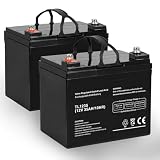
| Daakmax 12V 35Ah AGM (2 pack) | Light camping loads | Pack of 2, maintenance-free |
| OPTIMA D34M BlueTop | Boat or RV needing both jobs | 750 CCA, dual terminal |
| CHITOLI 12V 100Ah LiFePO4 | Home energy storage and RV | 4000-15000 cycles, 100A BMS |
How to Choose
Capacity and runtime math
Capacity in amp-hours tells you how much energy the battery holds. Multiply amp-hours by 12 volts to get watt-hours: a 100Ah battery holds roughly 1200Wh, which is why one listing here quotes 1280Wh for its LiFePO4 unit. Add up the watts of what you plan to run, divide by 12, and multiply by hours of use to find your amp-hour need. Leave a margin, because lead-acid chemistry is happiest when you do not drain it fully. As a rough rule, plan on using only about half of an AGM battery’s listed capacity per trip, while lithium listings usually allow deeper use. A 35Ah unit therefore gives a modest cushion, while 100Ah and 200Ah units suit all-day loads.
AGM versus lithium iron phosphate
AGM batteries are sealed, maintenance-free, and widely familiar, but they are heavy and generally should not be discharged all the way down. LiFePO4 units usually advertise thousands of cycles, such as the 4000 to 15000 figures in these listings, and include a built-in battery management system. They often need a charger or controller that supports lithium, so check compatibility before you switch.
Group size, terminals, and fit
Group 24 and Group 31 are physical sizes, and they decide whether the battery fits your tray or box. Measure the space first. Also look at terminal style: the dual-terminal OPTIMA offers both post and side options, while others list standard connections. A trolling motor box and a boat battery compartment can be tighter than expected. Allow extra room for cable bends and a vented cover if the maker calls for one, and secure the battery so it cannot slide in rough water.
What to ignore and where budget models cut corners
Ignore the biggest cycle claim in a headline unless it is tied to a stated depth of discharge. Lesser-known lithium brands may omit warranty length or cold-charging details, so read the full listing. Look for a BMS current figure that matches your load: a 100A BMS is fine for a trolling motor, but a large inverter may need more. Budget AGM packs often hide small capacities, so confirm amp-hours per battery, not per pack.
The 8 Best Options
12V 100Ah LiFePO4 Group 24
This Group 24 lithium unit targets RVs and trolling motors. The title lists 1280Wh of capacity, a 100A BMS, low-temperature cutoff, and support for 4P4S expansion up to 20.48kWh, with marine and solar use named as well.
- Strength: The expansion claim lets you grow into a larger bank over time.
- Strength: Low-temperature cutoff suggests built-in protection for cold conditions.
- Trade-off: The brand name is not stated in the title, so warranty details need checking.
Skip it if your charger does not support lithium. Buyers who only need a few hours of light use may also find 1280Wh more capacity than the job requires, and a smaller unit would free up space in the box.
Renogy 12V 100Ah Deep Cycle AGM
A lead-acid solar battery from a known name in off-grid gear. The listing cites a 3% self-discharge rate and 1100A maximum discharge current, and names RV, camper, cabin, home appliances, marine, and off-grid use.
- Strength: Low self-discharge helps if the battery sits between trips.
- Strength: AGM is sealed and fits many standard charging setups.
- Trade-off: Lead-acid chemistry is typically heavier per usable amp-hour than lithium.
Skip it if weight and long cycle life are your top priorities. It makes the most sense for a battery that supports occasional weekend use, where the sealed case and low self-discharge figure keep things simple between trips.
Renogy 12V 200Ah Deep Cycle AGM
This is the larger sibling, doubling capacity to 200Ah with a 2000A maximum discharge current. The same 3% self-discharge figure and the same list of RV, camper, cabin, marine, and off-grid uses appear in the title.
- Strength: One large unit means fewer connections than wiring several small batteries.
- Strength: The higher discharge current figure suits heavier loads.
- Trade-off: Size and weight are likely substantial, so check your mounting space and lifting plan.
Skip it if you only run a few small lights or a fish finder. Anyone planning to mount it overhead or carry it by hand should plan for the weight of a battery this large before ordering.
12V 100Ah LiFePO4 Group 31
A lithium iron phosphate battery in the larger Group 31 size. The title lists a built-in 100A BMS and 15000 deep cycles, and names solar systems, home energy, RVs, and marine use.
- Strength: A very high stated cycle count points to long-term use.
- Strength: Built-in BMS handles protection without extra hardware.
- Trade-off: Group 31 is a bigger footprint than Group 24, so measure first.
Skip it if your battery tray only fits a smaller group size. Solar builders should also confirm that their charge controller has a lithium profile, since that is a common stumbling block.
Newport 12V 50Ah Deep Cycle AGM Marine
A compact, rechargeable sealed lead-acid option for trolling motors, kayaks, and small boats. The title keeps the claims simple: 12V, 50Ah, AGM, marine use.
- Strength: The 50Ah size suits small craft where space and weight matter.
- Strength: Sealed construction is friendlier for tight compartments.
- Trade-off: Fifty amp-hours limits runtime on larger trolling motors.
Skip it if you plan a full day on the water with a heavy motor. For short outings with a light motor, though, the modest size is a feature, not a flaw.
Daakmax 12V 35Ah Deep Cycle AGM (Pack of 2)
Two 35Ah rechargeable sealed lead-acid batteries come in the pack. The listing calls them maintenance-free and aimed at camping, RV, and off-grid use.
- Strength: Two batteries let you wire in parallel for more capacity.
- Strength: Maintenance-free design means no topping off.
- Trade-off: Each unit is small, so combined runtime stays modest.
Skip it if you need a single large battery with higher current output. The small size does suit portable lighting, camp gear, and similar light draws where two modest batteries are easier to carry than one heavy one.
OPTIMA D34M BlueTop Dual Purpose
The only dual-purpose pick here, designed for both starting and deep cycle duty. The title lists 750 CCA, dual terminals, sealed AGM construction, and a maintenance-free build with versatile mounting.
- Strength: One battery can crank an engine and also run accessories.
- Strength: Dual terminals offer more ways to connect.
- Trade-off: Dual-purpose designs trade some deep cycle depth for starting power.
Skip it if you only need a dedicated house battery. A boat owner who wants an engine to turn over and a stereo to run on the same unit is the intended buyer here.
CHITOLI 12V 100Ah LiFePO4
This lithium unit lists a built-in 100A BMS, 4000 to 15000 deep cycles, and a 10-year lifetime claim. Uses named include RV, trolling motor, camping, marine, solar, and home energy storage.
- Strength: The wide use list makes it flexible for mixed setups.
- Strength: A stated long lifetime suits owners who plan to keep it for years.
- Trade-off: The cycle range is wide, so confirm which figure applies at your depth of discharge.
Skip it if your system still relies on a lead-acid-only charger. Those who want a long lifespan for home storage will like the stated claims, but should still read the warranty terms on the full listing.
Which One Fits Your Situation
Weekend kayak or small boat
The Newport 50Ah AGM keeps weight and bulk down for compact craft, and its sealed design suits the cramped storage found on kayaks and small boats.
Cabin or camper with a solar panel
The Renogy 100Ah AGM is a straightforward fit for lighting and a few small appliances, while the Renogy 200Ah handles bigger daily loads when the cabin has more to run.
Long-term lithium bank for home energy
The Group 31 LiFePO4 or the CHITOLI suits builders planning for many cycles. The Group 24 unit adds an expansion path if you start small.
Boat that must crank an engine and run accessories
The OPTIMA D34M BlueTop covers both roles in one sealed package.
Common Mistakes
- Sizing capacity to your exact load instead of leaving a margin.
- Buying lithium without checking whether your charger supports it.
- Assuming a pack of two lists the amp-hours for the pack rather than each battery.
- Ignoring group size and terminal layout until the battery arrives.
- Trusting a headline cycle count without a stated depth of discharge.
Related guides
- Combination Smoke And Carbon Monoxide Detectors
- Aio Liquid Coolers For High Performance Gaming
- Graphics Cards For Low Wattage Power Supplies
Frequently Asked Questions
Can I use a car battery for deep cycle work?
Not well. Car batteries are made for short, high-current bursts and tend to wear out quickly under repeated deep discharge. A deep cycle or dual-purpose design is the safer choice, and the OPTIMA in this list is the example of a unit built to do both jobs.
How many amp-hours do I need?
Add the watts of your devices, divide by 12 for amps, and multiply by hours of use. Then add a margin, especially with lead-acid chemistry. For example, a 60-watt load running five hours works out to about 25 amp-hours before any margin.
Is lithium worth it over AGM?
If you cycle the battery often, lithium’s stated cycle counts and lower weight make it attractive. For occasional use or tight upfront budgets, AGM remains a reasonable choice.
Can I connect batteries together?
Many can be wired in parallel or series, but only follow the maker’s guidance, and never mix different capacities, ages, or chemistries in one bank. The Group 24 listing mentions 4P4S expansion, which signals the manufacturer supports it.







