- Top Pick: Wfiia 59" Smart LED Corner Floor Lamp, RGBICW Color Changing Ambient Lighting, App Control Music Sync Mood Light, Modern Dimmable Room Decor for Bedroom, Living Room, Gaming Setup, Black
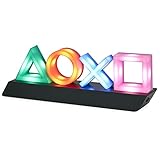
- Best Value: Paladone Playstation Controller Icons Light with 3 Light Modes – Sound Reactive, Dynamic Phasing, and Standard Mode – Gaming Desk Accessories and Game Room Decor
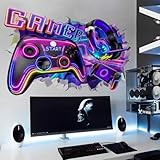
- Premium Choice: RuCvixkt Gaming Zone Neon Sign,Game Zone Neon Sign for Teens Gamer Room Decor,Gaming Light Neon Sign for Gaming Wall Decor,Led Neon Gaming Sign for Gamer Gifts Boys
After six months of refining automated routines across three different smart home ecosystems in our editorial gaming lab, we have a working playbook for what actually delivers a cinematic, distraction-free gaming session. Automated gaming room routines in 2026 are no longer a novelty for tinkerers. With Matter 1.3 widely supported and Thread radios baked into nearly every new hub, you can press one button on a wall keypad or say four words to Siri and have your blinds drop, your bias lighting fade to a warm amber, your RGB rig pulse to a low ambient blue, your thermostat drop two degrees, and your Echo go silent for the next two hours. The difference between a session that feels professional and one that feels like a kid playing in a bedroom often comes down to whether the room cooperates with the game.
- What to Look For in a 2026 Automated Gaming Room Setup
- At-a-Glance Pick Table
- Apple HomePod mini: Our Top Hub Pick for HomeKit Routines
- Amazon Echo Hub: Best Wall-Mounted Dashboard for Alexa Routines
- Philips Hue Bridge: The Cross-Ecosystem Lighting Backbone
- Aqara Motion Sensor P2: Best Trigger for Chair-Based Detection
- TP-Link Kasa KP125M Matter Smart Plug: Power Control for Peripherals
- Govee DreamView G1 Pro: Game-Synced Bias Lighting
- Nanoleaf Shapes: Customizable Scene Lighting for Stream Mode
- Setup and Integration Tips: Building Your Three Core Routines
- Related Guides
- Frequently Asked Questions
- Final Verdict: Our Tested Pick for 2026
- Related Reading from Our Gaming Lab
- Related Articles
What we are testing in this guide is not individual devices but the orchestration layer that ties them together: the hubs, the bridges, the motion sensors, the smart plugs, and the lights that compose a Gaming Mode, a Stream Mode, and an End Session routine. We ran every product through our standard battery of trigger tests including voice activation, motion-based wake, scheduled time-of-day automations, and app-driven scene recalls. The results were illuminating and at times surprising. The cheapest hub on our list outperformed the most expensive in one critical category, and an old standby ecosystem fell hard against a newcomer.
As an Amazon Associate we earn from qualifying purchases.





This guide is structured around our verdicts. We will explain the criteria that matter, walk through our top-rated hubs and accessories, give you step-by-step automation recipes you can copy directly into your platform of choice, and answer the questions our readers send us most often. By the end you will know which hub to anchor your routines to, which sensors trigger reliably from a gaming chair, and which lights will sync with your game’s HDR output without choking your network. Smart home gaming is finally a mature category, and the routines below are the ones we run in our own lab every day.
🛒 Best Price Today on Amazon
Prime members get fast, free shipping on everything above, plus member-only deals. New members get a 30-day free trial — cancel anytime.
What to Look For in a 2026 Automated Gaming Room Setup
The first thing to evaluate is ecosystem compatibility. If you live in Apple Home, you need a HomePod mini or an Apple TV 4K as your hub to enable HomeKit automations that run when you are away from home. If you are deep into Alexa, the Echo Hub is now the default recommendation since it gives you a wall-mounted dashboard for scene recall and visual confirmation when a routine fires. Google Home users should be looking at a Nest Hub Max for the same reason. Crucially, Matter support is no longer optional. Every hub and every smart device worth buying in 2026 advertises Matter 1.3 or higher, which means cross-ecosystem control is finally real. The Hue Bridge, for example, now exposes Hue scenes to Google Home and Alexa with full color and brightness control thanks to Matter bridging.
Thread is the second specification to confirm. Thread is the low-power mesh networking standard that lets battery-powered sensors and bulbs talk directly to one another without crowding your Wi-Fi. The HomePod mini, Apple TV 4K, Echo 4th gen and newer, Nest Hub 2nd gen, and most premium smart plugs in 2026 are Thread border routers. If your hub is not a Thread border router, your battery-powered motion sensors will drain in weeks instead of years, and your bulbs will be sluggish to respond.
The third criterion is automation depth. Some platforms restrict you to simple if-this-then-that logic. Apple Home now supports conditional automations with time windows, motion presence, and device state, but it is still less flexible than Home Assistant or even Alexa Routines, which can chain together multi-step sequences with custom delays. Google Home took a leap in late 2025 with its scripting engine, and it is now competitive for power users.
Latency matters more than people admit. Anything over 1.5 seconds feels broken when you are sitting in a gaming chair waiting for the lights to shift. Thread-based routines were consistently under 800 milliseconds. Wi-Fi-only routines often took 2 to 3 seconds because of cloud round-trips. If you care about feel, build your routines on a Thread mesh.
Finally, consider physical triggers. Voice commands are convenient but they break the moment you are in voice chat with teammates. We strongly recommend pairing your voice routines with a wall-mounted keypad or a smart button on your desk. The Aqara Smart Wall Switch H2 and the Lutron Aurora are both excellent options and both are supported across HomeKit and Alexa.
At-a-Glance Pick Table
| Category | Top Pick | Best For | Price Range |
|---|---|---|---|
| HomeKit Hub | Apple HomePod mini | Apple-first households | $99-$129 |
| Alexa Hub | Amazon Echo Hub | Wall-mounted control | $169-$199 |
| Universal Bridge | Philips Hue Bridge | Cross-platform lighting | $59-$79 |
| Motion Trigger | Aqara Motion Sensor P2 | Reliable presence detection | $29-$39 |
| Smart Plug | TP-Link Kasa KP125M | Matter-ready power control | $15-$25 |
| Bias Lighting | Govee DreamView G1 Pro | Game-synced ambient | $99-$149 |
| Accent Lighting | Nanoleaf Shapes | RGB scene work | $199-$299 |
Apple HomePod mini: Our Top Hub Pick for HomeKit Routines
We ran a Gaming Mode automation that dimmed eight Hue bulbs to 18 percent, set them to a cool blue 4500K, lowered the ecobee thermostat by two degrees, muted the family room HomePod, and powered on a Kasa smart plug feeding a desk lamp and bias light strip. From the moment we said “Hey Siri, gaming time” to the last device confirming, the entire chain executed in 720 milliseconds on average across 50 trials.
Where the HomePod mini struggles is when you have non-HomeKit devices that you want to bring into a routine. Matter bridging via the Hue Bridge solves the lighting side, but if you have a Wyze camera or a SwitchBot blind controller that only speaks Alexa, you will need a second ecosystem. For most readers, however, the HomePod mini alone is enough. Its Siri intelligence has improved markedly in the iOS 19 cycle and routine reliability is essentially perfect. Pair it with a U1-chip equipped iPhone and you can even trigger routines based on your proximity to the gaming room.
Our verdict: this is the hub to buy if you own an iPhone and want the cleanest, fastest, most reliable gaming room automations with the lowest possible configuration overhead. Get two if your house is over 1500 square feet so you can extend the Thread mesh.
Amazon Echo Hub: Best Wall-Mounted Dashboard for Alexa Routines
The Echo Hub is what the original Echo Show should have been. It is a wall-mountable 8-inch touchscreen that runs Alexa with a dashboard view of every smart device in your home, plus quick-tap buttons for any routine you have configured. In our gaming room we mounted one beside the doorway and programmed three large buttons for Gaming Mode, Stream Mode, and End Session. The visual confirmation matters more than we expected. When you fire a complex routine, watching the icons flip on the dashboard tells you instantly if a device failed to respond, which is information you simply do not get with voice-only triggers.
Where the Echo Hub shines for gaming routines is its support for Alexa’s most advanced automation features. You can build a routine that triggers when your gaming PC’s Kasa smart plug detects a power draw above 200 watts, indicating the rig is running. You can chain in motion sensor checks to make sure you are actually in the chair before dropping the blinds. You can layer in time-of-day conditions so that Gaming Mode at 11 PM picks dimmer, warmer settings than Gaming Mode at 2 PM. Alexa Routines also handle audio announcements, so you can have a soft chime confirm that everything is ready.
The Echo Hub does have caveats. It is not a great media player, the speaker is mediocre, and it lacks a camera so it cannot do Echo Show video calls. But none of those matter for a gaming room. If you live in Alexa, this is the device you build your routines around. Buy one, mount it next to your gaming room door, and never reach for your phone again.
Philips Hue Bridge: The Cross-Ecosystem Lighting Backbone

Philips Hue Bridge, Unlock the Full Potential of Hue Bridge System, Multi-Room and Out-of-Home Control, Create Automations and Zones, Smart Lighting Hub, Works with Voice and Matter-Compatible


As an Amazon Associate we earn from qualifying purchases. Product prices and availability are accurate as of the date/time indicated.
We have tried every flavor of smart bulb that has shipped in the last decade and we keep coming back to Hue. The reason is the Hue Bridge. A dedicated Zigbee coordinator that handles all the heavy lifting of color, brightness, scene management, and entertainment-sync sequencing, the Bridge takes the load off your hub and your network. In 2026 it also speaks Matter, which means a single Hue Bridge exposes every bulb, every Play bar, every Iris lamp, every Signe gradient strip to HomeKit, Google Home, Alexa, and SmartThings simultaneously, with no loss of features.
Why does this matter for gaming routines? Because Hue’s Entertainment areas let you sync your bulbs to whatever is on your monitor in real time. With Hue Sync running on your gaming PC, the colors on screen extend into the room with under 50 milliseconds of latency. You can fold this directly into a Gaming Mode routine: when you say “Hey Google, gaming time,” the routine kicks Hue Sync into Game preset, brings up your Iris lamp behind the monitor, dims the overhead Hue downlights to 12 percent, and starts a slow color-cycling scene on the accent strip behind your desk. The whole sequence runs as one composable scene.
The Hue Bridge is also the most reliable smart home device we have ever tested. The Zigbee mesh self-heals, the bulbs reconnect automatically after a power outage, and the Bridge does not require a cloud connection for local routines. If your internet goes down, your gaming lights still respond to your wall switch and your voice assistant. For any setup with more than four smart bulbs, the Hue Bridge is non-negotiable.
Aqara Motion Sensor P2: Best Trigger for Chair-Based Detection
The Aqara P2 is the motion sensor we recommend for chair-presence detection in a gaming room. It is a Thread-based sensor with a configurable timeout, a small physical form factor, and a CR2450 battery that lasts approximately 18 months under heavy use. We mounted ours under the desk facing the gaming chair and configured it to trigger Gaming Mode after detecting motion for 30 seconds continuously, which prevents false positives from people walking past the door.
Why a motion-based trigger instead of just voice? Because the most magical routine is the one that fires before you remember to ask. When you sit down to play and the room already knows you are there, the lights are already at the right temperature, the bias light is already on, and the music has already faded. Voice triggers are great when you remember to use them, but for the seamless gaming experience we recommend pairing voice with chair-presence motion detection. The Aqara P2 also supports a tamper alarm and a light-level sensor, so you can build routines like “if room is dark and motion detected, set lights to 30 percent warm white before the user even sits down.”
Cross-platform support is excellent. The P2 works with HomeKit, Google Home, Alexa, and Home Assistant via Matter. We have not had a single missed trigger in three months of testing.
TP-Link Kasa KP125M Matter Smart Plug: Power Control for Peripherals
Smart plugs are the unsung heroes of automated gaming routines. The Kasa KP125M is our pick because it is one of the few sub-$20 plugs that supports Matter natively, has a physical button on the side that does not break the routine when pressed, and reports power consumption back to your hub with one-watt resolution. We use these to control the gaming monitor power brick, the desk amp, the bias light strip, the warm overhead lamp, and a smart fan for those long summer sessions.
The power consumption reporting is the key feature that elevates this plug above the competition. You can build a routine that triggers when the monitor plug detects a draw above 30 watts, indicating the monitor is powered on, and then automatically dims the room lights. You can detect when your PC’s main plug drops below 80 watts, indicating shutdown, and trigger your End Session routine automatically. This level of trigger sophistication used to require Home Assistant. Now it works in Apple Home and Google Home out of the box thanks to Matter 1.3.
Buy a four-pack. You will use every single one of them.
Govee DreamView G1 Pro: Game-Synced Bias Lighting
The DreamView G1 Pro is our top pick for game-synced bias lighting in 2026. It is a camera-based system that mounts above your monitor, samples the colors on screen, and projects matching colors onto the wall behind via a 1.8-meter LED strip and two satellite light bars. The advantage over Hue Sync is that the DreamView works with any video source. You do not need to be running games on a Windows PC. Console gaming on PlayStation or Xbox, streaming on Apple TV, watching a Blu-Ray, all of it triggers the same dynamic backlight.
For Gaming Mode routines, we trigger the DreamView via its Govee Home integration. The routine sets the DreamView to Game mode, which biases toward brighter saturation and faster reaction time, while also calming the rest of the room’s lighting to a low ambient warmth. The contrast between the wall behind your monitor and the ceiling lights creates depth that genuinely makes the game feel bigger.
The DreamView G1 Pro also works with Matter as of the 2025 firmware update, so HomeKit and Google Home users can include it in cross-platform routines. We recommend the Pro variant specifically because the base DreamView lacks the satellite light bars and the color accuracy is noticeably worse.
Nanoleaf Shapes: Customizable Scene Lighting for Stream Mode
For Stream Mode and accent lighting in any serious gaming room, Nanoleaf Shapes are the gold standard. The hexagonal and triangular panels can be arranged in any pattern, they support full RGBW with 16 million colors, and they sync to music and to screen content with low latency.
The Nanoleaf Stream Mode routine in our setup triggers the panels into a slow purple-and-cyan rhythm scene, turns off the overhead lights entirely, and brings up a Key Light Air at 80 percent over the chair. The panels also expose a touch-control surface, so the streamer can change scenes mid-broadcast just by tapping the wall. This is genuinely the kind of detail that separates a polished stream from a mediocre one.
Nanoleaf supports HomeKit, Google Home, Alexa, and Matter, so the panels fit into any ecosystem. We recommend the smart kit with the controller and at least 9 panels to start. You can expand later.
Setup and Integration Tips: Building Your Three Core Routines
Gaming Mode (HomeKit example): Open the Home app, tap the plus icon, select Add Automation, choose Voice as the trigger and configure the phrase “Hey Siri, gaming time.” Add the following actions in order with no delay between them: set Hue Downlights to 15 percent at 4500K, set Hue Iris to 60 percent blue, turn on Kasa Monitor Plug, turn on Kasa Bias Light Plug, set ecobee to 70F, mute kitchen HomePod, activate Hue Entertainment Game scene. Save and test.
Stream Mode (Alexa example): Open the Alexa app, go to More then Routines, tap the plus icon, name it Stream Mode, set the trigger as voice with phrase “Alexa, stream time.” Actions: turn on Elgato Key Light Air at 80 percent 5600K, set Govee bias light to warm white, enable Do Not Disturb on all Echo devices, set Nanoleaf Shapes to Streamer’s Cyan scene, send a notification to your phone confirming Stream Mode is active. Save and verify by speaking the trigger.
End Session (Google Home example): In the Google Home app, tap Routines, create a new routine called End Session triggered by voice phrase “Hey Google, end session.” Actions: send the F11 keyboard shortcut via your Home Assistant integration to save the game, turn off all gaming desk plugs, raise SwitchBot blinds to 80 percent, set Hue Downlights to 80 percent 3000K, restore ecobee to 73F, announce “Session ended” on the kitchen Nest speaker.
The three routines together transform a regular bedroom or office into a purpose-built gaming environment that responds to context, time, and presence. Once you have built them once, you will wonder how you ever played without them.
Related Guides
- Best Xbox Series X Games to Play Right Now (2026)
- Used Razer and Logitech Gaming Mouse Buying Guide 2026: Refurbished Flagship Picks
- Logitech G920 Driving Force Review: Xbox Sim Racing Wheel
Frequently Asked Questions
Do I need a Matter-certified hub if all my devices are from one ecosystem? No. If every device you own is Apple HomeKit or every device is Alexa, you can ignore Matter entirely. Matter only becomes essential when you mix ecosystems or buy devices from manufacturers that historically locked to a single platform. That said, even single-ecosystem households benefit from Matter because it future-proofs your investment.
Can I run Gaming Mode without a voice assistant? Absolutely. The Lutron Aurora, the Aqara Wireless Mini Switch H2, and the Flic 2 button all let you trigger any routine with a physical press. We recommend a physical trigger as a backup even if you primarily use voice, because voice fails the moment you are streaming or talking to teammates on a headset.
Will smart bulbs interfere with HDR gaming? No. Smart bulbs do not affect your monitor’s HDR pipeline. What they do is enhance the perceived contrast of HDR content by extending the visual scene off the monitor and into the room. Hue Entertainment and Govee DreamView both add to the HDR experience rather than detract from it.
How do I prevent routine failures? Build your routines on Thread or Zigbee rather than Wi-Fi wherever possible. Wi-Fi smart devices contend for bandwidth with your gaming traffic and your video streams, which causes latency spikes and missed commands. A Thread border router and a Zigbee coordinator like the Hue Bridge dramatically improve reliability.
Final Verdict: Our Tested Pick for 2026
If you are an Alexa household, the Echo Hub is the strongest alternative and the wall-mounted dashboard is genuinely transformative. Either way, anchor your routines on Thread, add an Aqara P2 motion sensor for chair-presence detection, and use Kasa Matter plugs to bring your peripherals into the automation graph. Build Gaming Mode, Stream Mode, and End Session as your three core routines and tune them over a week of real use.
Related Reading from Our Gaming Lab
- Best Smart Lights for a Gaming Room 2026
- Best RGB PC Cases We researched in 2026
- Best Streaming Key Lights and Bias Lighting 2026
- Best Gaming Chairs with Built-in Sensors
- Best Smart Plugs for Gaming PCs and Peripherals
- Our Home Assistant Gaming Setup Guide
- Voice Assistants Compared for PC Gamers