

- Top Pick: GIGABYTE B550 Eagle WIFI6 AMD AM4 ATX Motherboard, Supports Ryzen 5000/4000/3000 Processors, DDR4, 10+3 Power Phase, 2X M.2, PCIe 4.0, USB-C, WIFI6, GbE LAN, PCIe EZ-Latch, EZ-Latch, RGB Fusion
- Best Value: GIGABYTE B650 AORUS Elite AX AMD AM5 ATX Motherboard, Support Ryzen 9000/8000/7000 Series, DDR5, 14+2+1 Power Phase, PCIe 5.0 M.2, USB-C 3.2 Gen 2, WIFI6E, 2.5GbE, EZ-Latch, Q-Flash, RGB Fusion
- Premium Choice: GIGABYTE B850 AORUS Elite WIFI7 AMD AM5 ATX Motherboard, Support AMD Ryzen 9000/8000/7000 Series, DDR5, 14+2+2 Power Phase, 3X M.2, PCIe 5.0, USB-C, WIFI7, 2.5GbE LAN, EZ-Latch, 5-Year Warranty
The ATX motherboard is the foundation of a full-size gaming PC: it sets your CPU socket and chipset, dictates how much RAM and how many drives and graphics or expansion cards you can fit, and provides the rear I/O and connectors everything else plugs into. The full-size ATX form factor is the most popular choice for desktops because it offers the most expansion slots and ports while fitting standard mid-tower cases. This guide rounds up the best ATX motherboards in 2026 across the platforms builders actually buy — AMD AM4 and AM5, and Intel LGA 1700 — so you can match a full-size board to your CPU and your build goals.
- Best ATX Motherboards at a Glance
- 1. MSI MAG B550 Tomahawk Gaming Motherboard (AMD Ryzen 5000, AM4, DDR4)
- 2. GIGABYTE B650 AORUS Elite AX (AMD AM5, DDR5, Wi-Fi, PCIe 4.0)
- 3. MSI MAG B650 Tomahawk WiFi (AMD Ryzen 9000/8000/7000, AM5, DDR5)
- 4. MSI B650 Gaming Plus WiFi Motherboard (AMD B650, Socket AM5, ATX)
- 5. GIGABYTE Z790 AORUS Elite AX (Intel LGA 1700, DDR5, Z790, Wi-Fi)
- 6. ASUS Prime Z390-P LGA 1151 ATX Motherboard (Intel 8th/9th Gen)
- How to Choose an ATX Motherboard
- Frequently Asked Questions
- Related Guides
- Related Articles
Our picks were chosen on what genuinely matters for an ATX board: the CPU socket and chipset (which decide processor compatibility and features), expansion in the form of PCIe and M.2 slots, memory support, rear I/O and connectivity such as Wi-Fi, build quality including VRM and cooling, and value. We have included both AMD and Intel options across DDR4 and DDR5, with prices from around $112 up to around $194, because the right ATX board depends entirely on the CPU you are pairing it with. Below is an at-a-glance comparison of all six, then a closer look at each board and a buyer’s guide built around sockets, form factor, and expansion — the criteria that define a full-size ATX motherboard.
As an Amazon Associate we earn from qualifying purchases.


🛒 Best Price Today on Amazon
Prime members get fast, free shipping on everything above, plus member-only deals. New members get a 30-day free trial — cancel anytime.
Best ATX Motherboards at a Glance
| Motherboard | Best For | Standout Spec | Approx Price |
|---|---|---|---|
| MSI MAG B550 Tomahawk | AM4 Ryzen 5000 value | AM4, DDR4, PCIe 4.0, strong VRM | around $112 |
| GIGABYTE B650 AORUS Elite AX | AM5 Ryzen 7000/9000 value | AM5, DDR5, Wi-Fi, PCIe 4.0 | around $138 |
| MSI MAG B650 Tomahawk WiFi | Enthusiast AM5 mid-range | AM5, DDR5, robust VRM, Wi-Fi | around $160 |
| MSI B650 Gaming Plus WiFi | Modern AM5 mainstream | AM5, DDR5, Wi-Fi, ATX | around $173 |
| GIGABYTE Z790 AORUS Elite AX | Intel 14th/13th Gen | LGA 1700, DDR5, Z790, Wi-Fi | around $190 |
| ASUS Prime Z390-P LGA1151 | Intel 8th/9th Gen builds | LGA 1151, Z390, expansion-friendly | around $194 |
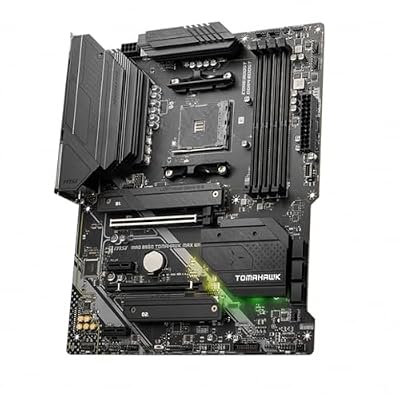
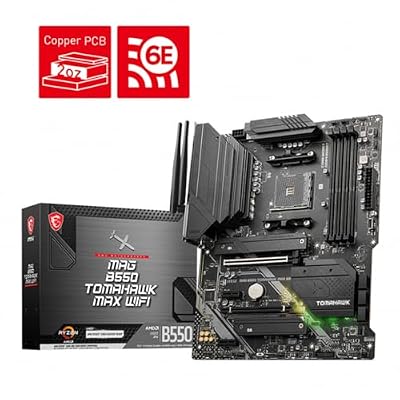
1. MSI MAG B550 Tomahawk Gaming Motherboard (AMD Ryzen 5000, AM4, DDR4)

MSI MAG B550 Tomahawk MAX WiFi Gaming Motherboard (AMD Ryzen 5000 Series, AM4, DDR4, PCIe 4.0, SATA 6Gb/s, M.2, USB 3.2 Gen 2, HDMI/DP, Wi-Fi 6E, Bluetooth 5.2, 2.5Gbps LAN, ATX)



As an Amazon Associate we earn from qualifying purchases. Product prices and availability are accurate as of the date/time indicated.
The MSI MAG B550 Tomahawk leads this list as the value champion for AMD AM4 builds, and it has earned legendary status among PC builders. It is a full-size ATX board for AMD Ryzen 5000-series CPUs on the AM4 socket, with DDR4 memory, PCIe 4.0 support, and a famously robust VRM and cooling setup for its price. At around $112 it is the most affordable board here and arguably the best value.
This is the board to choose for a powerful, sensibly priced Ryzen build, especially with a 5000-series chip. The strong VRM means it comfortably powers high-core-count Ryzen CPUs, the PCIe 4.0 support feeds a fast graphics card and NVMe SSD, and the full ATX layout provides ample expansion slots and rear I/O for a complete build. Its reputation for reliability and value is thoroughly deserved. If you are building on AM4 and want the most capable board for the money, the B550 Tomahawk is the obvious starting point.
Pros: Robust VRM and cooling, AM4 Ryzen 5000 support, PCIe 4.0, full ATX expansion, superb value.
Cons: AM4 and DDR4 are a previous-generation platform; no built-in Wi-Fi.
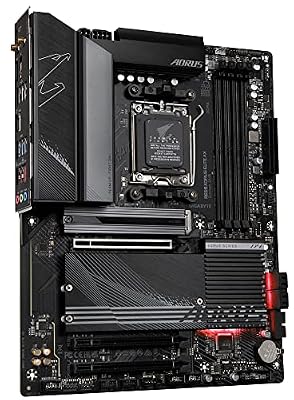
2. GIGABYTE B650 AORUS Elite AX (AMD AM5, DDR5, Wi-Fi, PCIe 4.0)

GIGABYTE B650 AORUS Elite AX AMD AM5 ATX Motherboard, Support Ryzen 9000/8000/7000 Series, DDR5, 14+2+1 Power Phase, PCIe 5.0 M.2, USB-C 3.2 Gen 2, WIFI6E, 2.5GbE, EZ-Latch, Q-Flash, RGB Fusion



As an Amazon Associate we earn from qualifying purchases. Product prices and availability are accurate as of the date/time indicated.
The GIGABYTE B650 AORUS Elite AX is the value pick for AMD’s modern AM5 platform, bringing current-generation features at a sensible price. It is a full-size ATX board for AM5 Ryzen 7000, 8000, and 9000-series CPUs, with DDR5 memory, PCIe 4.0, multiple M.2 slots, and integrated Wi-Fi (the ‘AX’). At around $138 it is an affordable entry into a future-ready AMD build.
This is the board for someone building a new AMD system who wants the longevity of the AM5 socket and DDR5 without overspending. AM5 supports current and upcoming Ryzen chips, DDR5 delivers high memory bandwidth, the M.2 slots handle fast NVMe storage, and built-in Wi-Fi saves a card and a slot. The full ATX form factor leaves room to expand. For a modern, well-equipped AM5 board that balances features and price, the B650 AORUS Elite AX is a smart, future-proof choice.
Pros: Modern AM5 socket, DDR5, integrated Wi-Fi, multiple M.2, full ATX, strong value.
Cons: DDR5-only platform costs more to build than AM4; mid-range VRM.
3. MSI MAG B650 Tomahawk WiFi (AMD Ryzen 9000/8000/7000, AM5, DDR5)

MSI MAG B650 Tomahawk WiFi Gaming Motherboard (AMD Ryzen 9000/8000/7000 Series Processors, AM5, DDR5, PCIe 4.0, M.2, SATA 6Gb/s, USB 3.2 Gen 2, HDMI/DP, Wi-Fi 6E, Bluetooth 5.3, 2.5Gbps LAN, ATX)


As an Amazon Associate we earn from qualifying purchases. Product prices and availability are accurate as of the date/time indicated.
The MSI MAG B650 Tomahawk WiFi carries the respected Tomahawk name onto AMD’s AM5 platform, and it is the enthusiast mid-range pick. It is a full-size ATX board for AM5 Ryzen 9000, 8000, and 7000-series CPUs with DDR5, a notably strong VRM, generous M.2 storage, and integrated Wi-Fi. At around $160 it sits in the sweet spot for a serious, lasting AM5 build.
This is the board for the builder who wants headroom and reliability on AM5 rather than the bare minimum. The beefy VRM comfortably feeds high-end Ryzen CPUs and gives thermal headroom for sustained loads, the DDR5 support and multiple M.2 slots cover fast memory and storage, and built-in Wi-Fi adds convenience. As with the AM4 original, it pairs robust power delivery with a clean full-ATX layout. For an enthusiast-grade AM5 board that will support powerful chips for years, the B650 Tomahawk WiFi is a standout.
Pros: Strong VRM for high-end Ryzen, AM5/DDR5, multiple M.2, integrated Wi-Fi, full ATX.
Cons: Pricier than entry B650 boards; DDR5 platform raises overall build cost.
4. MSI B650 Gaming Plus WiFi Motherboard (AMD B650, Socket AM5, ATX)
The MSI B650 Gaming Plus WiFi is a modern mainstream AM5 pick, offering current-generation AMD features in a straightforward full-size package. It is an ATX board on the AM5 socket using the B650 chipset, with DDR5 memory support, M.2 storage, and integrated Wi-Fi. At around $173 it targets builders who want a dependable, contemporary AMD foundation.
This is the board for a new AM5 gaming PC where you want solid, current features and MSI’s reliability without chasing the absolute top tier. The B650 chipset and AM5 socket support modern Ryzen CPUs, DDR5 provides high memory bandwidth, the M.2 slots take fast NVMe drives, and Wi-Fi is built in for flexible placement. The full ATX layout gives the expansion and I/O a complete build expects. For a modern, no-surprises AM5 motherboard from a trusted brand, the B650 Gaming Plus WiFi is a sensible mainstream choice.
Pros: AM5 socket, B650 chipset, DDR5, M.2 storage, integrated Wi-Fi, full ATX layout.
Cons: Priced above some rival B650 boards; mainstream rather than enthusiast VRM.
5. GIGABYTE Z790 AORUS Elite AX (Intel LGA 1700, DDR5, Z790, Wi-Fi)
The GIGABYTE Z790 AORUS Elite AX is the pick for high-end Intel builds, supporting Intel’s 14th and 13th-generation Core processors. It is a full-size ATX board on the LGA 1700 socket using the top Z790 chipset, with DDR5 memory, robust power delivery, multiple M.2 slots, and integrated Wi-Fi. At around $190 it is a premium foundation for a fast Intel system.
This is the board for someone building a powerful Intel rig who wants the overclocking-friendly Z790 chipset and full feature set. Z790 unlocks the most from Intel’s K-series chips, the strong VRM feeds high-core-count CPUs cleanly, DDR5 and multiple M.2 slots cover fast memory and storage, and built-in Wi-Fi rounds out connectivity. The full ATX layout supplies the expansion slots and rear I/O an enthusiast build needs. For a high-end LGA 1700 motherboard built around 14th and 13th-Gen Intel CPUs, the Z790 AORUS Elite AX is the standout Intel choice.
Pros: Z790 chipset for Intel 14th/13th Gen, LGA 1700, DDR5, strong VRM, Wi-Fi, full ATX.
Cons: Premium price; LGA 1700 is a mature platform near the end of its life.
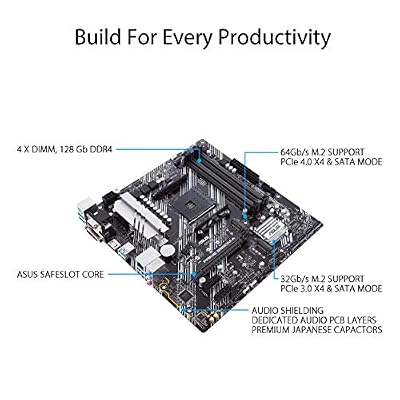
6. ASUS Prime Z390-P LGA 1151 ATX Motherboard (Intel 8th/9th Gen)

ASUS Prime B550M-A WiFi II AMD Micro ATX DDR4 Motherboard with PCIe 4.0, WiFi 6, ECC Memory, HDMI 2.1, RGB Header

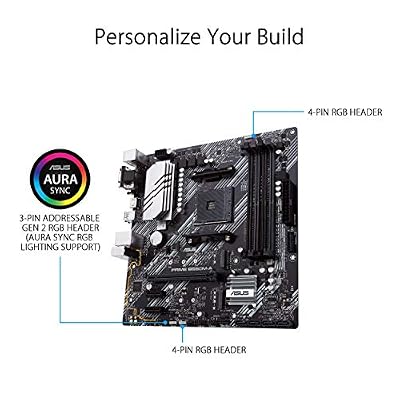


As an Amazon Associate we earn from qualifying purchases. Product prices and availability are accurate as of the date/time indicated.
Rounding out the list is the ASUS Prime Z390-P, the pick for older Intel builds and upgrades. It is a full-size ATX board on the LGA 1151 socket using the Z390 chipset, supporting Intel’s 8th and 9th-generation Core CPUs, and it is known for being expansion-friendly with multiple slots. At around $194 it serves a specific need: a capable ATX board for the LGA 1151 platform.
This is the board to choose if you are building or upgrading on Intel’s 8th or 9th-generation platform rather than starting fresh — there is no sense buying a new-socket board for a CPU it cannot accept. The Z390 chipset supports those Core processors, the expansion-friendly layout offers plenty of slots for graphics and add-in cards, and the full ATX form factor provides the I/O and room a complete build wants. For a dependable ATX motherboard targeting LGA 1151 Intel CPUs, the Prime Z390-P does exactly what it should.
Pros: Z390 chipset for Intel 8th/9th Gen, LGA 1151, expansion-friendly, full ATX layout.
Cons: Older LGA 1151 platform; DDR4-era board, not for current-gen Intel CPUs.
How to Choose an ATX Motherboard
The first and most important decision is the CPU socket, because it must match your processor exactly. AMD’s current platform is AM5 (the B650 boards here, for Ryzen 7000, 8000, and 9000), while AM4 (the B550 Tomahawk) serves Ryzen 5000 and earlier. Intel’s modern socket is LGA 1700 (the Z790 board, for 14th and 13th-Gen Core), while LGA 1151 (the Z390-P) supports 8th and 9th-Gen chips. Pick your CPU first, then choose a board with the matching socket — nothing else about a motherboard matters if it cannot physically accept your processor.
Next comes the chipset, which sits on top of the socket and determines features like overclocking support, the number of fast PCIe lanes, and connectivity. AMD’s B-series chipsets (B550, B650) offer a strong feature set at mainstream prices, while Intel’s Z-series (Z390, Z790) are the enthusiast tier that unlocks overclocking on K-series CPUs. Decide whether you need overclocking and how many high-speed lanes your graphics card and NVMe drives require, then match the chipset to those needs and your budget.
The ATX form factor itself is what you are buying into here, and it is the reason these boards suit full desktop builds. Full-size ATX provides the most expansion slots — typically several PCIe slots plus multiple M.2 storage slots — and the most rear I/O, while still fitting standard mid-tower cases. If you plan to add a graphics card, fast NVMe drives, and possibly expansion cards, ATX gives you the room that smaller Micro-ATX and Mini-ITX boards cannot. Confirm the board has the slot and port count your build needs.
Finally, weigh memory, VRM quality, and connectivity, then set your budget. DDR5 boards (all the AM5 and Z790 models) offer high bandwidth and future-readiness; the DDR4 AM4 board is cheaper to build. A strong VRM, as on the MSI Tomahawk boards, matters for powering high-end CPUs reliably under load, and integrated Wi-Fi (the ‘AX’/’WiFi’ models) saves a slot and a card. For AM4 value, the B550 Tomahawk leads; for AM5 value, the B650 AORUS Elite AX; for enthusiast AM5, the B650 Tomahawk WiFi; for mainstream AM5, the B650 Gaming Plus WiFi; for high-end Intel, the Z790 AORUS Elite AX; and for LGA 1151, the Prime Z390-P. Match socket, chipset, and expansion to your CPU and goals, and pick the ATX board on this list that fits.
Frequently Asked Questions
What is the difference between ATX and smaller motherboard sizes?
ATX is the full-size form factor, offering the most PCIe expansion slots, multiple M.2 storage slots, and the most rear I/O, while still fitting standard mid-tower cases. Micro-ATX and Mini-ITX are smaller, with fewer slots and ports, suited to compact builds. Every board in this guide is full-size ATX, which is the popular choice when you want maximum expansion and connectivity for a desktop build.
How do I know which ATX motherboard fits my CPU?
Match the motherboard’s socket to your processor. AMD Ryzen 7000/8000/9000 chips use AM5 (the B650 boards here); Ryzen 5000 and earlier use AM4 (the B550 Tomahawk). Intel 14th/13th-Gen Core chips use LGA 1700 (the Z790 board); 8th/9th-Gen use LGA 1151 (the Z390-P). Always confirm the socket — and that the board’s chipset supports your specific CPU — before buying.
Do I need a Z-series chipset or is a B-series board enough?
It depends on whether you want to overclock. Intel Z-series chipsets like Z790 and Z390 unlock overclocking on K-series CPUs and offer more high-speed lanes, suiting enthusiasts. AMD B-series boards like B550 and B650 deliver a strong feature set at mainstream prices and support CPU overclocking on the AMD side. For most gamers a B-series board is plenty; choose Z-series for high-end Intel overclocking.
Should I choose a DDR4 or DDR5 ATX motherboard?
It is tied to the platform. The AM4 B550 Tomahawk uses DDR4, which makes for a cheaper build and is great value for a Ryzen 5000 system. The AM5 and Z790 boards here use DDR5, which offers higher bandwidth and better future-readiness for a new build. If you are starting fresh, a DDR5 board on AM5 or LGA 1700 is the more forward-looking choice; for value on existing parts, DDR4 AM4 still makes sense.
Related Guides
- Best CPUs for Gaming
- Best AMD Motherboards
- Best NVMe SSDs
- Best RAM for Gaming
- Best Gaming PC Builds
- Best Budget Gaming Setup
Affiliate Disclosure: As an Amazon Associate, we earn from qualifying purchases. If you click a link and make a purchase, we may earn a small commission at no extra cost to you. Prices and availability are accurate as of publication and may change.
Ready to decide? Our #1 pick for 2026 is the MSI MAG B550 Tomahawk.
Live price & availability on Amazon.


