
- Top Pick: Rogue R67S Unlocked 4G LTE Smartphone for T-Mobile & AT&T Networks, Android 15 Go, 6.8-Inch HD+ Display, 3GB RAM + 3GB Extended Memory, 32GB Storage, 4,000mAh Removable Battery, Black
- Best Value: Ulefone Note 23 4G Android 16 Go Cell Phone, 20GB (3GB+17GB Virtual), 32GB | 6.56" 90Hz Screen Unlocked Smartphone, Unisoc T7100/2TB Expandable/3-Card Slot/Face Unlock/GPS/Glonass/Galileo, USB-C, Orange
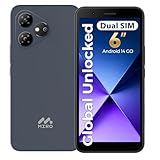
- Premium Choice: MIRO 4G Cell Phone – New Android 14 Go Edition Smartphone, 6" Display, 2GB+32GB (256GB Expandable), 3000mAh Battery, 5MP+2MP Camera, Dual SIM, 3.5mm Headphone Jack(Blue)
Android Go is a trimmed-down edition of the operating system built for phones with very little memory, and that single fact shapes the whole shopping decision. A Go phone is not trying to run the newest 3D games or edit video. It is meant to open messages, maps, a browser, a music app and a camera without stuttering on 2GB or 3GB of RAM. If that sounds like what you need, whether for a first phone, a backup handset, a spare for a drawer, or a device you hand to a relative who only wants calls and photos, this is the right corner of the market to be shopping in.
The tricky part in 2026 is that Go listings are crowded with stacked numbers. Some titles advertise “20GB RAM” when the physical memory is 3GB and the rest is storage borrowed as virtual memory. Screen sizes run from 3 inches to nearly 7. Batteries are removable on some models and sealed on others. This guide compares six listed phones using only what their titles state, then explains which specs deserve your attention and which are marketing arithmetic.
Quick Picks
As an Amazon Associate we earn from qualifying purchases at no extra cost to you.





| Product | Best for | Key spec from the title |
|---|---|---|
| Rogue R67S | Big screen, swappable battery | 6.8-inch HD+ display, 4,000mAh removable battery |
| Ulefone Note 23 | Smoother scrolling and extra storage | 6.56-inch 90Hz screen, Android 16 Go, 2TB expandable |
| MIRO 4G | Simple everyday phone with a headphone jack | Android 14 Go, 2GB + 32GB, 3.5mm jack |
| Mini Smartphone 3.0″ | Pocket backup or digital detox | 3.0-inch screen, GPS, Wi-Fi, Face ID |
| Unnecto Bolt One | First phone with a case included | 4GB RAM, 5.0-inch display, US warranty |
| Ulefone Note 22 | Compact build with a removable battery | 5-inch screen, Android 16 Go, 3000mAh removable battery |
How to Choose
Physical RAM versus “virtual” RAM
Read titles that show a sum such as “3GB+17GB virtual” carefully. The first number is real memory; the second is a slice of internal storage the phone borrows when it runs low. Borrowed memory is slower than the real thing, so it helps a little with switching between apps but never turns a 3GB phone into a 20GB phone. For Android Go, 2GB is the practical floor, 3GB gives more breathing room, and 4GB is the most generous option in this group.
Storage and card slots
Every phone here lists 32GB of built-in space, and a slice of that is taken by the system itself. Treat expandable storage as part of the plan, not a bonus. Look for a microSD slot, check the maximum card size the title promises (256GB on one model, 2TB on others), and keep photos and downloaded music on the card. A phone that fills its 32GB with app updates will slow down no matter what the RAM figure says.
Network bands and carrier fit
An unlocked phone only helps if it connects to your carrier. The Rogue title names T-Mobile and AT&T networks; others say only “4G” or “Dual SIM”. Confirm that LTE bands match your carrier before you buy, and remember that none of these titles mentions 5G. If your plan or area depends on 5G coverage, a Go phone is the wrong category. Dual SIM support is useful for travelers or anyone separating work and personal numbers.
Screen, battery and what to ignore
For reading and video, 6 inches and up is comfortable; 5 inches is easier to pocket; 3 inches is a novelty. A 90Hz refresh rate, listed on one model, makes scrolling feel smoother. Battery capacity runs from 2000mAh to 4,000mAh in these titles, and removable packs let you carry a spare. Ignore camera megapixel counts on entry-level phones; a 5MP sensor is a convenience tool, not a replacement for a dedicated camera.
The 6 Best Options
Rogue R67S
The Rogue is the largest screen in this group at 6.8 inches, with an HD+ panel and a 4,000mAh battery that the title describes as removable. It is aimed at buyers who want an older relative’s phone to be easy to read and easy to keep powered. The title states Android 15 Go and carrier compatibility with T-Mobile and AT&T. Together, the large panel and swappable pack make it the most practical pick here for long days away from an outlet, such as a shift at work or a day of errands.
- Strength: the 6.8-inch display gives text and video plenty of room
- Strength: a removable 4,000mAh battery can be swapped for a spare
- Trade-off: only 3GB RAM plus 3GB of extended memory and 32GB of storage, so keep apps minimal
Skip it if you need a phone that slips into a small pocket, or if your carrier is neither of the two named.
Ulefone Note 23
This is the newest-software option here, listing Android 16 Go on a 6.56-inch screen that runs at 90Hz. The title also lists a Unisoc T7100 processor, USB-C, face unlock, GPS with Glonass and Galileo, and a three-card slot supporting up to 2TB of expansion. It suits someone who wants the most modern feel a Go device offers, and who plans to load a large collection of photos or downloaded shows onto a memory card rather than the internal 32GB.
- Strength: a 90Hz screen is uncommon at this entry level and helps scrolling look smoother
- Strength: multi-constellation GPS and generous expandable storage cover navigation and media
- Trade-off: the 20GB figure is only 3GB real memory plus 17GB virtual, so do not expect high-end multitasking
Skip it if you want a camera-first phone, since the title makes no camera claims.
MIRO 4G
The MIRO keeps things plain: a 6-inch display, Android 14 Go, 2GB of RAM, 32GB of storage with expansion to 256GB, and a 3000mAh battery. The title mentions a 5MP plus 2MP camera pairing, dual SIM, and a 3.5mm headphone jack, which matters to anyone who still uses wired earbuds for commutes or calls. In practice it is the straightforward, low-fuss choice for someone who mostly calls, texts, browses and snaps the occasional photo.
- Strength: the headphone jack saves you from adapters or charging earbuds
- Strength: dual SIM and a 256GB card ceiling make it flexible for a basic phone
- Trade-off: 2GB RAM is the lowest in this lineup, so heavy browsing with many tabs will feel limited
Skip it if you plan to keep many apps installed at the same time.
Mini Smartphone 3.0″
This is the oddball of the group: a 3.0-inch Android phone marketed as the world’s smallest phone, pitched at students, travelers and digital detox. The title lists Wi-Fi app downloads, GPS, Face ID, expandable memory, a camera and video calling. It is a niche pick, and the title does not name the Go edition, so confirm the software before ordering. Think of it as a gadget for a specific purpose rather than a general-purpose handset.
- Strength: the tiny body is easy to carry as a backup or travel device
- Strength: GPS and Wi-Fi app support keep the basics available
- Trade-off: a 3-inch screen is tough for reading, typing and long video
Skip it if this will be your only phone.
Unnecto Bolt One
The Bolt One lists Android 14 (Go), a 5.0-inch display, a 1.3GHz quad-core processor, 4GB of RAM, 32GB of storage, and a 2000mAh battery. The title also mentions dual SIM, a 5MP camera, a case in the box and US warranty coverage. It fits a young user’s first phone or a simple household spare. The mix of a modest screen and the most physical memory in the group makes it a sensible first phone for light daily use.
- Strength: 4GB RAM is the largest physical memory figure listed in this group
- Strength: the included case and stated US warranty help new owners
- Trade-off: the 2000mAh battery is the smallest here, so plan on nightly charging
Skip it if you want a large display or a long stretch between charges.
Ulefone Note 22
The Note 22 pairs a 5-inch screen with Android 16 Go, 4G, dual SIM, face unlock and USB-C. The title lists 3GB of real memory plus 17GB virtual, 32GB of ROM, expansion up to 2TB, and a removable 3000mAh battery. It is a compact alternative to the Note 23 for people who prefer a smaller phone. Because the battery is removable, it also works as a rugged-feeling spare for a glovebox or travel bag.
- Strength: a removable 3000mAh battery allows an easy swap
- Strength: current Android 16 Go software in a one-hand-friendly size
- Trade-off: a 5-inch panel shows less content than the larger models, and the title lists no refresh-rate figure
Skip it if smooth 90Hz scrolling matters; the Note 23 is the one that lists it.
Which One Fits Your Situation
A phone for a parent or grandparent
Choose the Rogue R67S. The 6.8-inch screen is easy to read, the battery is removable, and the carrier support is spelled out in the title, which cuts down on guesswork.
A first phone for a younger child
The Unnecto Bolt One makes sense here. It lists a case, a US warranty and 4GB of RAM, and its 5-inch body is easier for small hands.
A travel backup or spare
The Mini Smartphone 3.0″ is built for this job: tiny, with GPS and Wi-Fi, and easy to tuck in a bag. Pair it with a carrier that supports your trip and keep expectations modest.
A main phone that should feel current
Look at the Ulefone Note 23. It is the pairing of Android 16 Go and a 90Hz display that sets it apart, and the three-card slot gives you room for photos and media.
Common Mistakes
- Counting virtual memory as real RAM and expecting a 20GB phone to behave like a flagship.
- Skipping a carrier band check, then discovering the phone drops to weak signal at home.
- Filling the built-in 32GB with photos instead of moving them to a memory card.
- Choosing the smallest screen for a person who reads a lot of text.
- Assuming every “Android” phone is the Go edition; read the title for the word Go.
Related guides
- Battery Operated Smoke And Carbon Monoxide Detectors
- Combination Smoke And Carbon Monoxide Detectors
- Aio Liquid Coolers For High Performance Gaming
Frequently Asked Questions
What does Android Go change?
It is a lighter version of Android designed for phones with limited memory and storage. It ships with lighter apps and tuned system behavior so basic tasks stay responsive on low-spec hardware.
Can these phones run games?
Simple puzzle and casual games are realistic. With 2GB to 4GB of RAM and entry-level processors, demanding 3D titles are not the goal of this category.
Is more virtual RAM better?
It helps modestly with app switching, but it is slower than real memory and uses up your internal storage. Compare the real RAM figure first.
Do I need a memory card?
With 32GB built in on all six, a microSD card is strongly advisable. It keeps photos, music and downloads off the system partition so the phone stays quick. The titles also do not promise an update schedule, so treat these as basic-task devices and protect accounts with a screen lock and two-step sign-in.