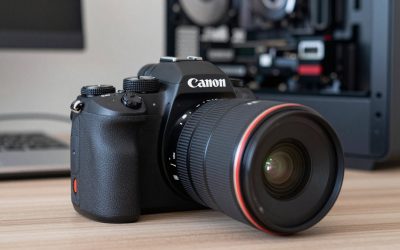
- Top Pick: Master Airbrush Cool Runner II Air Brush Kit with Air Compressor Dual Fan
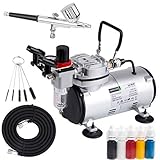
- Best Value: Timbertech Airbrush Kit With Compressor AS18-2K Basic Start Kit With Air Hose, Cleaning Brushes, and Test Paints for Hobby, Body Tattoo, Model painting, Automotive Graphic, Make-up
- Premium Choice: Master Airbrush Cool Runner Dual Fan Air Compressor with Storage Tank
The best airbrush compressor kits for beginners are the Timbertech AS-186-style 3-liter tank kits for the best balance of control and value, the Master Airbrush Cool Runner II kits for an inexpensive all-in-one setup, and the Iwata-Medea Studio Series Smart Jet Pro when quiet operation and dependable pressure control matter most.
- Quick Comparison: Beginner Airbrush Compressor Kits
- Best Overall for Most Beginners: Timbertech AS-186-Style Kits
- Best Budget All-in-One: Master Airbrush Cool Runner II Kits
- Best Quiet Upgrade: Sparmax AC-27
- Best Premium Compact Option: Iwata-Medea Smart Jet Pro
- Decision Matrix: Match the Compressor to Your Workspace
- Pressure Settings Beginners Can Use
- Hoses, Fittings, and Compatibility
- Maintenance Requirements
As an Amazon Associate we earn from qualifying purchases at no extra cost to you.



Quick Comparison: Beginner Airbrush Compressor Kits
| Kit or compressor class | Tank | Typical airflow | Operating noise | Pressure control | Included airbrush | Typical market range |
|---|---|---|---|---|---|---|
| Timbertech AS-186-style kit | 3 L | 20–23 L/min | 47–50 dB | Regulator and moisture filter | Usually gravity-feed dual-action, 0.3 mm | $90–$150 |
| Master Airbrush Cool Runner II TC-320-style kit | Usually no tank | Approximately 20–23 L/min | Approximately 47–59 dB | Regulator/filter on selected bundles | Often one or more beginner airbrushes | $100–$180 |
| Sparmax AC-27 | 2.5 L | Approximately 23 L/min | Approximately 40–45 dB | Regulator and moisture trap | Usually sold as compressor-only | $250–$350 |
| Iwata-Medea Smart Jet Pro | No tank | Approximately 18 L/min | Approximately 47 dB | Integrated regulator and moisture filter | Usually compressor-only | $300–$450 |
| Iwata-Medea Studio Series Power Jet Pro | 2 L | Approximately 34 L/min | Approximately 50 dB | Regulator and moisture filter | Usually compressor-only | $500–$700 |
Specifications can vary by regional version and bundle, so check the supplied regulator, hose, and airbrush before ordering. The important difference is not peak airflow alone: a tank changes how consistently the compressor delivers air, while a tankless model saves space and usually starts more quickly.
Best Overall for Most Beginners: Timbertech AS-186-Style Kits
An AS-186-style compressor is the strongest starting point for miniature painting, scale models, plastic models, artwork, and general hobby use. Its roughly 3-liter tank stores compressed air before it reaches the brush. That reduces pulsing, keeps the motor from running continuously, and gives you a quieter working rhythm.
Most versions include a moisture trap, pressure regulator, and a 1/8-inch airbrush hose. Many bundles also include a 0.3 mm gravity-feed dual-action airbrush. That nozzle size is a useful compromise: it can spray thinned acrylic paint for detail work while still covering a miniature or model efficiently.
Why the tank matters
Suppose an airbrush uses 15 L/min while spraying and the compressor can supply about 20 L/min. The compressor has only a 5 L/min surplus while the motor is running. A 3-liter tank charged from 4 bar gauge to 6 bar gauge stores approximately:
Tank volume × pressure difference = 3 L × 2 bar = about 6 liters of usable atmospheric-equivalent air.
At a 15 L/min spray rate, that provides roughly 24 seconds of stored air before the pressure falls back toward the compressor’s cut-in point. The motor then restores the pressure while you pause, reposition the model, or refill paint. This is why a small tank feels much steadier than its airflow number suggests.
Best Budget All-in-One: Master Airbrush Cool Runner II Kits
Master Airbrush Cool Runner II kits are practical when you want a compressor and airbrush in one purchase. The “cooling” design generally uses a fan to help the compressor tolerate longer sessions, and many bundles include a hose, cleaning tools, and one or more airbrushes.
The main compromise is that many versions are tankless. Air delivery can therefore feel less smooth during long trigger pulls, especially with thin paint at low pressure. For miniature painting, this is manageable; for broad, perfectly even gradients, a tank-equipped compressor is preferable.
Check the exact bundle carefully. Some kits include a gravity-feed brush with a 0.3 mm nozzle, while others include siphon-feed or additional brushes. Included brushes are useful for learning, but they may need more frequent cleaning and may not have the nozzle precision of a dedicated brush from Iwata, Sparmax, or Harder & Steenbeck.
Best Quiet Upgrade: Sparmax AC-27
The Sparmax AC-27 is a good choice for a bedroom, shared office, or apartment where compressor noise is disruptive. Its small tank and relatively low noise make it more pleasant than many inexpensive tankless units, while its regulator and moisture trap provide the controls a beginner actually needs.
It is especially suitable for modelers who spray in short sessions and want a compact, more refined machine. The higher purchase price buys better fit and finish and usually more predictable operation, rather than dramatically higher painting speed. If you primarily spray large surfaces, choose a compressor with more airflow instead.
Best Premium Compact Option: Iwata-Medea Smart Jet Pro
The Iwata-Medea Studio Series Smart Jet Pro is designed for users who value a compact footprint, straightforward controls, and a well-supported compressor platform. It is a tankless, oil-less unit with integrated pressure regulation and moisture separation.
Because it has no storage tank, it is most comfortable for detail painting, illustration, nail art, and short model-painting passes. It is less ideal if you routinely hold the trigger open for large backgrounds. Buy it as a compressor-only solution if you already own a suitable airbrush; bundled beginner packages are not always the best value.
Decision Matrix: Match the Compressor to Your Workspace
| Your situation | Recommended choice | Reason |
|---|---|---|
| First miniature or model-painting setup under $150 | AS-186-style 3 L kit | Tank, regulator, moisture trap, hose, and usable starter brush |
| You want the fewest separate purchases | Master Cool Runner II bundle | Usually includes compressor, brush, hose, and cleaning accessories |
| You share a room or paint late at night | Sparmax AC-27 or Smart Jet Pro | Quieter operation and better build quality than many entry-level units |
| You spray large panels or backgrounds | Tank-equipped compressor with at least 20 L/min airflow | More consistent pressure and less continuous motor operation |
| You already own a high-quality airbrush | Compressor-only purchase | A bundle’s included brush may duplicate equipment you do not need |
Pressure Settings Beginners Can Use
Set pressure with the airbrush connected and the trigger pulled. Reading pressure with no airflow can give a misleadingly high value.
- Fine miniature details: 12–18 PSI with well-thinned paint and a 0.2–0.3 mm nozzle.
- General miniature and model coverage: 18–25 PSI with a 0.3–0.5 mm nozzle.
- Primers and thicker paints: 25–35 PSI, provided the paint manufacturer allows it.
- Broad coverage: 25–40 PSI with a larger nozzle and a suitable airbrush.
Higher pressure is not a universal fix for sputtering. It can create overspray, dry the paint before it reaches the surface, and produce a rough finish. First thin the paint correctly, clean the nozzle, and confirm that the compressor is delivering dry air.
Hoses, Fittings, and Compatibility
Most hobby airbrush systems use a 1/8-inch BSP or 1/8-inch threaded connection, but some airbrushes use a smaller proprietary fitting. Before buying, verify both ends of the hose: compressor thread and airbrush thread. A hose that fits the compressor may still require an adapter at the brush.
A braided nylon or polyurethane hose is easier to handle than a stiff vinyl hose. Look for a hose long enough to keep the compressor away from your painting hand—around 1.8 meters is a useful general length. Use thread sealant only where the fitting design requires it; do not force mismatched threads, since a damaged regulator or airbrush body can be expensive to replace.
Maintenance Requirements
Oil-less hobby compressors need little routine maintenance, but they are not maintenance-free.
- Drain the tank after each session if the compressor has a drain valve. This removes condensed water and reduces internal corrosion.
- Empty the moisture trap when liquid appears or after a long humid session.
- Inspect hose connections for leaks. A leak can make the compressor run continuously and create pressure fluctuations.
- Clean the airbrush immediately after use. Dried paint in the nozzle causes more beginner problems than compressor failure.
- Keep ventilation openings clear and place the compressor on a stable surface.
For a first purchase, choose a 3-liter tank kit if you want the easiest learning curve and broadest compatibility. Choose a Master bundle when the lowest complete-system cost matters most, and step up to Sparmax or Iwata when low noise, compact design, and long-term refinement justify the additional budget.
Ready to decide? Our #1 pick for 2026 is the Timbertech AS-186-style kit.
Live price & availability on Amazon.