One quick flag before I write this: the RTX A2000 is a real Nvidia workstation card (part of the Ampere RTX A-series, including a 6GB and 12GB variant, and a laptop version), so I’m writing about it as what it actually is — a low-profile professional/workstation GPU, not a gaming card. I’ll be upfront in the article that gamers usually want something else.
What the RTX A2000 Actually Is
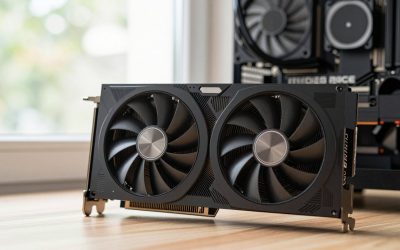
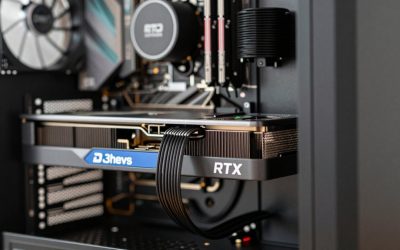
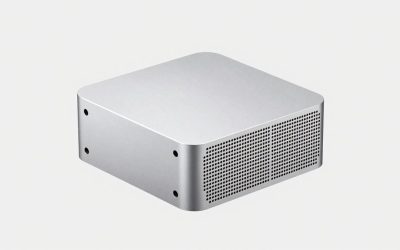
The Nvidia RTX A2000 is a low-profile, single-slot workstation GPU built on the Ampere architecture, the same generation as the GeForce RTX 30-series. It’s not a gaming card, even though it shares a lot of silicon DNA with one. Nvidia positions it for CAD, 3D rendering, video editing, and light AI/ML work on compact or power-limited systems — think small-form-factor workstations, SFF cases, or laptops where a full-size RTX 3060 won’t physically fit or won’t run on the available power budget.
It comes in a 6GB and a 12GB VRAM configuration (both GDDR6 with ECC support), plus a mobile variant found in workstation laptops. The desktop card draws around 70W and runs off slot power alone, no PCIe power connector needed. That’s the headline feature: real Ampere performance in a card that fits almost anywhere and doesn’t tax your PSU.
Performance, Realistically
Compute-wise, the A2000 sits roughly in RTX 3050 to low RTX 3060 territory, but clocked and power-limited for a 70W envelope, so expect noticeably less than a desktop 3060 in anything compute-bound. It has RT cores and Tensor cores, so ray tracing and DLSS-style AI acceleration work, but at this power level you’re not pushing high frame rates in demanding ray-traced games.
For professional workloads, that’s rarely the point. CAD viewport performance, Blender viewport and render acceleration via OptiX, DaVinci Resolve and Premiere GPU effects, and driver certification for applications like SolidWorks, AutoCAD, and Revit matter more than raw FPS. Nvidia’s Studio and Quadro/RTX-series drivers are validated against these apps in ways the consumer GeForce drivers aren’t, which is the real reason some professionals pay a premium for this card over a GeForce equivalent.
Who Should Actually Buy This
The A2000 makes sense for three groups:
CAD and 3D professionals running small-form-factor or compact workstations where a full-length dual-slot card won’t fit, and who need certified drivers for their software stack. If your firm has an IT policy requiring Nvidia RTX/Quadro-certified cards for liability or support reasons, this decides itself.
Video editors and motion graphics people on tight power or space budgets who want GPU-accelerated encode/decode and effects without a full-size card and extra PSU headroom.
Developers and researchers doing light local AI inference or CUDA development who need ECC memory and ample VRAM (the 12GB variant) in a low-power, quiet form factor, not training large models.
If you’re none of these, you probably shouldn’t be looking at this card. It’s priced like a professional product because it is one.
If You’re a Gamer, Keep Walking
I want to be blunt here because this is the single most common wrong turn people make with this card. The A2000’s price-to-gaming-performance ratio is bad. You pay a workstation premium (often $450-700+ depending on VRAM and market) for gaming performance a $200-250 GeForce card beats comfortably. There’s no gaming-specific driver optimization push behind it either, since Nvidia’s Game Ready driver branch targets GeForce, not the RTX A-series.
If you want a small, efficient card for a mini-ITX gaming build, look at a current-gen RTX 4060 graphics card instead. You’ll get better frame rates, DLSS 3 frame generation, and a proper gaming driver branch, usually for less money than an A2000. Many 4060 SFF variants exist specifically for small cases.
How It Stacks Up
| Card | VRAM | Power Draw | Best For | Street Price (approx.) |
|---|---|---|---|---|
| RTX A2000 (6GB) | 6GB GDDR6 ECC | ~70W, no PCIe connector | Compact CAD/3D workstations | $450-500 |
| RTX A2000 (12GB) | 12GB GDDR6 ECC | ~70W, no PCIe connector | Larger scenes/datasets, local AI inference | $600-700 |
| GeForce RTX 3060 | 12GB GDDR6 | ~170W, 1x 8-pin | Gaming, hobbyist rendering | $280-330 |
| GeForce RTX 4060 | 8GB GDDR6 | ~115W, 1x 8-pin | 1080p/1440p gaming, SFF builds | $290-320 |
Prices move around, so treat these as ballpark figures, not quotes. The real takeaway from this table is the gap between “GeForce” and “RTX A-series” isn’t really about raw speed, it’s about certification, ECC memory, and fitting in constrained enclosures.
Buying Tips
Check your case clearance and PCIe slot type before ordering. The A2000 is single-slot and low-profile, but confirm your motherboard has a free x16 slot that isn’t physically blocked by other cards or drive cages in a small case. Also verify your software vendor’s certified driver list if driver certification is the reason you’re buying this card at all, since that’s the entire value proposition over a cheaper GeForce part.
If you’re assembling a small workstation build and want a certified-driver card from Nvidia’s professional lineup more broadly, a search for Nvidia RTX A2000 graphics card will show current listings and both VRAM variants side by side, which is useful since pricing between the 6GB and 12GB models fluctuates.
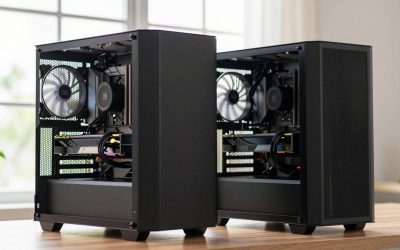
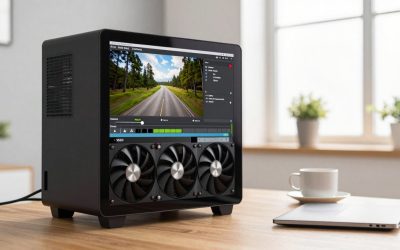
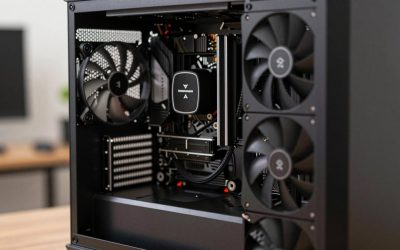
For a quiet, compact case to pair with a low-profile card like this, a decent mini ITX PC case with good airflow matters more than people expect, since small cases can trap heat even from a 70W card if the layout is cramped.
FAQ
Can the RTX A2000 play modern games?
Yes, but modestly. Expect roughly RTX 3050-class performance at best, fine for esports titles and older AAA games at 1080p, but you’ll be turning down settings in anything recent. It’s not what the card is designed or priced for.
Is the 12GB version worth the extra cost over the 6GB?
Only if you’re working with large CAD assemblies, high-poly 3D scenes, 4K/8K video timelines, or local AI models that need the extra headroom. If your workloads fit comfortably in 6GB today, the 12GB card is money spent on future-proofing you may not need.
Does the A2000 need a separate power connector?
No. It draws power entirely from the PCIe slot, under roughly 70W, which is why it works in systems with modest or small-form-factor power supplies that couldn’t run a higher-wattage gaming card.
Why is this card so much more expensive than a GeForce card with similar specs?
You’re paying for ECC memory, professional driver certification with CAD/3D/video software vendors, and support channels aimed at businesses. If you don’t need those things, that premium buys you nothing useful.