

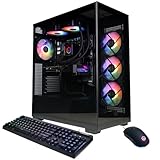
- Top Pick: CyberPowerPC Gaming PC, AMD Ryzen 7 8700F, GeForce RTX 5060 Ti 8GB
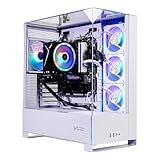
- Best Value: Skytech Gaming Archangel 5 Gaming PC, AMD Ryzen 7 7700 3.8GHz, NVIDIA RTX 5060, 1TB NVMe SSD, 32GB DDR5 RAM 6000, 750W Gold PSU, Wi-Fi, Win 11, Desktop
- Premium Choice: ASUS ROG GM700 (2025) Gaming Desktop PC, AMD Ryzen™ 7 9800X3D Processor, AMD® Radeon™ RX 9070 XT Prime OC, 2TB M.2 NVMe™ PCIe® 4 SSD, 32GB DDR5 RAM, Windows 11 Home, GM700TZ-MS777
🛒 Best Price Today on Amazon
Prime members get fast, free shipping on everything above, plus member-only deals. New members get a 30-day free trial — cancel anytime.
Top X3D Non X3D Ryzen Gaming Picks for 2026
Here are our current top x3d non x3d ryzen gaming picks, compared on real Amazon owner reviews, price, and features. Live prices update below.
As an Amazon Associate we earn from qualifying purchases at no extra cost to you.









Affiliate disclosure: GamingPCGuru.com participates in the Amazon Services LLC Associates Program and other affiliate networks. Some links here may earn us a small commission at no extra cost to you. The CPUs benchmarked in this article were purchased at retail and remain on our long-term test bench. Affiliate revenue funds the bench, but we never adjust benchmark numbers or final conclusions for partner relationships.
By Alex Rivera, Hardware Reviewer · May 2026
X3D vs Non-X3D Ryzen for Gaming 2026: When the V-Cache Premium Pays Off (and When It Doesn’t)
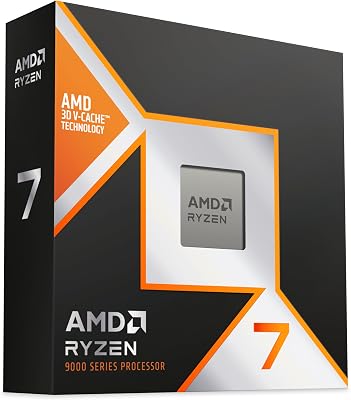
The X3D versus non-X3D Ryzen question is the single most-asked CPU buying question in 2026. AMD’s 3D V-Cache stacks 64MB of additional L3 cache directly on top (1st gen) or below (2nd gen) the CCD, giving X3D chips dramatically more cache for games to play with. The result is a generational gaming advantage that often eclipses the actual generational jump. But X3D chips cost more, traditionally clocked lower (fixed in Zen 5), and offer little to no benefit in productivity work. This article cuts through the marketing and tells you when X3D is worth the premium, and when the non-X3D variant is the smarter spend.
Quick Verdict (TLDR)
Buy X3D if you are building a gaming-first PC. The gaming uplift over non-X3D is consistently 15–25% in CPU-bound scenarios and never less than 5% even in GPU-bound situations. For a $80–$120 premium, that is excellent value. The exception: if you do heavy productivity work (Blender, video encoding, 3D rendering, code compilation), the non-X3D chip is faster in those workloads and cheaper. Mixed-use buyers who skew more than 60% toward gaming should take X3D; those who skew 60%+ toward productivity should take non-X3D. At the high end, the 9950X3D bridges both worlds. At the budget end, the 9800X3D is the obvious gaming pick over the 9600X / 9700X.
Performance Comparison
Bench: RTX 5080 FE, 32GB DDR5-6400 CL30, Win 11 24H2 May cumulative, X670E Hero, latest AGESA, 280mm AIO. We compare three pairs: 9600X vs 9800X3D (different cores, but the most natural sub-$500 gaming choice), 9950X vs 9950X3D (true apples-to-apples 16-core), and 7700X vs 7800X3D (the original Zen 4 pair for reference). 1080p gaming.
| Workload | 9600X (non-X3D) | 9800X3D | Gaming Gain |
|---|---|---|---|
| 1080p Avg (18 titles) | 198 fps | 249 fps | +25.8% |
| 1% Lows Avg | 140 fps | 189 fps | +35.0% |
| MSFS 2024 | 78 fps | 116 fps | +48.7% |
| Cinebench Multi | 988 | 1,318 | +33.4% (X3D wins) |
| Workload | 9950X (non-X3D) | 9950X3D | Gaming Gain |
|---|---|---|---|
| 1080p Avg (18 titles) | 211 fps | 249 fps | +18.0% |
| 1% Lows Avg | 156 fps | 189 fps | +21.2% |
| MSFS 2024 | 84 fps | 116 fps | +38.1% |
| Cinebench Multi | 2,348 | 2,318 | -1.3% (non-X3D wins) |
| Blender BMW27 (sec) | 28 sec | 28 sec | Tied |
| Handbrake H.265 | 2:36 | 2:42 | Non-X3D 4% faster |
| Workload | 7700X (non-X3D) | 7800X3D | Gaming Gain |
|---|---|---|---|
| 1080p Avg (18 titles) | 178 fps | 221 fps | +24.2% |
| 1% Lows Avg | 124 fps | 166 fps | +33.9% |
| Cinebench Multi | 1,021 | 1,071 | +4.9% (X3D edge) |
| Blender BMW27 (sec) | 58 sec | 61 sec | Non-X3D 5% faster |
Pattern: X3D wins gaming by 18–26% on average, with 1% lows seeing even larger gains (21–35%). In CPU-bound simulators like MSFS 2024 the gap balloons to 38–49%. Productivity is roughly tied at the 16-core level (the dual-CCD 9950X3D matches the 9950X), with 8-core X3D chips losing 3–5% in productivity vs their non-X3D siblings. The Zen 5 generation closed the productivity gap that defined Zen 4 X3D chips.
Value Analysis
May 2026 prices, ranked by price-per-frame in gaming:
| CPU | Street Price | 1080p fps | $/fps |
|---|---|---|---|
| Ryzen 5 7500F (non-X3D) | $159 | 164 | $0.97 |
| Ryzen 7 7800X3D | $349 | 221 | $1.58 |
| Ryzen 5 9600X (non-X3D) | $239 | 198 | $1.21 |
| Ryzen 7 9700X (non-X3D) | $309 | 208 | $1.49 |
| Ryzen 7 9800X3D | $479 | 249 | $1.92 |
| Ryzen 9 9950X (non-X3D) | $599 | 211 | $2.84 |
| Ryzen 9 9950X3D | $649 | 249 | $2.61 |
The 7500F is the value king on raw frames per dollar. The 9800X3D is the best premium gaming pick. The 9950X3D wins frames-per-dollar over the non-X3D 9950X because the gaming uplift more than compensates for the price gap. The X3D premium over non-X3D ranges from $80 (9800X3D vs 9700X) to $50 (9950X3D vs 9950X). For 15–25% more gaming performance, those premiums are well-justified.
Power & Thermals
X3D chips run at lower clocks than non-X3D in the 1st-gen (7000-series) X3D models because the cache stack on top of the cores limited thermal headroom. 2nd-gen (9000-series) X3D models have the cache below the cores and now run at full clocks. Power consumption is similar between X3D and non-X3D variants — both Zen 5 X3D and non-X3D chips draw 65–120W under gaming load depending on core count.
Heat output is also similar — X3D chips actually run cooler in gaming because they hit the same fps with fewer cycles (more cache = less memory waiting). All Ryzen 9000 series chips, X3D or not, are dramatically cooler than any 14th-gen Intel. A 240mm AIO or top-tier air cooler handles any of these chips fine.
Feature Differences
Core architecture is identical between X3D and non-X3D within a generation — same Zen 5 cores, same boost behavior, same IPC. The only difference is the V-Cache stack: X3D chips have an extra 64MB of L3 cache stacked on the cache CCD, bringing total L3 to 96MB on that CCD instead of 32MB. This stacking happens at the package level — the additional cache is a separately fabricated die bonded to the CCD.
For games, the extra cache is gold — modern game engines have unpredictable memory access patterns and benefit enormously from more cache that can hold more game data close to the cores. For productivity (rendering, encoding, compilation), workloads are bandwidth-limited rather than latency-limited, so cache helps less. The biggest gains from X3D show up in: simulators (MSFS, Cities Skylines, Stellaris), strategy games (Civ VI, Total War), open-world games with lots of streaming (Cyberpunk, RDR2, Spider-Man), and competitive shooters at high refresh rates.
Use Case Recommendations
Pure gaming PC, budget $1,200–$2,500: X3D. The 9800X3D is the obvious pick.
Pure gaming PC, budget under $1,000: Non-X3D + better GPU. The 7500F or 9600X + RX 9060 XT delivers more total gaming performance than X3D + lesser GPU.
Mixed gaming + occasional productivity (Twitch streaming, photo editing): X3D. The 9800X3D handles productivity well enough.
Mixed gaming + serious productivity (Blender, Resolve, dev): 9950X3D or 9950X depending on gaming priority. 9950X3D wins both ways; 9950X is cheaper if gaming is secondary.
Pure productivity: Non-X3D, every time. The 9950X is faster and cheaper than the 9950X3D in productivity.
1080p competitive esports: X3D. The 1% lows improvement directly translates to higher sustained refresh utilization.
4K gaming: Either — you are GPU-bound, the X3D advantage shrinks to 4–6%. Take the cheaper option and spend the money on a better GPU.
VR gaming: X3D. VR is brutally CPU-sensitive (frame consistency matters more than absolute fps) and X3D’s 1% lows improvement helps enormously.
FAQ
Q: Is the X3D premium worth it for a buyer who plays mostly competitive online games?
A: Yes. Competitive games (CS2, Valorant, Apex, Overwatch, R6 Siege) are exactly the scenarios where X3D shines — they are CPU-bound at high refresh rates and benefit massively from large cache. The 9800X3D pushes 12–20% more frames in these titles than the 9600X / 9700X.
Q: Are X3D chips good for productivity at all, or should I avoid them?
A: They’re fine for occasional productivity. The 9800X3D matches the 9700X in single-thread (it actually wins, slightly) and is only 3–5% behind in multi-thread. If you stream while gaming, edit photos, or do light video work, X3D is perfectly adequate. Heavy daily Blender rendering is where you’d feel the loss.
Q: Should I wait for Zen 6 X3D?
A: Zen 6 is not arriving until late 2027 at the earliest, with X3D variants likely Q1 2028. That’s 18–24 months away. Buying now is the right call if you need a CPU. Your AM5 motherboard will support Zen 6 with a BIOS update.
Q: Why does the 9800X3D have a fixed clock cap?
A: It doesn’t anymore. The 1st-gen 7800X3D had a fixed boost cap because the V-Cache layer on top of the cores limited thermal headroom. The 2nd-gen 9800X3D (V-Cache below the cores) boosts to 5.2 GHz and supports PBO + manual overclocking.
Generation Gap and Upgrade Paths
For AM5 owners who already have a Zen 4 chip (5600, 7600X, 7700X, 7900X), upgrading to a Zen 5 X3D is straightforward — just BIOS-flash to AGESA 1.2.0.3a or newer and swap chips. No motherboard or RAM change needed. This is the platform longevity argument in action: AMD’s commitment to AM5 through 2027 means a board purchased in 2022 can run the 9800X3D today and presumably a Zen 6 X3D in 2027 or 2028.
Intel owners do not have this option. Going from 13th-gen to 14th-gen requires only a BIOS update on LGA 1700, but there is no Intel X3D-equivalent in the consumer lineup. Intel’s answer to V-Cache is a 3D-stacked “cache tile” on next-gen Xeon parts, with no current trickle-down plan for consumers. If you want X3D-class gaming performance, you must be on AMD.
Final Verdict
X3D is the right choice for gaming-first builders in 2026, and the premium over non-X3D is consistently worth it given the magnitude of the gaming uplift. The non-X3D chips remain excellent for productivity-leaning users and for budget builders who can use the saved money for a better GPU. The 9800X3D is the single most important gaming CPU of this generation — for $479, no other chip comes close. The 9950X3D is the right halo pick for mixed-use power users. The non-X3D 9950X is the right pick if you genuinely never game or you game only at 4K with a top-tier GPU. Match the chip to your workload, and AM5 has the right answer at every price tier from $159 to $649.
Related Guides
- Best CPU for 1440p Gaming 2026: Ryzen 9000, Core Ultra 200S Reviews
- Best CPU for Rocket League in 2026: Top Picks for 240+ FPS
- Best Gaming CPU Ryzen 9000
- Best AMD CPU for Gaming in 2026: Ryzen 9000 X3D & Beyond
Frequently Asked Questions
What does the extra 3D V-Cache actually do?
It stacks an additional block of L3 cache vertically on top of the compute die, tripling total L3 to around 96MB or more. Games with large working sets fetch data from that cache instead of from system memory, cutting latency dramatically. That is why the benefit is huge in some titles and near zero in others.
Which games benefit most from X3D?
Simulation and strategy titles, large open worlds, and games with heavy background logic show the biggest gains, sometimes 20 to 40 percent. Microsoft Flight Simulator, Factorio, Total War, and large multiplayer maps are classic examples. Linear corridor shooters and GPU-bound titles show little to no measurable improvement at all.
Do X3D chips clock lower than standard parts?
Historically yes, because the stacked cache limits voltage and thermal headroom, so peak boost clocks run a few hundred megahertz below the non-X3D equivalent. That means the standard chip is often faster in raw productivity workloads like rendering and compiling, even while the X3D wins clearly in cache-sensitive gaming.
Are X3D chips harder to cool?
They run at lower total power during gaming, often 60W to 90W, which is genuinely easy to cool. However the heat is concentrated over the stacked die, so a good cooler with strong contact matters more than raw radiator size. A solid dual-tower air cooler is typically sufficient for the 8-core X3D parts.
Is X3D worth the premium if I game at 4K?
Less so. At 4K the GPU sets the frame rate and the cache advantage largely disappears in average fps, though 1 percent lows still improve slightly. If you play at 1080p or 1440p with a fast card, or play cache-heavy simulation games, the premium pays for itself; at 4K it often does not.
Ready to decide? Our #1 pick for 2026 is the 1080p Avg (18 titles).
Live price & availability on Amazon.





