The power supply is the least glamorous part of a gaming PC and the one people are most tempted to cheap out on, which is exactly why it deserves careful attention. A quality PSU delivers clean, stable power to every other component, protects your expensive GPU and CPU from voltage spikes, and keeps running quietly for a decade. A weak or poorly built one can crash your system under load, or in the worst case, take other parts down with it.
This guide explains how to size a power supply correctly, what the efficiency ratings actually mean, and which modern connectors your build needs in 2026. You will learn how to calculate the wattage that matches your hardware, how much headroom to leave for upgrades, and how to spot a unit worth trusting. The models below span budget to enthusiast tiers and give you real reference points for each recommendation.
As an Amazon Associate we earn from qualifying purchases.




How Much Wattage Do You Actually Need?
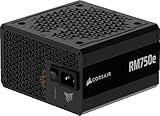
Add up the peak draw of your GPU and CPU, then add roughly 150 watts for everything else, and you have a rough baseline. The graphics card dominates this math: a mainstream card is happy on a quality 650 to 750W unit like the CORSAIR RM750e, while a high-end card benefits from 850W or more, which is where the MSI MAG A850GL fits neatly. Always aim to run your PSU at 50 to 70 percent of its rating under load, because that is where most units are quietest and most efficient. Buying too small forces the unit to run hot and stressed; buying wildly oversized just wastes money.
Understanding 80+ Efficiency Ratings
The 80+ badge tells you how much wall power actually reaches your components versus how much is lost as heat. Higher tiers waste less energy and usually indicate better internal components.
- 80+ Bronze: Fine for budget builds; entry units like the ARESGAME AGV 500W sit here.
- 80+ Gold: The sweet spot for gaming, balancing efficiency, quiet operation, and price.
- 80+ Platinum: Marginally more efficient and often quieter, seen on premium units like the ASUS ROG Strix 1000W Platinum.
ATX 3.1 and the 12V-2×6 Connector
Modern graphics cards draw power through a single high-density connector, and in 2026 you want a PSU built to the ATX 3.1 and PCIe 5.1 standards with a native 12V-2×6 cable. This newer connector design addresses the overheating concerns of earlier revisions and handles the transient power spikes that GPUs produce during demanding scenes. Units like the be quiet! Pure Power 13 M and the CORSAIR RM850e ship with this cable natively, so you avoid clunky adapters and get a cleaner, safer connection to your card.
Modular vs Non-Modular Cabling
Fully modular power supplies let you connect only the cables your build uses, which dramatically improves airflow and makes cable management far easier. Semi-modular units hardwire the essentials and let you add the rest, while non-modular units include every cable permanently attached. For most gaming builds a fully modular unit such as the MSI MAG A750GL is worth the small premium, especially in a compact case where extra cables have nowhere to hide.
Reliability, Warranty, and Protections
A power supply is a long-term investment, so look for a long warranty as a proxy for the manufacturer’s confidence. Ten-year coverage, like that offered on the ASUS TUF Gaming 1000W Gold, signals durable internal components. Also confirm the unit lists the core protection features, over-voltage, over-current, over-temperature, and short-circuit protection, since these are what stand between a fault and a dead build. Never trust the wattage printed on a no-name unit that lacks both a recognized efficiency rating and these safeguards.
Tips
- Buy roughly 150 to 200 watts more than your current build needs so a future GPU upgrade does not require a new PSU.
- Prefer a native 12V-2×6 cable over an included adapter for the cleanest connection to modern GPUs.
- Treat a 10-year warranty as a signal of quality, not just a safety net.
- Route the 24-pin and PCIe cables first during your build, since they are the thickest and hardest to hide later.
Frequently Asked Questions
Can a power supply be too powerful for my PC?
Not in any harmful way. A higher-wattage unit simply runs at a lower load percentage and draws only what your components need. The only downsides are cost and, on very oversized units, slightly less efficiency at idle.
Do I need ATX 3.1 or is an older PSU fine?
An older ATX 3.0 unit still works with an adapter, but a native ATX 3.1 supply with a 12V-2×6 cable is the safer, cleaner choice for current graphics cards and is what we recommend for any new 2026 build.
Is 850W enough for a high-end gaming PC?
For a single high-end GPU and a modern CPU, 850W is comfortable and leaves useful headroom. Step up to 1000W only if you run the most power-hungry cards or plan aggressive overclocking.
What does 80+ Gold actually save me?
Gold-rated units convert around 90 percent of wall power into usable output at typical loads, wasting less as heat than Bronze. The practical benefits are a cooler, quieter system and modestly lower electricity use over the unit’s life.
Conclusion
Choosing a power supply comes down to three questions: how many watts your hardware needs, how efficient and well-protected the unit is, and whether it has the modern connector your GPU requires. Size for your components with a bit of upgrade headroom, insist on at least an 80+ Gold rating and a native 12V-2×6 cable, and favor units backed by a long warranty. Get those right and the PSU becomes the one part you never have to think about again.