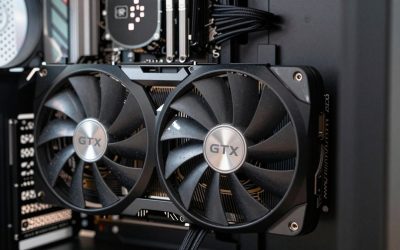
- Top Pick: ASUS Prime GeForce RTX 5070 12GB GDDR7 OC Edition Gaming Graphics Card find alternatives
- Best Value: ASUS Dual GeForce RTX 4070 OC Edition 12GB GDDR6X, IP5X, Auto-Extreme Technology, 144-Hour Validation Program, HDMI 2.1a, DP 1.4a, 3 Year Warranty
- Premium Choice: ASUS Dual GeForce RTX 5060 Ti 16GB GDDR7 OC Edition Gaming Graphics Card
Until Dawn arrived on PC on October 4, 2024 — a rebuilt and enhanced version of the slasher horror adventure that invites you to relive the nightmare, where every decision can mean the difference between life and death. Despite the modern coat of paint, it is not a particularly demanding PC game. The official minimum asks for a GTX 1660-class card and an older quad-core with AVX support, while the recommended tier tops out at an RTX 2060 / RX 6600 XT with 16GB of RAM. Because it is a story-driven, mostly linear horror game rather than an open world or a simulation, it is kind to older hardware — but it does ask for 70GB of space on an SSD, and a modern mid-range GPU gives you the headroom to push resolution and optional ray-traced effects.
As an Amazon Associate we earn from qualifying purchases at no extra cost to you.


Until Dawn Official PC System Requirements
| Component | Minimum (official) | Recommended (official) |
|---|---|---|
| OS | Windows 10, 11 | Windows 10, 11 |
| Processor | Intel Core i7 4790K / AMD Ryzen 5 1500x (or similar processor with AVX support) | Intel Core i5 8600 / AMD Ryzen 7 2700X |
| Memory | 8 GB RAM | 16 GB RAM |
| Graphics | NVIDIA GeForce GTX 1660 / Radeon RX 470 (or equivalent card with minimum 6GB VRAM) | NVIDIA GeForce RTX 2060 / AMD Radeon RX 6600XT |
| DirectX | Version 12 | Version 12 |
| Storage | 70 GB available space | 70 GB available space |
Source: the official Until Dawn™ Steam store listing (app 2172010), checked October 2026. Publishers can update these specs after patches.
Two details in the official lists are easy to miss. The minimum processor must support AVX, which rules out pre-2011-era CPUs, and the minimum graphics tier calls for a card with at least 6GB of VRAM, such as the GeForce GTX 1660 or Radeon RX 470. Both tiers require DirectX 12, Windows 10 or 11, and 70GB of space on an SSD — a hard drive is not a supported install target, and the notes repeat the SSD requirement for a reason.
The recommended tier — Core i5-8600 or Ryzen 7 2700X, 16GB of RAM, GeForce RTX 2060 or Radeon RX 6600 XT — is the point where the game has enough headroom to raise settings, move up in resolution, or switch on the optional ray-traced effects. Anything newer than those parts gives you more room to play with.
How Demanding Is Until Dawn Really?
Until Dawn is a scene-based, largely linear horror adventure, not an open world and not a simulation. Environments are detailed but confined, there are no crowds of NPCs, no large-scale physics simulation, and no heavy streaming of a big map. That keeps CPU load light and makes performance fairly predictable from scene to scene.
The load sits mainly on the GPU: character models, cinematic lighting, shadows, fog, and depth-of-field effects during dialogue close-ups and exploration. The PC rebuild adds modern rendering features on top of the original PS4 presentation, including optional ray-traced effects, and those extras are what push the official minimum up to a 6GB VRAM card. Turn them off and the game scales down toward older hardware quite gracefully.
For most players the practical bottlenecks are storage and memory rather than raw GPU power: the game wants an SSD, and 8GB of RAM is listed only as the minimum. If you meet the recommended tier and install to an SSD, Until Dawn is a comfortable experience rather than a punishing one.
Best GPU Choices by Resolution
Until Dawn does not publish official resolution targets, so the tiers below are guidance rather than requirements — they scale up from the official minimum and recommended cards. Higher tiers simply give you more headroom for higher settings, higher resolutions, and optional ray tracing.
1080p (Full HD) – The Sweet Spot
The official recommended card, the GeForce RTX 2060 or Radeon RX 6600 XT, is a sensible 1080p target and sits comfortably above the GTX 1660 / RX 470 minimum. If you are buying today, anything at or above that level works well: RTX 3060, RTX 4060, RTX 5060, Radeon RX 6600, RX 7600, or Intel Arc A750. All of them carry at least 8GB of VRAM, which is more than the 6GB the official minimum asks for and leaves room for higher texture settings.
The minimum card is not useless at 1080p — a GTX 1660 or RX 470-class GPU can still run the game if you drop settings and use upscaling, but expect to make visible compromises. There is no reason to buy anything faster than a current mid-range card for 1080p unless you also want ray tracing enabled.
1440p (QHD) – Recommended for a Sharper Image
1440p is where the extra pixel count starts to matter. Cards a step or two above the official recommended tier handle it comfortably: RTX 3060 Ti, RTX 4060 Ti, RTX 5060 Ti, RTX 4070, Radeon RX 6700 XT, RX 7700 XT, or RX 9060 XT. These all have enough VRAM for high textures and enough shading power to keep the game smooth at 1440p without leaning hard on upscaling.
If you want the optional ray-traced reflections and ambient occlusion switched on at 1440p, aim higher — RTX 5070, Radeon RX 9070 class hardware — and plan to use DLSS or FSR on a quality mode. Ray tracing is an extra, not part of the official requirement, so dropping it is always a valid way to stay on a mid-range card.
4K (Ultra HD) – Possible, With the Right Card
4K is not out of reach for this game the way it is for the heaviest open-world releases, but it is where the official specs stop being a useful guide. You want a card well above the recommended tier: RTX 4070 Super, RTX 5070, Radeon RX 7800 XT, or RX 9070 class, with DLSS or FSR enabled to keep the experience smooth. Without upscaling, expect to reduce settings on anything below the upper mid-range.
VRAM matters most at 4K. The official minimum of 6GB is fine for lower resolutions, but at 4K with high textures a 12GB or 16GB card is the safer choice, and it also keeps ray-traced effects viable. If your card has 8GB, 1440p will be a better fit than 4K.
CPU, RAM and Storage Notes for Until Dawn
CPU
Until Dawn is not CPU-bound. The official minimum is an Intel Core i7-4790K or AMD Ryzen 5 1500X — old quad-core and first-generation Ryzen parts — and the recommended is a Core i5-8600 or Ryzen 7 2700X, which tells you the game is not asking for much from the processor. Any modern six-core chip, such as a Ryzen 5 5600, Ryzen 5 7600, or Core i5-12400F, is more than enough and will not hold back a mid-range GPU.
The one hard requirement is AVX support, which the official minimum calls out explicitly. Very old processors without AVX — early Core 2 and pre-Bulldozer AMD chips — will not run the game at all, regardless of their clock speed. If your CPU meets that bar and is roughly at the minimum tier, expect it to work, though a modern chip will give you smoother frame pacing during scene transitions and quick-time events.
RAM
8GB is the official minimum and 16GB is the official recommendation. In practice 16GB is the number to aim for: it covers Windows background tasks, the game itself, and the browser or chat client most people leave open. 8GB will run the game, but it leaves very little margin and can contribute to hitches when a new chapter loads. There is no benefit to going beyond 32GB for this title, and 16GB in dual-channel is the sweet spot.
Storage
An SSD is effectively mandatory — the official notes list 70GB of storage on an SSD for both the minimum and recommended tiers. On a mechanical drive you should expect long chapter loads and asset streaming stutter, which is exactly the kind of interruption a cinematic horror game suffers from most. Any SATA SSD is enough; a modern NVMe drive such as a WD Black SN770 or Samsung 970 EVO Plus will cut load times further, but there is no DirectStorage requirement here, so a top-end PCIe 4.0 or 5.0 drive is not necessary.
Example PC Builds for Until Dawn
Both builds below sit above the official recommended specification, so they leave room for higher settings, higher resolutions, and optional ray tracing.
Budget 1080p Build
Aimed at 1080p with high settings and ray tracing off. This is the most cost-effective way to play, and it comfortably clears the official recommended GPU tier.
- CPU: Intel Core i5-12400F / AMD Ryzen 5 5600
- GPU: NVIDIA RTX 5060 8GB / AMD RX 7600 8GB / Intel Arc A750
- RAM: 16GB (2x8GB) DDR4 3200
- Storage: 1TB NVMe SSD
This class of system handles Until Dawn without drama and leaves enough performance in reserve for other recent story-driven games at 1080p. You should only need FSR or DLSS if you decide to enable ray tracing.
Balanced 1440p Build
Aimed at 1440p with high settings, and with enough headroom to turn ray-traced effects on while using upscaling.
- CPU: AMD Ryzen 5 7600 / Intel Core i5-14400F
- GPU: NVIDIA RTX 5070 / RTX 4070 Super / AMD RX 9070 / RX 7800 XT
- RAM: 16GB or 32GB (2x16GB) DDR5 5600-6000
- Storage: 1TB-2TB NVMe SSD
This is the sweet spot if you play on a 1440p monitor. You get headroom for higher settings, stable frame pacing during cinematics, and the ability to keep ray-traced reflections enabled alongside DLSS or FSR.
Laptop and Handheld Suitability
Gaming Laptops
The game’s modest CPU demands make it a good fit for laptops. A machine with an RTX 3060 Laptop, RTX 4060 Laptop, RX 7600M XT, or newer will run Until Dawn comfortably at 1080p with high settings, which is well beyond the official recommended desktop GPU tier. For a 1440p laptop panel, an RTX 4070 Laptop class GPU is the sensible target. Make sure the laptop has 16GB of RAM and that the game is installed on the internal SSD — a laptop with 8GB of memory is the most common reason for stutter here. If your laptop has a MUX switch, use the discrete GPU mode to avoid losing performance to integrated graphics.
Steam Deck, ROG Ally and Other Handhelds
Until Dawn is a modern, lighting-heavy title, so handhelds need compromise. On a Steam Deck, check the current compatibility rating before buying and expect to run low settings with upscaling enabled and a frame-rate cap for stability; the 70GB install also takes a meaningful bite out of the internal drive, so a microSD card is worth considering for storage rather than for performance.
On more powerful Windows handhelds such as the ROG Ally, Ally X, or Legion Go, you have more GPU headroom than a Steam Deck, so you can raise resolution and settings further. In all cases, capping the frame rate to a steady 30 or 40 fps, enabling FSR, and using the device’s higher TDP performance profile will give a much more consistent experience than chasing an uncapped frame rate — especially since the game is installed on the device’s SSD and streamed from it constantly.
Settings That Raise FPS the Most
Until Dawn does not have dozens of performance-heavy sliders, but a few settings have an outsized impact. These are the ones to adjust first if you need more performance:
- Ray-traced effects: If your GPU supports them, ray-traced reflections and ambient occlusion are the most expensive optional features in the game. Turning them off is the single biggest lever available, and the visual difference is mostly limited to wet surfaces and reflective interiors. Leave them off unless you are above the recommended tier and using upscaling.
- Shadow quality: Shadows are costly in the flashlight and cabin sequences where many light sources overlap. Dropping shadow quality a step or two is one of the better trade-offs, since the game’s heavy fog and darkness hide a lot of the difference during normal play.
- Effects, fog and post-processing: These control volumetric fog, depth of field, and motion blur. Lowering them helps most in forest and snowstorm scenes, and it also tends to make the image slightly clearer during fast camera movement.
- Upscaling (DLSS / FSR): Not a quality setting, but the most effective performance tool in the game. At 1440p and 4K, a quality mode gives a large uplift for a small loss of sharpness. At 1080p, stick to quality mode — the more aggressive modes can look soft on character faces, which is noticeable in a game built around close-ups.
If you are just short of smooth performance, work in this order: turn ray tracing off, drop shadows a step, keep textures high as long as you have at least 6GB of VRAM, and enable DLSS or FSR on quality. Texture quality has very little performance cost when you have the VRAM for it, so it should be the last thing you lower.
FAQ
Do I need a powerful PC for Until Dawn?
No. The official minimum is a GTX 1660-class card with 6GB of VRAM and an older quad-core with AVX support, and the recommended tier is an RTX 2060 or RX 6600 XT with 16GB of RAM. A mid-range PC from the last few years is more than enough.
Is an SSD required?
Yes. The official notes list 70GB of storage on an SSD for both the minimum and recommended specifications. Running the game from a mechanical hard drive causes long chapter loads and asset streaming stutter. Any SATA or NVMe SSD with 70GB free will do.
Can I play with 8GB of RAM?
It is the official minimum, so it should run, but 16GB is the recommended figure and the better target. With 8GB there is very little margin once Windows and background applications are accounted for, which is where hitching during chapter transitions tends to come from.
Does Until Dawn support DLSS and FSR?
The PC version includes upscaling support along with optional ray-traced effects. Upscaling is the most effective way to gain performance at 1440p and 4K without a major visual downgrade, and it is what makes ray tracing practical on mid-range hardware.