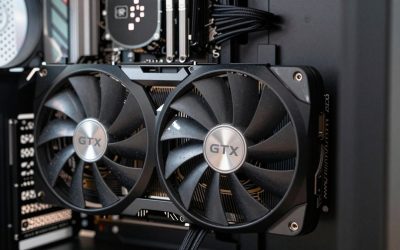
- Top Pick: GIGABYTE GeForce RTX 3050 WINDFORCE OC V2 6G Graphics Card, 2X WINDFORCE Fans, 6GB GDDR6 96-bit GDDR6, GV-N3050WF2OCV2-6GD Graphics Card
- Best Value: GIGABYTE GeForce RTX 5080 Gaming OC 16G Graphics Card, WINDFORCE Cooling System, 16GB 256-bit GDDR7, GV-N5080GAMING OC-16GD Video Card
- Premium Choice: msi Gaming GeForce RTX 3060 Ventus 2X 12G OC V1 Graphics Card – 15 Gbps GDRR6 Boost Clock: 1807 MHz 192-Bit HDMI/DP PCIe 4 Torx Twin Fan Ampere
Tom Clancy’s Rainbow Six Siege is not a demanding PC game. Released on December 1, 2015, and now free to play, it is an elite, tactical team-based shooter where superior planning and execution triumph — and its engine has spent a decade being tuned to run at high frame rates on modest hardware. Any modern budget gaming PC with a dedicated GPU from the last several years and a modern quad-core CPU can run it comfortably at 1080p, and a current mid-range system has more than enough headroom for high-refresh competitive play. You do not need a high-end GPU or a high-core-count CPU to get an excellent experience.
- Tom Clancy’s Rainbow Six Siege Official PC System Requirements
- How Demanding Is Rainbow Six Siege in Practice?
- Best GPU for Rainbow Six Siege by Resolution
- CPU, RAM and Storage: What Actually Matters for Siege
- Example PC Builds for Rainbow Six Siege
- Laptop and Handheld Gaming: Can You Play Siege on the Go?
- Settings That Raise FPS the Most in Rainbow Six Siege
- Frequently Asked Questions
The official requirements back that up. Ubisoft asks for nothing more exotic than a Ryzen 3 3100 or Core i3-8100 and a GTX 1650-class card at minimum, and only steps up to a Ryzen 5 3600 or Core i5-10400 with an RTX 2060 or RX 6600 at recommended. This guide walks through those official specs, what they mean in practice, which GPUs make sense at 1080p, 1440p and 4K, and how to set the game up for competitive frame rates.
As an Amazon Associate we earn from qualifying purchases at no extra cost to you.


Tom Clancy’s Rainbow Six Siege Official PC System Requirements
The figures below are the official requirements published for the game — the same list that appears on its Steam store page. Both tiers call for a 64-bit version of Windows, DirectX 12, a broadband internet connection and 65 GB of available storage space.
| Component | Minimum (official) | Recommended (official) |
|---|---|---|
| OS | Windows 10, Windows 11 (64-bit versions) | Windows 11 (64-bit versions) |
| Processor | AMD Ryzen 3 3100 / Intel i3-8100 | AMD Ryzen5 3600 / Intel i5-10400 |
| Memory | 8 GB RAM | 8 GB RAM |
| Graphics | Nvidia GTX 1650 4GB / AMD RX 5500XT 4GB / Intel ARC A380 6GB | NVIDIA RTX 2060 6GB / AMD RX 6600 8GB |
| DirectX | Version 12 | Version 12 |
| Storage | 65 GB available space | 65 GB available space |
Source: the official Tom Clancy's Rainbow Six Siege Steam store listing (app 359550), checked October 2026. Publishers can update these specs after patches.
Two things stand out about that list. First, the memory requirement is identical on both tiers: 8 GB of RAM is all the game asks for, whether you are at minimum or recommended. That is unusually modest and tells you a lot about the game’s footprint. Second, the hardware floors are modern but inexpensive — a Ryzen 3 3100 or Core i3-8100 paired with a GTX 1650, RX 5500 XT or Arc A380 clears the minimum, and the recommended tier only steps up to a Ryzen 5 3600 / Core i5-10400 and an RTX 2060 or RX 6600.
There is no 4K tier, no 32 GB memory tier and no flagship GPU anywhere in the official list, because the game does not need one. Note also that the operating system floor is Windows 10 or Windows 11 in 64-bit form, and the recommended OS is Windows 11 64-bit.
Two smaller details are worth flagging. Siege ships with BattlEye anti-cheat technology, and the official notes direct you to Ubisoft’s support FAQ for the current list of supported chipsets — worth a look if you are running an unusual or very new CPU. A DirectX 9.0c compatible sound card with the latest drivers is listed as well, with the recommended tier specifying 5.1 output.
How Demanding Is Rainbow Six Siege in Practice?
Rainbow Six Siege runs on Ubisoft’s AnvilNext engine, but not the open-world version of it used by the Assassin’s Creed games. Matches take place on small, self-contained indoor maps with a fixed player count and no world streaming, so there is no large open environment to load, simulate or keep resident in memory. That keeps the load light on both the CPU and the GPU compared with contemporary AAA shooters.
The engine’s age helps too. A decade of optimisation work, a move to modern graphics APIs and a deliberately low baseline of geometry and effects mean the game is friendly to older and entry-level hardware. The real demands are ordinary GPU shading and the CPU work of handling draw calls during heavy destruction and gadget use — not physics simulation, not world streaming, not large-scale AI.
What does scale is resolution and refresh rate. Because Siege is a competitive shooter, most players are chasing a high-refresh monitor rather than maximum visual fidelity, and the game responds well to that goal: the frame rates that 144 Hz and 240 Hz displays need are within reach of mid-range hardware, provided the CPU can keep up. At very high frame rates the game becomes lightly CPU-bound, which is why single-core speed and memory latency matter more than core count. It is not a CPU-heavy title in the way a large-scale strategy or simulation game is.
The one thing that does push requirements up is resolution. 4K output costs meaningfully more GPU time than 1080p, but even then the official recommended card — an RTX 2060 — is a modest part, so a modern mid-range GPU has no trouble. There is also no obligation to run the game at maximum settings: Siege’s visual style is clean and readable even at reduced quality, which is exactly why competitive players tend to lower effects rather than buy faster hardware.
Best GPU for Rainbow Six Siege by Resolution
The tiers below are anchored to the official minimum and recommended GPUs, so everything listed meets or exceeds what the game asks for. Cards are grouped by the resolution and refresh rate they suit rather than by price, and current-generation options are named alongside the older cards that still satisfy the official spec.
1080p – The Competitive Sweet Spot
1080p is where the vast majority of Siege players stay, and it is the resolution the official requirements are written around. You do not need much GPU power here.
- Meets the official minimum: GeForce GTX 1650 4GB, Radeon RX 5500 XT 4GB and Intel Arc A380 6GB are the exact cards Ubisoft lists, and they are enough to play at 1080p with settings turned down. Older cards that clear the same bar in practice include the GeForce GTX 1060 6GB and the Radeon RX 570 4GB.
- Meets the official recommended: GeForce RTX 2060 6GB and Radeon RX 6600 8GB are the recommended tier and a comfortable fit for 1080p at higher settings. The RTX 3050 6GB, RTX 3060 12GB and RX 6600 XT sit in the same class.
- Ideal for high-refresh 1080p: A current-generation mid-range card such as the GeForce RTX 5060, Radeon RX 9060 XT or Intel Arc B580 — or the previous-generation RTX 4060 and RX 7600 — will keep the GPU out of the way on a 144 Hz or 240 Hz 1080p monitor.
- Overkill: Anything above an RTX 5070 or RX 9070 class card will mostly be waiting on the CPU at 1080p in Siege, and is only worth buying if you play more demanding games as well.
1440p – For Sharper Visuals Without Losing High Refresh
Siege scales well to 1440p, and the extra clarity genuinely helps with long-angle holds and spotting movement at distance. The performance cost over 1080p is modest because the game is not shader-heavy.
- Entry 1440p: GeForce RTX 5060 / RTX 4060 or Radeon RX 9060 XT 8GB / RX 7600 XT. These sit comfortably above the official recommended spec and handle 1440p at high settings.
- Great choice for 1440p high refresh: GeForce RTX 5070, Radeon RX 9070, or the previous-generation RTX 4070 / RTX 4070 Super and Radeon RX 7800 XT. This class keeps the GPU from being the limiting factor even during heavy destruction.
For a 1440p 144 Hz or 165 Hz display, a card in the RTX 5070 / RX 9070 class is the sensible sweet spot — and an RTX 5060 or RX 9060 XT will still do the job if you are willing to drop a setting or two.
4K – Achievable, But Rarely Necessary
4K is reachable in Siege because the engine is light and the official recommended GPU is only an RTX 2060. That said, competitive players rarely play at 4K, and it is only worth targeting if you want the resolution for other games too.
- Comfortable 4K: GeForce RTX 5070, Radeon RX 9070, or the previous-generation RTX 4070 Super and Radeon RX 7800 XT. All of these sit far above the official recommended spec.
- 4K with headroom to spare: GeForce RTX 5070 Ti, RTX 5080 and Radeon RX 9070 XT. These are well beyond what Siege alone requires, and would only make sense alongside more demanding titles.
Unless you are chasing a very high refresh rate at 4K, there is little reason to buy a top-tier GPU just for Siege. A card from the recommended tier, or one step above it, is plenty for the game itself.
CPU, RAM and Storage: What Actually Matters for Siege
CPU
Siege is a lightly threaded game. It runs well on four to six cores, and the official requirements reflect that: a Ryzen 3 3100 or Core i3-8100 at minimum, and a Ryzen 5 3600 or Core i5-10400 at recommended. You do not need a Core i7/i9 or a Ryzen 9 for this game, and core counts beyond six bring diminishing returns.
What matters is single-core performance and memory latency, because those set the ceiling once you are chasing very high frame rates. A modern budget six-core such as a Core i5-12400F / i5-13400F or a Ryzen 5 5600 / Ryzen 5 7600 is more than enough. If you are aiming at a high-refresh monitor and want frame times to stay flat during explosions and breaching charges, a chip with strong per-core speed — including AMD’s X3D parts — helps keep the low points stable. Moving up from an older quad-core to a current six-core makes the experience more consistent, but beyond that the game is not asking for much.
To be clear: this is not a CPU-heavy title. It is a small-map competitive shooter, not a large-scale simulation or strategy game, so the processor is rarely the reason a mid-range system struggles.
RAM
The official requirement is 8 GB of RAM on both the minimum and recommended tiers. 8 GB will run Siege, but 16 GB is the practical choice if you keep a browser, Discord and the Ubisoft launcher open at the same time — those background applications, not the game, are what push an 8 GB system into trouble.
Configuration matters more than raw speed. Running two matched sticks in dual-channel gives the CPU noticeably better memory bandwidth than a single stick, and that shows up most at high frame rates. DDR4-3200 or DDR5-5600 kits are plenty; there is no need for 32 GB unless you multitask heavily or play other modern titles alongside Siege.
Storage
Siege needs 65 GB of free space according to the official listing, and that is the number to plan around — leave some headroom for patches and seasonal updates. Storage speed does not change in-match frame rates, but it does change how long you wait. On a mechanical hard drive, map loading is slow enough that you can be the last player in; on a SATA SSD it drops substantially, and an NVMe SSD is quicker still. An SSD is the single most noticeable quality-of-life upgrade for this game, and any 500 GB or 1 TB SATA or NVMe drive will do.
Example PC Builds for Rainbow Six Siege
These builds are organised by the resolution and refresh rate they target, and every one of them clears the official recommended specification. Specific pricing is not listed because it swings heavily by region and over time — the parts themselves are the point.
Budget Build – Competitive 1080p
- CPU: AMD Ryzen 5 3600 / Ryzen 5 5600 or Intel Core i3-12100F / Core i5-12400F
- GPU: AMD Radeon RX 6600 8GB or NVIDIA GeForce RTX 2060 6GB / RTX 3050 6GB / RTX 4060
- RAM: 16GB (2x8GB) DDR4 3200
- Storage: 1TB NVMe SSD
- What to expect: A system that meets or beats the official recommended spec at every point, with enough GPU headroom for a 1080p high-refresh monitor. This is the tier to aim for if Siege is your main game.
Mid-Range Build – 1440p High Refresh and 4K
- CPU: AMD Ryzen 5 7600 or Intel Core i5-13400F / Core i5-14400F
- GPU: NVIDIA GeForce RTX 5060 / RTX 5070 or AMD Radeon RX 9060 XT / RX 9070
- RAM: 16GB (2x8GB) DDR5, or 32GB if you also play more demanding titles
- Storage: 1TB NVMe SSD
- What to expect: Well beyond the official recommended spec, comfortable at 1440p on a high-refresh display and capable at 4K. The CPU is fast enough to keep frame times steady once the GPU has headroom to spare.
Spending more than this mid-range tier is not necessary for Siege alone, but it can make sense if you also play more demanding shooters and AAA releases. Equally, dropping to the official minimum specification is a perfectly valid way to play — you simply accept lower settings and a lower resolution.
Laptop and Handheld Gaming: Can You Play Siege on the Go?
Siege runs well on gaming laptops, because the laptop equivalents of the recommended desktop GPUs are comfortably capable at 1080p. Any laptop with a dedicated GPU in the RTX 3050 / RTX 4050 / RTX 4060 Laptop class, or a comparable Radeon part, will handle the game at 1080p with high settings. The bigger constraint in a laptop is usually cooling and sustained CPU clocks rather than the GPU, so a machine with a 45W-class Core i5/i7 or Ryzen 5/7 and a decent cooling system will hold up better over a long session than a thin chassis with a faster chip that throttles.
Handhelds are a mixed bag. Siege uses BattlEye anti-cheat, and the game is not officially supported on Steam Deck, so it will not run in SteamOS without workarounds that are not reliable for online play. Windows-based handhelds such as the ROG Ally, Ally X or Legion Go can run the game, but you will be lowering resolution and settings to keep frame rates smooth, and a seven-inch screen with thumbsticks is a poor fit for a tactical shooter where audio cues and precise aim matter. For ranked play, a desktop or laptop with a mouse, keyboard and high-refresh monitor remains the better choice.
Settings That Raise FPS the Most in Rainbow Six Siege
Siege’s settings menu is not enormous, and most of the available performance sits in a handful of options. The goal for competitive play is not maximum visual quality but clarity: you want to spot enemies quickly while keeping frame rates high and frame times flat.
- Resolution scale: Keep it at 100% if you can. Lowering it is one of the largest single performance gains available, but it blurs the image and makes distant enemies harder to identify — treat it as a last resort rather than a default.
- Anti-aliasing: Temporal anti-aliasing smooths edges but softens the image and costs a little performance. If you are chasing frame rate, a lighter AA setting or turning it off entirely is a reasonable trade; if you prefer a cleaner image, keep it on.
- Shadows and shading quality: These are among the most expensive settings in the game and have limited competitive value. Dropping them a tier or two frees up a noticeable amount of performance on entry-level and mid-range GPUs.
- Reflections and ambient occlusion: Both cost performance for very little gameplay benefit, and both are easy to reduce or disable.
- Motion blur, depth of field and lens effects: Turn these off. They cost performance and actively hurt clarity in a competitive shooter.
- Texture quality: Textures have little impact on frame rate as long as you have enough VRAM. The official minimum cards ship with 4-6 GB, which is enough to keep textures high; only drop to a lower setting on a card with very little VRAM.
A sensible competitive approach is to keep textures high, drop shadows, shading, reflections and ambient occlusion, and disable motion blur, depth of field and lens effects. That combination keeps the image readable while leaving the GPU free to push frame rates. If you are on a card near the official minimum, the same logic applies — just be prepared to lower resolution scale as well.
Frequently Asked Questions
Do you need a good PC for Rainbow Six Siege?
No. The official recommended specification is a Ryzen 5 3600 or Core i5-10400 with an RTX 2060 or RX 6600 and 8 GB of RAM, which is a modest mid-range system by current standards. A budget gaming PC built around the official minimum — a Ryzen 3 3100 or Core i3-8100 with a GTX 1650, RX 5500 XT or Arc A380 — will run the game at 1080p, and 16 GB of RAM makes it more comfortable for multitasking.
Is Rainbow Six Siege CPU or GPU heavy?
Neither, really. It is a small-map competitive shooter rather than a large-scale simulation, so it does not lean hard on the processor. At ordinary frame rates the GPU sets your performance; once you push toward very high refresh rates, single-core CPU speed and dual-channel memory become the limiting factors. The official CPU requirements — a Ryzen 3 3100 or Core i3-8100 at minimum, a Ryzen 5 3600 or Core i5-10400 at recommended — show how little the game asks for.
Can Rainbow Six Siege run on integrated graphics?
It will launch on recent integrated graphics, but it is a stretch: you will need to drop resolution and settings well below what a dedicated card handles, and the official minimum lists dedicated GPUs (GTX 1650, RX 5500 XT, Arc A380) rather than any integrated option. For anything beyond casual play, a dedicated GPU is strongly advised.
How much VRAM do you need?
The official minimum GPUs carry 4 GB (GTX 1650, RX 5500 XT) or 6 GB (Arc A380), and the recommended cards carry 6 GB (RTX 2060) or 8 GB (RX 6600). In practice 4 GB is enough for 1080p with sensible settings, and 6-8 GB gives you room to raise texture quality and play at higher resolutions. There is no need to chase a 16 GB card for this game.
Does an SSD help FPS?
No — an SSD does not raise average frame rates. What it does is cut map loading times dramatically and keep texture streaming smooth, which matters more in Siege than in many games because you do not want to load in after the round has started. With 65 GB of storage required, a 1 TB SSD leaves comfortable room for the game and its updates.