- Top Pick: Skytech Gaming PC Storm, Ryzen 5, RTX 5060 Ti 8GB, 16GB RAM, 1TB SSD
- Best Value: Skytech Gaming Storm Gaming PC, AMD Ryzen 5 5500 3.6GHz, NVIDIA RTX 3050 6GB VRAM, 1TB NVMe SSD, 16GB DDR4 RAM 3200, 650W Gold PSU, Wi-Fi 5, Windows 11, Desktop
- Premium Choice: Skytech Gaming Storm Gaming PC, AMD Ryzen 7 5700 3.7GHz, NVIDIA RTX 5060 Ti 8GB VRAM, 1TB NVMe SSD, 32GB DDR4 RAM 3200, 650W Gold PSU, Wi-Fi 5, Windows 11, Desktop
🛒 Best Price Today on Amazon
Prime members get fast, free shipping on everything above, plus member-only deals. New members get a 30-day free trial — cancel anytime.
- Top Skytech Storm Ryzen 5500 Rtx Picks for 2026
- Skytech Storm at a Glance
- CPU & Gaming Performance
- GPU & Resolution Targets
- RAM & Storage Loadout
- Build Quality & Thermals
- Connectivity & Upgrade Path
- Who It’s For
- Verdict
- Related Guides
- Frequently Asked Questions
- More Gaming PC Reviews
- Related Articles
- Related Guides
Top Skytech Storm Ryzen 5500 Rtx Picks for 2026
Here are our current top skytech storm ryzen 5500 rtx picks, compared on real Amazon owner reviews, price, and features. Live prices update below.
As an Amazon Associate we earn from qualifying purchases at no extra cost to you.
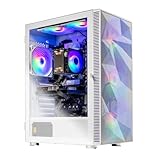


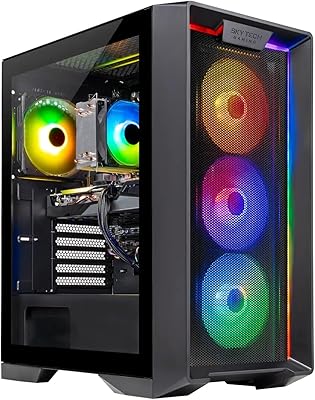

The Skytech Gaming Storm (AMD) is an entry-level prebuilt aimed at the buyer who wants a current-generation Blackwell GPU without paying the high-end price for it. It pairs the AMD Ryzen 5 5500 with the NVIDIA GeForce RTX 5060 Ti (8GB) at around $1,200. This Skytech Storm review walks through the hardware choices, where the value is, and the trade-offs the price implies — most importantly, the deliberate choice to spend on the graphics card and accept a previous-generation CPU platform to make the budget work.
28
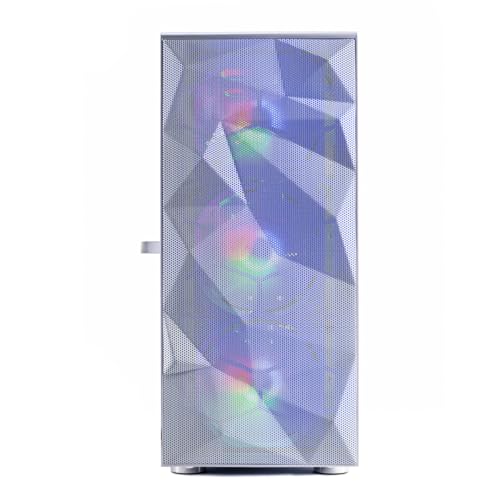
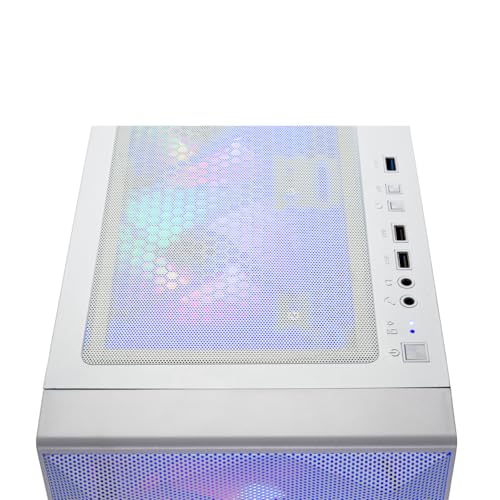
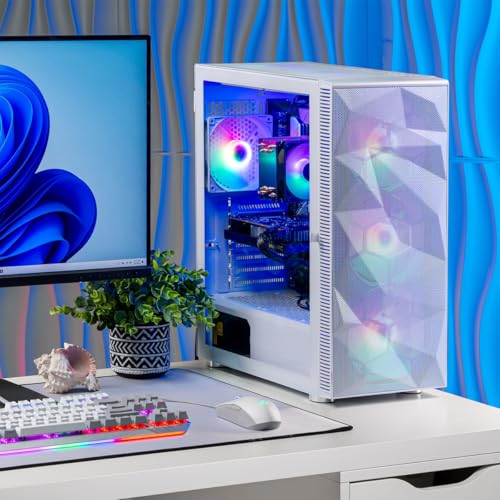
Skytech Gaming Storm Gaming PC, AMD Ryzen 5 5500 3.6GHz, NVIDIA RTX 5060 Ti 8GB VRAM, 1TB NVMe SSD, 16GB DDR4 RAM 3200, 650W Gold PSU, WI-FI 5, Windows 11, Desktop
In Stock




As an Amazon Associate we earn from qualifying purchases. Product prices and availability are accurate as of the date/time indicated.
Skytech Storm at a Glance
| Component | Specification |
|---|---|
| CPU | AMD Ryzen 5 5500 (6 cores, 12 threads, 3.6 GHz base) |
| GPU | NVIDIA GeForce RTX 5060 Ti 8GB GDDR7 (Blackwell) |
| RAM | see listing (DDR4) |
| Storage | 1TB SSD |
| Motherboard form factor | AM4 desktop board (see listing) |
| PSU | see listing |
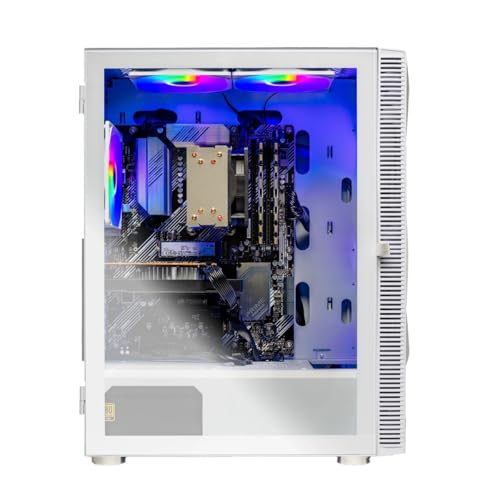
| Cooling | Skytech air cooler (see listing) |
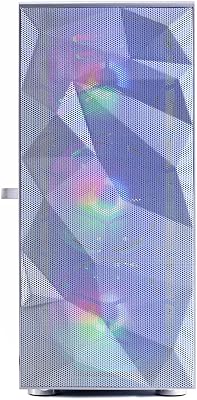
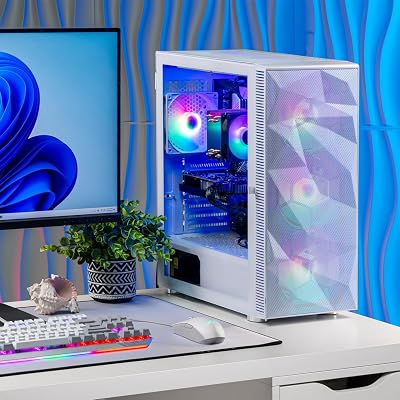
| Case | Skytech Storm tempered-glass chassis |
| Approx price | around $1,200 |
CPU & Gaming Performance
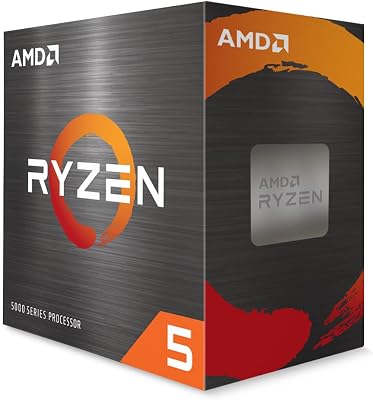
The CPU is the Ryzen 5 5500, a 6-core, 12-thread chip on AMD’s previous-generation AM4 platform. It is a competent gaming processor — six modern cores are still enough for the great majority of current titles — and choosing it is a deliberate cost-saving decision that frees budget for the GPU. The compromise to be honest about is straightforward: the 5500 is not on the cutting edge of single-threaded performance and it lacks the very large cache of an X3D part, so in the most CPU-limited gaming scenarios it will not feed an aggressive GPU as hard as a current-generation chip would. For 1080p high-refresh and most 1440p gaming with the GPU here, that is rarely the limiting factor.
GPU & Resolution Targets
The RTX 5060 Ti with 8GB of GDDR7 is the smartest part of this build at this price. It is a current-generation Blackwell GPU built for high-refresh 1080p and confident 1440p gaming, and with DLSS 4 and Multi Frame Generation it is comfortable at high settings in modern titles. Putting a 5060 Ti in a sub-$1,200 system is a value-focused move that puts the money where most owners will feel it. The 8GB frame buffer is fine for high-refresh 1080p and the great majority of 1440p gaming; if maximum-texture 1440p in the heaviest 2026 titles is the priority, the 16GB version of the same card has more headroom. For context see our RTX 5060 Ti guide.
RAM & Storage Loadout
The Storm ships with a 1TB SSD, a sensible entry-level capacity that will fill up fast for a buyer with a large modern game library — plan to add a second drive within a year if you keep many AAA installs. The exact RAM capacity should be confirmed from the listing; AM4 is a DDR4 platform, so any memory here is DDR4, typically at 3200 MT/s. A 16GB baseline is typical for this class of build; if a 32GB configuration is available, that is the more comfortable choice for streaming and longevity. Both the storage and the memory are conventional consumer parts and so are straightforward to upgrade later.
Build Quality & Thermals
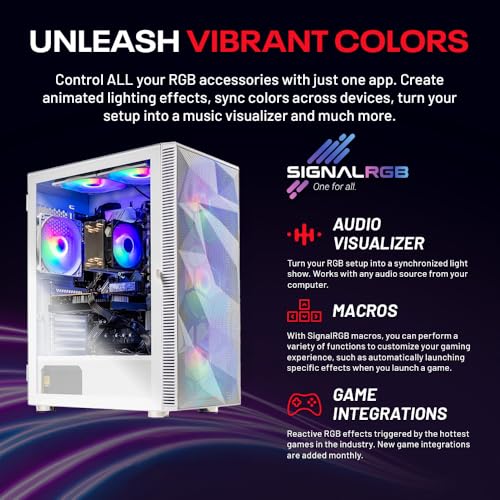
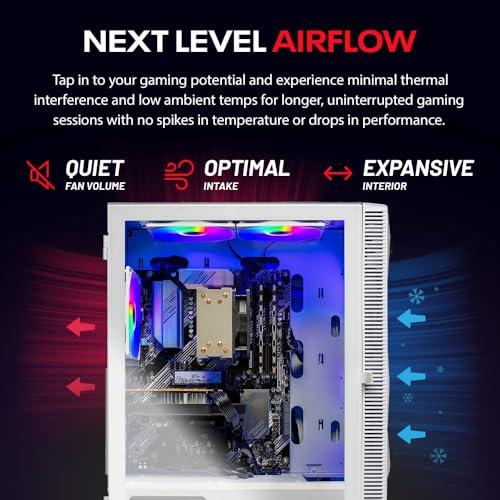
The Storm chassis is a contemporary Skytech tower with a tempered-glass panel and RGB lighting, and Skytech’s build standards — clean cabling, tidy presentation and a clean Windows install with no bloatware — are well established across its range. The 5500 is a modest-power chip and the RTX 5060 Ti is a moderate-power GPU, so the cooling burden on this configuration is gentle and an air cooler is a perfectly sensible match. The listing should confirm the exact cooler and PSU; either way this is a far less demanding thermal job than the high-end systems higher up the price tree. Skytech’s solid base of positive buyer feedback across its prebuilt range is good evidence that these systems arrive well-built and hold up reliably in everyday use.
Connectivity & Upgrade Path
The Storm is built on the AM4 platform with DDR4 memory — AMD’s previous-generation desktop ecosystem. That means the long-term CPU upgrade path is limited to other AM4 parts rather than the current AM5 line. In practical terms, the more useful upgrade paths for this system are the GPU and storage, both of which are straightforward in a conventional tower. Display outputs from the RTX 5060 Ti cover the latest DisplayPort and HDMI standards, so connecting a current-generation high-refresh monitor is not a problem. Confirm WiFi standard, USB layout and PSU wattage from the seller listing for your unit.
Who It’s For
The Storm is for the value-focused buyer who wants a current-generation Blackwell GPU in a sub-$1,200 prebuilt and is happy to accept a previous-generation CPU and platform to get there. If you game primarily at high-refresh 1080p and increasingly at 1440p, value the RTX 5060 Ti’s DLSS 4 support, and recognise that the Ryzen 5 5500 is enough for the GPU at those resolutions, the Storm is squarely your machine. It is less suited to the buyer who wants a long-term CPU upgrade path on the current AM5 platform, or to the enthusiast targeting maxed 1440p texture loads — that is RTX 5060 Ti 16GB or RTX 5070 territory.
Verdict
At around $1,200 the Skytech Storm is a smart entry-level Blackwell gaming PC. The RTX 5060 Ti is well chosen for the resolution targets buyers at this price actually use, and putting a current-generation GPU into a sub-$1,200 prebuilt is exactly the right priority. The Ryzen 5 5500 and the AM4 platform are the honest compromises, and they are sensible ones at this price. For the value-focused gamer who wants current-generation graphics without stretching the budget, the Storm earns a recommendation. Comparable options are covered in our best prebuilt gaming PCs under $1,500 roundup.
The wider point is that a current-generation GPU keeps a system relevant for far longer than a current-generation CPU does. Card features such as DLSS 4 and Multi Frame Generation become more useful as game engines lean on them more heavily over time, and a recent GPU architecture remains supported by driver updates and new game-engine features for years. By contrast, a previous-generation six-core CPU is still capable today and will remain capable for the kinds of gaming this system is bought for. Spending the money on the GPU is the right priority at this price.
Frequently Asked Questions
Is the Skytech Storm good for 1080p gaming?
Yes, very good. The RTX 5060 Ti is a strong high-refresh 1080p card, and DLSS 4 extends performance further in supported titles.
Is the Ryzen 5 5500 too weak for the RTX 5060 Ti?
No. At 1080p and 1440p the GPU is the more meaningful factor, and the 5500 is enough to feed the 5060 Ti without becoming the obvious bottleneck.
Can I upgrade the CPU later?
Only to other AM4 chips. AMD has moved on to AM5 for the current generation, so this is best treated as a buy-and-keep CPU.
Is 1TB of storage enough?
It is a reasonable start, but modern AAA games are large. Plan to add a second SSD within a year if you keep a sizeable game library installed.
More Gaming PC Reviews
- Skytech Archangel Review: Intel i5-14400F + RTX 5060 Gaming PC (2026)
- Skytech Azure 3 Review: Ryzen 7 5700 + RTX 5060 Gaming PC (2026)
- Skytech Shadow 5 (AMD) Review: Ryzen 7 8700F + RTX 5060 Ti Gaming PC (2026)
- Skytech King 95 Review: Ryzen 7 7800X3D + RX 9070 XT Gaming PC (2026)
- ZOTAC MEK Gaming PC Review: RTX 5080 + Ryzen 7 9800X3D (2026)
- Thermaltake LCGS View u2770-380 Review: Core Ultra 7 270K Gaming PC (2026)
- Skytech Shadow 5 Review: Intel i7-14700F + RTX 5070 Gaming PC (2026)
- Skytech Archangel 5 Review: Ryzen 7 7700X + RTX 5070 Gaming PC (2026)
Affiliate Disclosure: As an Amazon Associate, we earn from qualifying purchases. If you click a link and make a purchase, we may earn a small commission at no extra cost to you. Prices and availability are accurate as of publication and may change.