- Top Pick: Logitech G29 Driving Force Racing Wheel and Pedals
- Runner-up: Logitech G920 Driving Force Racing Wheel and Pedals
- Also consider: Thrustmaster T248 Racing Wheel and Magnetic Pedals
Racing is not one genre when you move it to Linux. It is four related genres that share steering wheels and start lights, and each survives the switch differently. The hardcore simulation corner is in surprisingly good shape, the arcade and kart shelves are close to intact, and the damage is concentrated in one specific place: current, publisher-controlled online racing. Your class predicts your experience better than any compatibility list.
This article is the catalogue map: the racing classes, the state of their games, and the lines that divide them. It deliberately stays at catalogue level. The hardware half of the question, which wheel bases have kernel drivers and how force feedback behaves through Proton, is covered in depth by the companion sim racing hardware guide in this series.
As an Amazon Associate, we earn from qualifying purchases.
Quick answer
Most racing games run on Linux. The big simulation titles work through Proton, the trucking simulators and a handful of others ship native Linux builds, and arcade and kart racers are the safest classes of all. The losses are specific: current Formula 1 games and EA Sports WRC are blocked by kernel-level anti-cheat, and iRacing remains unofficial. If your racing is single-player or community-league based, the switch costs almost nothing.
Four classes, four different stories
Start with the map itself. Simulation means titles built around tyre models, setup sheets and long races: Assetto Corsa and its Competizione sibling, Automobilista 2, rFactor 2 and BeamNG.drive. Simcade sits one step toward accessibility, with licensed cars under friendlier handling: the DiRT Rally games and the GRID series live here. Arcade drops the simulation pretence for speed and spectacle, and kart racing shrinks the whole idea into power-ups and drift boosts. The trucking simulators are not racing at all, but they share the wheels and the players, and they appear below.
The classes matter because they fail differently. Simulation titles are mostly older, Steam-based and free of publisher anti-cheat, exactly the profile Proton handles best. Simcade mixes a safe back catalogue with risky current releases. Arcade and kart games are usually pad-first, single-player heavy and built on mainstream engines, so they translate cleanly.
Simulation: the deepest bench
The simulation class is where Linux racing is strongest. Assetto Corsa runs through Proton and remains the centre of gravity for community modding and league racing. Assetto Corsa Competizione, the GT3 specialist, also runs through Proton, and its organised online ladders work because its multiplayer uses its own servers rather than a kernel-level anti-cheat layer. Automobilista 2 and rFactor 2 complete the established group: both are documented Proton runners with wheel support, and both host active community leagues.
BeamNG.drive shows the class at its most flexible: a soft-body physics sandbox that runs through Proton and doubles as a rally, chase and destruction playground. The honest limits are equally clear. The physics-heavy end asks for strong single-thread CPU performance on any operating system, and the one famous absence, iRacing, is covered below. Judged purely as a catalogue, a simulation player loses remarkably little by switching.
Simcade and arcade: the broad middle
Simcade is where most racing hours are actually spent, and its back catalogue is in good health. DiRT Rally 2.0 runs through Proton with wheel support riding on the driver tiers summarised below, and the original DiRT Rally goes one better with a proper native Linux build. The GRID series, led by GRID Legends and the 2019 GRID, runs through Proton as well. Their age is their protection: none carries the current generation of publisher anti-cheat.
The class has one instructive exception. Forza Horizon 5 shows how the store matters more than the game: its Steam release runs through Proton and is a documented Steam Deck regular, while the same game bought through the Microsoft Store has no Linux route at all. Arcade racers proper follow the same rule as the kart class below: pad-first design, offline-friendly structure and mainstream engines make them reliable travellers.
Kart and family racing: the safest shelf
If one class survives the switch completely intact, it is this one. SuperTuxKart is the emblem: a genuinely good open-source kart racer with a native Linux build, online play and split-screen. Around it, the commercial kart and party-racing shelf travels well through Proton. These games are built for controllers, so the wheel driver question never arises. Their online modes are casual rather than ranked, so anti-cheat stays light. A household switching to Linux will find its kart shelf essentially untouched.
Wheel and force feedback realities
A catalogue map only needs the short version of the wheel story, because the full driver survey lives in the companion hardware guide. Wheels fall into three tiers on Linux. Logitech’s G29 and G920 family and newer Moza bases work through drivers inside the kernel itself, so they work with force feedback out of the box. Thrustmaster’s T248 and T300 RS and Fanatec’s bases rely on community drivers installed out of tree, which adds a maintenance routine after kernel updates and, for some Thrustmaster models, a one-time firmware update on Windows.
Through Proton, the major sims deliver force feedback on the supported tiers. The practical translation is simple: simulation and simcade players should choose a wheel from the kernel or community-driver tiers, while arcade and kart players can ignore the entire question and use any standard controller.
The online racing caveat
Every serious loss in this catalogue has the same cause, and it is not performance. Kernel-level anti-cheat cannot run inside Proton’s user-space model, so publishers who adopt it close the Linux door as a side effect. EA’s current Formula 1 games ship with that protection and are listed as broken for Linux and Steam Deck, and EA Sports WRC joined them when the same anti-cheat arrived in a post-launch update. These are policy outcomes, not technical verdicts, and only the publisher can reverse them.
iRacing occupies the remaining grey space. It has no official Linux support, only an experimental, thinly tested community route. Treat it as something to test on a spare install, never as a reason to delete a Windows partition. Against those cases, weigh what does work: the ranked and league structures inside Assetto Corsa Competizione, Automobilista 2 and rFactor 2 run on community or game-owned servers, and they operate on Linux today.
Standout native builds
Native builds deserve a section of their own because they remove the translation layer entirely. Euro Truck Simulator 2 and American Truck Simulator are the heavyweights: full native Linux versions, direct wheel support, enormous mod scenes and years of continued development. The original DiRT Rally’s native port shows what the class once aimed for, and SuperTuxKart completes the trio from the open-source side. When a native build is maintained, it is the best seat in Linux gaming: no prefix and no compatibility settings to manage.
How to choose
Choose by class first and by title second. Simulation players should build around Assetto Corsa, Competizione, Automobilista 2 and rFactor 2, pick a wheel from the kernel tier for zero maintenance, and accept the community-driver routine for belt-driven or direct-drive hardware. Simcade players should mine the back catalogue, where DiRT Rally 2.0 and the GRID games offer years of content, and buy current releases on Steam so the Proton route stays open. Arcade and kart players can simply bring their libraries with them. In every class, check your must-play titles by name before switching, because the exceptions are always specific games, never whole shelves.
Who should skip this
Skip the switch if your racing life is the current Formula 1 games, EA Sports WRC or iRacing leagues: the first two are blocked by anti-cheat policy and the third is unofficial and fragile. Skip it if you race inside the Microsoft Store or the Xbox app, where no Linux route exists. And skip the non-kernel wheel tiers if you run Secure Boot and will not do the key enrolment step.
The gear that fits each class
Logitech G29 Driving Force Racing Wheel and Pedals
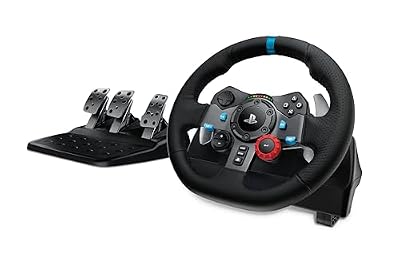
The default starting point for simulation and simcade on Linux, and the wheel the kernel knows best.
Specs:
– Drive: gear-driven, dual-motor force feedback
– Rotation: 900 degrees
– Pedals: three-pedal set included
– Compatibility: PlayStation and PC layout
– Linux path: in-kernel driver, with an optional community module for deeper effects
Logitech G920 Driving Force Racing Wheel and Pedals

The Xbox-layout twin of the G29, sharing the same kernel support and the same role as the zero-maintenance starter wheel.
Specs:
– Drive: gear-driven, dual-motor force feedback
– Rotation: 900 degrees
– Pedals: three-pedal set included
– Compatibility: Xbox and PC layout
– Linux path: in-kernel driver
Thrustmaster T248 Racing Wheel and Magnetic Pedals

The simcade step up, with a built-in display and magnetic pedals.
Specs:
– Drive: hybrid belt and gear force feedback
– Pedals: magnetic three-pedal set included
– Display: built-in race information screen
– Compatibility: Xbox and PC version
– Linux path: in-kernel initialisation plus the community hid-tmff2 driver; a one-time firmware update on Windows comes first
Thrustmaster T300 RS GT Edition Racing Wheel

The belt-driven enthusiast pick and one of the wheels the community driver is tested against, which shows in its support quality.
Specs:
– Drive: brushless belt-driven force feedback
– Rotation: up to 1080 degrees
– Pedals: T3PA-GT three-pedal set included
– Compatibility: PlayStation and PC layout
– Linux path: in-kernel initialisation plus the community hid-tmff2 driver
Logitech G Driving Force Shifter

The six-speed add-on that completes a Logitech rig for the manual-gearbox corners of the catalogue, from trucking natives to historic sim content.
Specs:
– Pattern: six-speed H-pattern with push-down reverse
– Mounting: desk clamp built in
– Compatibility: G29, G920 and G923 wheels
– Linux path: works through the wheel’s own kernel driver connection
FAQ
Do racing games run as fast on Linux as on Windows?
The established simulation and simcade titles run through Proton at close to their Windows performance, and native builds have no translation layer at all. The dividing lines in this genre are driver support and anti-cheat policy, not frame rates.
Which racing games are completely blocked on Linux?
The current Formula 1 games and EA Sports WRC, all blocked by kernel-level anti-cheat that Proton cannot host. Anything bought through the Microsoft Store is also out of reach, including the store version of Forza Horizon 5, while its Steam release runs.
Is iRacing playable on Linux?
Not officially. Community reports describe an experimental route with thin testing behind it, so treat it as a spare-install experiment. League drivers whose season depends on iRacing should keep a Windows install for it.
Do I need a wheel to enjoy racing on Linux?
No. Arcade and kart classes are designed for controllers and lose nothing on a pad, and the simulation titles all support pads as well. A wheel matters when you want the simulation class at full depth, and the kernel-tier Logitech models are the maintenance-free way to get one.
Final verdict
Racing is one of the stronger genres to bring to Linux, provided you read it as a class map rather than a single list. Simulation is deep and healthy, simcade’s back catalogue is rich, arcade and kart shelves are essentially intact, and the native trucking simulators are among the best-supported games on the platform. The losses are narrow: current anti-cheat-protected releases and one subscription sim. If your racing lives outside those two fences, the switch costs you almost nothing.