- Top Pick: Samsung 990 PRO 4TB NVMe SSD
- Runner-up: Samsung T9 Portable SSD 2TB
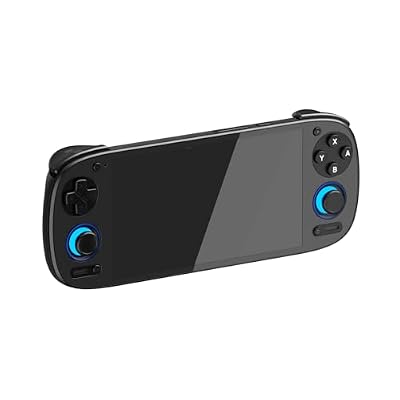
- Also consider: ASUS ROG Ally X
Open-world games are where Linux gaming looks strongest and weakest at the same time. The genre is built on long single-player campaigns, and single-player is what Proton handles best: most of the biggest open worlds of the last decade install and run on Linux with no work beyond pressing Play. The catch is the genre’s second half. Several flagship series attach an online mode to the campaign, and those modes are where publisher anti-cheat decisions, not Proton, decide whether you get the whole game or only part of it.
This guide maps the genre by world type, names the native standouts, and goes franchise by franchise through the Proton catalogue with the honest split: campaign playable, online mode playable, or online mode blocked. It closes with the storage reality of a genre whose installs are the largest in gaming.
As an Amazon Associate, we earn from qualifying purchases.
Quick answer
Most big open-world campaigns run well on Linux. Native standouts include Valheim, Rust, Dying Light and Mad Max, and the major single-player franchises, The Witcher, Cyberpunk, Elden Ring, Fallout and Red Dead Redemption 2’s story mode, run through Proton. The losses are online modes: GTA Online is blocked by its anti-cheat, so buy these games for their campaigns.
The class map: open worlds by type
City and crime sandboxes are the genre’s public face: the Grand Theft Auto and Saints Row series, Watch Dogs, Cyberpunk 2077’s Night City and Sleeping Dogs. These are dense, vehicle-heavy worlds built around a story campaign with side systems layered on top, and on Linux they live or die by their online modes, which this guide covers franchise by franchise below.
Fantasy and historical role-playing worlds are the genre’s best travellers. The Witcher 3, the Elder Scrolls and Fallout series, Elden Ring, Kingdom Come: Deliverance and the Assassin’s Creed catalogue are campaign-first games, some with no online component at all, which makes their Linux state simple to describe and generally good.
Survival sandboxes are the third class, and the most Linux-native of the three. Valheim, Rust, 7 Days to Die, Project Zomboid and Vintage Story treat the world as a persistent system rather than a story stage, and several of them ship native Linux builds because their developers also run their dedicated servers on Linux.
Exploration worlds round out the map: No Man’s Sky, Subnautica, Elite Dangerous and Minecraft, where the world itself is the content. They reward long sessions rather than fast reactions, and they are disproportionately well served on Linux, as the next sections show.
The native standouts
Valheim is the genre’s model Linux citizen: a native build, a co-op survival world, and a dedicated server that runs on Linux, which is how most groups host it. Rust also ships a native Linux client, and its publisher enabled Easy Anti-Cheat support for Proton and Linux, so its always-online world is genuinely playable rather than campaign-only. 7 Days to Die and Project Zomboid both carry native builds as well, and Vintage Story was built on Linux-friendly technology from the start.
Feral Interactive’s ports supply the older blockbusters. Mad Max and Middle-earth: Shadow of Mordor have native Linux versions from that porting era, and Dying Light carries a native build too, with its sequel running through Proton. Minecraft’s Java edition is native by construction, and Terraria covers the two-dimensional end of the genre. None of these need a compatibility layer at all, which also makes them the safest long-term installs here: a native build cannot be broken by a Proton update.
The big franchises through Proton, honestly
The Witcher 3 and Cyberpunk 2077, both from CD Projekt Red, run through Proton at the standard the community treats as reference quality, and both carry Steam Deck Verified status. Elden Ring runs through Proton including its online features, because FromSoftware enabled Easy Anti-Cheat’s Linux support; its co-op and invasions work, which puts it ahead of most of this list. Fallout 4 and Skyrim Special Edition run through Proton, with the standing caveat that heavy mod lists take more manual work than on Windows.
Rockstar is the genre’s split verdict. Red Dead Redemption 2’s story mode runs through Proton and is a common Linux showcase. Grand Theft Auto V’s story mode also runs, but GTA Online does not: Rockstar enabled BattlEye for the mode without enabling its Linux support, and the mode has refused Linux players since, a documented publisher decision rather than a Proton failure. Buy both games on Linux for their campaigns only.
Ubisoft’s catalogue runs through Proton with a launcher caveat: Assassin’s Creed and Far Cry titles generally work, with the Ubisoft Connect layer adding a sign-in step rather than a block. Sony’s PC ports, Horizon Zero Dawn and its sequel among them, run through Proton; Ghost of Tsushima’s campaign runs, while its Legends co-op mode is not available on Steam Deck. Forza Horizon 5 runs through Proton with its online features intact, as do Starfield and Palworld. The pattern across all of it: campaigns are nearly universal, and each blocked mode traces to a specific anti-cheat or account decision you can check before buying.
The storage and performance reality
Open-world games are the largest installs most players own. Many modern entries pass the hundred-gigabyte mark on their own, and a shelf of five or six current titles can consume the better part of a one-terabyte drive before anything else is installed. On Linux the footprint grows slightly further: every Proton game keeps a prefix with its own copy of Windows system files, and Steam’s shader pre-caching stores a compiled cache per game, per graphics driver. Neither overhead is huge per game; across a big library both add up.
The practical habits follow from that. Keep open-world installs on your fastest drive, because these games stream assets from storage constantly as you cross the map, and a slow external drive shows up as late-loading scenery in exactly the biggest titles. Use Steam’s storage manager to move games between drives instead of redownloading them. And on a handheld, keep the two or three worlds you are actively playing on the internal drive, with the rest parked on the card.
Performance expectations should be set by world density, not by the genre label. A wilderness survival game and a neon city stress a machine very differently, and Proton adds its own translation cost on top. The settings that matter most govern draw distance and crowd or vegetation density; they scale the world itself, which is the expensive part.
How to choose
Choose by the mode you actually play. If you live in campaigns, almost the whole genre is open to you: start with The Witcher 3 or Elden Ring for fantasy, Cyberpunk 2077 for a city, and Red Dead Redemption 2 for a frontier. If you play with a group, start native: Valheim and Rust give you persistent worlds with working multiplayer and Linux-hosted servers, and 7 Days to Die covers the zombie end. If your group’s game is GTA Online or another mode named as blocked here, no setting fixes that; the honest options are a different game or a Windows install for that one title. Whatever you pick, check the game’s current ProtonDB reports before buying, because a single patch can move a title in either direction.
Who should skip this
Skip the genre’s online halves, not the genre. If your open-world hours are mostly GTA Online, this platform does not currently offer you that game, and nothing here changes it. Skip the biggest city sandboxes on very old hardware, where world density rather than compatibility will be your limit. And skip building a huge installed library on a small drive: this genre punishes storage optimism faster than any other, so buy storage first or keep the installed shelf short.
Samsung 990 PRO 4TB NVMe SSD

The library drive for a genre that eats terabytes. A fast PCIe 4.0 internal SSD with room for a shelf of hundred-gigabyte worlds plus their shader caches, from the maker’s flagship line.
- Specs: Capacity: 4TB
- Specs: Interface: PCIe 4.0 NVMe, M.2 2280
- Specs: Sequential read: up to 7,450 MB/s, maker-stated
- Specs: Model: MZ-V9P4T0B/AM
Samsung T9 Portable SSD 2TB

The overflow and travel drive. A compact USB portable SSD fast enough to run parked open-world installs, and small enough to move a library between a desktop and a handheld dock.
- Specs: Capacity: 2TB
- Specs: Interface: USB 3.2 Gen 2×2
- Specs: Sequential read: up to 2,000 MB/s, maker-stated
- Specs: Model: MU-PG2T0B/AM
ASUS ROG Ally X

The handheld way into big worlds. A Windows handheld with the memory and battery capacity the genre’s largest titles ask for, and a documented Bazzite candidate if you want it running a Linux interface instead.
- Specs: Processor: AMD Ryzen Z1 Extreme
- Specs: Memory: 24GB LPDDR5X
- Specs: Storage: 1TB NVMe SSD
- Specs: Display: 7-inch, 1080p, 120 Hz, maker-stated
8BitDo Ultimate 2 Bluetooth Controller

The long-session pad. Hall-effect sticks and triggers, a charging dock, and Linux and Steam Input support, suited to games measured in dozens of hours per world.
- Specs: Connection: Bluetooth, USB-C wired
- Specs: Sticks: Hall effect, anti-drift design
- Specs: Extras: charging dock, back buttons
- Specs: Compatibility: Switch, Windows, SteamOS via Steam Input
PlayStation DualSense Wireless Controller
The first-party alternative. Sony’s controller is natively supported by the Linux kernel and Steam Input, and several PC ports use its adaptive triggers and haptics when wired.
- Specs: Connection: Bluetooth, USB-C wired
- Specs: Features: haptic feedback, adaptive triggers
- Specs: Extras: built-in microphone, headset jack
- Specs: Model: CFI-ZCT1W, White
FAQ
Can I play GTA Online on Linux?
No. Grand Theft Auto V’s story mode runs through Proton, but GTA Online is blocked: Rockstar enabled BattlEye anti-cheat for the mode without enabling its Linux support, and it has refused Linux players since that change. Treat the game as single-player only on this platform.
Will GTA VI come to Linux?
Rockstar Games has announced GTA VI for PlayStation 5 and Xbox Series X and S, launching 19 November 2026, and has announced no PC version. With no PC version announced, there is nothing for Proton to run; any PC or Linux release would be a future Rockstar announcement, not a date to plan around.
How much storage does an open-world library need?
More than any other genre. Many current titles pass a hundred gigabytes each, and Proton prefixes plus shader caches add further space per game. Two terabytes is a comfortable minimum for an active shelf; four removes the juggling entirely.
Do mods work in open-world games on Linux?
Usually, with effort. Mods installed through Steam Workshop generally work as they do on Windows. External mod managers and script extenders, common in the Fallout, Skyrim and GTA communities, need manual setup inside the game’s Proton prefix and are the most fragile part of those games on Linux.
Final verdict
Open-world gaming is one of Linux’s strongest genres and one of its clearest honesty tests. The campaigns are nearly all here: the native survival worlds, CD Projekt Red’s pair, Elden Ring with its online intact, and the Rockstar and Ubisoft catalogues as single-player games. The exceptions are specific, documented and checkable: GTA Online above all, blocked by an anti-cheat decision rather than by Proton. Buy these games for their worlds, size your storage for the genre’s appetite, and Linux will carry the hundreds of hours those worlds ask for.