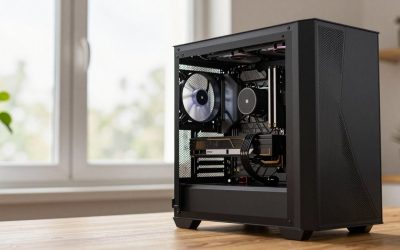
Nioh 2 – The Complete Edition arrived on PC in February 2021, bringing Team Ninja’s masocore action RPG — Sengoku-era Japan, hordes of yokai, the Yokai Shift ability and the enemy-made Dark Realms — to a platform where you can tune performance and visuals to your own setup. It is a fast, reflex-driven game: combat revolves around split-second dodges, parries and burst counters, so a high, stable frame rate is worth more here than maximum eye candy. The good news is that its official requirements are modest, with a GeForce GTX 970 listed as the minimum graphics card and a GTX 1660 SUPER as the recommended one. This guide walks through the official PC system requirements for Nioh 2, the graphics cards that make sense at 1080p, 1440p and 4K, and complete build suggestions to hit your target frame rate.
How Demanding Is Nioh 2?
Nioh 2 was a moderately demanding release for its era, but it is a modest game by today’s standards. The official minimum — a GeForce GTX 970 with 4 GB of VRAM and an Intel Core i5-4460 — describes a mid-range desktop from around 2015, and the recommended spec asks only for a GTX 1660 SUPER and a Core i7-6700K. In practice that means almost any dedicated gaming GPU released in the last several years clears the bar, and the game is not CPU-bound in the way a large-scale strategy, simulation or big multiplayer title is; its official recommended processor is a quad-core from 2015. What Nioh 2 does reward is a high, consistent frame rate, because its combat punishes hesitation. The one genuinely chunky demand is storage: the game needs 85 GB of available space, and a broadband connection is listed for both the minimum and recommended specs, which reflects the online co-op and summon features rather than the single-player campaign.
Nioh 2 Official PC System Requirements
| Component | Minimum (official) | Recommended (official) |
|---|---|---|
| OS | Windows® 10 64bit | Windows® 10 64bit |
| Processor | Intel Core i5 4460 or over | Intel Core i7 6700K or over |
| Memory | 6 GB RAM | 16 GB RAM |
| Graphics | NVIDIA GeForce GTX 970 or over, VRAM 4GB or over | NVIDIA GeForce GTX 1660 SUPER or over, VRAM 6GB or over |
| DirectX | Version 11 | Version 11 |
| Storage | 85 GB available space | 85 GB available space |
Source: the official Nioh 2 – The Complete Edition Steam store listing (app 1325200), checked October 2026. Publishers can update these specs after patches.
The published specs call for 64-bit Windows 10, DirectX 11, 6 GB of RAM at minimum and 16 GB at recommended, 85 GB of free storage space, and a 16-bit stereo sound device capable of 48 kHz WAVE playback. Both columns list a broadband internet connection, so plan for one if you want to use the game’s online co-op and visitor systems.
Best GPU for Nioh 2 by Resolution
Because the official recommended card is only a GTX 1660 SUPER, resolution — not raw GPU tier — is what mostly changes your hardware needs. Here is what makes sense at each target.
1080p
At 1080p, anything from a GTX 1660 SUPER upward will run Nioh 2 at high settings. The AMD Radeon RX 7600 is a comfortable, current-generation pick that sits well above the official recommendation, and newer cards in the same class — an RX 9060 XT or an RTX 5060 — give you the same kind of headroom with more modern features. If you already own a GTX 970-class card, you can still play at 1080p; you will simply be closer to the official minimum and may need to trim a few settings.
1440p
1440p remains well within reach of mid-range hardware for this game. An RTX 5060 or RX 9060 XT is a sensible target, and the NVIDIA GeForce RTX 4070 SUPER is more than enough — a large step above the official recommended GTX 1660 SUPER. Cards in this tier give you high-refresh headroom in Nioh 2 and plenty of room left over for heavier games.
4K
4K is the one resolution where Nioh 2 asks for real GPU muscle, simply because the pixel count is four times that of 1080p, though its 2021-era rendering means a modern upper-mid-range card copes comfortably. The NVIDIA GeForce RTX 4070 Ti SUPER is a realistic entry point and sits far above the official spec; if you are running a lower-tier card at 4K, upscaling is the easiest way to keep frame rates smooth.
CPU, RAM and Storage for Nioh 2
Pair your GPU with a capable processor, but keep expectations sensible: the official recommended CPU is a Core i7-6700K, a quad-core from 2015, so Nioh 2 is not a game that leans on many cores. Any modern six-core clears that bar with room to spare, and a faster chip mainly helps you hold high frame rates on a high-refresh monitor. The AMD Ryzen 5 7600 is far more than Nioh 2 needs while being excellent value for gaming generally, while the AMD Ryzen 7 7800X3D is the fastest mainstream gaming CPU if you want maximum frame rates across the board. Intel fans can opt for the Intel Core i5-14600K. For memory, the official minimum is 6 GB and the recommended figure is 16 GB, so 16 GB of DDR5 is the sensible target — a 32 GB kit such as the Corsair Vengeance DDR5 32GB gives you extra headroom for other games. Nioh 2 needs 85 GB of free space, so install it on a fast NVMe SSD like the Samsung 990 Pro 2TB NVMe SSD to cut load times and keep level streaming smooth.
Recommended PC Builds for Nioh 2
1080p budget build: AMD Radeon RX 7600 + AMD Ryzen 5 7600 + 16 GB DDR5 — comfortably above the official recommended spec for high-settings 1080p, and a good base for other games too.
1440p sweet-spot build: NVIDIA GeForce RTX 4070 SUPER + AMD Ryzen 7 7800X3D + 32 GB DDR5 + 2TB NVMe SSD — plenty for high-refresh 1440p in Nioh 2, with headroom to spare.
4K high-end build: NVIDIA GeForce RTX 4070 Ti SUPER + AMD Ryzen 7 7800X3D + 32 GB DDR5 + fast NVMe SSD — for 4K with upscaling where needed.
Is It Worth Upgrading Your PC for Nioh 2?
Because Nioh 2’s official bar is low, this is not a game that forces an upgrade — only one that rewards a targeted one. If your graphics card is already a GTX 970 or better, you meet the minimum and can play today; a GTX 1660 SUPER or better puts you at the recommended level, which is where most people will be perfectly happy. If you are on integrated graphics or a very old card, an entry-level modern GPU is a large jump for relatively little outlay. As always, the graphics card delivers the biggest gain, so upgrade the GPU first if you have to choose — the CPU rarely matters much in this game, and a mid-range chip from the last several years will not hold back a modern card. Bringing your memory up to the recommended 16 GB and moving the game onto an SSD are cheap improvements that noticeably smooth out loading and streaming. Rather than replacing everything at once, target the weakest link in your build.
Can You Play Nioh 2 on a Laptop or Handheld?
Gaming laptops have an easy time with Nioh 2. A modern mid-range mobile GPU — an RTX 4050 or RTX 4060-class chip, or a comparable Radeon — will handle it at 1080p, and even older gaming laptops with a GTX 1660 Ti-class GPU can run it at reduced settings, since the official recommended desktop card is only a GTX 1660 SUPER. Expect shorter battery life and more heat than a desktop, as always. On handhelds like the Steam Deck and ROG Ally, the game’s modest requirements make it a reasonable fit, though you will want lowered settings and should not expect desktop-level frame rates. If portability matters, prioritise a device with a capable GPU and pair it with a fast microSD or SSD — remember the game itself needs 85 GB of space.
How to Boost FPS in Nioh 2
If frame rates are lower than you would like, the first thing to try is an upscaler: if the game and your GPU support one (DLSS on NVIDIA, FSR on AMD, XeSS on Intel), enabling it is usually the single biggest performance gain available. If that is not an option, or you want more, lower the render resolution and then work through the most expensive settings first — shadows, volumetric or atmospheric effects, and post-processing. Keep your GPU drivers up to date, close background applications, and make sure the game is installed on an SSD rather than a mechanical drive. On a high-refresh monitor it also helps to cap the frame rate at a level your system can hold consistently, because stable frame pacing feels far better in a game this twitchy than a higher average with stutter.
Frequently Asked Questions
Can my PC run Nioh 2?
The official minimum is an Intel Core i5-4460, 6 GB of RAM and a GeForce GTX 970 with 4 GB of VRAM, plus 85 GB of free storage. For the recommended experience, aim for a Core i7-6700K, 16 GB of RAM and a GTX 1660 SUPER with 6 GB of VRAM. Because those figures are modest by today’s standards, most gaming PCs built in the last several years will run Nioh 2 without difficulty.
Is Nioh 2 demanding on PC?
Not by current standards. Its official recommended GPU is a GTX 1660 SUPER and its recommended CPU is a 2015 quad-core, so mid-range hardware handles it comfortably at 1080p and 1440p, and only 4K calls for a genuinely strong graphics card.
What GPU do I need for Nioh 2 at 1440p 60fps?
A modern mid-range card — something in the RTX 5060 or RX 9060 XT class — is enough for high-settings 1440p in Nioh 2, since the official recommended GPU is only a GTX 1660 SUPER. A NVIDIA GeForce RTX 4070 SUPER-class graphics card is well beyond what the game needs and leaves comfortable headroom for other, heavier titles. Enabling upscaling gives you extra margin if you want to push settings higher.
How much RAM does Nioh 2 need?
The official minimum is 6 GB and the recommended figure is 16 GB. In practice 16 GB is the sensible target for a modern gaming PC, which is exactly what the developer lists for the recommended experience; you do not need more than that specifically for Nioh 2, though a larger kit gives you headroom elsewhere.
Do I need an SSD for Nioh 2?
Not strictly — the official requirement is simply 85 GB of available space. That said, an SSD is strongly recommended: it shortens load times considerably and keeps level streaming smooth, and an NVMe drive like the Samsung 990 Pro is an ideal home for a game of this size.