MageQuit is Bowlcut Studios’ wizard brawler, released on 10 October 2019: up to ten mages draft spells and fight online or on one screen, growing their beards with every kill until the longest beard after nine rounds takes the match. It is built on cross-platform multiplayer, so the Linux question matters twice over — a Linux player needs both a working build and a seat in the same lobbies as everyone else.
This is one of the clean files. Steam’s record flags all three platforms, publishes a real Linux requirements tab, and the purchase package delivers a full-size Linux depot beside the Windows and Mac ones. The wrinkles sit at the edges: Valve’s Deck sheet names a Proton runtime for a game with its own Linux build, the newest community report describes a sound fault on the native route, and the Deck paperwork dates from 2022 while the game was still being updated in late 2025.
As an Amazon Associate, we earn from qualifying purchases.
Quick answer
MageQuit is genuinely native on Linux. Steam flags Windows, Mac and Linux true, the Linux requirements tab is populated with platform-specific text, and the standard purchase package includes a full Linux depot alongside the other two builds. Valve rates the game Verified on Steam Deck, ProtonDB classifies it as native across 13 reports, and the only PC edition sold is the Steam copy.
What Steam’s own record says
Steam’s appdetails record for MageQuit (app 572220) lists the platforms as Windows true, Mac true, Linux true, with Bowlcut Studios as developer and publisher and a release date of 10 October 2019. All three requirement fields are genuinely populated, rarer than it sounds in this cluster: the Mac minimum even carries the studio’s own note that the app is not notarized and may not work with Catalina, and the Linux minimum is platform-specific text rather than a copied shell.
That Linux tab names Ubuntu 12.04 or Steam Deck OS, a 64-bit dual-core processor at 2.8 GHz, 4 GB of RAM, OpenGL 2.1 graphics with period Nvidia and AMD driver versions named directly, and 2 GB of storage. The wording is old, but it is unmistakably a Linux list written for this game, and the Steam Deck OS mention shows the tab has been touched since the handheld launched. Cross-platform multiplayer is listed outright among the categories, alongside full controller support and Remote Play Together.
The depot table and the purchase package
Flags and tabs are claims; depots are delivery. SteamDB’s depot table lists three content depots, one per platform, all in the same size class: Windows at 1.01 GiB, macOS at 1.01 GiB and Linux at 1.11 GiB — the Linux build is marginally the largest, the opposite of the token or empty depot shapes that expose false native claims elsewhere in this series.
The package layer closes the question. The standard store purchase package (sub 145377) grants the game app alone and lists all three depots inside it, so a normal purchase delivers the Linux build by construction. Just as important, the layer is alive: all three depots were last updated on 12 October 2025, and the public branch serves a build from that month. The native build is no stranded 2019 artefact; it is maintained in step with the other platforms.
The family sweep: there is nothing to sweep
The record carries no DLC array at all — no soundtrack app flagging platforms it does not ship on, no art book, no supporter pack, no demo. The false-signal surface that complicates so many neighbouring files does not exist here. One naming caution: MageQuit Dungeons is a separate, later app from the same studio, not an add-on, and nothing in this ruling rests on it.
ProtonDB: a native classification with a Silver headline
ProtonDB’s summary record was read in full. It classifies the game as native — the game page heads its requirements block “Natively Supports:”, agreeing with Steam at every layer, a clean-agreement case rather than a stray-heading file. The headline tier is Silver, with Platinum as both best-reported and trending tier, across 13 reports at moderate confidence. For a native title that tier describes the fallback route and the report mix, so the texture matters more than the letter.
The native filings are encouraging: one Deck report calls the game perfect out of the box, and another is titled “No more crashes with dedicated Linux build”, crediting the native version with fixing the instability the reporter had under Proton. The most recent report cuts the other way: its author found that running through the Steam Linux Runtime now triggers an FMOD sound error, while forcing Proton Experimental stopped the crashes — a workaround that routes around the native build rather than through it. Older filings include a Proton 8.0-4 report of crashes around rounds three to five and a 2019 Borked report. The honest summary is a strong community file with one recent, specific fault report, not a spotless sheet.
Steam Deck: Verified, on 2022 paperwork
Valve’s own compatibility endpoint returned no readable sheet this session, so the verdict and paperwork were read from SteamDB’s republication of Valve’s data, the route this series discloses whenever the first-party endpoint fails. The verdict is Verified: all four checks pass — full functionality under the default controller configuration, Deck controller icons, legible text and a default graphics configuration that performs well — and SteamOS is separately rated Compatible.
Two details deserve their own sentences. The sheet’s recommended runtime reads proton-stable, an odd line for a game with a real Linux build: Valve’s paperwork names a Proton runtime even where a native build exists, so it is not evidence against the depot the package provably contains. And the test was run on 21 May 2022 against build 8247674, while the public branch now serves an October 2025 build — the paperwork predates the current build line by years, making this a supplement candidate for the factual Deck-paperwork list. The grade has not been withdrawn; it rests on an old test.
Anti-cheat, read from three separate sources
Steam’s record names no anti-cheat: no DRM notice and no external account notice. SteamDB’s detected-technologies list is engine and networking plumbing — Unity, the Discord SDK, FMOD, Mono, the Photon networking SDK and Resonance Audio — with no anti-cheat detected. Are We Anti-Cheat Yet carries no entry for MageQuit at all, searched by name and by app id. Three sources, kept separate, and none names an anti-cheat standing between a Linux player and the lobbies.
The GOG ruling
No GOG edition exists. The game’s natural GOG product address redirects to the general catalogue instead of resolving to a product page, so there is no product record whose identity could be verified. The Steam copy is the only PC edition, and it is the buy.
Gear that fits the record
The gear below follows the record’s shape: the handheld the badge was written for, pads for the couch and online lobbies this game is built around, a mouse for desktop sessions, and library storage.
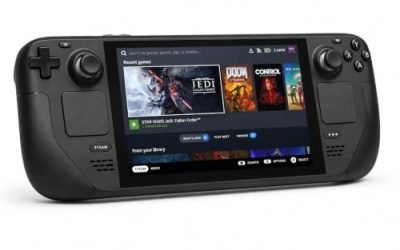
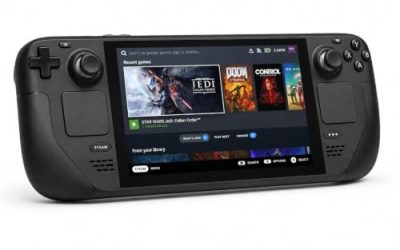
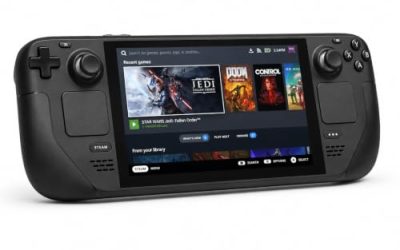
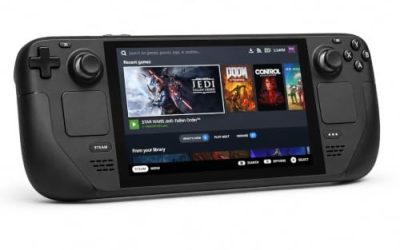
Valve Steam Deck OLED 512GB

The handheld the Verified badge was written for. The published requirements sit far below the Deck’s APU, the test sheet gives a clean four-check pass, and the native build means the Linux depot is the one that installs.
Specs
- Display: 7.4-inch HDR OLED, 1280 by 800, up to 90 Hz
- Processor: AMD Zen 2 and RDNA 2 custom APU
- Memory: 16 GB LPDDR5
- Storage: 512 GB NVMe, plus a microSD slot
- Wireless: Wi-Fi 6E and Bluetooth
- Channel note: Valve sells the Deck mainly through its own store, so Amazon listings are third-party sellers
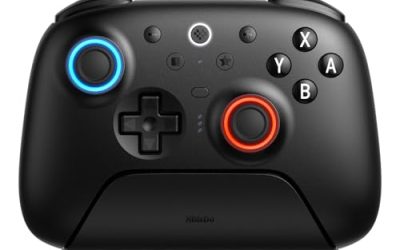
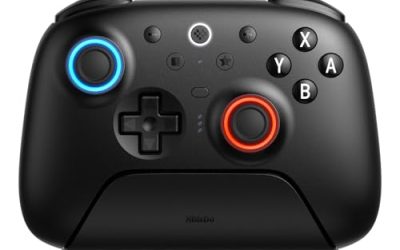
8BitDo Ultimate 2 Bluetooth Controller
The main pad pick for a game whose record leads with full controller support. Back buttons suit a spell-drafting brawler where the same few casts repeat every round, and the dock keeps it charged between matches.
Specs
- Connectivity: Bluetooth wireless and USB-C wired
- Joysticks: TMR electromagnetic, anti-drift design
- Triggers: Hall effect, with mode switching
- Extras: two remappable back buttons, motion control
- In the box: charging dock included
Xbox Wireless Controller, Carbon Black
The guest pad for the shared-screen case: MageQuit seats up to ten mages locally, so spare pads are this game’s natural accessory. Steam Input support is universal, and it pairs over Bluetooth or its own wireless standard.
- Connectivity: Xbox Wireless and Bluetooth
- Port: USB-C for wired play
- Controls: hybrid D-pad, dedicated Share button
- Power: AA batteries or optional rechargeable pack
Logitech G502 HERO
For desktop players who navigate the spell draft and menus by mouse between rounds, a precise wired sensor and eleven programmable buttons cover the inputs a long session repeats.
Specs
- HERO optical sensor, up to 25,600 DPI
- 11 programmable buttons
- Adjustable weight system
- Wired USB connection
- On-board memory profiles
Samsung T9 Portable SSD 2TB
For moving a Linux game library between machines, or keeping an offline backup of installers, a fast USB-C drive is the simple answer. The headline figure needs a Gen 2×2 host port; on a lesser port the drive runs at that ceiling.
Specs
- Capacity: 2 TB portable SSD
- Interface: USB 3.2 Gen 2×2, USB-C connector
- Maker-rated speeds: up to 2,000 MB per second read, 1,950 MB per second write
- Features: Dynamic Thermal Guard, maker-rated drop resistance
How to choose
Choose the Steam copy: it is the only PC edition on sale and the one package that provably delivers all three builds. On a Linux desktop, start with the native build — the depot is real, current and the route the strongest reports praise. Keep the ProtonDB file’s one recent wrinkle in mind: if the native run hits the sound error that report describes, forcing Proton Experimental is the documented workaround, and the trending tier says that route runs well. On Steam Deck, the Verified badge means install-and-launch is the expected path; just know the grade rests on a 2022 test. For input, plan around pads.
Who should skip
Skip MageQuit if you play alone: it is a multiplayer brawler at its core, and nothing in the record pitches a solo campaign. Skip it if you want a DRM-free offline installer, because no GOG edition exists. Skip it if a Silver ProtonDB headline unsettles you even for a native game — the report file behind it is only 13 deep. And do not base a Deck purchase on the badge alone if you need a verdict tested on the current build; Valve’s sheet is from 2022.
FAQ
Is MageQuit native on Linux?
Yes. Steam flags Linux true, the requirements tab is populated with platform-specific text naming Ubuntu and Steam Deck OS, the depot table holds a full-size Linux depot, and the purchase package includes it. ProtonDB independently classifies the game as native.
Does a normal purchase include the Linux build?
Yes. The store’s purchase package grants the game app and lists the Windows, macOS and Linux depots together, all updated in October 2025. There is no separate Linux edition to hunt for.
What does the Steam Deck Verified badge rest on?
On Valve’s May 2022 test, read here through SteamDB’s republication of Valve’s data: all four checks pass and SteamOS is rated Compatible. The sheet’s recommended runtime names a Proton branch even though a native build exists, and the tested build is years behind the current branch, so treat the badge as genuine but dated.
Is there any anti-cheat to worry about on Linux?
None is named anywhere this series looks. Steam’s record carries no DRM or account notice, SteamDB detects only engine and networking technologies, and the Are We Anti-Cheat Yet dataset has no entry for the game.
Final verdict
MageQuit earns the simplest verdict this series gives: native, and provably so at every layer that can be checked. The flags, the populated Linux tab, the full-size depot and the purchase package all say the same thing, the depot is still updated alongside the other platforms, and ProtonDB’s classification agrees. The honest caveats concern paperwork age and one recent runtime fault report, not whether the Linux build exists.
Product and ASIN Reference
| Product | ASIN |
|---|---|
| Valve Steam Deck OLED 512GB | B0CQ3RWQQZ |
| 8BitDo Ultimate 2 Bluetooth Controller | B0F194QFT2 |
| Xbox Wireless Controller, Carbon Black | B08DF248LD |
| Logitech G502 HERO | B07GBZ4Q68 |
| Samsung T9 Portable SSD 2TB | B0CHFS9K14 |