- Top Pick: CORSAIR Vengeance RS DDR5 32GB (2 x 16GB) Up to 6000MHz AMD Intel RAM
- Best Value: CORSAIR Vengeance RGB DDR5 RAM 32GB (2x16GB) Up to 6000MHz CL30-36-36-76 1.40V AMD EXPO Intel XMP Desktop Computer Memory – Gray (CMH32GX5M2B6000Z30K)
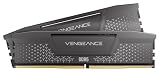
- Premium Choice: CORSAIR Vengeance DDR5 32GB (2 x 16GB) Up to 6000MHz AMD Intel RAM
When building or upgrading a PC, one key choice is DDR4 or DDR5 memory. The right answer depends mostly on your platform, since the two are not interchangeable.
- They Are Not Interchangeable
- Performance Differences
- Cost and Availability
- The Sweet Spot for Gaming
- Which Should You Choose?
- Enabling EXPO and XMP
- Capacity vs Speed
- Future-Proofing
- Key Takeaways
- Timings and Latency
- Matching RAM to Your CPU
- Final Thoughts and Quick Recap
- Frequently Asked Questions
- Related Guides
This guide explains the differences and which memory type makes sense in 2026.
As an Amazon Associate we earn from qualifying purchases at no extra cost to you.


They Are Not Interchangeable
DDR4 and DDR5 use different slots and are tied to your CPU and motherboard. Intel’s latest platforms and all AMD AM5 boards use DDR5, while older AM4 and earlier Intel boards use DDR4. You cannot mix them or fit one in the other’s slot.
So the first question is simply which platform you are building on; that usually decides the memory type for you.
Performance Differences
DDR5 offers higher bandwidth and speeds (6000 MT/s and beyond) versus DDR4’s typical 3200-3600 MT/s. In gaming, the real-world difference is often modest, but it grows with high-end GPUs and CPU-bound titles, and DDR5 has more headroom for the future.
For productivity and heavily multi-threaded workloads, DDR5’s bandwidth advantage is more noticeable.
Cost and Availability
DDR5 prices have fallen to near parity with DDR4 for mainstream kits, so on a new build DDR5 is the sensible choice. DDR4 remains cheaper for upgrading an existing AM4 or older Intel system, where it is still perfectly capable for gaming.
There is no reason to build a new DDR4 system in 2026 unless reusing parts.
The Sweet Spot for Gaming
On AM5 or current Intel, a 32GB DDR5-6000 kit (with EXPO/XMP) is the gaming sweet spot, offering great speed and capacity. On AM4, a 32GB DDR4-3600 CL16 kit is ideal and cost-effective.
Enabling EXPO or XMP in BIOS is essential to run the RAM at its rated speed rather than a slow default.
Which Should You Choose?
Building new? Choose DDR5 on a modern platform. Upgrading an AM4 or older Intel PC? Stick with DDR4, which is cheaper and still strong for gaming. Let your CPU and motherboard decide.
Do not pay a premium for extreme-speed kits; the mainstream sweet spot offers the best value.
Enabling EXPO and XMP
Whichever memory you choose, it runs at a slow default until you enable its speed profile in BIOS: EXPO on AMD, XMP on Intel. This one setting unlocks the RAM’s rated speed and is essential for gaming performance.
Without it, a fast DDR5-6000 kit runs at perhaps DDR5-4800, leaving performance on the table.
Capacity vs Speed
For gaming, 32GB at a sensible speed beats a smaller, ultra-fast kit. Once you have enough capacity and a decent speed with tuned timings, chasing extreme frequencies brings diminishing returns for most games.
Prioritise 32GB and a stable EXPO/XMP profile over headline-grabbing frequency numbers.
Future-Proofing
DDR5 is the forward-looking choice, since new platforms have standardised on it and speeds continue to climb. DDR4 is at the end of its road, so a new DDR4 build only makes sense when reusing existing parts.
If you plan to keep the platform for years, DDR5 gives more upgrade headroom.
Key Takeaways
To recap the essentials of this guide on ddr4 vs ddr5 ram: follow the official method, keep your software current, and change one thing at a time so you can tell what worked. The steps above are quick, safe and reversible.
If you take away one thing, it is that a little maintenance and the right free tools prevent most problems before they start, keeping your PC fast, stable and ready for the next game.
Timings and Latency
DDR5 runs at higher frequencies but looser timings than DDR4, so the real-world latency can be similar despite the bigger numbers. For gaming, a tuned DDR5-6000 CL30 kit and a DDR4-3600 CL16 kit both perform well on their respective platforms.
Chasing extreme frequencies with poor timings brings little benefit; a balanced kit with a good speed and reasonable timings is ideal.
Matching RAM to Your CPU
AMD’s Ryzen chips have a sweet spot around DDR5-6000 where the memory and internal fabric stay in sync, giving the best gaming results. Pushing much higher can force a less efficient mode, so 6000 is the recommended target on AM5.
Check your CPU’s recommended memory speed and buy a kit that matches rather than the fastest available.
Final Thoughts and Quick Recap
DDR4 vs DDR5 RAM does not need to be complicated. Stick to the official tools and methods covered above, make one change at a time, and verify the result before moving on. That disciplined approach keeps your PC stable and avoids the trial-and-error that causes most headaches, and it applies whether you are a first-time builder or a seasoned enthusiast.
The key points are simple: use trusted sources, keep your software current, and let real data rather than guesswork guide your decisions about ddr4 vs ddr5 ram. A few minutes of care here saves hours of troubleshooting later, and the habits pay off across every game and application you run.
The payoff is a system that stays fast, quiet and reliable, ready for whatever you play next. Bookmark this guide and revisit the steps whenever you upgrade a component or run into a new issue, and use the related guides below to keep the rest of your build in equally good shape. Consistent, small maintenance beats occasional big fixes every time.
Frequently Asked Questions
Can I use DDR4 RAM in a DDR5 motherboard?
No; they use different slots and are not compatible. Your motherboard supports one or the other.
Is DDR5 worth it for gaming?
On a new build yes, since prices are similar to DDR4 and it has more headroom. Upgrading an AM4 system, DDR4 is still great value.
What is the gaming sweet spot for RAM?
32GB DDR5-6000 on modern platforms, or 32GB DDR4-3600 CL16 on AM4, with EXPO/XMP enabled.
Do I need to enable XMP or EXPO?
Yes; without it, the RAM runs at a slow default speed instead of its rated speed.
Related Guides
- How Much RAM Do You Need for Gaming?
- How to Enable XMP / EXPO for Faster RAM
- How to Update AMD Chipset Drivers
- CPU-Z Explained: How to Read Your PC’s Specs