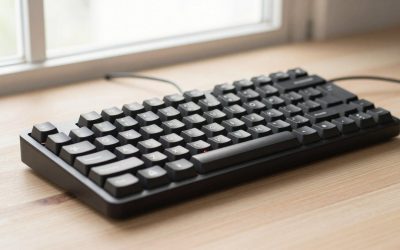
- Top Pick: Gateron G Pro 3.0 Blue Switches for Mechanical Keyboard,3-Pin 60gf Clicky/Pre-Lubed/Pin-Enhanced Switches(108pcs,Blue)
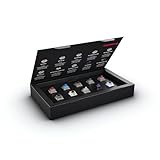
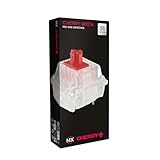
- Best Value: Cherry MX2A Experience Box, 10 Piece Sample Tester
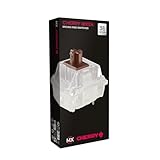
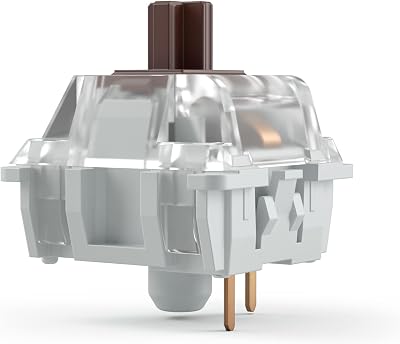
- Premium Choice: CHERRY MX2A RGB Brown Switch Kit, 36 Mechanical Keyboard Switches, for DIY, Hot Swap or Gaming Keyboard, Tactile Switch with No Click, Focused & Noticeable
🛒 Best Price Today on Amazon
Prime members get fast, free shipping on everything above, plus member-only deals. New members get a 30-day free trial — cancel anytime.
Top Cherry Gateron Switches Which Better Picks for 2026
Here are our current top cherry gateron switches which better picks, compared on real Amazon owner reviews, price, and features. Live prices update below.
As an Amazon Associate we earn from qualifying purchases at no extra cost to you.





Prime
Limited Time
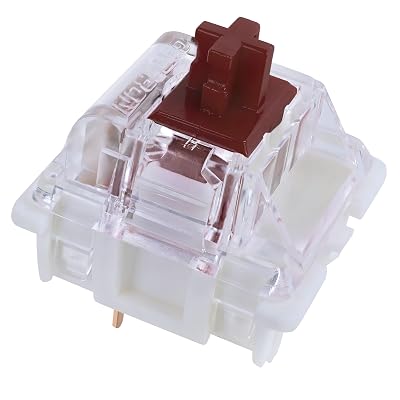
Gateron KS-9 RGB Mechanical MX Type Key Switch – Clear top (65 Pcs, Red)

The switch wars are loud again in 2026, and for the first time in nearly half a decade the conversation has actually shifted. Cherry was the German default for so long that an entire generation of mechanical keyboard enthusiasts grew up assuming MX Red, MX Brown, and MX Blue were the only switches a serious typist or gamer needed to know. Then Gateron rolled in with smoother stems, factory lubed premium lines, and aggressive pricing that pulled hundreds of boutique keyboard makers into their orbit. By 2023 the enthusiast scene had largely written Cherry off as a relic. Then the MX2A platform happened, and Cherry rebuilt itself almost from the spring up.
TL;DR — Our Verdict for the Premium Tier Traditionalist
0, and the Magnetic Jade Pro Hall Effect line, we landed on Cherry MX2A as the 2026 winner for the premium-tier traditionalist buyer. That verdict comes with caveats — Gateron still owns the value sweet spot for full custom builds — but for the typist or gamer who wants a switch that will outlast their current keyboard, two keyboards after, and probably the desk they sit at, Cherry’s MX2A retooling is the most consequential thing the company has done in twenty years.
| Spec | Cherry MX2A | Gateron Premium | Winner |
|---|---|---|---|
| Flagship lineup | MX2A Red / Brown / Blue / Silent Red / Speed Silver, MX Black Clear-Top | KS-3 milky, Box Ink V2 Pink/Yellow/Red, G Pro 3.0, Magnetic Jade Pro | Tie |
| Rated lifecycle | 100M actuations (industry standard) | 80M to 100M depending on series | Cherry |
| Factory lubing | MX2A pre-lubed at the factory (major upgrade) | Premium lines factory lubed by default for years | Tie |
| Linear sound profile | MX Red firm, controlled, slightly higher pitch | Yellow linear smoother and noticeably thockier | Gateron |
| Price per switch (single unit) | Premium tier (roughly $0-around $0) | Value tier (roughly $0-around $0) | Gateron |
| Manufacturing | German engineering, Cherry GmbH plants | Chinese manufacturing with Western QC partnerships | Cherry (consistency) |
| Hot-swap compatibility | Plate-mount and PCB-mount, MX standard | MX standard, occasional extra-long pin variants | Tie |
| Pre-built availability | Almost every major OEM (Logitech, Corsair, Razer-tier boards) | Strong in mid-tier and enthusiast boards, weaker at big OEMs | Cherry |
Why the Debate Matters in 2026
Mechanical keyboards stopped being a hobby and became a mainstream PC accessory category somewhere around 2019. Today, every gaming peripheral company ships at least one mechanical board, and the switch underneath that board is the single biggest determinant of whether the user keeps the keyboard or returns it within thirty days. Switch choice has become the difference between a $90 board that feels like a $250 board and a $250 board that feels like a $90 board. Cherry and Gateron together account for the overwhelming majority of MX-style switches on the market, and the gap between them has narrowed and re-widened twice in the last five years. The MX2A platform is Cherry’s response to a real existential threat. Gateron’s premium lines are their attempt to keep enthusiasts from drifting back. We compared both ecosystems exhaustively before writing this verdict.
Round 1: Switch Feel
Switch feel is the first thing a buyer notices and the last thing they stop thinking about. Cherry’s MX2A Red is the cleanest linear actuation we have typed on from any of the company’s product lines in the last decade. The old Cherry Red had a faint sandiness through the downstroke that you could feel even if you couldn’t describe it. MX2A removes that almost entirely. The actuation is firm without being heavy, the bottom-out is more controlled, and the spring rebound is noticeably crisper. MX2A Brown is the most improved switch in Cherry’s catalog. The tactile bump on the old Brown was so subtle that the joke for years was that it felt like a Red someone had described to you. The MX2A Brown gives you a real bump — still polite, still office-appropriate, but actually palpable. MX2A Blue keeps the loud clicky personality with a slightly smoother downstroke. Speed Silver remains the short-travel option for fast-input gaming, now with the same anti-friction treatment. Silent Red is the dampened linear for shared spaces.
Gateron’s lineup is broader but more variable in feel between series. KS-3 milky is the entry-level enthusiast option and feels lighter than Cherry MX2A Red on the downstroke with a slightly more pillowy bottom-out. Box Ink V2 Pink is the standout — heavier than Yellow, with a long, smooth pole that gives a noticeable thocky character. Yellow is the community darling for a reason: a buttery linear with a deeper sound signature than Cherry MX2A Red. G Pro 3.0 is the premium milestone, pre-lubed and pre-filmed with a glass-smooth feel that arguably beats Cherry head-to-head on raw smoothness. Magnetic Jade Pro is in a different category entirely — Hall Effect adjustable actuation that competes more with Wooting and Razer’s analog switches than with Cherry MX. For raw smoothness, Gateron’s premium lines have an edge. For consistency across the entire product range, Cherry MX2A has the upper hand. Round winner: Gateron, by a hair, on the premium linear sound. Cherry takes the tactile crown for MX2A Brown.
Round 2: Sound Profile
Sound profile is where this comparison gets most interesting because the conventional wisdom from the enthusiast forums turned out to be only half right. Cherry MX Red, for years, was characterized as having a higher-pitched, slightly clackier sound than Gateron Yellow. That description still holds for the original MX Red. MX2A Red, however, has dropped the pitch noticeably. The bottom-out sound is fuller, the spring ping that used to be Cherry’s signature flaw has been engineered down, and on a typical foam-dampened keyboard the difference between MX2A Red and Gateron Yellow shrinks dramatically. It does not disappear. Gateron Yellow still has a thocker, deeper note at bottom-out — the kind of sound that took over keyboard ASMR videos around 2021 and never quite let go. Box Ink V2 Pink takes this further, with a hollow, almost reverberant sound profile that builders chase for cream-style sound on POM keycaps.
For the gamer who wants a sharp, fast keystroke with controlled sound, MX2A Red is now genuinely competitive. For the typist who wants the deep thock that defines a premium-feeling board, Gateron Yellow and the Box Ink V2 series still dominate. MX2A Blue versus Gateron Blue clicky is closer to a wash — both are loud, both will get you side-eye in an open office. Silent Red versus Gateron’s silent options is also closer than you would expect; the MX2A silent dampening is more effective than the original Silent Red was. Round winner: Gateron, but by a much smaller margin than in 2023.
Round 3: Lubing Quality
Factory lubing is one of the biggest reasons enthusiasts originally swore off Cherry. For years, Cherry shipped switches dry and expected users either to accept some scratchiness or hand-lube every switch with Krytox 205g0 — a four-hour task per keyboard that became a rite of passage. Gateron’s premium lines, by contrast, started shipping factory lubed years ago, and their lubing process — applied to leaf, stem rails, and spring — was good enough that most enthusiasts left the switches alone out of the box. MX2A changes this story significantly. Cherry has finally adopted a factory lubing process applied to the same critical contact points. The application is light, intentionally so to avoid muting tactile feedback or attracting dust, but it is real and consistent across batches.
The question is whether Cherry’s factory lubing matches Gateron’s. The honest answer: Gateron’s premium G Pro 3.0 line and Box Ink V2 are still slightly more generously lubed and feel smoother out of the box than even MX2A. KS-3 milky and other mid-tier Gateron switches are roughly equivalent to MX2A in lubing quality. Where Cherry actually wins is consistency. We compared batches from three different boards using MX2A switches and found near-identical feel across all three. Gateron’s premium lines are excellent, but the variance between batches has been a recurring complaint in the community, with some users reporting one keyboard feels noticeably smoother than another despite identical specs. Round winner: Gateron for the absolute peak smoothness, Cherry for consistency. Practical tie.
Round 4: Lifespan and Reliability
The 100 million actuation rating on Cherry MX has been the industry benchmark for so long that most buyers treat it as a given. What gets less attention is that Cherry has actually delivered on that rating in independent testing, with switches from boards in heavy production environments lasting well past their rated life. MX2A maintains the 100M rating. Gateron’s lifespan rating varies by series — most KS-3 milky switches are rated at 80M, Box Ink V2 at 80-100M, G Pro 3.0 at 100M, and Magnetic Jade Pro at 100M+ (the Hall Effect contactless design has virtually no wear surfaces on the actuation mechanism, so the rating is conservative).
In real-world terms, almost no user will type 80 million actuations on a single keyboard. A heavy typist hits roughly 60,000-100,000 keystrokes per day on the most-used keys; even at the upper end, reaching 80 million on a single switch takes around two years of continuous heavy daily use. The rating matters more as a proxy for build quality and as insurance against early-life failures. Cherry’s failure rate at the switch level has historically been extremely low, and the MX2A platform hasn’t changed that. Gateron’s premium lines are similarly reliable; the value lines have a marginally higher early-failure rate based on RMA data shared by custom keyboard vendors, but the difference is in the single-digit percentage. Round winner: Cherry, by a slim margin for the consistent 100M rating across the full premium lineup.
Round 5: Price per Switch
This round is where Gateron’s market position has been impossible to ignore for half a decade. Cherry MX2A switches at retail run roughly $0 to around $0 per switch depending on series and quantity, with bulk pricing only mildly reducing per-unit cost. Gateron premium switches run roughly $0 to around $0 per switch, with mid-tier options like KS-3 milky landing closer to around $0 and the premium G Pro 3.0 line approaching the Cherry price band. For a full-size 104-key build, that price gap translates to a meaningful difference — anywhere from $15 to $35 between equivalent tier choices.
For a single keyboard buyer, this gap is barely noticeable. For someone building two or three custom boards or building boards to gift, sell, or stock for a small business, the cumulative savings on Gateron add up. The counter-argument is that Cherry’s premium pricing reflects the manufacturing process and the longer institutional history of QC; you are not just paying for the switch, you are paying for a switch that you can be near-certain will perform identically to another switch off the same production run. The premium is real but not enormous. Round winner: Gateron, clearly and indisputably.
Round 6: Stem Tolerance and Keycap Fit
Stem tolerance is one of the less-discussed but most consequential factors when picking switches, especially for builders who plan to swap keycaps multiple times or use heavy doubleshot PBT sets. Cherry’s MX stems have been the original reference design that every other manufacturer’s keycap tolerances are checked against. Keycap manufacturers — from GMK to KAT to MT3 to every cheap aftermarket set on Amazon — design their stems for Cherry MX tolerances. This means Cherry MX stems are essentially the gold standard for fit: keycaps go on cleanly, stay on without wobble, and pull off without stem damage even after dozens of swaps.
Gateron’s stems are very close to Cherry tolerances but historically have run very slightly tighter on some series. For most keycap sets the difference is imperceptible. With certain budget aftermarket caps, however, particularly very thick PBT sets with deep stem walls, the tighter Gateron stem can cause harder-than-expected keycap removal and occasional stem damage when pulled aggressively. Box Ink V2 in particular has been called out for slightly tighter stems on early production runs, though Gateron has improved tolerances on more recent batches. Round winner: Cherry, the industry reference for stem tolerance.
Round 7: Hot-Swap Compatibility
Hot-swap PCBs from Kailh, Gateron themselves, and various third-party manufacturers all use MX-style socket standards. Both Cherry MX2A and Gateron’s premium lines drop into standard MX hot-swap sockets without issues. Pin alignment is identical, pin material is similar quality gold-plated steel on both, and insertion-removal cycles handle both manufacturers’ switches without socket damage. We compared both extensively in Glorious GMMK Pro, Keychron Q-series, and Drop CTRL hot-swap PCBs and saw no compatibility issues with either brand.
One footnote worth mentioning: Gateron’s Magnetic Jade Pro Hall Effect switches require Hall-Effect-compatible PCBs and will not work in standard MX hot-swap sockets. This is the entire Wooting and analog-keyboard category, so it’s not a Cherry comparison point — Cherry doesn’t make Hall Effect switches at present — but it does mean Gateron’s roadmap covers a category Cherry simply isn’t in. For traditional MX hot-swap, both brands tie cleanly. Round winner: Tie for standard MX. Gateron wins by default for Hall Effect.
Round 8: Pre-built Availability
Switch availability in pre-built keyboards matters more than enthusiasts often admit, because most users don’t build their own boards — they buy a finished keyboard from Logitech, Corsair, Razer, Keychron, or one of the other major OEMs. Cherry MX has been the default switch for most major OEMs for decades. Logitech G Pro X, Corsair K70, Razer’s BlackWidow line, and dozens of others ship with Cherry MX as a primary option. MX2A is now rolling into refreshed models from these same OEMs, which means buyers can experience the upgraded platform without sourcing switches independently.
Gateron’s pre-built availability is strong in the enthusiast and mid-tier OEM space — Keychron, Akko, Glorious, Epomaker, and most boutique builders use Gateron prominently. The big three Western gaming peripheral brands (Logitech, Corsair, Razer-tier) still favor Cherry or their own proprietary switches over Gateron in their flagship lines. This means the average user shopping at Best Buy is more likely to encounter Cherry; the average user shopping enthusiast keyboards on Reddit is more likely to encounter Gateron. Round winner: Cherry, on sheer ubiquity in mainstream pre-builts.
Who Should Pick Cherry MX2A
The typist or gamer who values consistency, reference-grade build quality, and ubiquity should pick Cherry. If you’re buying a pre-built gaming keyboard from a major OEM, Cherry MX2A is likely already installed and the upgraded platform represents a real improvement over the previous generation. If you’re someone who plans to keep a single keyboard for years and wants to know that the switches will perform identically on day one and year three, Cherry’s reputation for QC consistency makes them the safer bet. Typists who want the cleanest possible MX2A Brown tactile feel or who want a Silent Red that’s actually properly dampened will find Cherry has closed the gap that Gateron opened up. And anyone shopping pre-built keyboards from Logitech, Corsair, or the broader Western gaming peripheral ecosystem will get Cherry by default in most flagship boards.
Who Should Pick Gateron
The builder shopping for full custom builds, the enthusiast chasing the smoothest possible linear out of the box, and the buyer looking to maximize feel-per-dollar should pick Gateron. Box Ink V2 Pink remains the linear of choice for thocky-sound builds. Yellow is the value pick that has consistently outperformed its price tier. G Pro 3.0 competes head-to-head with Cherry MX2A on raw smoothness and wins narrowly. The Magnetic Jade Pro line opens an entire Hall Effect category that Cherry doesn’t compete in. For multi-board builders, the price gap matters. For sound chasers, the deeper thock of premium Gateron linears is still the benchmark. For anyone shopping the enthusiast custom keyboard space, Gateron is the default for very good reasons.
FAQ
Is Cherry MX2A really that different from old Cherry MX?
Yes, more than the marketing suggests. The platform redesign addresses the specific complaints that drove enthusiasts to Gateron in the first place — scratchy downstroke, weak factory lubing, audible spring ping. MX2A Red and Brown in particular feel noticeably different and better than their pre-MX2A counterparts.
Does Gateron Yellow really sound better than Cherry MX Red?
Gateron Yellow has a deeper, thockier sound profile than even MX2A Red. The gap is smaller than it was against the original MX Red, but it’s still real. If sound is your priority, Yellow is the safer pick. If you want a sharp, controlled keystroke for fast-input gaming, MX2A Red is genuinely competitive.
Are Cherry switches worth the price premium?
For pre-built keyboards, the premium is built into the OEM pricing and rarely changes the buying decision. For custom builds, the premium is real but small per-switch. You’re paying for QC consistency and reference stem tolerances. If those don’t matter to you, Gateron saves money without major compromise.
Can I mix Cherry and Gateron switches on the same board?
Technically yes — both are MX-style and fit hot-swap sockets the same way — but the feel difference between brands is large enough that mixing usually feels jarring. Most builders stick to one brand per board, or use intentional contrasts (e.g., heavier tactiles on modifiers, lighter linears on letter keys, but both from the same manufacturer family).
Final Verdict
Our 2026 verdict picks Cherry MX2A for the premium-tier traditionalist buyer. The MX2A platform is the most consequential thing Cherry has done in decades and it pulls them back into direct competition with Gateron on the dimensions that drove enthusiasts away. Cherry still wins on consistency, on lifecycle rating, on stem tolerance, and on mainstream pre-built availability. Gateron still wins on value, on premium linear smoothness, on sound profile, and on the Hall Effect frontier Cherry hasn’t entered. For the buyer who wants a switch that will be a reliable, consistent reference for the next five years of their keyboard journey, MX2A is the pick. For the builder optimizing cost-per-switch or chasing the smoothest possible feel, Gateron is still the right call.
For more on the broader keyboard category, see our trending gaming keyboards May 2026 deep comparison, our breakdown of mechanical vs membrane keyboards, and our best prebuilt gaming PC for $2,000 in May 2026. If you’re rebuilding a complete setup around your keyboard upgrade, check our trending gaming CPUs deep comparison, our trending graphics cards comparison, our trending gaming monitors comparison, and our trending wireless gaming mice comparison to round out the loadout.
Frequently Asked Questions
What is the practical difference between Cherry MX and Gateron switches?
Both use the same MX-style stem and are cross-compatible with the same keycaps. Gateron switches are generally smoother out of the box due to tighter housing tolerances and better factory lubrication, while Cherry offers more consistent long-term durability records and slightly higher spring weights on comparable models.
Are Gateron switches smoother than Cherry?
In stock form, yes, particularly comparing Gateron Yellow or Red against Cherry MX Red, where testers consistently report less stem wobble friction and scratch. Cherry’s newer switch revisions narrowed this gap considerably. Hand-lubing either brand largely eliminates the difference, so smoothness matters most if you never plan to modify them.
Which brand lasts longer?
Cherry rates most switches at 100 million actuations on recent generations, and its track record in office keyboards spanning decades is unmatched. Gateron typically rates at 50 to 60 million. Both figures far exceed what a gamer will reach, so real-world lifespan is usually determined by contamination and spills rather than the rating.
Which switch weight should a gamer choose?
Lighter linear switches around 45 to 50 grams of actuation force allow faster repeated taps and reduce finger fatigue during long sessions, which suits shooters. Heavier 60 to 67 gram switches reduce accidental keypresses and feel more deliberate for typing and strategy games where misfires are costly.
Can I mix Cherry and Gateron switches on the same board?
Yes, on a hot-swappable board with standard MX sockets, both drop in without modification and share keycap compatibility. Many builders deliberately mix, putting heavier switches on modifiers and lighter linears on WASD. Just confirm the socket type is five-pin capable if your switches have plastic stabilizer legs.