

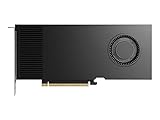
- Top Pick: NVD RTX PRO 6000 Blackwell Professional Workstation Edition Graphics Card for AI, Design, Simulation, Engineering – 96GB DDR7 ECC Memory – 4th Gen RT/5th Gen Tensor Core GPU – OEM Packaging
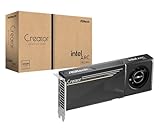
- Best Value: ASRock Intel Arc Pro B70 Creator 32GB Workstation Graphics Card, Xe2-HPG, 32GB GDDR6, PCIe 5.0, 4X DP 2.1, Blower Fan, Vapor Chamber, Honeywell PTM7950
- Premium Choice: ASRock Radeon AI PRO R9700 Creator 32GB Professional Graphics Card, 2920 MHz Boost Clock, GDDR6, AMD RDNA 4, AI-Accelerators, DisplayPort 2.1a, PCIe 5.0, Blower Cooler
🛒 Best Price Today on Amazon
Prime members get fast, free shipping on everything above, plus member-only deals. New members get a 30-day free trial — cancel anytime.
- Top Workstation Gpus Picks for 2026
- Best Workstation GPUs at a Glance
- 1. PNY NVIDIA RTX PRO 6000 Blackwell Max-Q Workstation Graphics Card
- 2. PNY NVIDIA RTX PRO 5000 Blackwell 48GB GDDR7 Graphics Card
- 3. NVIDIA RTX PRO 4000 SFF Blackwell 24GB GDDR7 ECC Low-Profile
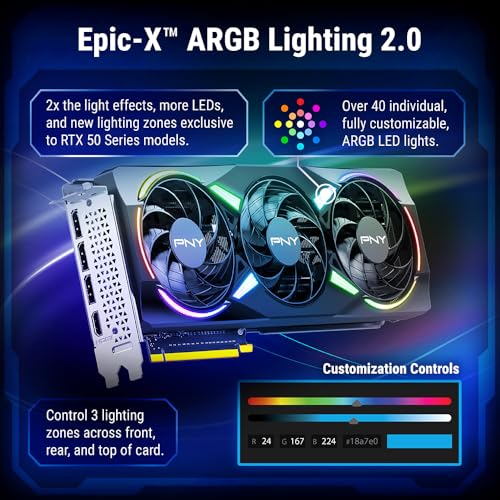
- 4. PNY NVIDIA GeForce RTX 5070 Epic-X ARGB OC, 12GB GDDR7 (Consumer Gaming Card)
- 5. GIGABYTE Radeon RX 9060 XT Gaming OC ICE 16GB GDDR6 (Consumer Gaming Card)
- 6. MSI GeForce RTX 3060 12GB GDDR6 Torx Twin Fan (Consumer Gaming Card)
- How to Choose a Workstation GPU
- Related Guides
- Frequently Asked Questions
- Related Guides
- Related Articles
Top Workstation Gpus Picks for 2026
Here are our current top workstation gpus picks, compared on real Amazon owner reviews, price, and features. Live prices update below.
As an Amazon Associate we earn from qualifying purchases at no extra cost to you.




Prime
Best Seller
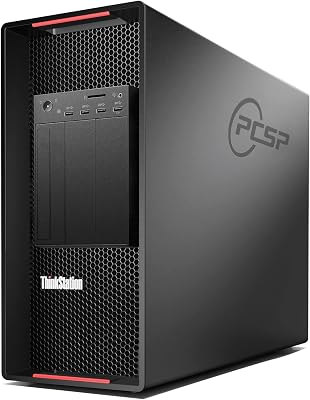
PCSP P920 Workstation/Server – 2X Intel Gold 6130 2.10GHz (32 Cores & 64 Threads Total), Quadro K620 2GB Graphics Card, No HDD, No Operating System (Renewed) (64GB DDR4)
View on Amazon.com


A genuine workstation GPU is a different animal from a gaming graphics card. Pro cards such as NVIDIA’s RTX PRO (formerly Quadro) line and AMD’s Radeon Pro series are built for professional applications: they ship with ISV-certified drivers validated for CAD, DCC and engineering software, frequently include error-correcting (ECC) memory for data integrity, and carry large VRAM buffers for huge scenes, models and datasets. Consumer GeForce and Radeon cards are superb for gaming and can absolutely be used for content creation, but they lack the certified drivers and ECC that define a true workstation product. This guide rounds up the best workstation GPUs in 2026 and is completely honest about that line — leading with the real pro cards and clearly flagging the gaming cards as what they are.
Our picks were chosen on what matters for professional work: certified drivers and reliability, VRAM capacity, memory features like ECC, form factor for workstation chassis, and value within their class. Three of these — the PNY NVIDIA RTX PRO 6000, RTX PRO 5000 and RTX PRO 4000 — are true workstation cards. The other three (MSI GeForce RTX 3060, GIGABYTE Radeon RX 9060 XT and PNY GeForce RTX 5070) are consumer gaming GPUs, included as honest, lower-cost alternatives for creators who do not need certification — and explicitly flagged as not workstation-class. Prices span an enormous range, from around $399 to around $12,696, reflecting that gulf. Below is an at-a-glance comparison, then a closer look at each and a buyer’s guide to choosing a workstation GPU.
Best Workstation GPUs at a Glance
| Graphics Card | Best For | Workstation-Class? | Approx Price |
|---|---|---|---|
| PNY NVIDIA RTX PRO 6000 Blackwell Max-Q | Top-tier pro workloads | Yes – certified, ECC, huge VRAM | around $12,696 |
| PNY NVIDIA RTX PRO 5000 Blackwell 48GB | High-end CAD / rendering / AI | Yes – certified, 48GB GDDR7 | around $4,820 |
| NVIDIA RTX PRO 4000 SFF Blackwell 24GB | Compact pro / SFF workstation | Yes – certified, ECC, low-profile | around $2,047 |
| PNY GeForce RTX 5070 12GB | Creator on a budget (gaming card) | No – consumer GeForce | around $633 |
| GIGABYTE Radeon RX 9060 XT 16GB | Value VRAM creator (gaming card) | No – consumer Radeon | around $470 |
| MSI GeForce RTX 3060 12GB | Entry creation (gaming card) | No – consumer GeForce | around $399 |
1. PNY NVIDIA RTX PRO 6000 Blackwell Max-Q Workstation Graphics Card
Prime
PNY Technology VCNRTXPRO6000BQ-PB NVIDIA RTX PRO 6000 Blackwell Max-Q Workstation Graphics Card
In Stock
As an Amazon Associate we earn from qualifying purchases. Product prices and availability are accurate as of the date/time indicated.
The PNY NVIDIA RTX PRO 6000 Blackwell Max-Q is the flagship true workstation GPU on this list and the no-compromise pick for the most demanding professional work. As a top-tier RTX PRO (Quadro-lineage) card it pairs an enormous VRAM buffer with ECC memory, ISV-certified professional drivers, and the Max-Q power-efficient design intended for workstation chassis. At around $12,696 it is unambiguously a professional tool with a professional price.
This is the card for studios and professionals running the heaviest workloads — massive 3D scenes, complex CAD assemblies, large-scale rendering, simulation and AI development — where certified stability and huge, error-corrected memory are non-negotiable. The certified drivers are validated for professional applications, the ECC memory protects data integrity over long compute runs, and the Max-Q efficiency suits dense workstation builds. If your work genuinely demands a flagship workstation GPU, this is the real thing — not a gaming card pressed into service.
Pros: True workstation card: ISV-certified drivers, ECC memory, very large VRAM, Max-Q efficiency.
Cons: Extremely expensive; overkill and poor value for anyone not doing top-tier pro work.
2. PNY NVIDIA RTX PRO 5000 Blackwell 48GB GDDR7 Graphics Card
Prime
PNY VCNRTXPRO5000B-PB NVIDIA RTX PRO 5000 Blackwell 48GB GDDR7 384B Graphic Card – Black
In Stock
As an Amazon Associate we earn from qualifying purchases. Product prices and availability are accurate as of the date/time indicated.
The PNY NVIDIA RTX PRO 5000 Blackwell is the high-end workstation pick that balances serious capability with a more attainable price than the flagship. It is a genuine RTX PRO card with a large 48GB GDDR7 frame buffer and a 384-bit memory interface, certified professional drivers, and the reliability professionals expect. At around $4,820 it targets demanding studios that need big memory and certification without stepping up to the RTX PRO 6000.
This is the card for high-end CAD, professional rendering, visual effects and AI work where 48GB of certified, professional-grade memory makes a real difference to scene and model size. The certified drivers keep professional software stable and supported, the large GDDR7 buffer handles substantial datasets, and it slots into a serious workstation as a true pro GPU. For professionals who need workstation-class memory and certification at a more accessible tier than the flagship, the RTX PRO 5000 is the standout.
Pros: True workstation card: 48GB GDDR7, certified pro drivers, large memory bus, strong reliability.
Cons: Still very expensive; unnecessary for gaming or light creative work.
3. NVIDIA RTX PRO 4000 SFF Blackwell 24GB GDDR7 ECC Low-Profile

7
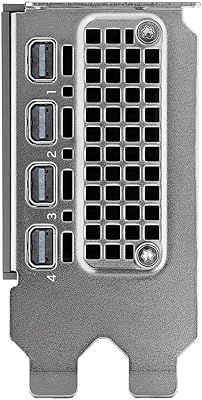
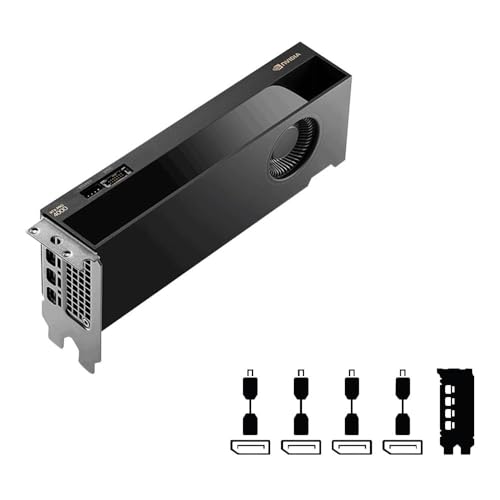
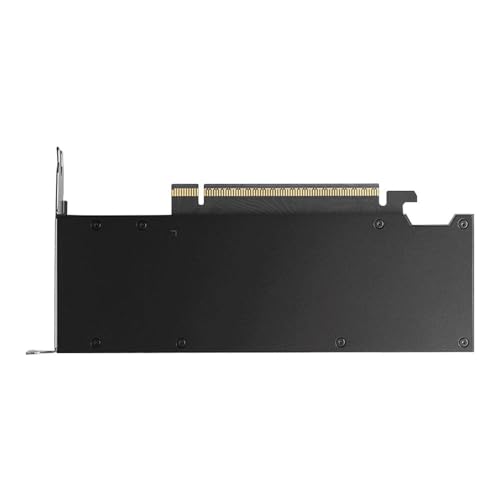
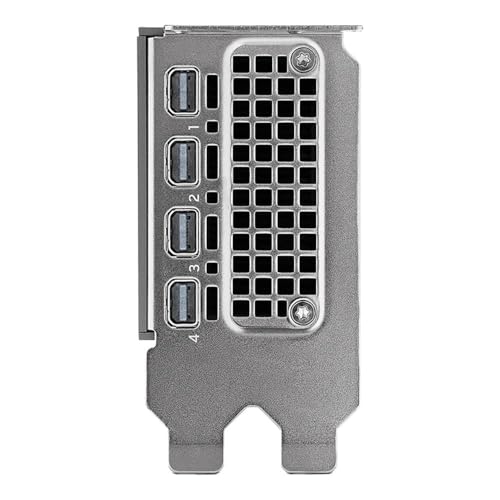
NVIDIA RTX PRO 4000 SFF Blackwell 24GB GDDR7 ECC – PCIe 5.0×8, 4X mDP 2.1b, Low-Profile Dual-Slot AI Workstation GPU Retail
In Stock


As an Amazon Associate we earn from qualifying purchases. Product prices and availability are accurate as of the date/time indicated.
The NVIDIA RTX PRO 4000 SFF Blackwell is the compact workstation pick — a true pro card engineered for small-form-factor and space-constrained workstations. It packs 24GB of GDDR7 with ECC, certified professional drivers, PCIe 5.0, four Mini DisplayPort 2.1b outputs and a low-profile design, all in an efficient footprint. At around $2,047 it is the most accessible genuine workstation card here.
This is the card for professionals who need certified, error-corrected performance but are building in a compact or SFF workstation where a full-height flagship will not fit. The 24GB ECC memory and certified drivers deliver real workstation reliability for CAD, design, multi-display setups and moderate rendering or AI tasks, while the low-profile, multi-output design suits dense or small chassis. For workstation-class capability in a space-limited build, the RTX PRO 4000 SFF is the practical pro choice — and a far better fit for professional software than any consumer card.
Pros: True workstation card: 24GB GDDR7 with ECC, certified drivers, low-profile SFF, quad mDP 2.1b.
Cons: Lower power and size cap raw throughput vs bigger pro cards; still a pro-tier price.
4. PNY NVIDIA GeForce RTX 5070 Epic-X ARGB OC, 12GB GDDR7 (Consumer Gaming Card)

30
Prime
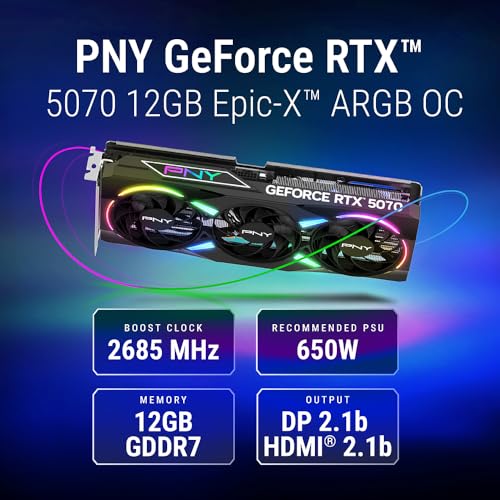
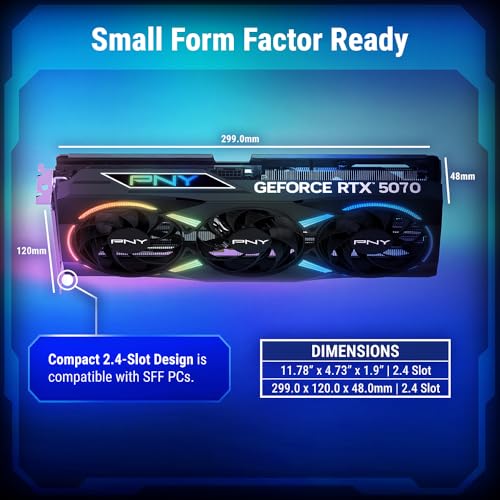
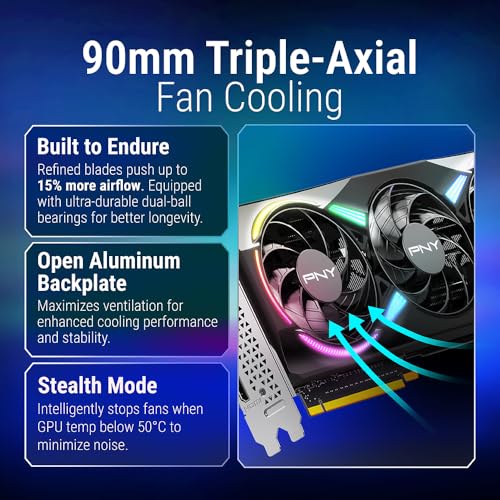
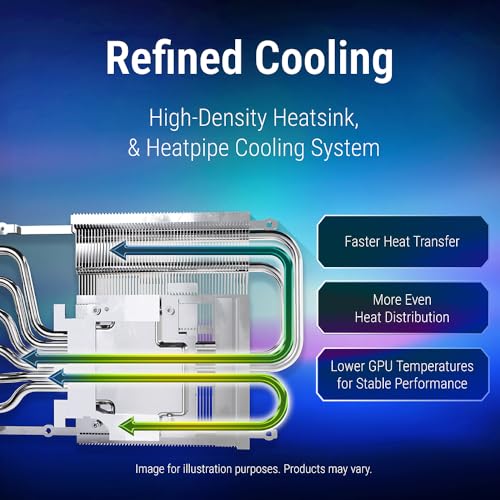
PNY NVIDIA GeForce RTX™ 5070 Epic-X™ ARGB OC Triple Fan, Graphics Card (12GB GDDR7, 192-bit, Boost Speed: 2685 MHz, SFF-Ready, PCIe® 5.0, HDMI®/DP 2.1, 2.4-Slot, Blackwell Architecture, DLSS 4)
In Stock


As an Amazon Associate we earn from qualifying purchases. Product prices and availability are accurate as of the date/time indicated.
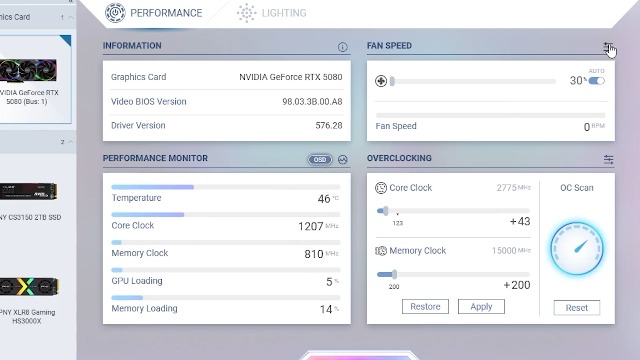
Here we cross the line into consumer territory, and we will say it plainly: the PNY GeForce RTX 5070 is a gaming graphics card, NOT a workstation-class GPU. It is a current-generation GeForce card with 12GB of GDDR7, triple fans and ARGB lighting — excellent for gaming and capable for content creation — but it ships with consumer GeForce drivers rather than ISV-certified professional drivers, and it has no ECC memory. At around $633 it is included as an honest budget alternative, not a true pro card.
This is the pick for a creator or hobbyist who runs apps like video editors, Blender or photo software and wants strong performance for far less than a pro card, while accepting they forgo certification and ECC. The RTX 5070 handles GPU-accelerated creative work well and doubles as a high-end gaming card. But if your livelihood depends on certified driver stability in professional CAD or engineering software, this is not the right tool — it is a gaming GPU that can moonlight in creation, and we are flagging it as such.
Pros: Strong modern GeForce performance, 12GB GDDR7, great for gaming and prosumer creation, far cheaper than pro cards.
Cons: NOT workstation-class: consumer drivers (no ISV certification), no ECC; gaming card, not a true pro GPU.
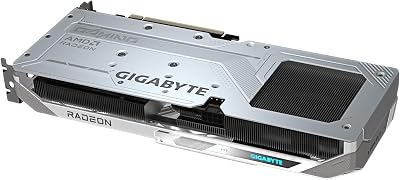
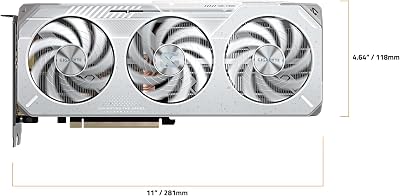
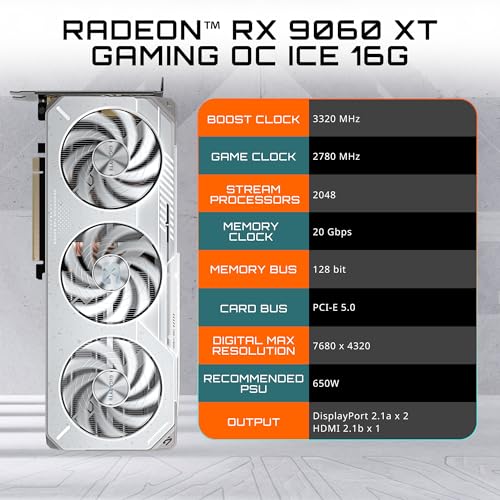
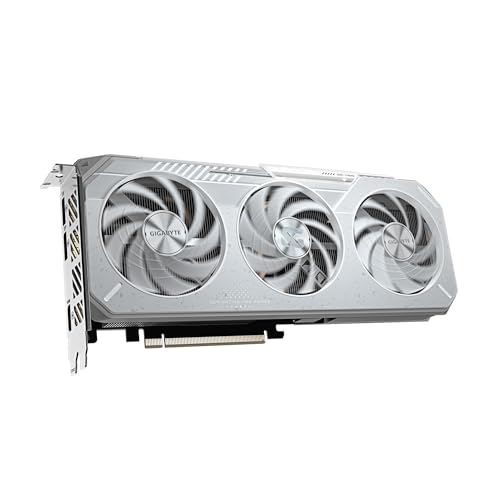
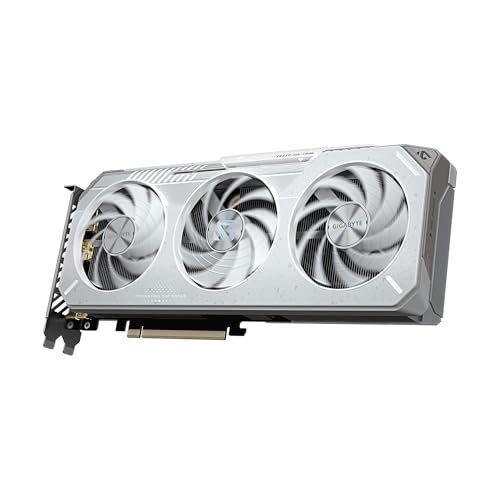
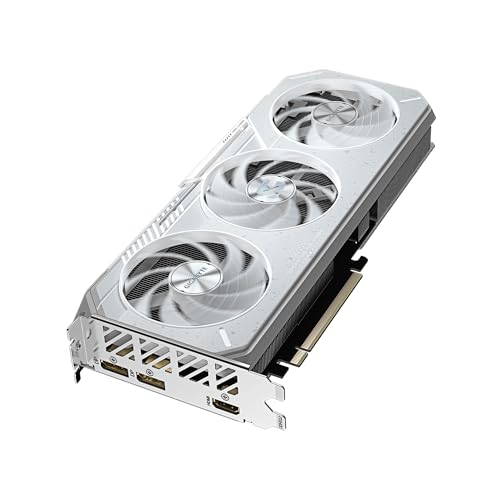
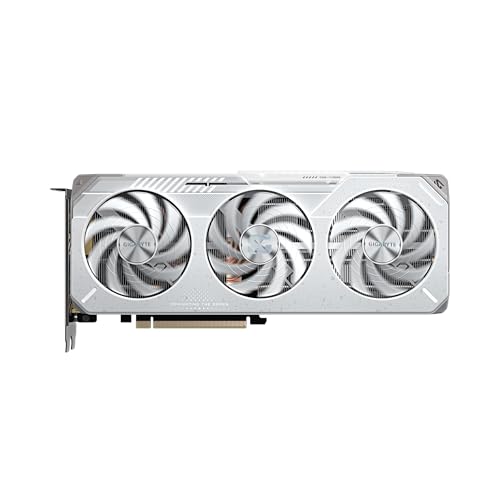
5. GIGABYTE Radeon RX 9060 XT Gaming OC ICE 16GB GDDR6 (Consumer Gaming Card)
19
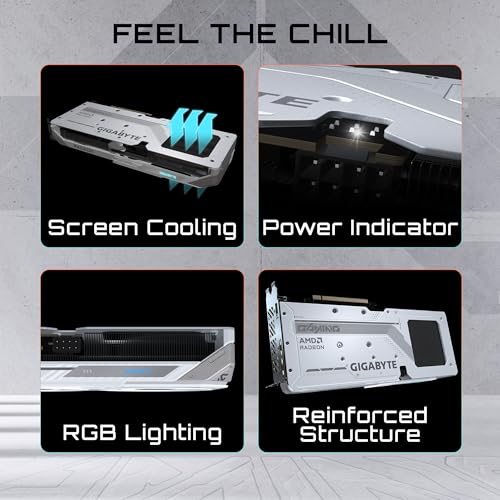
GIGABYTE Radeon™ RX 9060 XT Gaming OC ICE 16G Graphics Card (16GB GDDR6, 128-bit, PCIe 5.0, HDMI/DP 2.1, 2 Slot, Hawk Fan, Server-Grade Thermal Gel, Reinforced Structure)
In Stock







As an Amazon Associate we earn from qualifying purchases. Product prices and availability are accurate as of the date/time indicated.
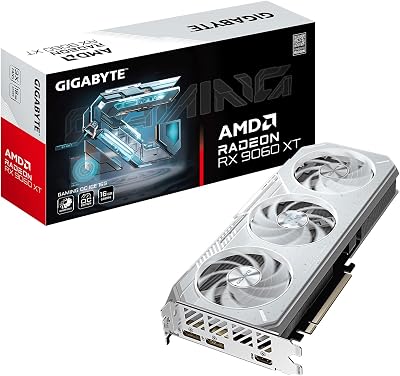
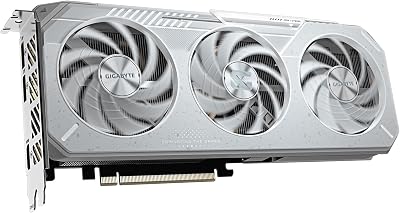
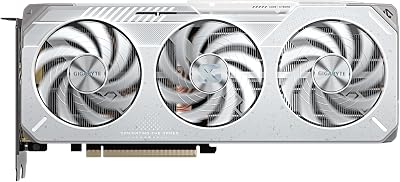
The GIGABYTE Radeon RX 9060 XT is another consumer gaming card on this list, and the same honesty applies: it is NOT a workstation GPU. It is a Radeon gaming card with a generous 16GB GDDR6 buffer on a 128-bit bus and a cool, quiet ‘ICE’ cooler — a strong value gaming card whose larger memory can help certain creative apps — but it uses consumer Radeon drivers, not AMD’s certified Radeon Pro drivers, and lacks ECC. At around $470 it is here as a value alternative, clearly labeled as a gaming part.
This is the pick for a budget-conscious creator who values the 16GB of VRAM for memory-hungry creative tasks and also games, and who does not need professional certification. The roomy frame buffer is its standout for the money, the ICE cooler keeps it quiet, and it is a capable 1080p/1440p gaming card. For certified professional CAD or DCC reliability, though, a true Radeon Pro or RTX PRO card is required — the RX 9060 XT is a gaming GPU with helpful VRAM, not a workstation product.
Pros: Generous 16GB GDDR6 for the price, quiet ICE cooler, solid value gaming card with creator-friendly memory.
Cons: NOT workstation-class: consumer Radeon drivers (no pro certification), no ECC; a gaming GPU.
6. MSI GeForce RTX 3060 12GB GDDR6 Torx Twin Fan (Consumer Gaming Card)

msi Katana 15 15.6” 165Hz QHD Gaming Laptop: Intel Core i7-13620H, NVIDIA Geforce RTX 4070, 16GB DDR5, 1TB NVMe SSD, Cooler Boost 5, Win 11: Black B13VGK-2000US
In Stock
As an Amazon Associate we earn from qualifying purchases. Product prices and availability are accurate as of the date/time indicated.
Rounding out the list is the MSI GeForce RTX 3060, the entry option here — and, to be clear, it is a consumer gaming card, NOT a workstation GPU. It is a previous-generation GeForce card with 12GB of GDDR6 on a 192-bit bus and MSI’s Torx Twin Fan cooler. Its 12GB buffer is unusually generous for its tier and useful in some creative apps, but it runs consumer drivers without ISV certification and has no ECC. At around $399 it is the cheapest pick, included as an honest entry-level alternative.
This is the card for someone starting out in GPU-accelerated creation — light video editing, 3D learning, photo work — on a tight budget, who also wants a capable 1080p gaming card and understands they are not getting workstation certification. The 12GB VRAM gives welcome headroom at this price, and the Torx cooler keeps things calm. But like the other two consumer cards here, it is not a substitute for a certified pro GPU in professional CAD or engineering pipelines — it is an affordable gaming card with generous memory, flagged honestly.
Pros: Generous 12GB VRAM for its tier, capable entry GeForce card, affordable, decent for learning creative work.
Cons: NOT workstation-class: previous-gen consumer GeForce, no certified drivers, no ECC; a gaming GPU.
How to Choose a Workstation GPU
The first and most important question is whether you actually need a true workstation GPU at all. Genuine pro cards — the PNY NVIDIA RTX PRO 6000, RTX PRO 5000 and RTX PRO 4000 SFF here — ship with ISV-certified drivers validated for professional CAD, DCC and engineering applications, and that certification is what buys you stability and vendor support in those programs. Consumer GeForce and Radeon cards (the RTX 5070, RX 9060 XT and RTX 3060 here) use gaming drivers without that certification. If your professional software and support contracts require certified drivers, only a true workstation card qualifies; if not, a consumer card may serve.
VRAM capacity and memory features come next, because professional datasets are memory-hungry. Large frame buffers like the RTX PRO 5000’s 48GB or the RTX PRO 4000’s 24GB let you load enormous models, scenes and AI datasets that would not fit on a smaller card. Just as important for some work is ECC (error-correcting) memory, found on the true pro cards, which guards against data corruption during long compute and render runs — something the consumer cards here do not offer. Decide how much memory your projects need and whether ECC integrity matters to your workflow.
Form factor and outputs matter more in a workstation than in a gaming rig. The RTX PRO 4000 SFF’s low-profile design and four Mini DisplayPort 2.1b outputs suit compact, multi-monitor professional setups, while a larger card like the RTX PRO 5000 needs a roomy chassis and adequate power and cooling. Confirm the card physically fits your workstation, that your power supply and slots support it, and that it provides the display outputs your multi-monitor or high-resolution setup requires before you commit.
Finally, weigh value honestly against your real needs and budget, because the price gulf here is vast — from a roughly $399 consumer card to a roughly $12,696 flagship pro GPU. If you do top-tier professional work where certified reliability and huge ECC memory pay for themselves, the RTX PRO cards justify their cost. If you are a creator or hobbyist who can live without certification, a consumer card like the RTX 5070, RX 9060 XT or RTX 3060 delivers strong performance for a fraction of the price — just go in knowing it is a gaming GPU, not a workstation one. Match the card’s class to your actual professional requirements, and the best workstation GPU is the one that meets your certification, memory and reliability needs without overpaying for capability you will never use.
Frequently Asked Questions
What makes a GPU a true workstation card versus a gaming card?
Workstation GPUs — like the PNY RTX PRO 6000, RTX PRO 5000 and RTX PRO 4000 SFF here — ship with ISV-certified drivers validated for professional CAD, DCC and engineering software, usually include ECC memory for data integrity, and often carry very large VRAM. Gaming cards such as the RTX 5070, RX 9060 XT and RTX 3060 use consumer drivers without that certification and lack ECC, so they are not workstation-class even when capable for creative work.
Can I just use a GeForce or Radeon gaming card for professional work?
Often yes, with caveats. Consumer cards like the RTX 5070, RX 9060 XT or RTX 3060 perform well in many creative apps and cost far less than pro cards. But they lack ISV-certified drivers and ECC memory, so for professional CAD, engineering or simulation software that requires certification — or for workflows where data integrity is critical — a true workstation card is the right tool. For hobbyist and prosumer creation, a gaming card is frequently enough.
Why is ECC memory important on a workstation GPU?
ECC (error-correcting code) memory detects and corrects memory errors that could otherwise corrupt data during long compute, simulation or rendering runs. On professional workloads where a single silent error can ruin hours of work or invalidate results, ECC adds important reliability. The true pro cards here (RTX PRO 6000, 5000 and 4000 SFF) offer it; the consumer gaming cards do not.
How much VRAM do I need for a workstation GPU?
It depends on your projects. Large professional scenes, CAD assemblies and AI datasets benefit from big buffers like the RTX PRO 5000’s 48GB or the RTX PRO 4000’s 24GB, which let you load data that smaller cards cannot hold. Lighter creative work fits comfortably in the 12-16GB on the consumer cards here. Estimate your largest typical dataset and choose a card whose memory comfortably exceeds it.
Related Guides
- Best GPUs for Your Build
- Best Graphics Cards
- Best GPUs for Video Editing
- Best GPUs for 4K
- Best Power Supplies
- Best PC Cases for Airflow
Affiliate Disclosure: As an Amazon Associate, we earn from qualifying purchases. If you click a link and make a purchase, we may earn a small commission at no extra cost to you. Prices and availability are accurate as of publication and may change.










