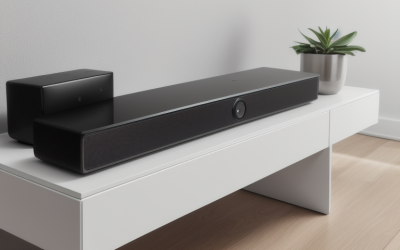
- Top Pick: Assistrust Sound Bar for Smart TV, Soundbar with Bluetooth/ARC/Opt/AUX Connect, Auto Volume Boost, 3 Equalizer Modes, 2 in 1 Detachable Soundbar for TV/PC/Gaming/Projectors
- Best Value: Bose TV Speaker – Soundbar for TV with Bluetooth and HDMI-ARC Connectivity, All-in-One Compact Soundbar, Includes Remote Control, Black
- Premium Choice: ULTIMEA 5.1CH Surround Sound Bar System with Dolby Atmos, Poseidon M60 | VoiceMX, BassMX, APP, 300W Soundbar for Smart TV, Surround Sound System for TV, with Subwoofer, Bluetooth 5.4
A 75-inch television changes what you need from a soundbar. The screen is roughly 65 inches wide, the viewing distance is usually longer than with a mid-size set, and thin built-in speakers sound even smaller next to that much picture. A compact one-piece bar that suits a 43-inch bedroom TV can look lost under a 75-inch panel and may not fill a big living room. The decision is how much width, power, and bass you want, and whether you also need surround or height effects.
This guide is for owners of large TVs who want a cleaner, fuller sound without a full receiver setup. The ten products are compared only on what the listings state: channel layout, power claims, subwoofer type, Dolby and DTS support, and connection options like HDMI ARC. Dimensions are not given in any of these titles, so measure your TV stand and check the full listing before committing. As of 2026, eARC and Bluetooth versions vary widely at this tier, which makes the spec lines worth reading closely.
Quick Picks
As an Amazon Associate we earn from qualifying purchases at no extra cost to you.

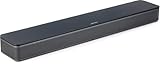


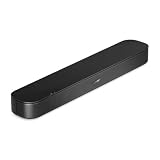


| Product | Best for | Key spec from the title |
|---|---|---|
| Assistrust Detachable Soundbar | Basic upgrade with simple inputs | Bluetooth, ARC, optical, AUX, 3 EQ modes |
| Bose TV Speaker | Compact, no-fuss dialogue boost | Bluetooth, HDMI-ARC, remote |
| ULTIMEA Poseidon M60 | Surround and Atmos with a subwoofer | 5.1CH, Dolby Atmos, 300W, Bluetooth 5.4 |
| Fire TV Soundbar | Simple stereo bar for a streaming setup | 2.0, DTS Virtual:X, Dolby Audio |
| ULTIMEA Poseidon M30 | Wireless subwoofer bass without surround | 2.1ch, 240W peak, Bluetooth 6.0 |
| Bose TV Speaker (2nd Gen) | Dialogue-focused compact bar with Atmos | Dolby Atmos, clear dialogue, HDMI-ARC |
| Saiyin Sound Bar | Wall-mounted, four-speaker bar | 4 speakers, wall mountable |
| TCL S55H | Atmos and DTS:X with room calibration | 2.1, 220W, auto room calibration |
| TOVZAIX 100W Sound Bar | Entry-level detachable bar | 100W, Bluetooth 5.3, ARC |
| Fire TV Soundbar Plus | Built-in sub with Atmos | 3.1 channel, Dolby Atmos |
How to Choose
Size and placement against a wide screen
Because a 75-inch screen is about 65 inches across, a bar in the 40 to 50 inch range will look proportionate, while a very short bar can look undersized. Check the product page for length since the titles here do not list it. Make sure the stand leaves room below the screen, or choose a wall-mountable model so the bar does not block the TV’s remote sensor or sit awkwardly in front of the bottom edge of the picture.
Power, channels, and a real subwoofer
Bigger rooms reward more output and real bass. Look for a separate subwoofer, such as the wireless ones named on the ULTIMEA and TCL listings, rather than a bar-only design. Channel count matters too: 2.0 is stereo, 2.1 adds a sub, 3.1 adds a dedicated center, and 5.1 or 5.1.2 adds rear and height channels. Be careful with wattage claims, because peak figures are not continuous output.
Connections and formats
HDMI ARC is the easiest way to use your TV remote for volume. Optical and AUX are fallbacks for older sets. If your TV supports Dolby Atmos over eARC, choose a bar that names it. Bluetooth versions, such as 5.3, 5.4, or 6.0, matter mainly for music streaming from a phone and do not change TV sound quality.
What to ignore and where budget models cut corners
Ignore generic EQ modes and “auto volume boost” wording when comparing sound quality, since nearly every maker adds them. Budget bars commonly cut corners on bass depth, build quality, and remote features, and a “surround” label does not mean physical rear speakers. Titles that omit a channel count or format list, such as the TOVZAIX, leave you guessing about what you are actually getting.
The 10 Best Options
Assistrust Detachable Soundbar
A 2-in-1 detachable soundbar for TV, PC, gaming, and projectors, with Bluetooth, ARC, optical, and AUX inputs, auto volume boost, and three equalizer modes. The listing reads as a flexible, connection-rich choice for people who use one bar across several devices.
- ARC, optical, and AUX cover most TV connection scenarios.
- Detachable design adds placement flexibility.
- Trade-off: no wattage, channel count, or subwoofer is stated, so it is hard to judge how well it fills a large space.
Skip it if you want a separate sub for a big living room, or a named Dolby or DTS format.
Bose TV Speaker
A compact all-in-one soundbar with Bluetooth and HDMI-ARC and a remote in the box. It is aimed at buyers who prioritize ease of setup over a full surround system and who care about hearing speech more clearly.
- HDMI-ARC lets your TV remote control volume.
- All-in-one construction avoids extra boxes and wires.
- Trade-off: it is described as compact, which may look small beneath a 75-inch screen.
Skip it if you want a separate subwoofer or Dolby Atmos, since neither appears in this title. It fits a smaller seating area better than a wide, deep family room, so match it to the space you actually have.
ULTIMEA Poseidon M60
A 5.1-channel Dolby Atmos system with a subwoofer, a 300W claim, VoiceMX and BassMX tuning, app control, and Bluetooth 5.4. On paper it is the most elaborate surround package in the group, which suits a big screen and a big room.
- The 5.1CH layout plus Atmos support aims for wide sound across a large room.
- A subwoofer and app control are both named.
- Trade-off: more components mean more cable and placement work.
Skip it if you want a single bar and nothing else on the floor.
Fire TV Soundbar
A 2.0 stereo bar with DTS Virtual:X and Dolby Audio plus Bluetooth. It is designed around a streaming-first living room and keeps the hardware to one slim unit, with virtual processing standing in for rear speakers.
- DTS Virtual:X and Dolby Audio are both listed.
- Simple one-piece design with Bluetooth.
- Trade-off: there is no subwoofer, so bass will be limited in a big room.
Skip it if low-end impact matters more than a tidy setup. Anyone already living in the Fire TV ecosystem will find the pairing natural, while others should confirm which inputs their TV offers.
ULTIMEA Poseidon M30
A 2.1-channel bar with a wireless subwoofer, 240W peak power, adjustable bass, HDMI, optical, and Bluetooth 6.0, plus app control and VoiceMX and BassMX tuning. It targets buyers who want real bass from a separate sub without managing rear speakers.
- Wireless subwoofer with adjustable bass.
- The newest Bluetooth version in this group.
- Trade-off: 240W is a peak figure and the title lists no Dolby Atmos.
Skip it if you want surround speakers or height channels. It suits viewers who mostly watch sports and streaming shows and care more about punch than about effects overhead.
Bose TV Speaker (2nd Gen)
An updated compact bar with Bluetooth and HDMI-ARC, Dolby Atmos, clear dialogue, deep bass wording, and an included remote. It speaks to viewers who value spoken-word clarity for news, sports, and dramas.
- Dolby Atmos is named in the title.
- Clear-dialogue focus helps with quiet speech.
- Trade-off: it is still a compact design with no separate subwoofer.
Skip it if you want big bass from a dedicated sub in a large room. Buyers whose main complaint is muffled speech rather than weak rumble are the ones this design addresses best.
Saiyin Sound Bar
A four-speaker bar with Bluetooth, HDMI-ARC, optical, and AUX connections, designed for wall mounting. The listing is short on specs beyond those basics, so treat it as a straightforward option.
- Wall mountable, a good match under a wall-hung TV.
- Four speakers and a full connection list.
- Trade-off: no wattage, subwoofer, or Dolby format appears in the title.
Skip it if you need verified surround formats or a separate sub. Because the listing says so little, read the full product page for dimensions and included mounting hardware before ordering for a 75-inch screen.
TCL S55H
A 2.1 bar with a wireless subwoofer, Dolby Atmos, DTS:X, auto room calibration, 220W, Bluetooth, and both app and remote control. Room calibration is a useful feature in a large space where reflections vary.
- Atmos, DTS:X, and room calibration are all named.
- A wireless subwoofer adds bass.
- Trade-off: a 2.1 layout has no rear speakers.
Skip it if you want physical rear surround speakers. If your TV supports Atmos passthrough, this bar is a sensible middle step between a basic stereo bar and a multi-piece surround kit.
TOVZAIX 100W Sound Bar
A 100W bar with Bluetooth 5.3, ARC, optical, AUX, three EQ modes, and a detachable 2-in-1 design. It is the basic option of the group, with connection coverage as its main selling point.
- Full set of common connections.
- Detachable design for flexible placement.
- Trade-off: no subwoofer or Dolby format is listed.
Skip it if you want strong bass to fill a large room. It makes the most sense as a first step up from TV speakers in a bedroom or den where the 75-inch screen is not the focal point of a large space.
Fire TV Soundbar Plus
A 3.1-channel bar with a built-in subwoofer and Dolby Atmos, with clear-dialogue wording in the title. The integrated sub keeps everything in one box, which suits a living room with limited floor space.
- The 3.1 layout includes a dedicated center channel for dialogue.
- Dolby Atmos is listed.
- Trade-off: built-in bass will not match a separate wireless sub.
Skip it if you prefer a separate subwoofer you can place across the room. Shoppers weighing it against the non-Plus model should note the added center channel and Atmos support listed here.
Which One Fits Your Situation
A big family room with sports and movies
The ULTIMEA Poseidon M60 gives the largest channel layout and a sub, while the TCL S55H is a calmer alternative with room calibration and no rear speakers to place.
A tidy setup with one box and one remote
The Bose TV Speaker (2nd Gen) or Fire TV Soundbar Plus keeps hardware minimal while adding Atmos, so cable clutter stays low.
An older TV with limited inputs
The Assistrust and TOVZAIX bars list optical and AUX as well as ARC, which helps if the TV lacks HDMI audio return.
A wall-mounted TV
The Saiyin Sound Bar names wall mounting directly, so it pairs naturally with a hung screen.
Common Mistakes
- Choosing a very short bar for a screen about 65 inches wide.
- Treating peak wattage as everyday output.
- Skipping a check of whether the TV has ARC or eARC.
- Expecting Atmos height effects without Atmos content.
- Forgetting that a separate subwoofer needs a nearby outlet.
Frequently Asked Questions
Is a compact bar enough for a 75-inch TV?
For small rooms and dialogue clarity, yes. For large rooms, a bar with a separate subwoofer will usually fill the space better.
Do I need Dolby Atmos?
Only if your content and your TV support it. Otherwise a solid 2.1 setup may offer more value.
What is the difference between ARC and eARC?
eARC supports higher-bandwidth audio formats, which matters for Atmos. ARC is fine for standard audio.
Can I use these bars with a gaming console?
Most list HDMI or optical inputs, so yes. Connect the console to the TV and pass audio through ARC.