The best Sony camera for wildlife photography in 2026 is the Sony Alpha a7 IV with its 33MP full-frame sensor, 10 fps burst, and Sony’s reliable Real-time Tracking AF — it suits photographers who want one body that handles mammals, birds in flight, and landscapes on the same trip. If you want the longest reach for the least money, the Sony RX10 V with its built-in 24–600mm equivalent lens is the value play for birds and small mammals. If you already own E-mount glass and want the fastest APS-C burst and deepest buffer, the Sony a6700 is the APS-C flagship. The picks below are ranked by how well they balance autofocus tracking, burst rate, resolution, rolling shutter, battery life, weather sealing, and the cost of the lenses you will actually need.
- Top 3 Picks
- Quick Comparison
- How We Chose
- 1. Sony Alpha a7 IV – Best for All-Round Wildlife
- 2. Sony a6700 with 16–50mm & 70–350mm Bundle – Best APS-C Reach
- 3. Sony RX10 V – Best One-Lens Wildlife Camera
- 4. Sony Alpha a6100 with 16–50mm + 55–210mm – Best First Wildlife Camera
- 5. Sony RX100 VII – Best Pocket Wildlife Backup
- 6. Sony FE 70–200mm F2.8 GM OSS II – Best Premium Zoom
- 7. Tamron 150–500mm f/5–6.7 Di III VC VXD – Best Long Reach for Full Frame
- 8. Sigma 70–200mm f2.8 DG DN OS Sports – Best Value Fast Zoom
- 9. Sony E 55–210mm F4.5–6.3 – Best Budget Entry Telephoto
- 10. TTARTISAN 500mm F/6.3 – Best Cheap Full-Frame Reach
- 11. ULANZI TB12 61-Inch Camera Monopod – Best Budget Support
- 12. KJK Trail Camera 36MP 2.7K – Best Unattended Wildlife Monitoring
- How to Choose
- Frequently Asked Questions
- Closing Recommendation by Situation
Quick answer: For most people in 2026, the best sony cameras for wildlife photography is the Sony Alpha a7 IV (28–70mm kit) — our #1 rated choice. See the full ranked comparison, alternatives and buying advice below.
Top 3 Picks
Best overall: Sony Alpha a7 IV. The 33MP BSI sensor gives you enough resolution to crop into a distant subject while still printing large, and the 759-point phase-detect array with Real-time Tracking keeps a bird’s eye locked even when it dives behind reeds. Ten frames per second with a deep enough buffer for a full wingbeat sequence is the sweet spot for most field work.
Best budget: Sony RX10 V. A 1-inch stacked sensor with a 24–600mm equivalent f/2.4–4 lens means you never buy a telephoto — the whole kit is one sealed body. It will not match full-frame ISO performance, but for daylight birds, safari travel, and anyone who refuses to carry a bag of lenses, nothing at this price touches the reach.
Best premium: Sony Alpha a6700 with the 70–350mm bundle. The a6700 pairs a 26MP APS-C sensor with the latest BIONZ XR processor and the AI processing unit, so subject recognition for birds and animals is a step above the a7 IV in some situations, and the 1.5x crop factor turns a 350mm lens into a 525mm-equivalent. It is the fastest, most responsive APS-C body Sony makes.
Quick Comparison
| Product | Best for | Key specs | Price tier |
|---|---|---|---|
| Sony Alpha a7 IV (28–70mm kit) | All-round wildlife + landscape | 33MP full-frame BSI, ~10 fps, 759-pt PDAF, 4K60, twin card slots | Premium |
| Sony a6700 (16–50mm + 70–350mm) | APS-C reach on a budget | 26MP APS-C, ~11 fps, AI subject recognition, 4K120, 1.5x crop | Premium |
| Sony RX10 V | One-lens travel wildlife | 20.1MP 1-inch stacked, 24–600mm equiv. f/2.4–4, ~24 fps, sealed | Premium |
| Sony Alpha a6100 (16–50mm + 55–210mm) | First wildlife camera | 24MP APS-C, ~11 fps, Real-time Eye AF, single card slot | Mid-range |
| Sony RX100 VII | Pocket backup / hiking | 20.1MP 1-inch stacked, 24–200mm equiv., ~20 fps, 4K video | Mid-range |
| Sony FE 70–200mm F2.8 GM OSS II | Fast constant-aperture zoom | Full-frame E-mount, f/2.8 constant, OSS, internal zoom | Premium |
| Tamron 150–500mm f/5–6.7 Di III VC VXD | Long reach, full frame | 150–500mm, VC stabilisation, VXD linear motor, 67mm filter thread | Mid-range |
| Sigma 70–200mm f2.8 DG DN OS Sports | Sports + wildlife action | Full-frame E-mount, f/2.8, OS stabiliser, weather-sealed barrel | Mid-range |
| Sony E 55–210mm F4.5–6.3 | Cheapest entry telephoto | APS-C E-mount, 55–210mm (82–315mm equiv.), OSS, light | Budget |
| TTARTISAN 500mm F/6.3 | Cheap full-frame reach | 500mm prime, manual focus, Sony E full-frame, fixed aperture | Budget |
| ULANZI TB12 61-inch monopod | Support for long glass | Aluminium, 61in, tilting head, 1/4in screw | Budget |
| KJK Trail Camera 36MP 2.7K | Unattended wildlife monitoring | 36MP stills, 2.7K video, 0.1s trigger, 130° wide, night vision | Budget |
How We Chose
Every pick here was selected by reading published specifications and reputable third-party reviews, not by handling the gear. That matters because wildlife photography has hard requirements that a spec sheet can hide: autofocus that recognises a bird’s eye, a buffer that survives a burst, weather sealing that survives a light rain, and a lens mount that does not force you into a single expensive path. We weighed seven criteria — autofocus subject tracking, burst rate measured in frames per second, sensor resolution and pixel density, rolling shutter in electronic mode, battery capacity measured in shots per charge (CIPA-style figures vary widely by use), weather sealing class, and the cost of the long lens you will eventually need.
Category fit drove the shortlist: a full-frame body, an APS-C body, a bridge camera, a compact, and a selection of long glass ranging from budget to premium. We checked the upgrade path for each — whether a Sony E-mount body lets you move from a 55–210mm kit lens to a 70–200mm f/2.8 and then to a 150–500mm without changing systems. We also included two non-camera items, a monopod and a trail camera, because they solve real wildlife problems and a buyer deserves to know they exist. Where a listing does not state an exact figure, we describe it by spec class rather than guessing.
1. Sony Alpha a7 IV – Best for All-Round Wildlife
As an Amazon Associate we earn from qualifying purchases at no extra cost to you.

The a7 IV is the camera most wildlife shooters should buy if they want one body that does mammals, birds in flight, and habitat shots without compromise. The 33MP full-frame sensor gives you real cropping room — a bird that only fills a quarter of the frame still leaves about 8MP after a 2x crop, which prints cleanly at A3 in a magazine spread. The autofocus system uses 759 phase-detect points covering roughly 94% of the frame, and Sony’s Real-time Tracking holds a subject’s eye even when it turns away or briefly disappears behind vegetation.
Burst rate is where the a7 IV sits in the sensible middle. Around 10 frames per second with the mechanical shutter and roughly the same with the electronic shutter at full resolution means a full wingbeat sequence fits in the buffer without filling the card in twenty seconds. Wild cat attacks and kingfisher dives need more, but 10 fps at 33MP covers the vast majority of field work. If you need 20 fps or more, step up to the a9 or a1 class — and accept the price jump.
Key specs
- 33MP full-frame back-illuminated CMOS sensor
- 759-point phase-detection AF, Real-time Eye AF for humans, animals, and birds
- Approximately 10 fps with mechanical shutter (settings-dependent)
- 4K video up to 60p, oversampled from 7K in some modes
- 3.68M-dot OLED viewfinder, 3-inch vari-angle touchscreen
- Twin card slots (CFexpress Type A / SD UHS-II)
- Weather-sealed magnesium alloy body
- NP-FZ100 battery, rated around 580 shots per charge (CIPA, varies with use)
- USB-C charging and power delivery for field top-ups
Why it works in the field
The twin card slots are not a luxury in wildlife work. A full burst at 33MP eats buffer fast, and having a second card lets you shoot RAW to one and JPEG backup to the other, or mirror in case of card failure. The a7 IV also handles the awkward light: the sensor’s back-illuminated design keeps dynamic range usable at ISO 1600–3200, which is where you will live at dawn and dusk. The electronic shutter’s rolling shutter is noticeable on fast panning, so for flying birds prefer the mechanical shutter or the electronic front-curtain mode.
Battery life of roughly 580 shots per charge sounds generous, but burst shooters will drain it faster. A practical field budget: two spare NP-FZ100 batteries and a USB-C power bank that can deliver 30W gives you a full day of shooting at 600–900 frames. That is a real number worth planning around, not a marketing figure.
Pros
- 33MP gives genuine cropping room for distant subjects
- Real-time Tracking is fast and sticky on birds and mammals
- Twin card slots with CFexpress Type A support
- Excellent full-frame dynamic range for dawn and dusk
- Huge native E-mount lens selection, including third-party long glass
- Weather-sealed body handles light rain and dust
Cons
- 10 fps is modest next to sports-oriented bodies
- Full-frame long lenses are heavy and expensive
- Rolling shutter visible in electronic shutter with fast panning
- Buffer fills quickly when shooting RAW at maximum burst
Versus the Sony a6700: the a6700 is faster in burst and adds AI subject recognition, and its 1.5x crop makes a 200mm lens behave like a 300mm. The a7 IV wins on low-light noise, dynamic range, and the ability to use the full frame when a subject comes close. If most of your work is small birds at long range in good light, the a6700 is the smarter purchase; if you shoot in forests and at dusk, the a7 IV is worth the extra.
2. Sony a6700 with 16–50mm & 70–350mm Bundle – Best APS-C Reach

The a6700 is Sony’s most capable APS-C body, and the bundled 16–50mm plus 70–350mm pairing gives you everything from a wide habitat shot to 525mm-equivalent reach in one box. The 26MP sensor plus the dedicated AI processing unit is the headline: the camera recognises birds, animals, insects, and trains as distinct subject types, and it will hold focus on a bird’s eye even with branches partly blocking the line of sight. For crop-sensor wildlife work, that subject recognition is worth more than a few megapixels.
The crop factor is the real advantage. A 350mm lens on APS-C frames like 525mm on full frame, and because the sensor only samples the centre of the image circle, you avoid the vignetting and edge softness that full-frame telephotos can show wide open. That means a relatively light, relatively affordable 70–350mm behaves like serious reach. Add the bundled 16–50mm and you have a walk-around kit that fits in a small shoulder bag.
Key specs
- 26MP APS-C back-illuminated CMOS sensor
- AI processing unit for subject recognition (birds, animals, insects, vehicles)
- Approximately 11 fps with mechanical shutter (settings-dependent)
- Real-time Eye AF for humans, animals, and birds
- 4K video up to 120p, 10-bit with S-Log3
- Single card slot (SD UHS-II)
- Vari-angle touchscreen, 2.36M-dot viewfinder
- Weather-sealed magnesium alloy body
- NP-FZ100 battery, rated around 570 shots per charge (CIPA, varies)
- Bundled 16–50mm and 70–350mm OSS lenses
Why it works in the field
Small sensors demand good light, and the a6700’s ISO ceiling is practically around 3200 for clean images, 6400 if you accept some noise reduction. That is the trade for reach: with the 70–350mm you are shooting at 525mm equivalent with a lens that weighs less than most full-frame 100–400mm zooms. The bundled lenses are both stabilised, which helps at those focal lengths when light drops.
The buffer is deeper than the a7 IV’s relative to resolution, and the electronic shutter is faster — though rolling shutter still appears with very fast panning. For perched birds and slow-moving mammals, the electronic shutter is silent and vibration-free, which matters more than most buyers realise: mechanical shutter slap can spook a nervous subject at close range.
Pros
- Best-in-class APS-C subject recognition for wildlife
- 1.5x crop turns 350mm into 525mm equivalent
- Bundled dual-lens kit covers wide to super-telephoto
- Deep buffer and fast burst for the price
- Weather-sealed body
- Silent electronic shutter option for skittish subjects
Cons
- APS-C noise performance trails full frame above ISO 3200
- Single card slot is a pro-workflow limitation
- Bundled lenses are consumer-grade, not premium glass
- Less cropping latitude than the a7 IV’s 33MP
Versus the Sony Alpha a7 IV: the a6700 is cheaper, lighter, faster, and smarter at recognising subjects, and the crop factor gives free reach. The a7 IV wins on low-light files, dynamic range, and shallow depth of field for isolating subjects. If your budget stretches to full-frame long glass, buy the a7 IV; if you want maximum reach per pound spent, the a6700 bundle is the better buy.
3. Sony RX10 V – Best One-Lens Wildlife Camera

The RX10 V is the camera for the photographer who does not want to change lenses. A 20.1MP stacked 1-inch sensor sits behind a fixed 24–600mm equivalent f/2.4–4 zoom — that is genuine super-telephoto reach in a body you can carry all day. The stacked sensor’s fast readout means minimal rolling shutter and burst rates around 24 fps with continuous AF, which is remarkable for a bridge camera.
The 1-inch sensor is the honest limitation. Its pixel density is high, so noise appears earlier than on APS-C or full frame, and you should plan to stay at ISO 800 or below for clean results. In exchange, you get a 25x zoom that never needs to be swapped, never sucks in dust through a lens mount, and is sealed as a single unit. For safari travel, whale watching, and hiking where weight matters, that is a genuine advantage.
Key specs
- 20.1MP 1-inch stacked back-illuminated CMOS sensor
- 24–600mm equivalent f/2.4–4 super-telephoto zoom, fixed
- Approximately 24 fps continuous shooting with AF (settings-dependent)
- Fast stacked-sensor readout, reduced rolling shutter
- 4K video, high-frame-rate modes for slow motion
- Weather-sealed body and lens assembly
- Single card slot
- Electronic viewfinder plus tilting screen
Why it works in the field
The key advantage is not image quality — it is never missing a shot because you had the wrong lens mounted. A flock lifts off 80 metres away; you zoom to 600mm and shoot. The alternative is fumbling a lens change while the bird leaves. For travel wildlife, that reliability matters more than a stop of noise performance.
The fast f/2.4 aperture at the wide end is genuinely useful for habitat shots in low light, and f/4 at 600mm is decent for a superzoom. Expect to shoot at ISO 400–800 in daylight and accept some noise at dawn. Battery life is good because the lens motor is the main drain, not a large sensor; carry one spare and you will cover a full outing.
Pros
- 24–600mm equivalent in one sealed body
- Fast stacked sensor with minimal rolling shutter
- Around 24 fps burst with continuous AF
- No lens changes, so no dust ingress
- Lighter and cheaper than a full-frame super-telephoto setup
- Excellent for travel and hiking
Cons
- 1-inch sensor limits low-light and shallow depth of field
- Cannot upgrade the lens — the system is fixed
- Smaller files limit cropping
- Premium price for a bridge camera
Versus the Sony a6700: the a6700 with the 70–350mm offers better image quality and an upgrade path, but you must carry two lenses and change them. The RX10 V is the better choice for travel, long hikes, and anyone who values never missing a moment over ultimate image quality.
4. Sony Alpha a6100 with 16–50mm + 55–210mm – Best First Wildlife Camera

The a6100 is the cheapest way into a real interchangeable-lens wildlife setup. A 24MP APS-C sensor, roughly 11 fps burst, and Real-time Eye AF give you the essentials, and the bundled 55–210mm delivers 82–315mm equivalent reach. It will not track a swallow in flight like the a6700, but for perched birds, deer, and general nature walks, it is honest, capable gear.
The 24MP sensor is the same generation as many higher-end Sony bodies, so image quality in good light is genuinely good. The autofocus lacks the dedicated AI processor, meaning bird-specific recognition is absent — you get animal eye AF, which covers mammals well and birds reasonably when they are large in frame. Subject tracking is less sticky than the a6700’s, so technique matters more: pre-focus, keep the subject centred, and use the burst.
Key specs
- 24MP APS-C CMOS sensor
- Approximately 11 fps with continuous AF (settings-dependent)
- 425-point phase-detection plus 425-point contrast-detection AF
- Real-time Eye AF for humans and animals
- 4K video up to 30p
- Single card slot (SD UHS-I)
- Tilting (not vari-angle) touchscreen
- NP-FW50 battery, rated around 420 shots per charge (CIPA, varies)
- Bundled 16–50mm and 55–210mm OSS lenses
Why it works as a starting point
The a6100’s real value is that it uses the same E-mount as every other Sony body, so a lens you buy now works if you upgrade to the a6700 or a7 IV later. Buy the body with the 55–210mm, learn to shoot at 1/1000s or faster with the stabiliser on, and you will get usable bird and mammal images. The 82–315mm equivalent reach is modest for small birds; plan on adding a longer lens.
Battery life is the weak spot. The smaller NP-FW50 is rated around 420 shots, and in practice a burst-heavy day will drain it faster than that. Budget two spares. The single UHS-I card slot also means slower buffer clearing, so shoot shorter bursts and give the camera time to write.
Pros
- Most affordable route into Sony E-mount wildlife shooting
- 24MP sensor delivers good detail in daylight
- Real-time Eye AF for animals
- Full access to the E-mount lens ecosystem
- Light and easy to carry on long walks
Cons
- No bird-specific subject recognition
- Slower, less sticky tracking than the a6700
- Single UHS-I card slot
- Small battery with limited runtime
- Tilting screen is less flexible for low angles
Versus the Sony a6700: the a6700 is faster, smarter, better sealed, and has a bigger battery. The a6100 is roughly half the outlay and still uses the same mount. If you are unsure whether wildlife is your thing, start here; if you already know you will shoot birds weekly, go straight to the a6700.
5. Sony RX100 VII – Best Pocket Wildlife Backup
The RX100 VII is the camera you carry when the big kit stays home. A 20.1MP 1-inch stacked sensor and a 24–200mm equivalent zoom fit in a jacket pocket, and the burst rate — around 20 fps with continuous AF — is faster than most full-frame cameras. For hiking, cycling, and travel where a full bag is impractical, it is the difference between having a camera and having nothing.
Its autofocus is the same generation as Sony’s best compacts, with Real-time Tracking and Eye AF, and the stacked sensor keeps rolling shutter low. Image quality is excellent for the sensor size in daylight; above ISO 1600 expect visible noise. The 200mm equivalent reach is not enough for distant birds, but it covers large mammals, insects, flowers, and environmental shots beautifully.
Key specs
- 20.1MP 1-inch stacked CMOS sensor
- 24–200mm equivalent f/2.8–4.5 zoom, fixed
- Approximately 20 fps with continuous AF (settings-dependent)
- Real-time Tracking and Real-time Eye AF
- 4K video with high-frame-rate slow motion
- Pop-up electronic viewfinder
- Single card slot, compact sealed body
Why it works in the field
The RX100 VII’s job is to be with you. Its pop-up viewfinder is genuinely useful in bright sunlight when a rear screen washes out, and the fast burst means you can catch a dragonfly take-off or a squirrel’s jump. It is also the ideal second camera when your telephoto body has a long lens mounted and a subject appears close.
Pros
- Truly pocketable with a viewfinder
- Very fast burst with reliable tracking
- Stacked sensor reduces rolling shutter
- Excellent daylight image quality for the size
- Great travel and hiking companion
Cons
- 200mm equivalent reach limits distant subjects
- Small sensor struggles in low light
- Fixed lens, no upgrade path
- Premium price for a compact
Versus the Sony RX10 V: the RX10 V has three times the reach and a faster lens, but it weighs far more and will not fit a pocket. Choose the RX100 VII for portability and the RX10 V for reach.
6. Sony FE 70–200mm F2.8 GM OSS II – Best Premium Zoom
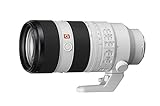
Sony’s second-generation 70–200mm f/2.8 G Master is the lens that makes a full-frame Sony body into a serious wildlife tool for larger subjects. A constant f/2.8 aperture across the zoom range buys you two things: faster shutter speeds in low light and shallower depth of field to isolate a subject from busy background. It is internal-zoom and internal-focus, so the barrel length never changes and the balance on a gimbal stays constant.
The linear focus motors are fast and near-silent, which matters for both stills tracking and video. Optical Steady Shot stabilisation helps at the long end, though for wildlife you should still keep shutter speeds at 1/500s or faster for moving subjects. Weighing noticeably less than its predecessor, it is the lens many sports and mammal photographers keep mounted as a default.
Key specs
- Full-frame E-mount, 70–200mm focal range
- Constant f/2.8 maximum aperture
- Optical Steady Shot image stabilisation
- Linear focus motors for fast, quiet AF
- Internal zoom and internal focus
- Weather-sealed barrel and mount
- Dedicated aperture ring and focus hold buttons
Why it works in the field
For deer, foxes, and large birds at moderate range, 200mm on full frame is often enough, and f/2.8 lets you shoot at ISO 800 instead of 3200 at dawn. The quick linear motors track approaching animals accurately when paired with a Sony body’s Real-time Tracking. Its weakness is reach: for small birds you will want a 1.4x or 2x teleconverter, which costs a stop or two of light, or a longer zoom.
Pros
- Constant f/2.8 across the zoom range
- Fast, quiet linear autofocus
- Internal zoom keeps balance and sealing
- Sharp wide open, excellent build quality
- Accepts Sony teleconverters for extra reach
Cons
- Premium price tier, and heavy
- 200mm is short for small birds
- Teleconverters cost light and add cost
Versus the Sigma 70–200mm f2.8 DG DN OS Sports: the Sigma offers a similar focal range and aperture for less money, with its own stabiliser and a weather-sealed barrel. The Sony typically focuses faster and pairs with Sony teleconverters; the Sigma is the value pick if budget matters more than the last increment of speed.
7. Tamron 150–500mm f/5–6.7 Di III VC VXD – Best Long Reach for Full Frame

If you shoot full frame and need real reach without super-telephoto prices, the Tamron 150–500mm is the obvious answer. It covers 150mm to 500mm with a VXD linear motor for fast, quiet autofocus and VC image stabilisation that lets you hand-hold at 500mm in decent light. On an APS-C body like the a6700 it becomes a 225–750mm equivalent — extraordinary reach for the money.
The maximum aperture of f/5–6.7 is modest, so plan on good light or raised ISO. At 500mm and f/6.7, a shutter speed of 1/1000s in overcast conditions will push ISO to 1600–3200 on full frame, which is manageable but not free. The 67mm filter thread keeps filters affordable, and the lens is relatively light for its class, which matters when you are tracking a subject for minutes at a time.
Key specs
- 150–500mm focal range, full-frame E-mount
- f/5–6.7 variable maximum aperture
- VXD linear motor autofocus
- VC (Vibration Compensation) image stabilisation
- 67mm filter thread
- Weather-sealed construction
- Compatible with APS-C bodies for extended equivalent reach
Why it works in the field
Reach is the single most valuable thing in wildlife photography, and this lens delivers it more cheaply than almost anything else in the E-mount system. The VXD motor is fast enough to track birds in flight when paired with a good body, and the stabiliser helps you keep the subject in frame at 500mm. Plan for a monopod or a sturdy stance at the long end, especially in wind.
Pros
- 500mm reach at a mid-range price
- Fast VXD autofocus motor
- Effective VC stabilisation for hand-holding
- Works on both full-frame and APS-C bodies
- Relatively light for its focal range
Cons
- Narrow f/5–6.7 maximum aperture
- Needs good light or higher ISO
- Focus breathing and slightly slower AF than premium primes
- Not quite as sharp as a dedicated super-telephoto prime
Versus the Sony E 55–210mm: the 55–210mm is cheaper and lighter but only reaches 315mm equivalent on APS-C. If birds are your subject, the Tamron’s extra reach is worth the money and the weight.
8. Sigma 70–200mm f2.8 DG DN OS Sports – Best Value Fast Zoom

The Sigma 70–200mm f2.8 DG DN OS Sports brings a constant f/2.8 zoom to the E-mount at a price below Sony’s G Master, and the bundle includes a Sunshine Photo accessory kit with a four-year USA manufacturer warranty. The optical stabiliser (OS) is the key feature for handheld wildlife work, compensating for small movements when you are tracking a moving subject at the long end.
Build quality is aimed at the Sports line — weather-sealed, with a robust barrel and a tripod collar that rotates. It is not a lightweight lens, so plan on a monopod or gimbal for long sessions. The autofocus is quick enough for large mammals and slow-to-moderate birds, though the fastest response still belongs to Sony’s own linear-motor designs.
Key specs
- 70–200mm focal range, full-frame E-mount
- Constant f/2.8 maximum aperture
- OS (Optical Stabiliser) image stabilisation
- Weather-sealed Sports-line construction
- Rotating tripod collar
- Bundled accessory kit and 4-year USA manufacturer warranty
Why it works in the field
For mammal work — deer, elk, foxes, bears at a safe distance — a fast 70–200mm is often the ideal lens, and the Sigma’s OS gives you a stop or two of handheld stability. If you shoot both sports and wildlife, this lens covers both. For dedicated birding, add a longer zoom; the Sigma is best seen as the versatile middle of a kit, not the far end.
Pros
- Constant f/2.8 at below-G Master pricing
- Effective optical stabiliser
- Robust, weather-sealed Sports build
- Bundle includes accessories and extended USA warranty
- Good for both wildlife and sports
Cons
- Heavy for long handheld sessions
- 200mm reach is limited for small birds
- Autofocus slightly behind Sony’s fastest linear motors
- Teleconverter compatibility is restricted compared with Sony
Versus the Sony FE 70–200mm F2.8 GM OSS II: the Sony is faster-focusing, lighter, and works with Sony’s teleconverters. The Sigma is the value choice if you want f/2.8 without the premium outlay and accept the extra weight.
9. Sony E 55–210mm F4.5–6.3 – Best Budget Entry Telephoto

The Sony E 55–210mm is the cheapest way to get telephoto reach on an APS-C E-mount body, giving 82–315mm equivalent. It is small, light, and stabilised, which makes it a natural first lens for anyone moving up from a kit zoom. Image quality is good in bright light and falls off in dull conditions, which is typical for its class.
Autofocus is adequate for perched birds and slow-moving mammals but not for fast flight. The variable f/4.5–6.3 aperture narrows to f/6.3 at 210mm, so you will be at ISO 800–1600 in shade. As a learning lens it is excellent: affordable enough that you can take it anywhere and not worry, and light enough to carry all day.
Key specs
- 55–210mm focal range, APS-C E-mount
- 82–315mm equivalent on APS-C bodies
- f/4.5–6.3 variable maximum aperture
- Optical Steady Shot stabilisation
- Lightweight plastic barrel
- Not weather-sealed
Why it works in the field
Its job is to remove the excuse for not owning a telephoto. Paired with an a6100 it gives a complete, light, affordable wildlife kit. Practice framing and panning with it, then upgrade to the Tamron 150–500mm when reach becomes the limiting factor — which it will, quickly, if you shoot birds.
Pros
- Very affordable
- Light and compact
- Image stabilisation included
- Good image quality in daylight
- Ideal first telephoto lens
Cons
- Only 315mm equivalent reach
- Slow, variable aperture
- Autofocus trails premium lenses
- No weather sealing
Versus the TTARTISAN 500mm F/6.3: the TTARTISAN gives far more reach for similar money but is manual focus only, which rules out most moving-subject work. The Sony is the better all-round starter; the TTARTISAN is for patient, static subjects.
10. TTARTISAN 500mm F/6.3 – Best Cheap Full-Frame Reach

The TTARTISAN 500mm F/6.3 is a manual-focus super-telephoto prime for full-frame Sony E-mount, and it is the cheapest way to put a real 500mm lens in front of a full-frame sensor. It is sharp enough stopped down, and because it is manual focus you set the plane of focus yourself — which for a static subject like a perched bird or a resting animal is entirely workable.
The catch is exactly that: no autofocus, fixed f/6.3 aperture, and no stabilisation. For birds in flight it is impractical. For landscapes with wildlife, moon shots, and patient fieldcraft from a hide, it delivers reach that would otherwise cost several times more. Expect to use a monopod and to shoot at 1/500s or faster to avoid blur.
Key specs
- 500mm fixed focal length, full-frame Sony E-mount
- f/6.3 fixed maximum aperture
- Manual focus only
- No image stabilisation
- Metal barrel construction
- Budget price tier
Why it works in the field
Reach per pound is unmatched. If you shoot from a hide at a fixed distance, or photograph subjects that sit still, manual focus at 500mm on a full-frame body produces genuinely detailed files. The discipline of manual focus also teaches you patience and fieldcraft — you wait for the bird rather than chasing it.
Pros
- Extremely affordable for 500mm
- Full-frame coverage
- Solid metal build
- Good sharpness stopped down
- Teaches manual focus technique
Cons
- Manual focus only — unsuitable for fast action
- Fixed f/6.3 aperture is slow
- No stabilisation
- Requires a monopod or tripod in most conditions
Versus the Tamron 150–500mm: the Tamron adds autofocus, stabilisation, and a zoom range for more money. If your subjects move at all, the Tamron is worth the difference without question.
11. ULANZI TB12 61-Inch Camera Monopod – Best Budget Support

A monopod is the most underrated piece of wildlife kit. It takes the weight of a long lens, steadies your framing at 500mm, and lets you pan smoothly — all while being far quicker to reposition than a tripod. The ULANZI TB12 is a 61-inch aluminium monopod with a tilting head and a standard 1/4-inch screw, compatible with Canon, Nikon, and Sony mirrorless and DSLR bodies.
For wildlife shooters using any of the long lenses above, a monopod transforms handheld endurance. At 500mm, holding a two-kilogram lens steady for five minutes is hard; on a monopod it is easy, and you can still follow a moving subject by pivoting at the base. The tilting head lets you shoot upward into trees without adjusting the whole column.
Key specs
- 61-inch maximum height
- Aluminium construction
- Tilting head
- Standard 1/4-inch mounting screw
- Compatible with Canon, Nikon, Sony mirrorless and DSLR
- Budget price tier
Pros
- Very affordable support for long lenses
- Fast to reposition compared with a tripod
- Reduces fatigue on long outings
- Works with any camera brand
Cons
- Less stable than a tripod for very long exposures
- Aluminium is heavier than carbon fibre
- Not a substitute for a gimbal with heavy telephotos
Versus a tripod: a tripod is better for stationary setups and long exposures at a hide; a monopod is better when you are moving and need to react quickly. Many wildlife shooters own both.
12. KJK Trail Camera 36MP 2.7K – Best Unattended Wildlife Monitoring

The KJK Trail Camera does a job no mirrorless camera can: it sits unattended for days and photographs animals that would never tolerate a human nearby. It captures 36MP stills and 2.7K video with night vision, has a 0.1-second trigger time, motion activation, and a 130° wide-angle lens.
Trigger speed is the number that matters most in a trail camera, and 0.1 seconds is fast enough to catch a passing animal rather than its empty wake. The 130° field of view covers a wide trail without needing precise aiming. For scouting a permission, monitoring a garden, or documenting nocturnal species, it complements a mirrorless kit perfectly — you learn where animals travel, then set up your good camera there.
Key specs
- 36MP still images
- 2.7K video
- Night vision
- 0.1-second trigger time
- Motion activated
- 130° wide-angle lens
- Budget price tier
Pros
- Works unattended day and night
- Fast 0.1s trigger captures moving animals
- Wide 130° coverage
- Inexpensive way to scout locations
- Complements a mirrorless wildlife kit
Cons
- Image quality far below a mirrorless camera
- No manual control over exposure or focus
- Best used as a scouting tool, not a primary camera
Versus a mirrorless camera: they are not competitors. A trail camera finds the animals; a Sony body photographs them properly. Serious wildlife photographers often use both.
How to Choose
Choosing a wildlife camera is a decision about trade-offs, and the trade-offs have numbers attached. Work through the criteria below in order, because the first two usually decide everything else.
Start with reach, because reach is the constraint
Most wildlife photographs fail because the subject is too small in frame, not because the sensor was too noisy. This means focal length matters more than megapixels. Work out the equivalent reach you need:
- Small birds in a garden: 400–600mm equivalent minimum. On APS-C that means a 300–400mm lens; on full frame a 400–600mm lens.
- Large mammals (deer, elk, foxes): 200–400mm equivalent is usually enough.
- Safari from a vehicle: 300–600mm equivalent, but a wide option matters too because animals sometimes come close.
- Dragonflies, butterflies, small reptiles: 100–300mm equivalent with a close minimum focus distance.
Sensor size changes the arithmetic. An APS-C sensor crops the centre of the image circle, so a 350mm lens frames like 525mm. A 1-inch sensor crops further still — the RX10 V’s 600mm equivalent reach comes from a much shorter physical lens. The cost of that crop is light-gathering area, which shows up as noise.
Autofocus tracking: look for subject recognition, not point count
Modern Sony bodies advertise huge phase-detect point counts, but the number of points stopped being the differentiator years ago. What matters in 2026 is subject recognition. The a6700’s AI processing unit identifies birds and animals as distinct categories and holds focus on an eye; the a7 IV does the same with Real-time Tracking; the a6100 has animal eye AF but no bird-specific recognition.
Practical consequence: if you shoot birds, pay for subject recognition. It is the single biggest hit-rate improvement between the a6100 and the a6700. If you mostly shoot mammals, the a6100’s animal eye AF covers you at a much lower price.
Burst rate and buffer: how to calculate what you actually need
Burst rate is usually quoted as a peak figure that only holds for a second or two before the buffer fills. Do the arithmetic before you buy. At 33MP RAW, a file is roughly 60–70MB. A camera with a buffer that holds 80 frames can therefore store about 5GB before it stalls — and at 10 fps that is 8 seconds of continuous shooting. That is plenty for a wingbeat. At 24 fps on a higher-resolution body, the same buffer lasts about 3 seconds.
Useful rule: divide your intended burst duration by frames per second, then multiply by file size, and compare with the buffer depth published in reviews. If the answer exceeds your card’s sustained write speed times the burst duration, the card is the bottleneck, not the camera. A UHS-II card writing at 200MB/s clears a 700MB burst in roughly 3.5 seconds; a UHS-I card at 90MB/s takes about 8 seconds. That difference is why the a6100’s single UHS-I slot feels slow and the a7 IV’s CFexpress slot does not.
Sensor resolution: crop room versus noise
More megapixels give you more cropping latitude. A 33MP file cropped to half its linear dimensions becomes about 8MP — still printable at A4. A 24MP file cropped the same way becomes about 6MP, which is fine for screen but tight for print. Higher resolution also means smaller photosites for a given sensor size, which usually means slightly more visible noise at high ISO. Full-frame bodies spread those megapixels over a larger area, so a 33MP full-frame sensor has larger photosites than a 26MP APS-C sensor and therefore better low-light performance.
Rolling shutter: mechanical versus electronic
An electronic shutter reads the sensor line by line. With a fast-moving subject, that produces skew — a bird’s wing bending like a banana. Stacked sensors read out much faster and largely eliminate this; standard sensors show it when panning. If you shoot flying birds, either use the mechanical shutter or choose a stacked-sensor body. The RX10 V and RX100 VII both use stacked sensors; the a7 IV, a6700, and a6100 do not.
Battery life: plan a real power budget
CIPA ratings of 420–580 shots per charge are a rough guide, but burst shooters exceed them and cold weather shrinks them. A practical budget for a full day of wildlife shooting:
- One camera body with an NP-FZ100 battery
- Two spare batteries (three total)
- A 20,000mAh USB-C power bank delivering at least 30W for in-bag charging between locations
Cold matters more than most buyers expect: at 0°C, lithium-ion capacity can drop by 20–30%. In winter, carry batteries in an inside pocket and rotate them. The a6100’s smaller NP-FW50 makes this more acute — budget three spares rather than two.
Weather sealing: read the body, not the marketing
Sony does not publish an IP rating for its cameras, so “weather-sealed” describes gaskets and seals rather than a guarantee. The a7 IV, a6700, and RX10 V have sealed bodies; the a6100 does not claim the same protection. Lenses matter as much as bodies: the FE 70–200mm GM II, the Tamron 150–500mm, and the Sigma Sports lens have sealed mounts and barrels, while the Sony 55–210mm does not seal. A sealed body with an unsealed lens is only half protected. Add a rain cover for any serious field work and never change lenses in the open.
Lens ecosystem value: the long game
This is where the E-mount wins decisively. Because Sony opened the mount to third parties, the same camera can use a $200ish entry telephoto, a mid-range 150–500mm, or a premium constant-aperture zoom, plus a deep second-hand market. Compare the cost per millimetre of reach across the options:
| Lens | Reach (APS-C equiv.) | Autofocus | Stabilisation | Price tier |
|---|---|---|---|---|
| Sony E 55–210mm | 82–315mm | Yes | Yes | Budget |
| TTARTISAN 500mm F/6.3 | 500mm (FF), 750mm (APS-C) | No | No | Budget |
| Tamron 150–500mm | 225–750mm | Yes | Yes | Mid-range |
| Sigma 70–200mm f2.8 DG DN OS | 105–300mm | Yes | Yes | Mid-range |
| Sony FE 70–200mm F2.8 GM II | 105–300mm | Yes | Yes | Premium |
| Sony RX10 V (fixed lens) | 24–600mm | Yes | Yes | Premium |
Two conclusions follow. First, on a crop body the Tamron 150–500mm delivers 750mm equivalent with autofocus and stabilisation — nothing else in this list comes close on reach per unit of cost. Second, a fixed-lens bridge like the RX10 V is competitive on reach but offers no path to upgrade: the money you spend is the camera you keep.
A decision matrix for common situations
| Your situation | Recommended choice | Why |
|---|---|---|
| One camera for wildlife, landscape, and family | Sony Alpha a7 IV | 33MP full frame, twin slots, best all-round balance |
| Small birds on a tight budget | a6700 + Tamron 150–500mm | AI subject recognition plus 750mm equivalent reach |
| Travel and safari, minimal luggage | Sony RX10 V | 24–600mm equivalent in one sealed body, no lens changes |
| First wildlife camera, unsure of commitment | Sony Alpha a6100 with 55–210mm | Lowest entry cost on the full E-mount ecosystem |
| Hiking and cycling, camera always with you | Sony RX100 VII | Pocketable with a viewfinder and fast burst |
| Mammals at dawn and dusk | a7 IV + Sony 70–200mm f/2.8 GM II | Fast aperture and clean high-ISO files in low light |
| Sports plus wildlife | a7 IV + Sigma 70–200mm f2.8 DG DN OS | Constant f/2.8 with stabilisation at mid-range cost |
| Static subjects from a hide | a7 IV + TTARTISAN 500mm F/6.3 | Unbeatable reach per pound if manual focus is acceptable |
| Scouting a new location | KJK Trail Camera | Unattended monitoring reveals animal movement patterns |
| Steadier long-lens framing | ULANZI TB12 monopod | Cheap, fast to reposition, cuts handheld fatigue |
Practical settings worth starting with
- Shutter speed: 1/1000s for perched birds, 1/2000s for flight, 1/500s for walking mammals. The reasoning is simple — a bird’s wingtip moves faster than the body, and you need to freeze the fastest-moving part, not the centre of mass.
- Aperture: start at f/5.6–f/8 for sharpness and adequate depth of field on a long lens. Wider apertures blur background but reduce the margin for focus error at 500mm, where depth of field can be centimetres deep.
- ISO: use Auto ISO with a ceiling. Set the ceiling at 3200 for full frame, 1600 for APS-C, and 800 for 1-inch sensors. That matches each sensor’s practical noise limit and stops the camera choosing an unusable ISO in poor light.
- Drive mode: low-speed continuous for perched subjects, high-speed for flight. Short bursts of 5–8 frames clear the buffer faster and give you less to review.
- Focus area: use a wide or zone area with subject tracking enabled rather than a single point. At long focal lengths a single point is almost impossible to keep on a moving eye.
- Stabilisation: leave lens stabilisation on for handheld work, turn it off on a tripod. On a monopod, most shooters leave it on — the residual movement is enough for the system to help.
What to buy first if the budget is limited
Spend on glass before bodies. A mid-range APS-C body with a 150–500mm lens will out-shoot a premium body with a 55–210mm every time, because reach determines whether the subject fills the frame. The upgrade order that makes sense is: body and kit lens, then a long zoom, then a monopod, then a faster body. Buy the a6100 with the bundled lenses to learn, add the Tamron 150–500mm when reach becomes the bottleneck, and only then consider the a7 IV or a6700.
Frequently Asked Questions
Is full frame or APS-C better for wildlife photography?
APS-C gives you 1.5x more reach from the same lens and is usually cheaper and lighter, which suits bird photography. Full frame gives better low-light performance, more dynamic range, and shallower depth of field, which suits mammals at dawn and dusk. If you shoot in good light and need distance, APS-C wins; if you shoot in forests and twilight, full frame wins.
How many megapixels do I actually need for wildlife?
About 24MP is a practical floor, and 26–33MP is comfortable. The reason is cropping: you will rarely fill the frame with a wild subject, so you need spare resolution to crop and still print. A 33MP file cropped to half its linear dimensions leaves roughly 8MP, which prints well at A4; a 24MP file leaves about 6MP, which is fine on screen but tight for print.
Do I need a stacked sensor for birds in flight?
Not strictly, but it helps. A stacked sensor reads out faster, which reduces rolling shutter skew when you pan with a fast subject, and it usually enables higher burst rates. Standard sensors work well for perched birds and slow movement, especially with the mechanical shutter. If flying birds are your main subject and budget allows, a stacked-sensor body is worth prioritising.
What burst rate is enough for wildlife?
Around 10 fps with a deep buffer covers most situations, including a bird’s wingbeat and a running mammal. Higher rates above 20 fps help with very fast, unpredictable action but fill the buffer quickly and generate huge numbers of files to review. Buffer depth often matters more than peak frame rate — a camera that shoots 10 fps for eight seconds beats one that shoots 20 fps for two.
Can I use a teleconverter with these lenses?
Sony’s own teleconverters work with selected Sony lenses, including the FE 70–200mm F2.8 GM OSS II, and typically cost one or two stops of light while multiplying focal length. Third-party lenses like the Tamron and Sigma options generally have restricted converter compatibility, so check before buying. On APS-C bodies the crop factor already adds reach, which often makes a converter unnecessary.
Is the Sony RX10 V good enough for serious wildlife photography?
Yes, within its limits. It gives 24–600mm equivalent reach in one sealed body with fast burst and good autofocus, and it is ideal for travel and anyone who dislikes lens changes. The 1-inch sensor limits low-light performance and shallow depth of field, so it is best in daylight. For publication-quality work at dawn, a full-frame or APS-C body with long glass is better.
How do I keep a long lens steady without a tripod?
Use a monopod, keep your shutter speed at 1/1000s or faster, tuck your elbows in, and use lens stabilisation. A monopod like the ULANZI TB12 takes the weight of the lens and lets you pan smoothly while remaining quick to reposition. At 500mm, even a light breeze makes handheld framing difficult, so support is not optional for long sessions.
Should I buy a trail camera as well as a mirrorless body?
They do different jobs, and many wildlife photographers own both. A trail camera sits unattended for days, triggers in 0.1 seconds, and records the animals that would never come near a human. Use it to learn where animals travel and at what hours, then set up your mirrorless camera in that spot with the right lens.
Closing Recommendation by Situation
If you want one camera that does everything well and you can stretch to full frame, buy the Sony Alpha a7 IV. If you want maximum reach and the best subject recognition per pound spent, buy the Sony a6700 with the 70–350mm bundle, and add the Tamron 150–500mm when you start chasing small birds. If you travel light and refuse to change lenses, the Sony RX10 V is the most complete single-purchase wildlife kit here. If you are new and unsure how deep the hobby will go, start with the Sony Alpha a6100 and its bundled lenses, then invest in glass. For pocketable backup, take the Sony RX100 VII. And whatever body you choose, put a monopod under your long lens and a trail camera on your scouting list — the support and the intel will improve your hit rate more than any single upgrade.
Ready to decide? Our #1 pick for 2026 is the Sony Alpha a7 IV (28–70mm kit).
Live price & availability on Amazon.