A running smartwatch earns its place on your wrist by doing three jobs well: locking onto a GPS signal quickly, showing pace and distance at a glance, and turning a pile of workouts into a plan you can follow. Everything else, from music storage to maps, is a layer you either need or do not. The right pick depends on whether you are lacing up for your first 5K or building toward a marathon block.
The seven watches below cover that spread, from a lightweight AMOLED model with dual band GPS to Garmin Forerunners that run from essential training features to maps and music. Notes rely on what each listing states, so use them to build a shortlist for 2026 and confirm details on the product page.
Quick Picks
As an Amazon Associate we earn from qualifying purchases at no extra cost to you.


| Product | Best for | Key spec from the title |
|---|---|---|
| Garmin Forerunner 165 | Everyday training | 43mm, built-in GPS, Garmin Coach |
| mibro GS Active2 | Feature-rich budget tier | Dual band GPS, 1.32 inch AMOLED, 15-day battery |
| Garmin Forerunner 55 | Simple GPS running | GPS running smartwatch |
| Garmin Forerunner 70 | First running watch | Beginner-level, adaptive training plans |
| Garmin Forerunner 265S | Smaller wrists, advanced metrics | 42mm, music on your wrist |
| Garmin Forerunner 965 | Long-distance planning | 47mm, maps, advanced training metrics |
| Garmin Forerunner 170 Music | Music without a phone | 43mm, music, adaptive training plans |
How to Choose
GPS quality and how it is listed
Built-in GPS is the baseline: without it, a watch borrows your phone for distance. Dual band GPS, as the mibro lists, is meant to improve accuracy around tall buildings and tree cover. If you run in dense cities or under canopy, favor a watch that names its GPS approach in the title rather than just saying GPS. Also consider where your runs start: a watch that locks on slowly can waste the first minute of a run, so look for a model that lists GPS as built in and not as an add-on or a phone-assisted feature.
Case size and display
Case sizes in this list run from 42mm to 47mm. Measure your wrist before choosing, and remember a heavier case feels different at mile ten than at mile one. Under 43mm sits comfortably on smaller wrists; 46mm or larger feels more substantial but can move around on a thin arm. An AMOLED display, like the 1.32 inch panel on the mibro, tends to be more vivid, while many Forerunner listings emphasize training depth over display type.
Training features versus complexity
Daily suggested workouts, adaptive training plans, and a coaching feature turn raw data into guidance. Beginners benefit from simple recommendations; experienced runners want recovery insights and advanced metrics. Ignore dozens of sport modes if you only run; the mibro's 150-plus modes are a bonus, not a core reason to buy. Instead, look for coaching that adjusts as your fitness changes, recovery guidance that tells you when to ease off, and suggested workouts that remove the daily guesswork from planning.
Music, maps, and battery
Music on your wrist lets you leave your phone at home, and maps help on unfamiliar trails. Both add complexity, and budget watches often cut corners on both. For battery, the mibro lists 15 days; the Garmin titles give no battery numbers, so check the spec sheet if multi-day endurance matters.
The 7 Best Options
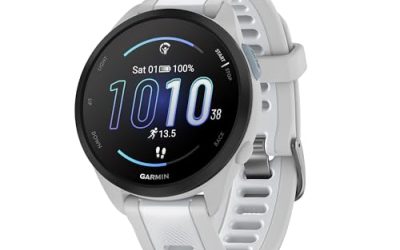
Garmin Forerunner 165 (43mm)
The Forerunner 165 is the middle ground for runners who want training depth without overbuilding. The listing covers built-in GPS for distance, pace, and speed, essential training and recovery features, Garmin Coach, and daily suggested workouts. It is available in Black and Whitestone, so the same specs come in a darker or lighter finish. It suits runners who log several sessions a week, follow a structured routine, and want recovery guidance without paying attention to every menu on a small screen.
- Garmin Coach and daily suggested workouts add structure.
- 43mm suits a wide range of wrists.
- Trade-off: the title does not mention music storage or maps.
Skip it if you want to leave your phone home and still hear a playlist, or if you want a larger case with mapping for long unfamiliar routes.
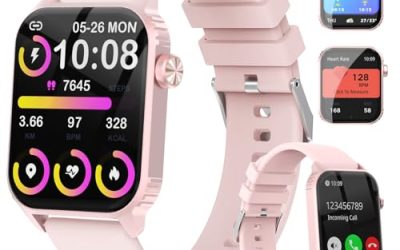
mibro GS Active2
This lightweight 46mm watch brings dual band GPS, built-in running plans, a 1.32 inch AMOLED display, a 15-day battery claim, and over 150 sport modes. It is for runners who also cross-train and want a bright screen, plus a watch that can sit on the charger for days at a time, which helps if you tend to forget nightly charging after early morning runs.
- Dual band GPS and an AMOLED display are both named in the title.
- A 15-day battery claim is the longest figure in this list.
- Trade-off: a lesser-known brand than the Garmin options, so check app support.
Skip it if you want a proven training ecosystem, or if you rely on advanced recovery insights and coaching that the listing does not describe.
Garmin Forerunner 55
The Forerunner 55 is the simplest entry: a GPS running smartwatch in black, with a short title and a focus on the fundamentals. It suits a runner who only needs distance and pace, someone who jogs a few mornings a week, wants an honest record of each run, and has no interest in digging through training dashboards or tuning workout plans.
- GPS running is the headline feature.
- Simplicity keeps the learning curve gentle.
- Trade-off: the title lists no training plans, music, or battery numbers.
Skip it if you want guided workouts or a newer design, or if you expect the title to describe training plans, coaching, and recovery tools in detail.
Garmin Forerunner 70
The Forerunner 70 is billed as a beginner-level running smartwatch at 43mm in black. It tracks pace, distance, and heart rate, and offers daily suggested workouts and adaptive training plans. It is the natural first purchase for someone who just signed up for a local 5K and needs the watch to explain what to do on each day rather than leave them guessing.
- Adaptive training plans change with progress.
- Heart rate, pace, and distance are all named.
- Trade-off: no music storage or maps are mentioned.
Skip it if you are already training seriously for race-day times, or if you want music stored on the watch so a phone can stay behind.
Garmin Forerunner 265S
The 265S is a 42mm Forerunner aimed at runners who want advanced training metrics and recovery insights with music on the wrist. Garmin Coach and daily suggested workouts are listed too. It suits smaller wrists and serious training, for example a runner stepping up from an entry model who now wants more insight into recovery between hard sessions and a playlist that travels without a phone.
- Advanced metrics and recovery insights go beyond the entry models.
- Music on your wrist is listed.
- Trade-off: the title offers no maps.
Skip it if you want a larger case or mapping, or if you prefer an entry-level watch with a gentler learning curve for your first running season.
Garmin Forerunner 965
The 965 is the flagship of this list, a 47mm watch with maps, advanced training metrics, recovery insights, music, Garmin Coach, and daily suggested workouts. It is for runners on longer routes and structured plans, including anyone who explores new trails on weekends and wants a route displayed on the wrist rather than relying on memory or a phone held in one hand.
- Maps appear in the title, unique among these watches.
- The widest feature set in the group.
- Trade-off: a 47mm case can feel large on small wrists.
Skip it if you want a compact, basic watch, or if you only run familiar loops where maps and a deep feature set would go largely unused.
Garmin Forerunner 170 Music
The 170 Music is a 43mm GPS running watch with music on the wrist, pace and distance tracking, daily suggested workouts, Garmin Coach, and adaptive training plans. It suits runners who want a playlist and plan without maps, such as someone who treats weekday runs as a routine and wants guided sessions plus music, all on the wrist and without a bulky phone strap.
- Music and coaching are packaged together.
- Adaptive training plans are listed.
- Trade-off: no maps or advanced recovery metrics are named in the title.
Skip it if you need trail navigation, or if you want the advanced recovery metrics that appear on the higher-tier models in this list.
Which One Fits Your Situation
You are starting to run
The Garmin Forerunner 70 is described as beginner level, with daily suggested workouts and adaptive plans, which helps when you do not yet know how to structure a week. The Forerunner 55 is a stripped-back alternative for people who just want to record distance and pace.
You want music and no phone
The Garmin Forerunner 170 Music keeps the case at 43mm and bundles music with coaching. The 265S adds advanced metrics and recovery insights, and at 42mm it is the smallest case here, which suits smaller wrists that still want serious training tools.
You race or follow long plans
The Garmin Forerunner 965 adds maps and advanced training metrics, which suits marathon blocks and unfamiliar routes.
You want features at a lower tier
The mibro GS Active2 lists dual band GPS, AMOLED, and a 15-day battery claim in a lightweight body.
Common Mistakes
- Choosing a large case for a small wrist, then fighting a loose strap on every run.
- Choosing maps and music when you only run familiar loops.
- Assuming every smartwatch with a running mode has built-in GPS.
- Ignoring app and platform support when picking a lesser-known brand.
- Comparing sport mode counts instead of the coaching features you will actually use, such as daily suggested workouts and adaptive plans.
Related guides
- Battery Operated Smoke And Carbon Monoxide Detectors
- Combination Smoke And Carbon Monoxide Detectors
- Aio Liquid Coolers For High Performance Gaming
Frequently Asked Questions
Do I need a dedicated running watch?
If you run regularly and want pace, distance, and training plans, yes. A general smartwatch can track basic runs but often lacks deeper coaching. If you only jog occasionally and care mostly about notifications, a simpler wearable may be enough and a dedicated running model would be overkill.
What is dual band GPS?
It uses two satellite frequencies to improve location accuracy in tricky areas such as city streets. It is a useful extra, not a requirement. Most casual runners on open roads will see little difference, while city runners between tall buildings are more likely to notice it.
Is music on the wrist worth it?
It is worth it if you hate carrying a phone. If you already run with a phone armband, you can skip it. Remember that music support only matters if the listing states it, and among these watches that means the 265S, the 965, and the 170 Music.
Which Forerunner suits a small wrist?
The 265S at 42mm is the smallest case listed. The 43mm models are close behind, and the mibro at 46mm and the 965 at 47mm are the largest cases listed, which may feel better on larger wrists.