

- Top Pick: AYN Thor Pro Dual-Screen Handheld
- Runner-up: Retroid Pocket 5 (Black)
- Also consider: Anbernic RG556 (Blue)
Metroidvania games are map games disguised as action games. You spend as much time checking which corridor you missed as you do fighting through it, and a single playthrough can stretch across dozens of short sessions and a lot of backtracking. That makes the genre unusually picky about hardware: the map has to be readable, the d-pad has to land pixel-precise jumps after hour three, and sleep-and-resume has to work flawlessly because nobody finishes Symphony of the Night in one sitting.
The five handhelds below were chosen against those specific demands, from a dual-screen machine that keeps the DS Castlevania maps permanently visible to a budget Linux box built around nothing but a good d-pad.
As an Amazon Associate, we earn from qualifying purchases.
Quick Answer
For most players, the Retroid Pocket 5 is the metroidvania sweet spot: a sharp AMOLED screen, a dependable d-pad, hall-effect sticks for the 3D entries and enough power for everything from Super Metroid to the PS2 era. If the DS Castlevania trilogy is your priority, the dual-screen AYN Thor Pro keeps the map on its own display. On a budget, the Anbernic RG35XX H covers the 2D classics well.
Why This Genre Punishes the Wrong Handheld
Three traits separate a good metroidvania machine from a generic emulation box. The first is the map. On most systems the map is a pause screen, so a larger, higher-resolution display means fewer squinting breaks in play. The Nintendo DS entries in the Castlevania series went further and put the map on the second screen permanently, which is why a dual-screen handheld changes those games more than any spec bump.
The second trait is control range. The 2D canon lives and dies by the d-pad: diagonal inputs for wall jumps, down-forward rolls, and quick direction changes in boss fights. The 3D branch of the genre, from Metroid Prime to Castlevania: Lament of Innocence, needs analog sticks and triggers instead. A handheld that only does one of those two jobs well covers only half the genre.
The third trait is session shape. Metroidvanias reward short, frequent sessions with constant saving, so fast sleep, reliable resume and honest battery life matter more than raw benchmark numbers. Every pick below handles at least two of these three traits well, and most handle all three.
AYN Thor Pro Dual-Screen Handheld

The Thor Pro is the only handheld here that plays the DS Castlevania trilogy the way it was designed to be played: game on the top screen, map and status on the bottom screen, no pausing. Its main 6-inch AMOLED runs at 120Hz, and the Snapdragon 8 Gen 2 inside also covers the genre’s demanding end, including GameCube and PS2 entries, without breaking stride. The clamshell shape protects both screens in a bag, which suits a genre built on pick-up-and-play sessions.
Specs:
- Chip: Qualcomm Snapdragon 8 Gen 2
- Main display: 6.0-inch AMOLED, 1920 x 1080, 120Hz
- Second display: 3.92-inch AMOLED, 1240 x 1080
- Memory: 12GB LPDDR5X RAM, 256GB storage plus microSD slot
- Battery: 6,000mAh
- System: Android 13, hall-effect sticks, Wi-Fi 7
- Weight: 380 grams
Retroid Pocket 5 (Black)
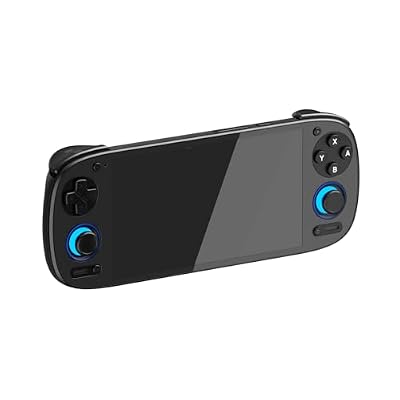
The Pocket 5 is the balanced pick. Its 5.5-inch AMOLED makes pause-screen maps genuinely pleasant to read, the d-pad handles the 2D canon with confidence, and the hall-effect sticks plus analog triggers cover the Prime games and other 3D entries. The Snapdragon 865 runs the whole genre, including upscaled PS2 titles, and Retroid’s software support is among the most consistent in this market.
Specs:
- Chip: Qualcomm Snapdragon 865
- Display: 5.5-inch AMOLED touchscreen, 1920 x 1080
- Memory: 8GB LPDDR4X RAM, 128GB UFS 3.1 storage plus microSD slot
- Battery: 5,000mAh
- System: Android 13, hall-effect sticks, analog triggers
- Output: DisplayPort video out over USB-C
Anbernic RG556 (Blue)

The RG556 trades a little processing headroom for the biggest, most comfortable screen in this group relative to its size. The 5.48-inch AMOLED is kind to map screens and to eyes during long exploration sessions, and the wide body gives your hands room during extended play. The Unisoc T820 handles the 2D genre easily and most PS2-era entries at native resolution, and active cooling keeps long sessions consistent.
Specs:
- Chip: Unisoc T820 octa-core
- Display: 5.48-inch AMOLED touchscreen, 1920 x 1080
- Memory: 8GB LPDDR4X RAM, 128GB UFS 2.2 storage plus microSD slot
- Battery: 5,500mAh
- System: Android 13, hall-effect sticks, analog triggers, active cooling fan
Anbernic RG406H (White)

The RG406H is the 4:3 purist’s pick. Its 4-inch 960 x 720 screen matches the aspect ratio of the SNES, PS1 and Game Boy Advance libraries almost exactly, so Super Metroid, Symphony of the Night and the GBA Castlevania games fill the display with minimal wasted space and clean scaling. Under the shell it shares the T820 platform with the RG556, so performance is a full generation ahead of most 4:3 machines, and the sticks extend its reach into early 3D entries.
Specs:
- Chip: Unisoc T820 octa-core
- Display: 4.0-inch IPS touchscreen, 960 x 720, 4:3 aspect ratio
- Memory: 8GB LPDDR4X RAM, 128GB UFS 2.2 storage plus microSD slot
- Battery: 5,000mAh
- System: Android 13, hall-effect sticks, analog triggers, active cooling fan
Anbernic RG35XX H (64GB)

The RG35XX H is the budget d-pad machine. It runs Linux rather than Android, boots fast, sleeps reliably and covers the genre’s 2D heartland — NES, SNES, Genesis, GBA and PS1 — without any setup drama. The horizontal body and proper d-pad make it the pick most likely to live in a jacket pocket for train-ride sessions of Aria of Sorrow. It stops being the right answer when your list reaches GameCube or PS2, which are beyond the H700 chip.
Specs:
- Chip: Allwinner H700 quad-core
- Display: 3.5-inch IPS, 640 x 480
- Memory: 1GB LPDDR4 RAM, 64GB microSD card, second microSD slot
- Battery: 3,300mAh
- System: Linux, dual card slots, HDMI output
How to Choose
Start with your library, not the spec sheet. If the DS Castlevania trilogy sits near the top of your list, the second screen is not a luxury: the Thor Pro is the only pick that keeps those maps visible at all times. If your list is mostly SNES, GBA and PS1, prioritize the 4:3 screen of the RG406H or the simplicity of the RG35XX H, because aspect ratio and d-pad quality will shape every hour you play.
If your list spans the whole genre including GameCube and PS2, you need the Android tier: the Pocket 5 for balance, the RG556 for screen comfort, or the Thor Pro for power plus the second display. Check three things before buying any of them: that the d-pad design suits precision platforming, that the device supports the frontend you prefer, and that battery capacity matches your session length. Storage is rarely a constraint for this genre, since even a large metroidvania library is small beside modern game sizes.
Who Should Skip These Picks
Skip this entire category if your metroidvania backlog lives on modern platforms. Recent genre entries are native PC and console games, and a docked console or a gaming laptop you already own will run them better than any emulation handheld. Also skip the budget Linux tier if you dislike community firmware and manual setup; the RG35XX H rewards a little tinkering, and the Android picks are friendlier out of the box. Finally, if you mostly play on a television, a mini PC or your existing console will serve you better than a small screen.
Frequently Asked Questions
Which handheld is best for the DS Castlevania games?
The AYN Thor Pro, because Dawn of Sorrow, Portrait of Ruin and Order of Ecclesia were designed around a permanent map on the second screen. Single-screen handhelds can swap or overlay the two displays, but the map is never simply there, and these games ask you to check it constantly.
Is a 4:3 screen really better for older metroidvanias?
For the SNES, PS1 and GBA libraries, yes. Those games were drawn for a 4:3 frame, so a native 4:3 panel like the RG406H shows them full-height with clean scaling instead of pillarboxed on a wide display. Widescreen handhelds pull ahead again with PSP and later entries.
How much power does this genre actually need?
Very little at the 2D end: the RG35XX H runs the NES through PS1 canon comfortably. The demanding entries are the 3D ones, mainly GameCube and PS2, and those need the Snapdragon-class Android picks. Nothing in the classic genre requires a flagship PC handheld.
D-pad or stick: which matters more for metroidvanias?
The d-pad, for most of the genre. Nearly all of the celebrated entries are 2D games built around d-pad movement, and a sloppy d-pad with false diagonals will cost you more missed jumps than any other hardware flaw. Sticks only become essential for the 3D branch such as the Prime series.
Final Verdict
Metroidvania is the genre where screen shape and control quality beat raw power. Buy the Retroid Pocket 5 for the best all-round balance, the AYN Thor Pro if the DS trilogy matters to you, the RG406H for a native 4:3 experience with modern headroom, the RG556 for big-screen comfort, and the RG35XX H when the budget is the deciding factor. Any of the five will carry the genre well; the right choice is the one that matches the era you replay most.







