

- Top Pick: Redragon M612 Wired RGB Optical Gaming Mouse 8000 DPI Remapping Keys
- Best Value: Yonktoo Mouse Jiggler Undetectable – Ultra Slim Mouse Mover with Realistic Movement, No Software Needed, Keeps Your PC Awake and Active, Keeps Computer Awake for Office or Remote Work – Black
- Premium Choice: AEETYRN Mouse Mover Device, Auto-ON Mouse Jiggler Undetectable for PC/Laptops, Mouse Wiggler Driver-Free Keep Computer Awake, As a Gift, Blue
Writing code is long, intense, repetitive work, and the right mouse can make a real difference to both productivity and comfort. Developers benefit from things gamers and casual users rarely think about: programmable buttons mapped to shortcuts, builds and navigation, precise tracking for moving accurately around dense code and large screens, and an ergonomic shape that keeps the hand comfortable through hours of work. A mouse that saves you keystrokes and spares your wrist pays for itself. This guide rounds up the best mice for developers in 2026, judged on programmable buttons, precision and long-session ergonomics.
- Best Mice for Developers at a Glance
- 1. Logitech G502 Hero High Performance Wired Mouse, 11 Buttons
- 2. Anker 2.4G Wireless Vertical Ergonomic Mouse, Multi-Device
- 3. Logitech M185 Wireless Mouse, 2.4GHz with USB Receiver
- 4. Logitech G305 Lightspeed Wireless Gaming Mouse, HERO Sensor
- 5. Logitech G305 Lightspeed Wireless Mouse, 12,000 DPI HERO
- 6. Logitech M510 Wireless Mouse with Side Buttons, Long Battery
- How to Choose a Mouse for Development
- Frequently Asked Questions
- Related Guides
- Related Articles
Our picks were chosen on what genuinely matters for coding: the number and usefulness of programmable buttons, sensor precision for accurate work across big or multiple displays, ergonomic comfort for marathon sessions, and value. We have included a spread from around $14 to around $37 because a developer’s ideal mouse depends on whether you prize macros, precision, comfort or portability. The list spans a button-laden programmable flagship, precise wireless options, an ergonomic vertical mouse and dependable everyday picks. Below is an at-a-glance comparison of all six, then a closer look at each and a buyer’s guide built around programmable buttons, precision and ergonomics — the criteria that make a mouse genuinely better for writing code.
As an Amazon Associate we earn from qualifying purchases at no extra cost to you.




🛒 Best Price Today on Amazon
Prime members get fast, free shipping on everything above, plus member-only deals. New members get a 30-day free trial — cancel anytime.
Best Mice for Developers at a Glance
| Mouse | Best For | Standout Spec | Approx Price |
|---|---|---|---|
| Logitech G502 Hero | Programmable buttons + macros | HERO 25K, 11 buttons | around $32 |
| Anker Vertical Ergonomic | Wrist comfort for coding | Vertical, multi-device | around $22 |
| Logitech M185 Wireless | Reliable budget everyday | Compact 2.4GHz, long battery | around $14 |
| Logitech G305 Lightspeed | Precise low-latency wireless | LIGHTSPEED, HERO 12K | around $36 |
| Logitech G305 (alt config) | Lightweight precise wireless | HERO sensor, programmable | around $37 |
| Logitech M510 Wireless | Comfortable extra-button mouse | Side buttons, long battery | around $28 |
1. Logitech G502 Hero High Performance Wired Mouse, 11 Buttons






As an Amazon Associate we earn from qualifying purchases. Product prices and availability are accurate as of the date/time indicated.
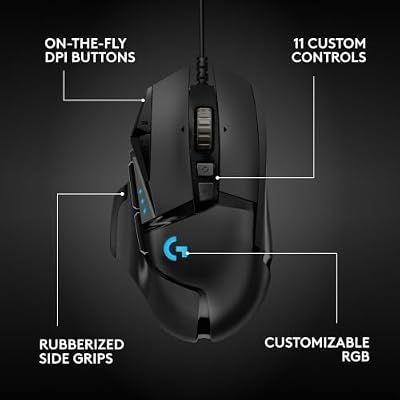
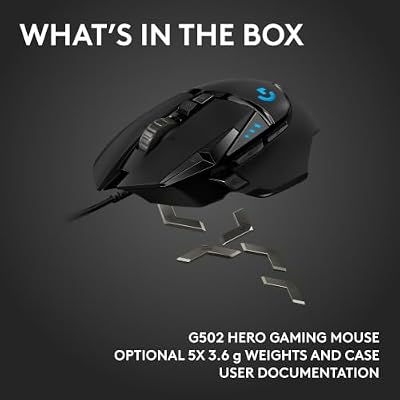
The Logitech G502 Hero is the programmable-buttons pick and the standout for developers who want shortcuts at their fingertips. It pairs the precise HERO 25K sensor with eleven fully programmable buttons and adjustable weights, and Logitech’s G HUB software lets you map those buttons to anything — build commands, window switching, copy-paste, IDE shortcuts and macros. At around $32 it is one of the most capable, customizable mice you can put on a coding desk.
For development the G502’s value is turning repetitive actions into single clicks. The eleven buttons can be mapped per-application, so your editor, terminal and browser each get the shortcuts that matter, the precise sensor tracks accurately across large or multiple monitors, and the adjustable weights let you tune the feel for long sessions. The wired connection is consistent with nothing to charge. If programmable power and precision for coding are your priority, the G502 Hero is the clear choice.
Pros: Eleven programmable buttons for macros and shortcuts, precise HERO 25K sensor, per-app profiles, tunable weights.
Cons: Heavier than minimalist mice; wired only.
2. Anker 2.4G Wireless Vertical Ergonomic Mouse, Multi-Device

Anker 2.4G Wireless Ergonomic Mouse, Right Hand Vertical Mouse USB Receiver


As an Amazon Associate we earn from qualifying purchases. Product prices and availability are accurate as of the date/time indicated.
The Anker vertical ergonomic mouse is the wrist-comfort pick for developers who spend all day at the keyboard and mouse. Its upright, vertical shape holds the hand in a natural handshake position to reduce forearm and wrist strain, and it supports convenient multi-device use. At around $22 it is an affordable way to bring genuine ergonomic relief to a coding setup.
For long coding sessions the Anker’s draw is comfort that lasts. The vertical design eases the wrist twist a flat mouse forces, which many developers find makes hours of work far more comfortable and helps head off repetitive strain. The multi-device support is handy when you juggle more than one machine, a common developer scenario. It is not a programmable powerhouse, but as an ergonomic mouse that keeps your wrist happy through marathon coding days, it is a smart, comfort-first choice that complements a good keyboard.
Pros: Ergonomic vertical shape reduces wrist strain, multi-device support, comfortable for marathon coding.
Cons: Few extra buttons; vertical shape has a short learning curve.
3. Logitech M185 Wireless Mouse, 2.4GHz with USB Receiver





As an Amazon Associate we earn from qualifying purchases. Product prices and availability are accurate as of the date/time indicated.
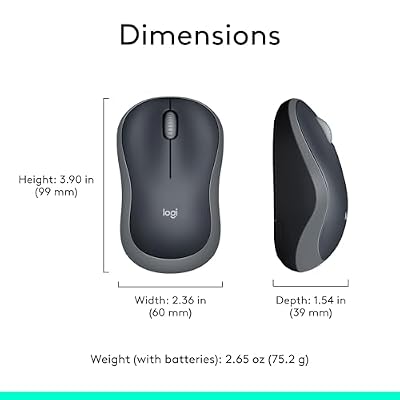
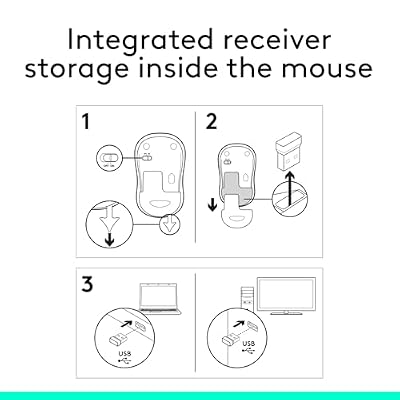
The Logitech M185 is the reliable budget everyday pick. It is a compact 2.4GHz wireless mouse with a plug-and-play USB receiver, a comfortable ambidextrous shape and Logitech’s trademark dependable wireless and long battery life. At around $14 it is the most affordable mouse here and a solid, no-drama companion for general development work.
For coders the M185 is about quiet dependability rather than features. The stable Logitech wireless connection just works, the tiny receiver stays tucked in a USB port, and the year-plus battery life means little maintenance — useful when you are focused on code, not peripherals. The symmetrical shape suits either hand for general navigation. It lacks programmable side buttons, so it is best as a reliable secondary mouse, a travel option, or a budget everyday pick. For dependable, affordable wireless that simply gets out of the way, it fits the bill.
Pros: Dependable Logitech wireless, plug-and-play receiver, long battery life, comfortable, very affordable.
Cons: No programmable buttons; compact size suits smaller hands.
4. Logitech G305 Lightspeed Wireless Gaming Mouse, HERO Sensor


As an Amazon Associate we earn from qualifying purchases. Product prices and availability are accurate as of the date/time indicated.
The Logitech G305 Lightspeed is the precise low-latency wireless pick. It pairs Logitech’s LIGHTSPEED wireless — engineered to rival wired response — with the accurate HERO sensor in a lightweight shell, and includes programmable buttons configurable in G HUB. At around $36 it gives developers precise, responsive, cable-free control with room to map a few shortcuts.
For development the G305’s appeal is precision without a cable. LIGHTSPEED keeps tracking fast and responsive across large or multiple displays, the accurate HERO sensor moves the cursor exactly where you intend through dense code, and the programmable buttons let you assign handy shortcuts. The light weight reduces fatigue over long sessions, and long battery life keeps maintenance low. For a coder who wants accurate, low-latency wireless and a tidy desk, with the option of a few mapped commands, the G305 is an excellent all-rounder.
Pros: Precise HERO sensor, LIGHTSPEED low-latency wireless, programmable buttons, lightweight, long battery life.
Cons: Fewer buttons than the G502; lighting and extras are minimal.
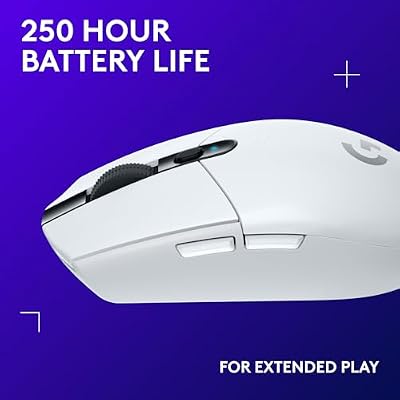
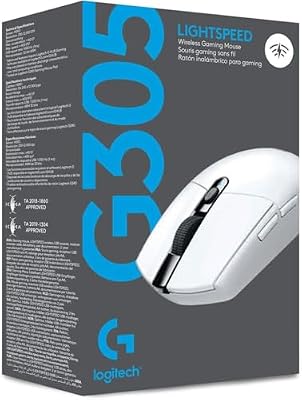
5. Logitech G305 Lightspeed Wireless Mouse, 12,000 DPI HERO




As an Amazon Associate we earn from qualifying purchases. Product prices and availability are accurate as of the date/time indicated.
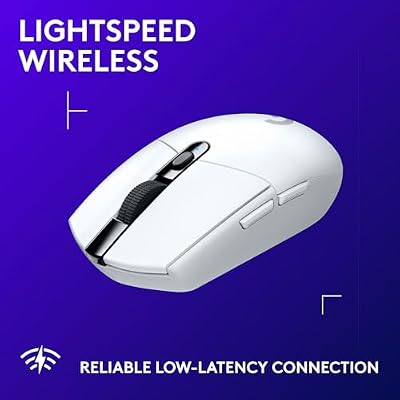
This alternative G305 Lightspeed configuration highlights the same strengths for developers who want lightweight, precise wireless in a slightly different finish. It uses the same accurate HERO sensor (up to 12,000 DPI) and LIGHTSPEED wireless, with programmable buttons set up in G HUB, in a featherweight shell. At around $37 it is a precise, responsive wireless mouse well suited to a tidy coding desk.
For coding the priorities are identical: accurate, low-latency tracking and a light, fatigue-friendly shape. The HERO sensor places the cursor precisely across big or multi-monitor setups, LIGHTSPEED keeps wireless input snappy, and the programmable buttons let you map a couple of shortcuts to streamline your workflow. The low weight and strong battery life make it comfortable for long sessions with little upkeep. If you like the G305 formula and want a precise, lightweight wireless mouse for development, this configuration is an equally strong choice.
Pros: Accurate HERO sensor, snappy LIGHTSPEED wireless, programmable buttons, featherweight, long battery life.
Cons: Limited button count; minimal extras beyond core performance.
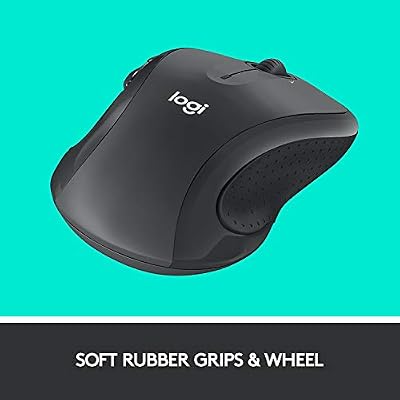
6. Logitech M510 Wireless Mouse with Side Buttons, Long Battery





As an Amazon Associate we earn from qualifying purchases. Product prices and availability are accurate as of the date/time indicated.
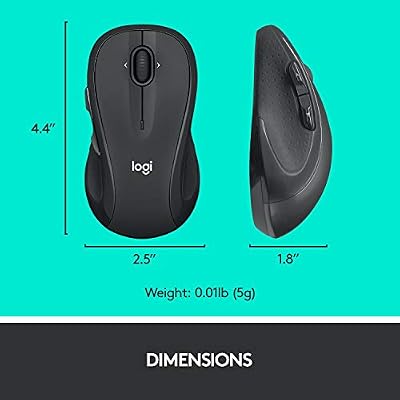
Rounding out the list is the Logitech M510, the comfortable extra-button pick. It is a full-size wireless mouse with a contoured ergonomic shape, back/forward side buttons, a precise laser sensor and excellent battery life. At around $28 it offers developers a comfortable hand-filling design with a couple of genuinely useful programmable buttons at a sensible price.
For development the M510 balances comfort and modest customization. The full-size contoured body fills the hand and supports it well over long coding sessions — more comfortable than a compact travel mouse — while the side buttons can be mapped to back/forward navigation, window switching or shortcuts to speed up your workflow. The laser sensor tracks reliably and the long battery life keeps maintenance minimal. For a comfortable everyday developer mouse with a few extra buttons and a dependable Logitech wireless link, the M510 is a well-rounded choice.
Pros: Comfortable full-size shape, useful programmable side buttons, reliable laser sensor, long battery life.
Cons: Fewer buttons than the G502; larger size suits bigger hands.
How to Choose a Mouse for Development
For development, programmable buttons are the feature that most directly boosts productivity. Extra buttons can be mapped to build commands, IDE shortcuts, window switching, copy and paste, or macros, turning multi-step actions into a single click. A button-rich mouse like the Logitech G502 Hero, with eleven buttons and per-application profiles, is ideal for power users, while a couple of side buttons on the M510 or G305 cover navigation. Decide how many shortcuts you will genuinely use and choose the button count to match.
Precision is the second pillar, because developers work across dense code, large monitors and often multiple displays. An accurate sensor like Logitech’s HERO — in the G502 and both G305 configurations — tracks faithfully so the cursor lands exactly where you intend, without the wander or smoothing of a basic sensor. You do not need an extreme DPI ceiling for coding; what matters is clean, consistent tracking across your whole desktop, so prioritise sensor quality over a headline DPI figure.
Ergonomics decide how comfortable those long coding sessions feel. A full-size contoured mouse like the M510 fills and supports the hand better than a compact travel mouse over hours of work, while a vertical mouse such as the Anker holds the wrist in a neutral handshake position to ease strain for those prone to discomfort. Match the shape and size to your hand and any wrist concerns — comfort compounds over a full day of coding, and a mouse that prevents fatigue is worth as much as one that saves keystrokes.
Finally, weigh connection, weight and budget. Wired mice like the G502 give consistent input with nothing to charge, while LIGHTSPEED wireless in the G305 rivals wired latency for a cable-free desk, and lighter shells reduce fatigue over long sessions. Software like Logitech’s G HUB or Options unlocks remapping and per-app profiles that make a mouse far more useful for coding. Set your budget, decide whether programmable power, precision, ergonomic comfort or portability matters most, and pick the mouse on this list that best fits how you write code.
Frequently Asked Questions
What features make a mouse good for developers?
Programmable buttons, precise tracking and ergonomic comfort. Programmable buttons let you map IDE shortcuts, build commands and macros to single clicks — the Logitech G502 Hero’s eleven buttons excel here — a precise sensor like the HERO keeps the cursor accurate across dense code and big screens, and an ergonomic shape keeps your hand comfortable through long coding sessions. Those three together matter far more than gaming-grade DPI.
How many programmable buttons do I need for coding?
It depends on your workflow. If you want shortcuts, builds, window switching and macros at your fingertips, a high-button mouse like the G502 Hero with eleven buttons and per-app profiles is ideal. If you just want quick back/forward navigation, a couple of side buttons on the Logitech M510 or G305 are plenty. Map only the buttons you will actually use rather than chasing the highest count.
Is an ergonomic or vertical mouse better for long coding sessions?
It can be, especially if you are prone to wrist discomfort. A vertical mouse like the Anker holds your wrist in a neutral handshake position to ease strain over marathon sessions, while a full-size contoured mouse such as the Logitech M510 supports the hand comfortably for hours. Both beat a flat, compact mouse for all-day coding; choose based on your hand size and comfort preference.
Should a developer choose a wired or wireless mouse?
Either works well. Wired mice like the G502 Hero give consistent input with nothing to charge, which suits a fixed desk. Modern wireless — notably Logitech’s LIGHTSPEED in the G305 — rivals wired responsiveness while keeping the desk tidy and freeing movement. For precise, low-maintenance coding the choice usually comes down to whether you prefer a permanent wired link or a clean, cable-free setup.
Related Guides
- Best Mouse
- Best Mouse for Home Office
- Best Ergonomic Mouse
- Best Keyboards for Developers
- Best Monitors for Programming
- Best Budget Gaming Setup
Affiliate Disclosure: As an Amazon Associate, we earn from qualifying purchases. If you click a link and make a purchase, we may earn a small commission at no extra cost to you. Prices and availability are accurate as of publication and may change.
Ready to decide? Our #1 pick for 2026 is the Logitech G502 Hero.
Live price & availability on Amazon.


