- Top Pick: Samsung 43-Inch Class M70H Series, Mini LED, 4K, Smart TV, 2026 Model
- Best Value: Samsung 55-Inch Class M70H Series, Mini LED, 4K, Smart TV, 2026 Model
- Premium Choice: TCL 55 Inch Class QM6K Series | Mini LED QLED 4K HDR | 55QM6K, Latest Model | 120HZ-144HZ High Brightness Smart Google TV Dolby Atmos Onkyo Audio | Voice Remote Alexa Gaming Streaming Television
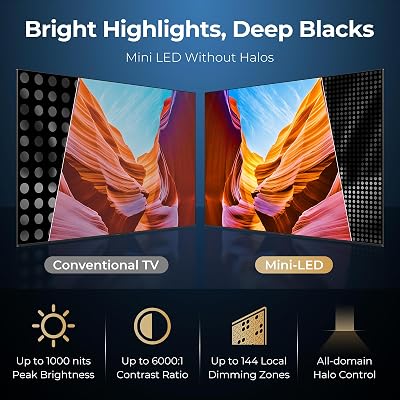
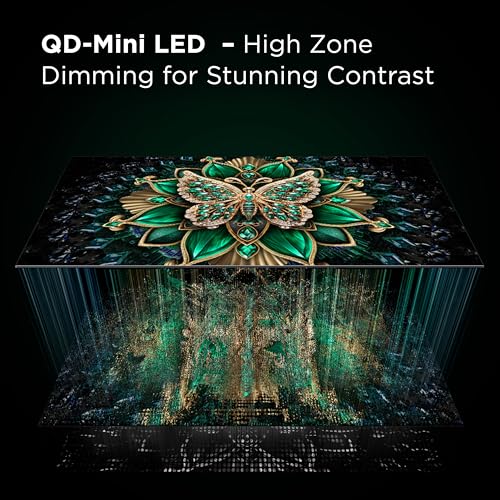
Mini-LED is the LED backlight technology that finally lets LCD gaming TVs compete with OLED on contrast — and routinely beat it on brightness. Instead of dozens of large backlight LEDs, a Mini-LED TV uses thousands of tiny LEDs grouped into many local dimming zones, so it can light bright areas hard while keeping dark areas genuinely dark. Add 4K, a 120Hz or 144Hz refresh rate, HDMI 2.1 with VRR and ALLM, and a QLED-style quantum dot color layer, and Mini-LED becomes one of the strongest gaming-TV categories — especially for bright rooms. This guide rounds up the best Mini-LED gaming TVs in 2026 across TCL, Hisense, iFFALCON and Amazon’s Ember Mini-LED line.
- Best Mini-LED Gaming TVs at a Glance
- 1. iFFALCON 55″ 4K MiniLED Smart TV with 4x HDMI 2.1, 144Hz VRR
- 2. TCL 55 Inch Class QM6K Series Mini LED QLED 4K HDR Smart Google TV (2026)
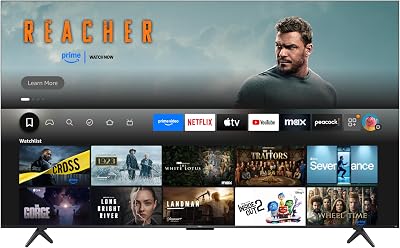
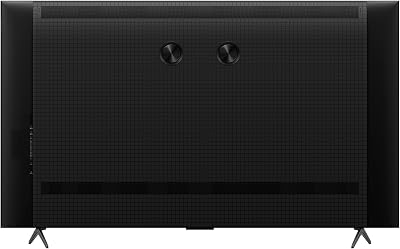
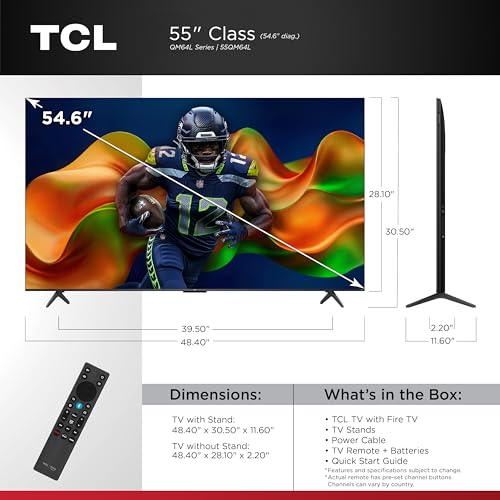
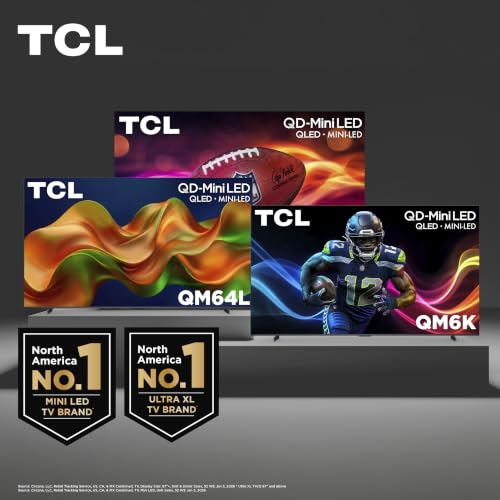
- 3. TCL 55 Inch Class QM64L Series Mini LED QLED 4K HDR Smart Fire TV (2026)
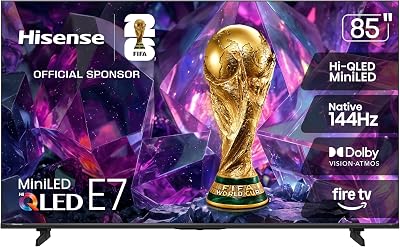
- 4. Hisense 85″ E7 Cinema Series Hi-QLED Mini-LED 4K UHD Fire TV (2026)
- 5. Hisense 75″ QD7 Mini-LED 4K Smart Fire TV
- 6. Amazon Ember 55″ Mini-LED Fire TV with Dolby Vision IQ, 144Hz
- How to Choose a Mini-LED Gaming TV
- Related Guides
- Frequently Asked Questions
- Related Guides
- Related Articles
Our picks were chosen on what genuinely defines a Mini-LED gaming TV: a true Mini-LED backlight rather than a standard LED edge-lit panel, a QLED-class color layer, modern gaming features (HDMI 2.1, 144Hz, VRR, ALLM and Game Mode), and a sensible spread of sizes and prices. Prices range from around $400 on the iFFALCON 55-inch through to around $1,099 on the giant Hisense 85-inch E7. Below is an at-a-glance comparison of all six, then a closer look at each set, followed by a buyer’s guide built around Mini-LED backlights, brightness, refresh rate and value — the criteria that genuinely separate a great Mini-LED gaming TV from a basic LED.
As an Amazon Associate we earn from qualifying purchases at no extra cost to you.


🛒 Best Price Today on Amazon
Prime members get fast, free shipping on everything above, plus member-only deals. New members get a 30-day free trial — cancel anytime.
Best Mini-LED Gaming TVs at a Glance
| TV | Best For | Standout Spec | Approx Price |
|---|---|---|---|
| iFFALCON 55″ 4K Mini-LED Smart TV | Budget Mini-LED with PS5/Xbox features | Mini-LED, 4x HDMI 2.1, 144Hz VRR 240Hz | around $400 |
| TCL QM6K 55″ Mini-LED QLED (2025) | Best-value 55″ Mini-LED gaming | Mini-LED, 120-144Hz, Google TV | around $498 |
| TCL QM64L 55″ Mini-LED Fire TV (2026) | 55″ Fire TV alternative | Mini-LED QLED, 120-144Hz, Fire TV | around $500 |
| Hisense 85″ E7 Mini-LED Fire TV (2026) | Cinema-scale Mini-LED | 85″ Hi-QLED Mini-LED, 144Hz, Dolby Vision | around $1,099 |
| Hisense 75″ QD7 Mini-LED Fire TV | Big-screen QD7 Mini-LED | 75″ QD Mini-LED, 144Hz, HDR10+/DV | around $550 |
| Amazon Ember 55″ Mini-LED Fire TV | Amazon-ecosystem Mini-LED | Mini-LED QLED, 144Hz gaming, Dolby Vision IQ | around $560 |
1. iFFALCON 55″ 4K MiniLED Smart TV with 4x HDMI 2.1, 144Hz VRR

36
Prime
iFFALCON 55" 4K MiniLED Smart TV | PS5 & Xbox Ready, 4X HDMI 2.1 | Hotel, Home & Office Use | 144Hz VRR 240Hz, Dolby Vision Gaming, Dolby Atmos, IMAX Enhanced, Google TV, Alexa | 55U85
In Stock




As an Amazon Associate we earn from qualifying purchases. Product prices and availability are accurate as of the date/time indicated.
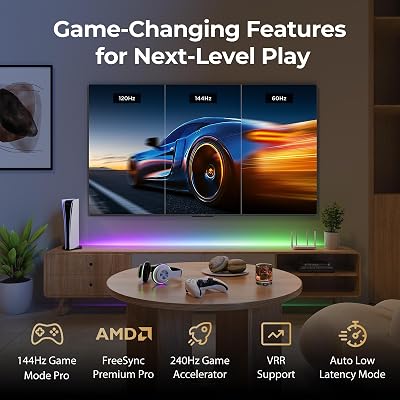
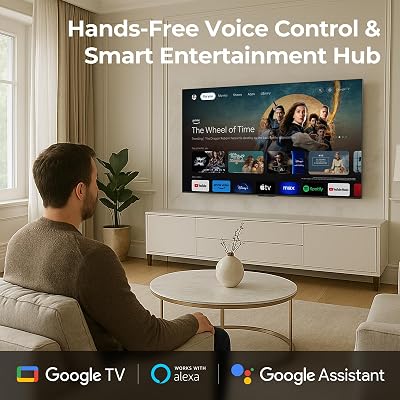
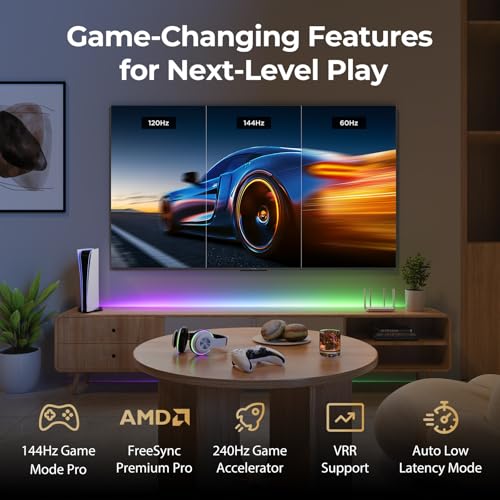
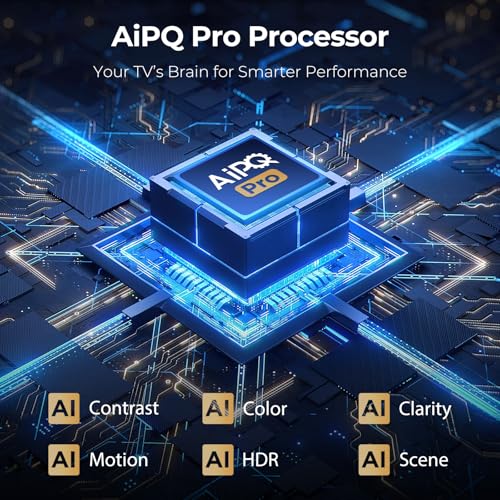
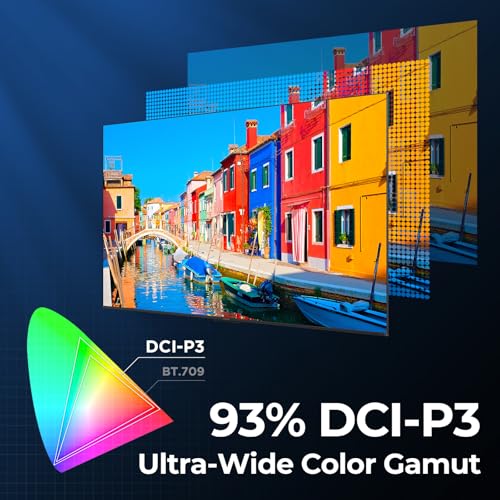
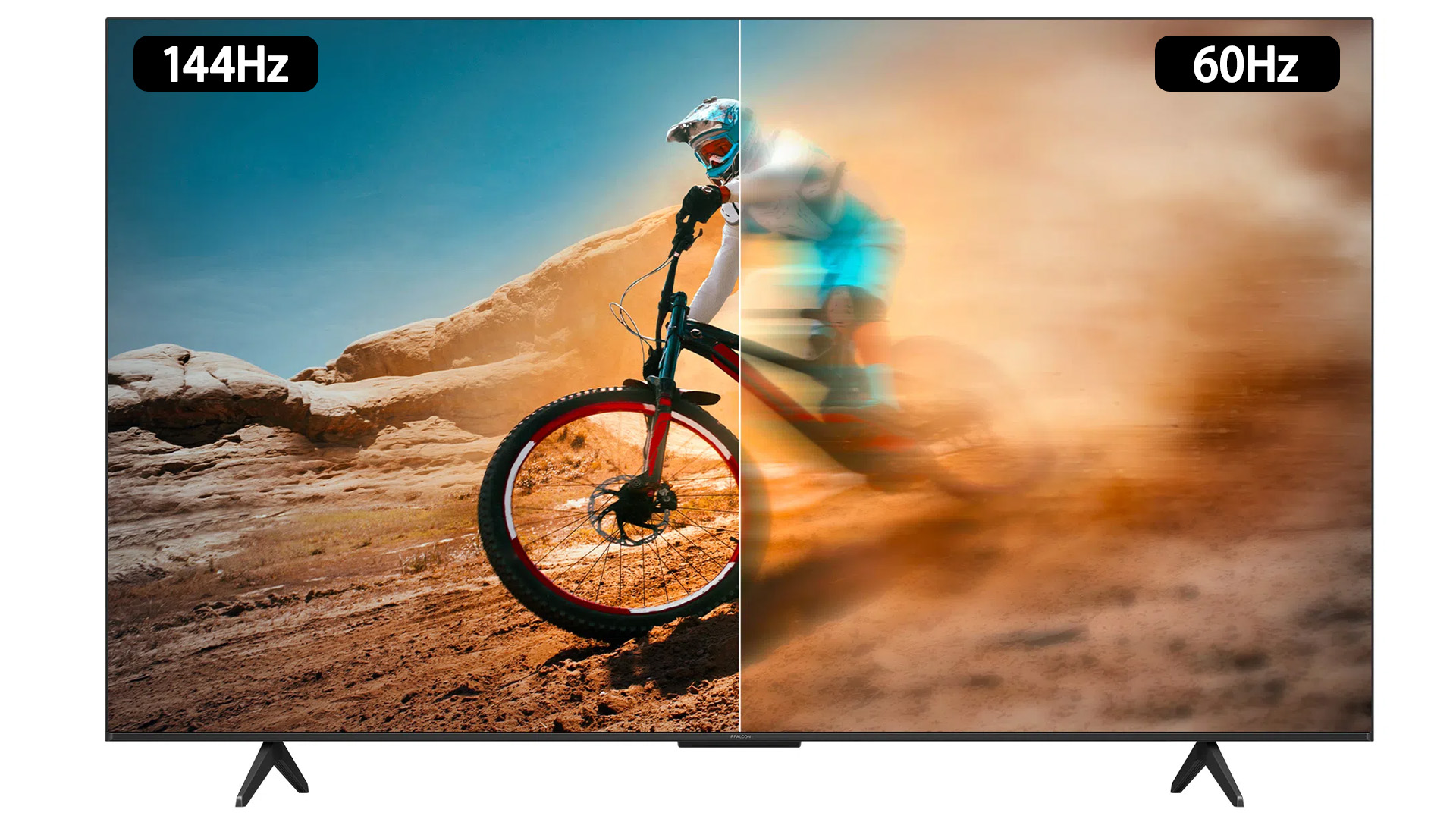
The iFFALCON 55-inch is the budget Mini-LED pick with an unusually console-friendly spec sheet. It is a 4K MiniLED smart TV with PS5 and Xbox ready features, four HDMI 2.1 ports, 144Hz VRR (and 240Hz VRR support advertised on supported sub-4K inputs), and Dolby Vision. At around $400 it is the cheapest Mini-LED on this list.
This is the Mini-LED to pick when you want a stack of modern gaming features without paying top-tier money. Four HDMI 2.1 ports is unusually generous and a big practical win — it means you can connect a PS5, an Xbox Series X, a PC and a soundbar without juggling cables — and 144Hz VRR support covers high-refresh PC gaming. As a brand it sits below the big names, but the Mini-LED backlight and HDMI 2.1 chain make it a genuine gaming-capable TV at a budget price.
Pros: Four HDMI 2.1 ports, 144Hz VRR, Mini-LED with Dolby Vision, lowest price here.
Cons: Brand reputation below TCL/Hisense/Samsung/LG; verify zone count and brightness.
2. TCL 55 Inch Class QM6K Series Mini LED QLED 4K HDR Smart Google TV (2026)
65
TCL 55 Inch Class QM6K Series | Mini LED QLED 4K HDR | 55QM6K, 2025 Model | 120HZ-144HZ High Brightness Smart Google TV Dolby Atmos Onkyo Audio | Voice Remote Alexa Gaming Streaming Television
In Stock









As an Amazon Associate we earn from qualifying purchases. Product prices and availability are accurate as of the date/time indicated.
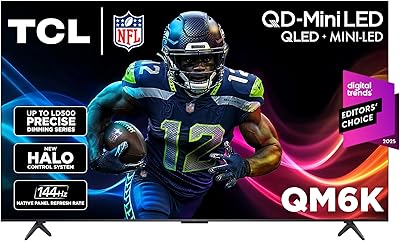
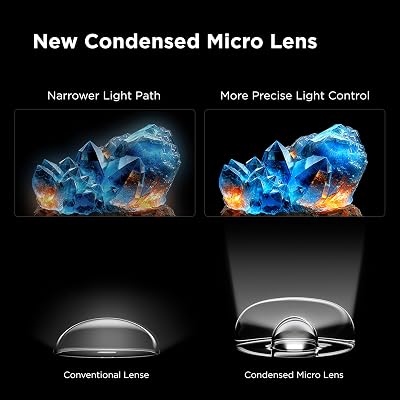
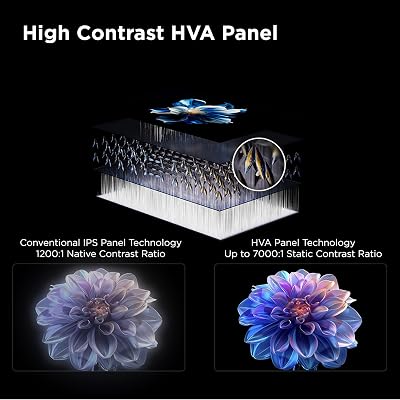
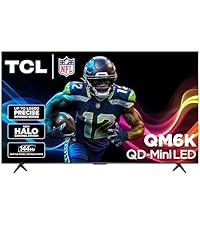
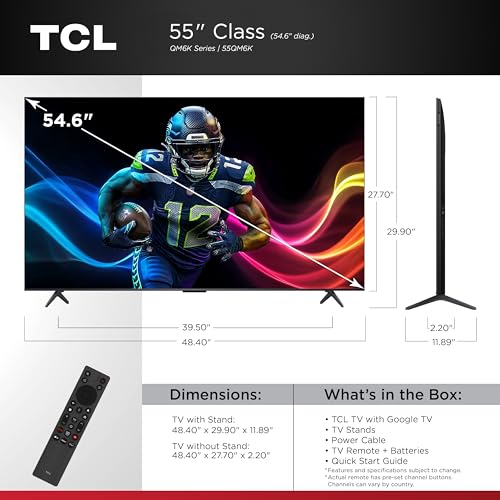
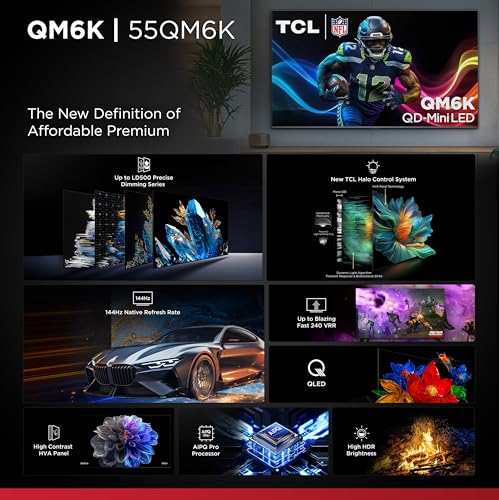
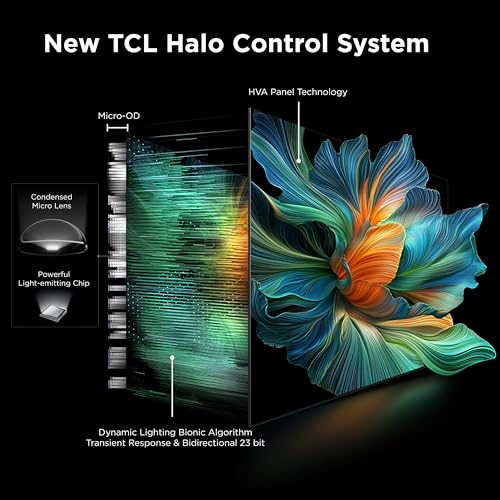
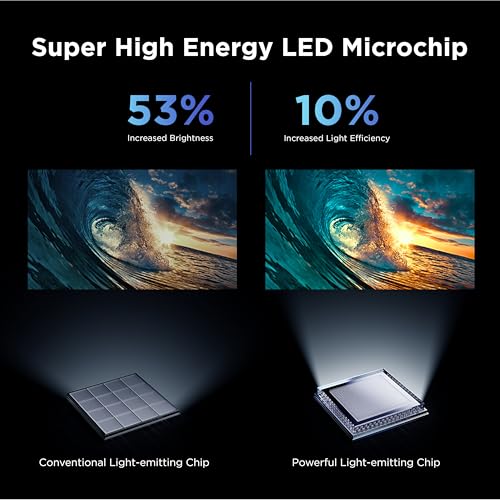
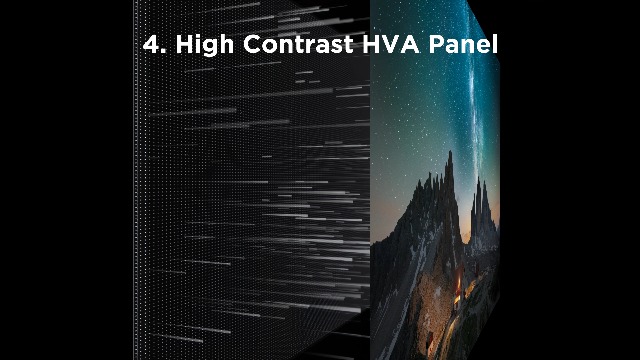
The TCL 55-inch QM6K is the best-value Mini-LED gaming pick of this list and the natural starting point for most buyers. It is a true Mini-LED QLED 4K HDR panel — not a standard edge-lit LED — supporting 120Hz to 144Hz refresh on supported inputs, with Google TV as the smart platform and Game Mode for low input lag. At around $498 it brings genuine Mini-LED contrast and brightness to a mainstream gaming price.
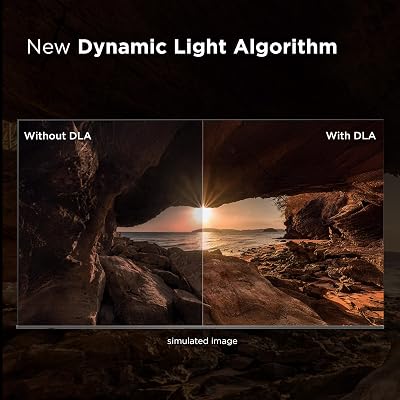
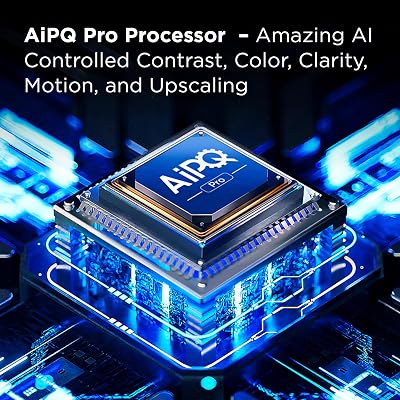
For PS5, Xbox Series X and PC gaming this is exactly the intent it serves: a high-brightness Mini-LED backlight gives HDR highlights real punch, the local-dimming zone count keeps blacks deep, QLED quantum dot color delivers a wide gamut, and 120-144Hz support with HDMI 2.1 lets modern consoles run at 4K/120Hz with VRR and ALLM. Google TV adds a broad app library on top. For a no-fuss 55-inch Mini-LED that punches well above its price, the QM6K is the clear value pick.
Pros: True Mini-LED QLED, 120-144Hz, HDMI 2.1 gaming, Google TV, strong value.
Cons: Zone count and brightness below higher TCL tiers; Mini-LED contrast not OLED.
3. TCL 55 Inch Class QM64L Series Mini LED QLED 4K HDR Smart Fire TV (2026)
61
TCL 55 Inch Class QM64L Series | Mini LED QLED 4K HDR Smart Fire TV | 55QM64L, 2026 | 120Hz-144Hz High Brightness, Dolby Vision Atmos, Alexa+ Voice Remote AI Streaming Television | Amazon Exclusive
In Stock









As an Amazon Associate we earn from qualifying purchases. Product prices and availability are accurate as of the date/time indicated.
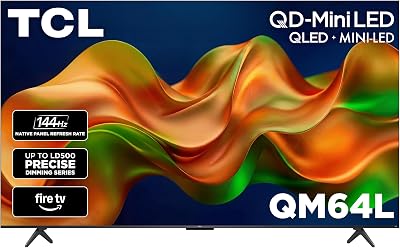
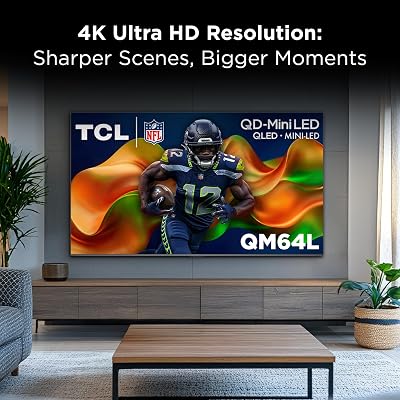
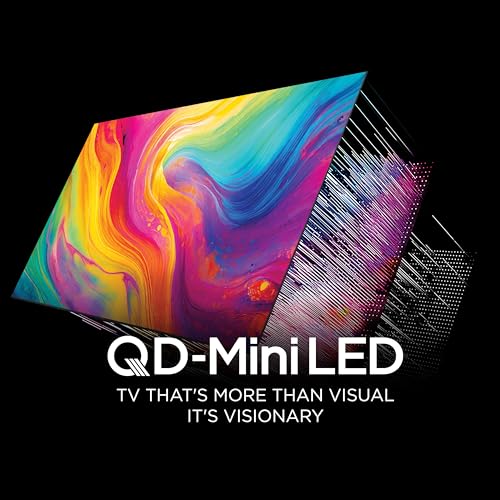
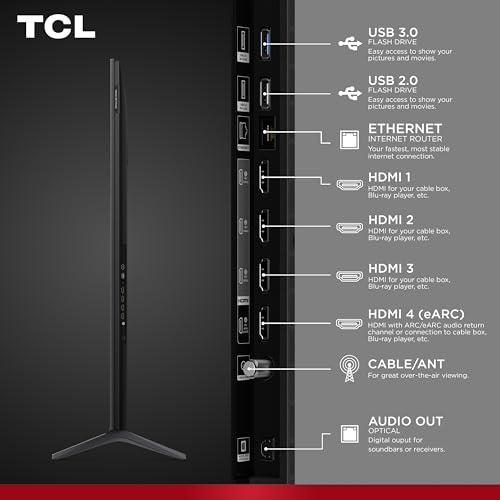
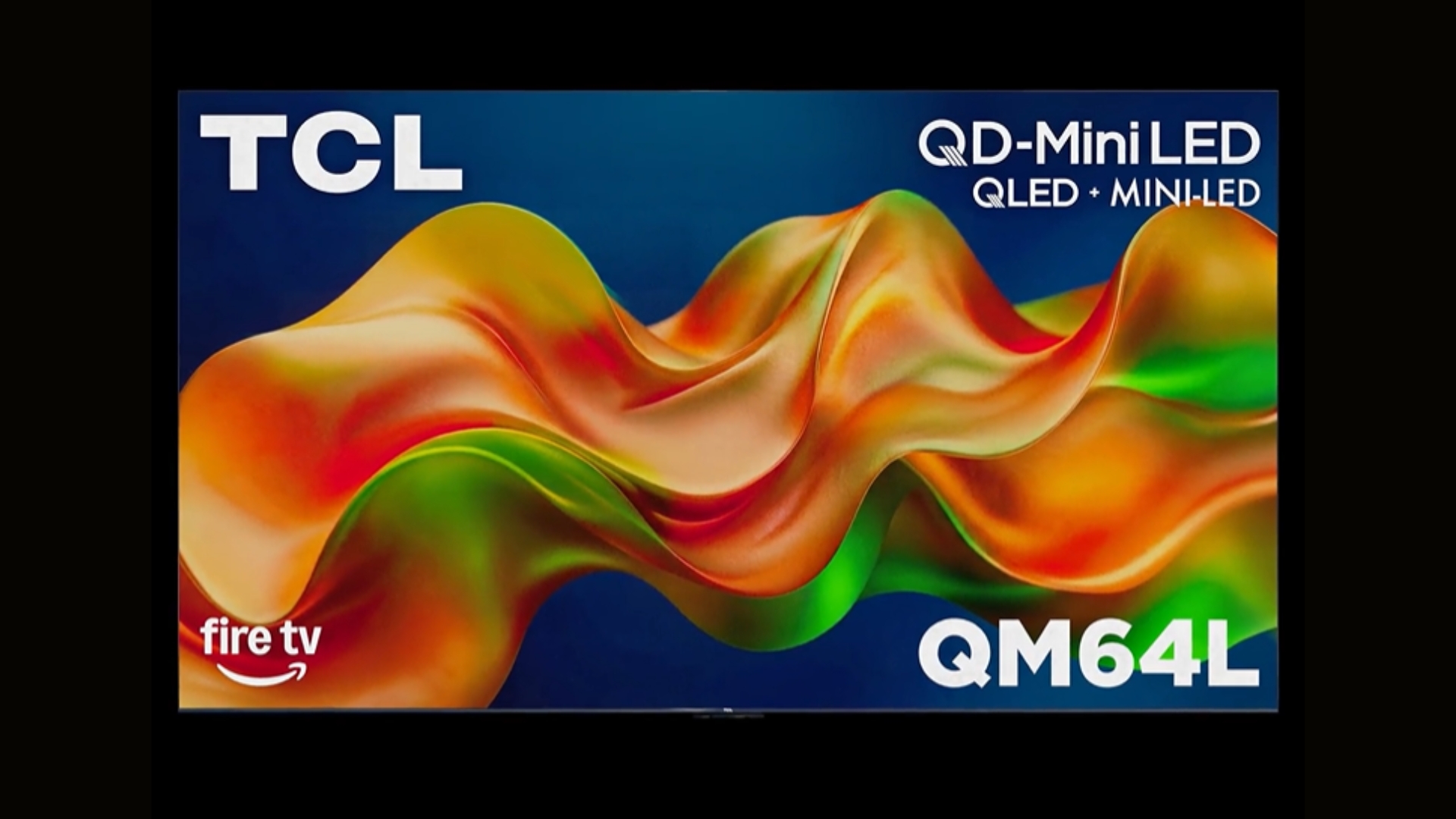
The TCL QM64L 55-inch is the Fire TV cousin of the QM6K and a strong alternative for Amazon-ecosystem households. It uses a Mini-LED QLED backlight, supports 120Hz-144Hz on supported inputs, and runs Fire TV instead of Google TV. At around $500 it is essentially neck-and-neck with the QM6K on price, with the platform choice as the main differentiator.
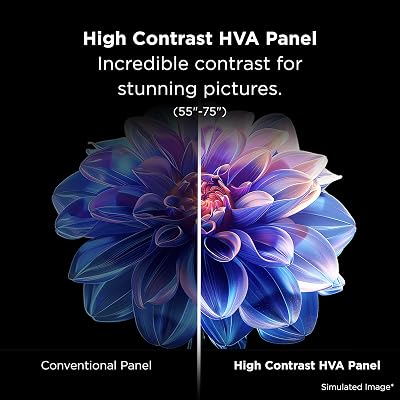
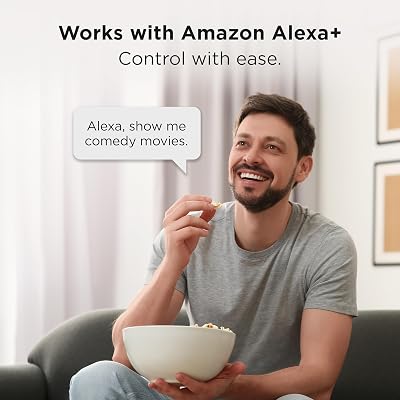
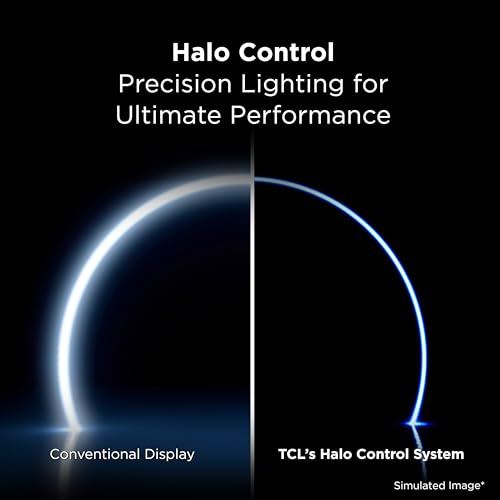
This is the Mini-LED to pick if you already use Alexa, an Echo speaker, Prime Video and the Amazon ecosystem broadly. You get the same Mini-LED contrast and QLED color advantages as the QM6K — punchy HDR highlights, deeper blacks than a basic LED, wide color from the quantum dot layer — with Fire TV’s app library, profiles and Alexa voice control instead of Google’s. HDMI 2.1, VRR, ALLM and 144Hz support cover modern console and PC gaming. If Fire TV is the platform you actually use, the QM64L is the clear pick of the pair.
Pros: Mini-LED QLED, 120-144Hz, Fire TV with Alexa, HDMI 2.1 gaming features.
Cons: Mini-LED tier shares limitations with QM6K (no OLED-level black).
4. Hisense 85″ E7 Cinema Series Hi-QLED Mini-LED 4K UHD Fire TV (2026)
51
Hisense 85" E7 Cinema Series Hi-QLED Mini-LED 4K UHD Smart Fire TV (85E7SF, 2026 NEW) – Native 144Hz, AI Picture, Dolby Vision IQ · Atmos, FALD, HDR10+ Adaptive, MEMC, Alexa+
In Stock










As an Amazon Associate we earn from qualifying purchases. Product prices and availability are accurate as of the date/time indicated.
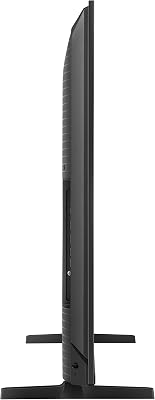
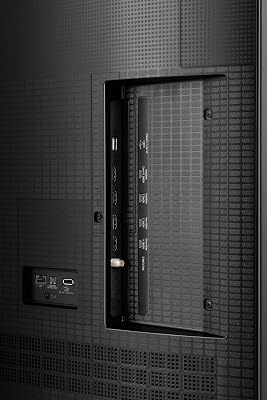
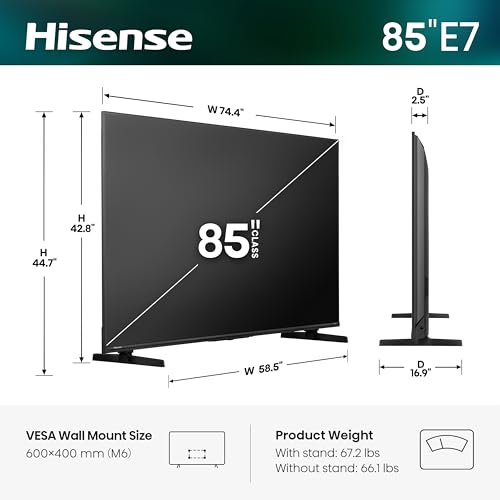
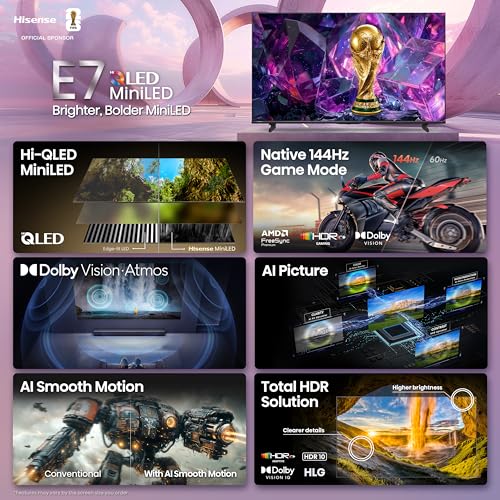
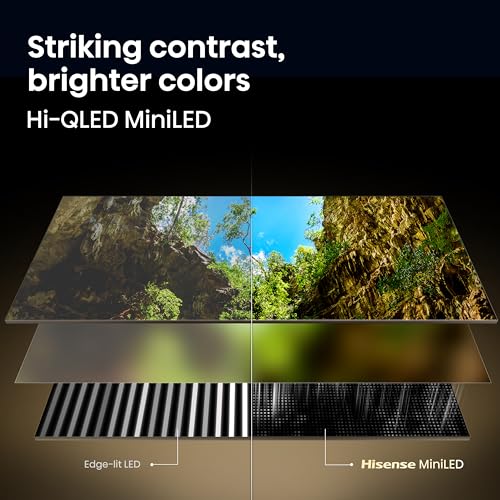
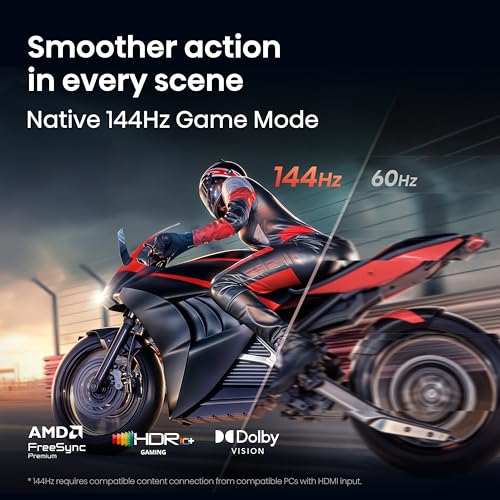
The Hisense 85-inch E7 is the cinema-scale Mini-LED of this guide. It is a Hi-QLED Mini-LED panel built around the Cinema Series tuning, with native 144Hz, AI Picture, Dolby Vision and Atmos, Fire TV and a giant 85-inch screen for around $1,099. As a Mini-LED, it pairs a thousands-of-LEDs backlight with quantum dot color for the brightness and contrast modern HDR content rewards.
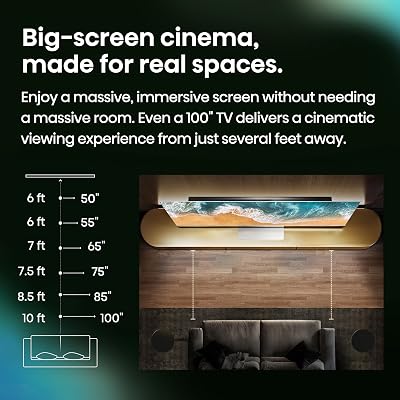
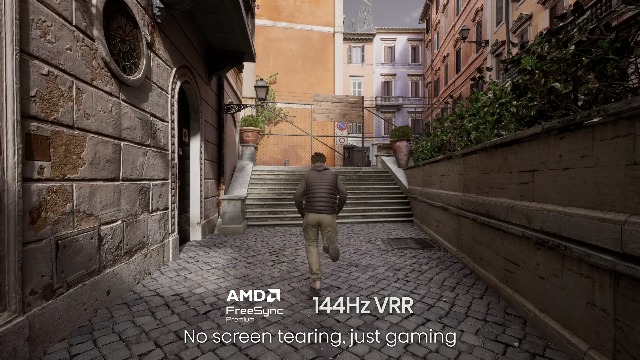
This is the Mini-LED for the home theater or big-room buyer who wants the largest sensible screen size without leaving QLED Mini-LED. At 85 inches it dwarfs typical living-room TVs, the 144Hz refresh and HDMI 2.1 chain handle PC and current-gen console gaming, and Dolby Vision with Atmos covers cinematic HDR film and series. Mini-LED’s high-brightness backlight is especially welcome at this scale, where OLED brightness can feel stretched. For a true big-screen Mini-LED that still slots under $1,100, the E7 85 is the standout.
Pros: 85″ Hi-QLED Mini-LED, native 144Hz, Dolby Vision and Atmos, Fire TV.
Cons: Needs a large room; Mini-LED haloing can show vs OLED in dark scenes.
5. Hisense 75″ QD7 Mini-LED 4K Smart Fire TV
50
Prime
Hisense 75" QD7 Mini-LED 4K Smart Fire TV – QLED, 144Hz, HDR10+, Dolby Vision/Atmos, Game Mode Pro, Alexa Built-in (75QD7QF)
In Stock










As an Amazon Associate we earn from qualifying purchases. Product prices and availability are accurate as of the date/time indicated.
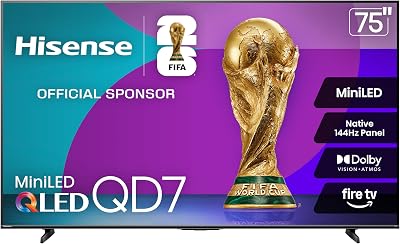
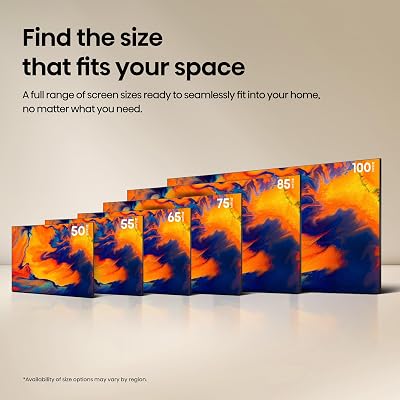
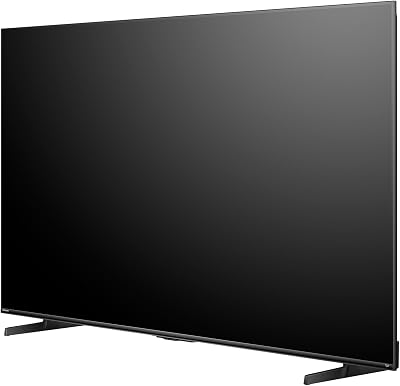
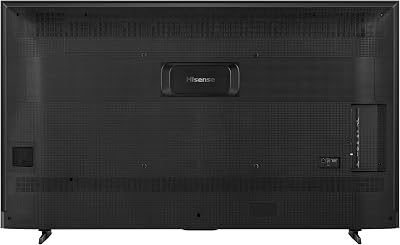
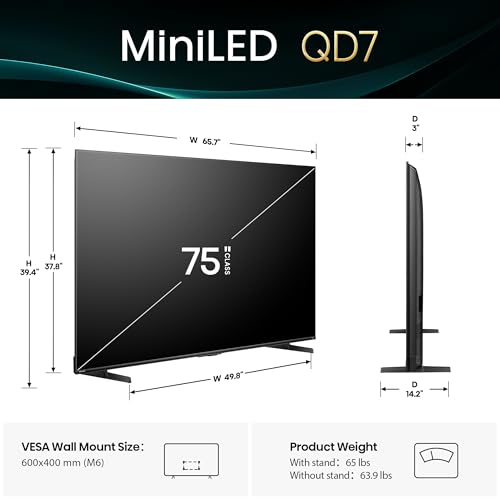
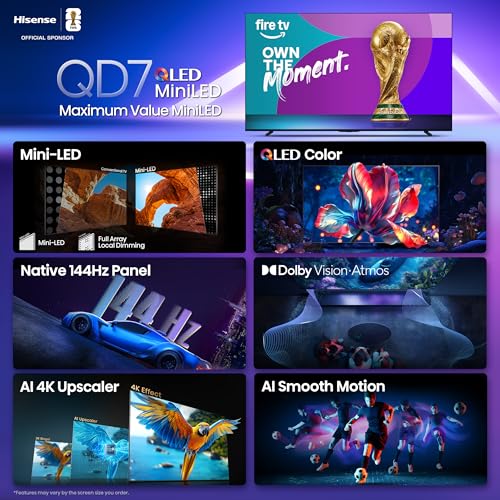
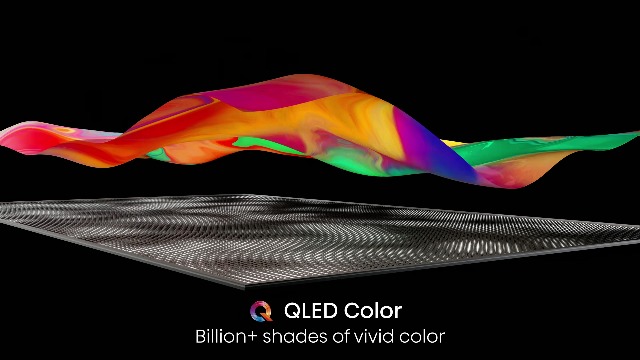
The Hisense 75-inch QD7 is the big-screen QD-based Mini-LED on this list. It uses a QD (quantum-dot) Mini-LED backlight to deliver wide color and high brightness on a 75-inch 4K panel, supports 144Hz with HDR10+ and Dolby Vision/Atmos for HDR gaming and movies, and runs Fire TV with Alexa and Game Mode Pro. At around $550 it offers an unusually large Mini-LED panel for the price.
This is the Mini-LED to pick when you want a genuinely big screen without breaking past the mid-tier price ceiling. The 75-inch panel anchors a real living room, the QD Mini-LED backlight delivers the brightness and color volume gaming TVs need for HDR, and 144Hz support with Dolby Vision and HDR10+ covers both gaming and cinematic HDR content. Fire TV ties it into Alexa and the Amazon ecosystem. If your main constraint is screen size for the money, the QD7 75 is hard to beat among Mini-LED competition.
Pros: 75″ QD Mini-LED, 144Hz, HDR10+ and Dolby Vision, Fire TV with Alexa.
Cons: Larger panel sometimes ships with lower zone density than smaller siblings.
6. Amazon Ember 55″ Mini-LED Fire TV with Dolby Vision IQ, 144Hz

14
Prime
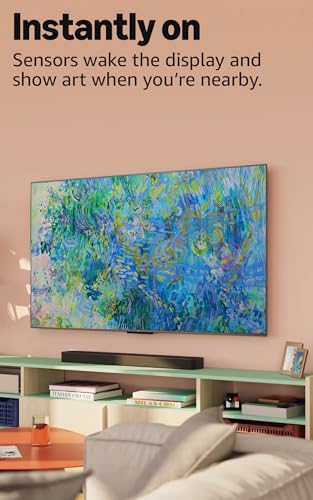
Amazon Ember 55" Mini-LED Series with Fire TV (newest model), QLED 4K UHD smart TV, Dolby Vision IQ, 144hz gaming mode, Ambient Experience, find shows faster with Alexa+
In Stock


As an Amazon Associate we earn from qualifying purchases. Product prices and availability are accurate as of the date/time indicated.
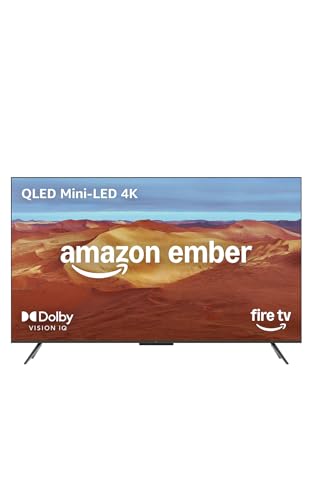
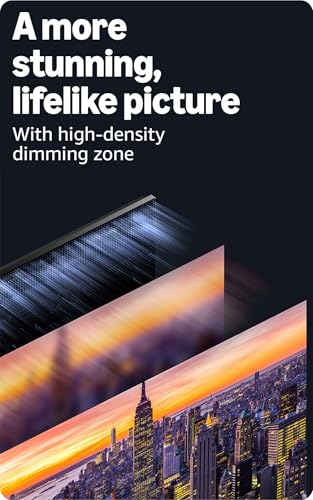
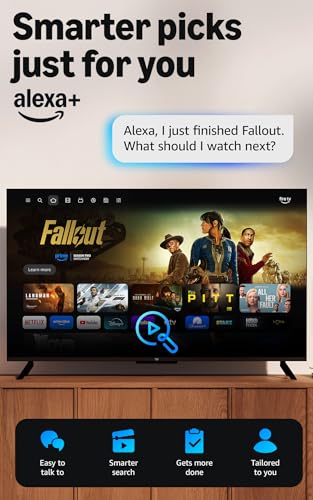
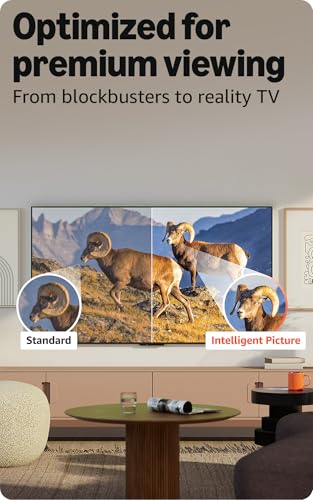
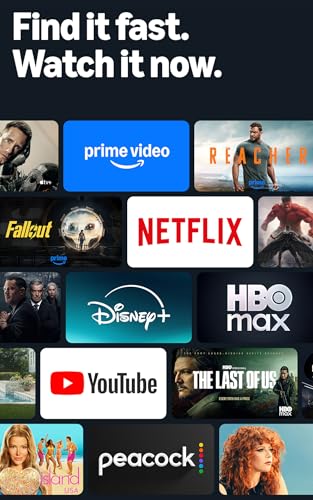
Rounding out the list is the Amazon Ember 55-inch Mini-LED, Amazon’s first-party Mini-LED Fire TV. It is a QLED 4K UHD smart TV with Mini-LED backlighting, Dolby Vision IQ, 144Hz gaming mode and full Fire TV integration with Alexa. At around $560 it sits in the middle of the list and gives Amazon-ecosystem users a flagship-ish Mini-LED branded and supported directly by Amazon.
This is the Mini-LED to choose if you want deep Alexa and Fire TV integration with Amazon’s own hardware. The Mini-LED backlight and QLED color layer deliver the brightness and color volume Mini-LED buyers come for, Dolby Vision IQ adapts HDR for room lighting, and a 144Hz gaming mode covers high-refresh gaming on PC and current-gen consoles. For a Mini-LED that ties tightly into Amazon’s ecosystem and comes with Amazon-branded support, the Ember is the sensible pick.
Pros: Amazon-branded Mini-LED QLED, Dolby Vision IQ, 144Hz gaming, Fire TV with Alexa.
Cons: Newer brand identity; verify long-term firmware update cadence.
How to Choose a Mini-LED Gaming TV
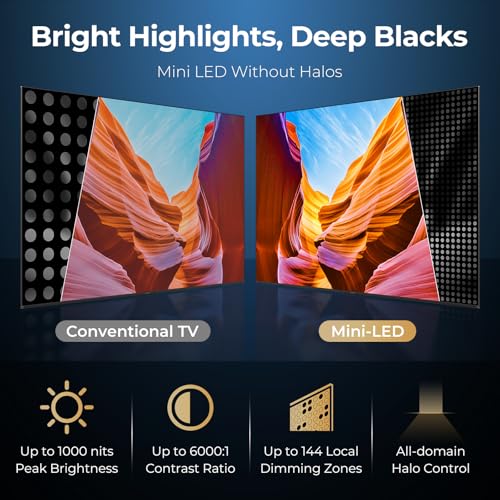
For Mini-LED gaming, confirm the panel really is Mini-LED, not just LED. Mini-LED uses thousands of small LEDs grouped into many local-dimming zones, so it can light bright HDR highlights hard while keeping nearby dark areas dim — that is what gives Mini-LED its OLED-like contrast and brilliant brightness. A standard edge-lit LED TV will not deliver the same contrast no matter how the marketing reads. All six picks here are true Mini-LED panels (TCL QM6K/QM64L, Hisense QD7/E7, iFFALCON, Amazon Ember), which is the first filter you should apply when shopping.
Brightness, zone count and color matter more than headline DPI-style numbers. A higher number of dimming zones produces more precise local contrast, peak brightness drives how punchy HDR highlights look in a lit room, and a QLED-class quantum dot color layer (as on the TCL, Hisense and Ember picks) widens the color volume. Brands rarely publish zone-count comparably, but expect bigger panels and pricier tiers to have more zones and higher peak brightness. For bright rooms, prioritise Mini-LED brightness over OLED.
Gaming features are the next layer and they make a real difference. Look for HDMI 2.1 ports (the iFFALCON’s four is unusually generous), VRR and ALLM support, a 120Hz or 144Hz refresh ceiling, and a Game Mode for low input lag. All six picks here cover the basics; the iFFALCON’s four HDMI 2.1 ports and the larger TCL/Hisense sets’ higher zone counts are the practical differentiators. If you only own a PS5 or one PC, two HDMI 2.1 ports is plenty; if you stack a console, a PC and a soundbar, four ports prevents constant cable juggling.
Finally, weigh ecosystem, size and price together. Google TV (TCL QM6K) and Fire TV (TCL QM64L, Hisense, Amazon Ember) both have broad app support, but pick the one that matches the speakers and devices you already use. Sizes range from 55 inches up to the genuinely cinematic 85-inch Hisense E7 — measure your room first. And remember that Mini-LED is a value-flagship category as much as a premium one: TCL’s QM6K and the iFFALCON 55 prove you can buy a genuinely modern, gaming-ready Mini-LED for around $400-500. Pick the Mini-LED whose size, brightness, port count and platform line up with how you actually play.
Frequently Asked Questions
How is Mini-LED different from regular LED for gaming?
A standard LED TV uses a small number of large backlight LEDs, while a Mini-LED TV uses thousands of tiny LEDs grouped into many local-dimming zones. That difference lets a Mini-LED panel light bright HDR highlights aggressively while keeping nearby dark areas dim, producing much higher contrast and more impactful HDR than basic LED. For gaming, that translates into clearer shadow detail in dark scenes and brighter, punchier highlights — both useful in modern HDR titles.
Is Mini-LED better than OLED for gaming?
It depends on the room and the games. Mini-LED typically beats OLED on peak brightness — useful in sunny living rooms and for bright HDR highlights — while OLED still wins on per-pixel contrast in dark scenes and on pixel response time. For bright rooms or daytime gaming, Mini-LED like the TCL QM6K, Hisense QD7/E7 or Amazon Ember is often the smarter call; for dark-room cinematic gaming, an OLED is still harder to beat.
How many HDMI 2.1 ports do I need on a gaming TV?
For most setups, two HDMI 2.1 ports is enough: one for a current-gen console, one for a PC or second console. If you stack a PS5, an Xbox Series X, a gaming PC and a soundbar with eARC, four HDMI 2.1 ports — as on the iFFALCON 55 — prevents constant cable swapping and supports 4K/120Hz on every device. Decide based on how many high-bandwidth devices you actually own.
Are budget Mini-LED TVs worth it, or should I save for a premium model?
Budget Mini-LEDs like the iFFALCON 55 and TCL QM6K deliver genuine Mini-LED contrast and modern gaming features at remarkably accessible prices. Premium tiers typically add more dimming zones, higher peak brightness, better processing and refined motion handling — real improvements, but with diminishing returns. If you mainly play in a moderately lit room and want strong HDR for around $400-500, a budget Mini-LED is plenty; if you want the brightest, most refined image, the premium tier earns its price.
Related Guides
- Best OLED Gaming TVs
- Best QD-OLED Gaming TVs
- Best 55-Inch 4K 120Hz TVs
- Best Gaming TVs Under $1000
- Best 4K Gaming Monitors
- Best Gaming Soundbars
- Best Budget Gaming Setup
Affiliate Disclosure: As an Amazon Associate, we earn from qualifying purchases. If you click a link and make a purchase, we may earn a small commission at no extra cost to you. Prices and availability are accurate as of publication and may change.