

- Top Pick: TP-Link Deco X55 AX3000 WiFi 6 Mesh System, Deco X55(3-Pack)
- Best Value: TP-Link Deco XE75 AXE5400 Tri-Band WiFi 6E System – Wi-Fi up to 7200 Sq.Ft, Engadget Rated Best for Most People, Replaces WiFi Router and Extender, AI-Driven New 6GHz Band, 3-Pack
- Premium Choice: Deco 7 Dual-Band BE5000 WiFi 7 Mesh Wi-Fi System 4-Stream 5 Gbps, 240 Mhz
A single router sat by the front door has never been the right answer for a modern home. Walls, floors and distance carve out dead zones where the signal fades, the stream buffers and the game lags — and a mesh system exists to erase them. Instead of one box shouting across the whole house, a mesh router uses a main unit plus one or more satellite nodes that work together as a single, seamless network, handing your devices off node-to-node as you move so you never drop or reconnect. This guide rounds up the best mesh routers in 2026 for genuine whole-home coverage.
- Best Mesh Routers at a Glance
- 1. TP-Link Deco S4 Mesh AC1900 WiFi System – Up to 5,500 Sq.ft. Coverage
- 2. Amazon eero 6 mesh wifi system – Supports internet plans up to 500 Mbps
- 3. Amazon eero 6 mesh wifi system – Supports internet plans up to 500 Mbps
- 4. TP-Link Deco M5 Mesh WiFi System – Up to 5,500 sq. ft. Whole Home Coverage
- 5. TP-Link AX1800 WiFi 6 Router (Archer AX21 V5) – Dual Band Gigabit
- 6. Google WiFi system, 3-Pack – Whole Home Coverage (NLS-1304-25)
- How to Choose the Right Mesh Router
- Frequently Asked Questions
- Related Guides
- Related Articles
Our picks were chosen on what actually matters for a whole-home Wi-Fi system: total coverage area and the number of nodes, how seamlessly devices roam between them, the ease of app-based setup and management, and overall value. We have included a deliberate spread — from a single-unit Wi-Fi 6 router for smaller spaces up to multi-pack systems rated for 5,500 square feet — because the best mesh system is the one that covers your floor plan without overspending. Prices run from around $52 to around $200. Below you will find an at-a-glance comparison, then a closer look at each system and a buyer’s guide covering coverage, nodes, roaming and setup.
As an Amazon Associate we earn from qualifying purchases at no extra cost to you.


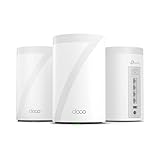




🛒 Best Price Today on Amazon
Prime members get fast, free shipping on everything above, plus member-only deals. New members get a 30-day free trial — cancel anytime.
Best Mesh Routers at a Glance
| System | Best For | Standout Spec | Approx Price |
|---|---|---|---|
| TP-Link Deco S4 (AC1900) | Large homes on a budget | Up to 5,500 sq.ft. coverage | around $96 |
| Amazon eero 6 (500 Mbps) | Wi-Fi 6 whole-home | Wi-Fi 6, app-managed mesh | around $200 |
| Amazon eero 6 (single/small pack) | Smaller spaces, Wi-Fi 6 | Wi-Fi 6, easy expansion | around $140 |
| TP-Link Deco M5 (AC1300) | Built-in security | 5,500 sq.ft., HomeShield | around $140 |
| TP-Link Archer AX21 (AX1800) | Single-room upgrade | Wi-Fi 6 AX1800 standalone | around $52 |
| Google Wifi 3-Pack (NLS-1304-25) | Simple multi-node setup | 3 nodes, Google Home app | around $143 |
1. TP-Link Deco S4 Mesh AC1900 WiFi System – Up to 5,500 Sq.ft. Coverage

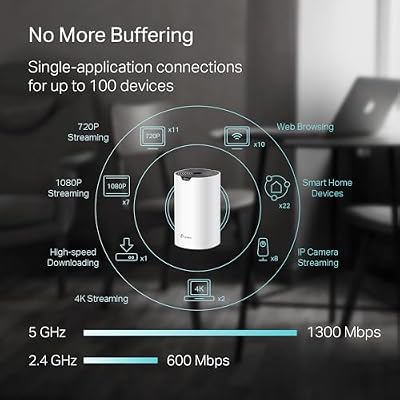
TP-Link Deco S4 Mesh AC1900 WiFi System, Deco S4(3-Pack)



As an Amazon Associate we earn from qualifying purchases. Product prices and availability are accurate as of the date/time indicated.
The TP-Link Deco S4 is the pick for blanketing a large home without spending a fortune. As an AC1900 dual-band mesh system, it is rated to cover up to 5,500 square feet with its nodes, replacing both your old router and any range extenders with one unified network. At around $96 it delivers serious whole-home reach at a price that undercuts most of the competition.
For whole-home coverage on a budget this is exactly the intent it serves. The nodes work together as a single Wi-Fi name, so your phone, laptop and consoles roam seamlessly from room to room without dropping the connection or asking you to reconnect. Setup runs through TP-Link’s Deco app with guided steps, and you can add more units later if your home grows. If your priority is killing dead zones across a big floor plan affordably, the Deco S4 is the obvious starting point.
Pros: Up to 5,500 sq.ft. coverage, seamless roaming, easy Deco app setup, excellent value.
Cons: AC (Wi-Fi 5) rather than Wi-Fi 6; dual-band only.
2. Amazon eero 6 mesh wifi system – Supports internet plans up to 500 Mbps
The Amazon eero 6 system is the Wi-Fi 6 whole-home pick. This multi-unit configuration supports internet plans up to 500 Mbps and uses the newer Wi-Fi 6 standard for better efficiency when many devices are connected at once — a real benefit in a busy smart home. At around $200 it is the premium option here, justified by its modern radios and polished ecosystem.
This is the system to choose for a connected household where dozens of devices compete for bandwidth and you want seamless roaming across every room. eero is known for some of the simplest setup in the category: the app walks you through placement, the nodes form a single self-optimising network, and a built-in smart-home hub adds Zigbee support. If you want a Wi-Fi 6 mesh that just works and roams flawlessly, the eero 6 is a standout.
Pros: Wi-Fi 6 efficiency, supports up to 500 Mbps plans, very easy app setup, seamless roaming.
Cons: Highest price here; some advanced features sit behind eero Plus.
3. Amazon eero 6 mesh wifi system – Supports internet plans up to 500 Mbps
This eero 6 configuration is the pick for smaller spaces that still want Wi-Fi 6. It delivers the same modern standard and support for plans up to 500 Mbps as its larger sibling, but in a more compact, lower-cost setup ideal for an apartment or a moderately sized home. At around $140 it is a smart entry point into the eero ecosystem.
The intent here is whole-home coverage scaled to a tidier footprint. You get the same effortless app setup and seamless node-to-node roaming, plus the ability to drop in additional eero units later as your needs grow — the system expands gracefully without a rebuild. For a smaller home that wants future-proof Wi-Fi 6, simple management and room to scale, this eero 6 configuration is an easy recommendation.
Pros: Wi-Fi 6 in a compact setup, simple to expand, effortless app management, seamless roaming.
Cons: Smaller coverage footprint than larger packs; needs add-ons for big homes.
4. TP-Link Deco M5 Mesh WiFi System – Up to 5,500 sq. ft. Whole Home Coverage

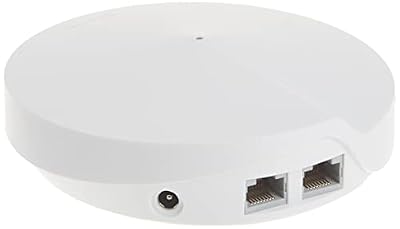
TP-Link Deco M5 Mesh WiFi System Deco M5 3-Pack




As an Amazon Associate we earn from qualifying purchases. Product prices and availability are accurate as of the date/time indicated.
The TP-Link Deco M5 is the pick for whole-home coverage with built-in security baked in. Like the S4 it is rated to cover up to 5,500 square feet across its nodes, but it adds TP-Link HomeShield protection — antivirus, parental controls and QoS — to safeguard every device on the network. At around $140 it pairs broad reach with peace of mind.
This is the system for a family home where coverage and safety both matter. The mesh nodes form one seamless network so devices roam without interruption, the HomeShield suite helps block threats and manage what the kids can access, and the Deco app keeps it all in one place. If you want a single mesh that blankets a large home and actively protects the devices on it, the Deco M5 is a well-rounded choice.
Pros: Up to 5,500 sq.ft. coverage, built-in HomeShield security, seamless roaming, family-friendly controls.
Cons: AC-class radios; raw throughput trails newer Wi-Fi 6 systems.
5. TP-Link AX1800 WiFi 6 Router (Archer AX21 V5) – Dual Band Gigabit
The TP-Link Archer AX21 is the honest outlier on this list: it is a single standalone Wi-Fi 6 router, not a multi-node mesh system. It is included because for a smaller home or apartment, one capable AX1800 router can cover the whole space on its own — and at around $52 it is by far the cheapest way onto Wi-Fi 6 here.
Treat this as the single-room-or-small-home upgrade rather than a true whole-home mesh. The AX1800 dual-band radios bring Wi-Fi 6 efficiency and gigabit wired ports, it supports OneMesh so you can later add a compatible extender for limited mesh-style coverage, and TP-Link’s Tether app keeps setup simple. If your space is modest and a full multi-node system is overkill, the Archer AX21 is a superb-value Wi-Fi 6 starting point — just know it is one node, not a mesh.
Pros: Affordable Wi-Fi 6, gigabit ports, OneMesh-ready for later expansion, simple app setup.
Cons: Single router, not a true mesh; coverage limited to smaller spaces.
6. Google WiFi system, 3-Pack – Whole Home Coverage (NLS-1304-25)

Google WiFi system, 3-Pack - Router Replacement for Whole Home Coverage (NLS-1304-25),White


As an Amazon Associate we earn from qualifying purchases. Product prices and availability are accurate as of the date/time indicated.
Rounding out the list is the Google Wifi 3-Pack, the pick for the simplest possible multi-node setup. It ships as three identical nodes that you place around the home to form one seamless network, managed entirely through the Google Home app. At around $143 it is a proven, fuss-free way to get true multi-node coverage across an average house.
This is the system for someone who wants whole-home mesh without any complexity. The three nodes self-organise into a single Wi-Fi name and hand devices off as you roam, the Google Home app reduces setup to a few taps and lets you run speed tests or pause devices, and the rounded units look at home on a shelf. For a straightforward, reliable three-node mesh with the easiest of app management, Google Wifi remains a sensible default.
Pros: Three-node coverage out of the box, seamless roaming, very simple Google Home setup.
Cons: Wi-Fi 5 generation; lacks the latest Wi-Fi 6 speed and efficiency.
How to Choose the Right Mesh Router
Choosing a mesh system starts with matching coverage and node count to your floor plan. The headline square-footage figures — up to 5,500 sq.ft. on the TP-Link Deco S4 and M5, for example — assume a typical layout, so a home with thick walls, multiple floors or awkward angles will want more nodes rather than fewer. Count your problem rooms: a single capable router like the Archer AX21 may cover a small apartment, while a sprawling house needs a true multi-pack to reach every corner.
Seamless roaming is the whole point of mesh, so make sure the system presents one network rather than several. Every option here uses a single Wi-Fi name and hands your devices off node-to-node as you move, so a video call or game keeps running as you walk from the office to the kitchen. This is the key advantage over old-style range extenders, which often create a separate network you have to reconnect to manually — a true mesh roams invisibly.
App setup and ongoing management separate a pleasant system from a frustrating one. eero, Deco and Google Wifi all lean on polished mobile apps that guide placement, run the initial configuration in minutes and let you pause devices, test speeds or set parental controls from your phone. If you value simplicity, weigh the app experience heavily; if you want extra protection, a system with built-in security like the Deco M5’s HomeShield bundles antivirus and parental controls into that same app.
Finally, decide between Wi-Fi 6 and Wi-Fi 5, and set your budget honestly. Wi-Fi 6 systems like the eero 6 handle many simultaneous devices more efficiently — worth it for a busy smart home — while proven Wi-Fi 5 systems like the Deco S4 and Google Wifi cover large homes for less. Match your internet plan’s speed to the system’s rating, buy enough nodes for your space, and pick the mesh router on this list that erases your dead zones without paying for capacity you will not use. The best mesh system is the one you forget is there because the signal simply never drops.
Frequently Asked Questions
What is the difference between a mesh router and a Wi-Fi extender?
A mesh system uses multiple nodes that work together as a single, seamless network, handing your devices off automatically as you move so you never reconnect. A traditional extender simply rebroadcasts the signal and often creates a separate network name you must switch to manually, usually at reduced speed. Mesh roaming is invisible; extenders are not — which is why a true mesh like the Deco or eero systems here gives a far smoother whole-home experience.
How many mesh nodes do I need for my home?
It depends on size and layout. A small apartment may be covered by a single capable router like the Archer AX21, while an average house is well served by a two- or three-node pack such as the Google Wifi 3-Pack. Large homes around 5,500 square feet, or those with thick walls and multiple floors, benefit from the multi-node TP-Link Deco systems. Count your dead zones and err toward more nodes if your layout is complex.
Do I need Wi-Fi 6 for a mesh system?
Wi-Fi 6, as in the Amazon eero 6 systems, handles many connected devices more efficiently and is the better long-term choice for a busy smart home. That said, proven Wi-Fi 5 mesh systems like the TP-Link Deco S4 and Google Wifi still deliver excellent whole-home coverage for everyday browsing, streaming and gaming at a lower price. Match the standard to how many devices you run and your budget.
Is mesh Wi-Fi easy to set up?
Yes. Modern mesh systems are designed around mobile apps that make setup remarkably simple. The eero, Deco and Google Home apps guide you through placing each node, connecting to your modem and naming the network, usually in well under fifteen minutes. They also let you manage the network afterward — pausing devices, running speed tests and adjusting settings — all from your phone, no networking expertise required.
Related Guides
- Best Gaming Routers
- Best Wi-Fi 6 Routers
- Best Network Switches
- Best Powerline Adapters
- Best Gaming PCs
- Best Budget Gaming Setup
Affiliate Disclosure: As an Amazon Associate, we earn from qualifying purchases. If you click a link and make a purchase, we may earn a small commission at no extra cost to you. Prices and availability are accurate as of publication and may change.
Ready to decide? Our #1 pick for 2026 is the TP-Link Deco S4 (AC1900).
Live price & availability on Amazon.


