Data analysis work – whether that’s Python/R scripting, running large spreadsheets, SQL queries against big datasets, or GIS mapping software – is mostly a RAM and CPU workload, not a GPU one, unless you’re specifically training machine learning models locally. The spec that determines what dataset size you can actually work with comfortably is RAM, so we checked real laptops currently sold on Amazon at three distinct memory tiers of the same chassis family, plus a comparable alternative.
Quick List
- Lenovo ThinkPad E16 ($1,139.98) – Best Entry Point – 16GB DDR5, fine for moderate dataset sizes.
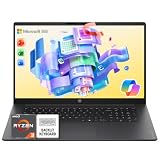
- HP Elitebook 16 G1i ($1,799.00) – Best Business-Line Alternative – 32GB RAM, 1TB SSD.
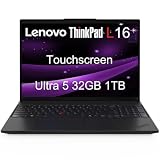
- Lenovo ThinkPad E16 ($1,789.99) – Best Mid-Tier – 32GB RAM, 2TB SSD, same chassis as the entry model.
- Lenovo ThinkPad E16 ($2,095.05) – Best for Large Datasets – 64GB RAM, the most memory in this lineup.
See All Picks


Which One Is Right for You?
If most of your work is spreadsheet-scale or SQL querying against a remote database – where the heavy lifting happens server-side rather than in local memory – the 16GB entry ThinkPad E16 is genuinely enough and the cheapest sensible option. If you regularly work with multi-gigabyte datasets locally in pandas or R, or you occasionally train small local models, the 32GB tier (either the matching ThinkPad E16 or the HP Elitebook alternative) is worth the jump; between those two, pick based on whether you prefer the ThinkPad’s extra 2TB of storage or the HP’s business-line build. If you routinely push large datasets or do heavier local modeling, the 64GB ThinkPad E16 configuration gives you the most comfortable ceiling in this lineup.
All Picks in Detail
1. Lenovo ThinkPad E16 (64GB) – Best for Large Datasets
At $2,095.05, this is the same Intel Ultra 7 255H chassis as the other ThinkPad E16 configurations here, maxed out to 64GB of RAM with a 1TB SSD. It’s the right buy specifically if you know you’re regularly hitting memory limits on smaller configurations – large in-memory transformations, heavier local modeling, or just wanting headroom to not think about it.
2. Lenovo ThinkPad E16 (32GB) – Best Mid-Tier
At $1,789.99, the same chassis and CPU as the 64GB option above but with 32GB RAM and a larger 2TB SSD – a sensible middle ground for most working data analysts who need real headroom without paying for the maximum memory configuration.
3. HP Elitebook 16 G1i – Best Business-Line Alternative
At $1,799.00, this matches the mid-tier ThinkPad’s 32GB RAM configuration almost dollar-for-dollar, giving you a genuine alternative if you prefer HP’s business line build and keyboard feel over Lenovo’s ThinkPad design.
4. Lenovo ThinkPad E16 (16GB) – Best Entry Point
At $1,139.98, this is the cheapest configuration in the ThinkPad E16 lineup here, with 16GB RAM and a 512GB SSD plus a bundled 500GB external HDD. Fine for moderate dataset sizes and spreadsheet/SQL-heavy work; step up in RAM if you regularly work with larger datasets in-memory.
Specs Compared
| Laptop | Price | CPU | RAM | Storage |
|---|---|---|---|---|
| ThinkPad E16 (16GB) | $1,139.98 | Intel Ultra 5 225H | 16GB DDR5 | 512GB SSD + 500GB ext. HDD |
| ThinkPad E16 (32GB) | $1,789.99 | Intel Ultra 7 255H | 32GB DDR5 | 2TB SSD + 500GB ext. HDD |
| ThinkPad E16 (64GB) | $2,095.05 | Intel Ultra 7 255H | 64GB DDR5 | 1TB SSD + 500GB ext. HDD |
| HP Elitebook 16 G1i | $1,799.00 | Intel Ultra 7 255U | 32GB DDR5 | 1TB SSD |
How We Chose These
We specifically filtered for business-line laptops with configurable RAM tiers, since RAM is the spec that most directly maps to usable dataset size for this workload. Our first search attempt for this topic returned almost no real laptops – mostly programming/cybersecurity books and data-science-themed novelty stickers – so we requeried with a more specific keyword and filtered the real results down to genuine business/workstation-class laptops with stated RAM configurations.
What to Look For
- RAM is the key spec, not GPU. As a rough rule, budget 3-4x your typical dataset size in RAM for comfortable in-memory work.
- GPU only matters for local ML training. Traditional analysis (pandas, SQL, spreadsheets, statistics) barely touches it.
- For GIS/mapping work specifically, consider a laptop with a discrete GPU if you do heavy 3D terrain visualization or very large raster datasets – see our CAD and 3D rendering guide for GPU-focused options.
- Business-line build quality (ThinkPad, Elitebook) often means a better keyboard for long typing/coding sessions than consumer laptops at the same price.
Questions
Do I need a GPU for data analysis?
Not for most traditional analysis (pandas, SQL, spreadsheets, statistical modeling). A GPU matters specifically if you’re training deep learning models locally, which is a different and much heavier workload than typical data analysis.
How much RAM do I need to work with a 10GB dataset?
As a rough rule, budget at least 3-4x your dataset’s size in RAM for comfortable in-memory work with typical analysis tools, so a 10GB dataset is realistically a 32GB+ RAM situation if you want to avoid memory pressure during transformations.
Is a business laptop like the ThinkPad or Elitebook good enough for data science?
Yes for the vast majority of data analysis and data science work, which is CPU/RAM-bound rather than GPU-bound. These business-line laptops also tend to have better keyboards and build quality for long work sessions than many consumer laptops at the same price.
What about GIS software specifically?
GIS work adds a rendering/visualization layer that benefits from a capable GPU alongside RAM, especially for 3D terrain or large raster datasets. None of these specific picks have a discrete GPU, which is fine for moderate-scale GIS work; for heavier visualization needs, look at our workstation laptop guide instead.
Update History
Published October 2026 with current live Amazon listings and pricing. Requeried from an initial search that returned mostly books and stickers rather than real laptops.
Sources
Product specifications, pricing and availability sourced directly from live Amazon product listings as of October 2026.