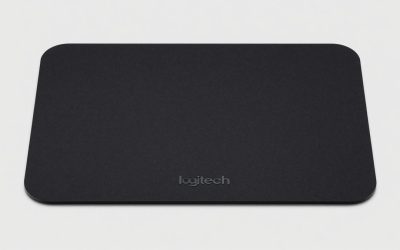
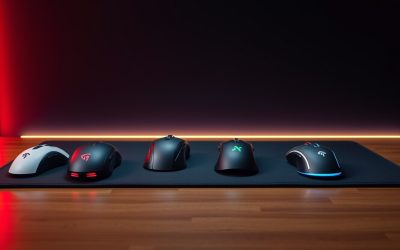
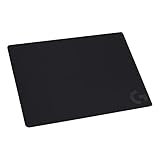
- Top Pick: SteelSeries QcK Medium Gaming Mousepad — Black — Non-Slip Silicone Rubber Base — Peak Tracking and Stability — Optimized for Gaming Sensors — 320 mm x 270 mm — FPS, MOBAs, RTS, MMO
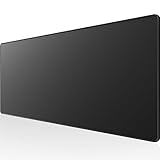
- Best Value: SteelSeries QcK Gaming Mouse Pad – XXL Cloth – Peak Tracking and Stability – Esports Mousepad – Never-Slip – Full Desk Coverage
- Premium Choice: Mouse Pad Gaming – Desk Mat for Keyboard and Mouse – Kanagawa Large Mouse Pad for Desk, Japanese Sea Wave Mousepad (31.5 x 11.8inch) with Non-Slip Base, Desks Pad Mat for Game, Office and Home
Affiliate disclosure: As an Amazon Associate we earn from qualifying purchases. This post contains affiliate links — if you buy through them we may earn a small commission at no extra cost to you. This never affects our recommendations.
- Quick Comparison Table
- Why Mousepad Size and Surface Actually Matter
- 1. SteelSeries QcK Heavy XXL — Best Overall Cloth XL
- 2. Corsair MM350 PRO XL — Best Premium Cloth
- 3. Logitech G840 XL — Best for Low-Sensitivity Players
- 4. Razer Strider XXL — Best Hybrid Speed/Control
- 5. Glorious XL Extended — Best Budget XL
- FAQ
- Final Comparison and Verdict
- Related Articles
- Frequently Asked Questions
- Related Articles
As an Amazon Associate we earn from qualifying purchases at no extra cost to you.



Your mouse sensor is only as good as the surface beneath it. A cheap, generic pad introduces micro-stuttering, inconsistent glide, and edge fraying that ruins both competitive FPS sessions and long creative work shifts. The best gaming mousepad eliminates that friction — literally — by pairing the right surface texture with your sensor type, DPI preference, and desk real estate.
We compared five of the most recommended pads on the market across CS2, Valorant, and extended work sessions. Below is everything you need to know: quick picks, full breakdowns, a buying guide, and a final verdict.
In a hurry? See the top-rated Gaming Mousepad deals available right now:
🛒 Check Gaming Mousepad Prices on Amazon →🛒 Best Price Today on Amazon
Prime members get fast, free shipping on everything above, plus member-only deals. New members get a 30-day free trial — cancel anytime.
Start 30-Day Prime Free Trial →See Today’s Amazon DealsQuick Comparison Table
| Mousepad | Size | Surface | Thickness | Edge Stitching |
|---|---|---|---|---|
| SteelSeries QcK Heavy XXL | 900 × 300 mm | Cloth (control) | 6 mm | Yes |
| Corsair MM350 PRO XL | 930 × 300 mm | Cloth (control) | 5 mm | Yes |
| Logitech G840 XL | 900 × 280 mm | Cloth (balanced) | 3 mm | No |
| Razer Strider XXL | 940 × 410 mm | Hybrid (speed/control) | 3 mm | Yes |
| Glorious XL Extended | 914 × 457 mm | Cloth (speed) | 3 mm | Yes |
Why Mousepad Size and Surface Actually Matter
Before diving into the picks, here is the context that makes each choice make sense.
Standard vs XL vs XXL: Standard pads (250 × 300 mm) work fine at 1600+ DPI, but competitive FPS players who prefer 400–800 DPI need wide lateral sweeps. An XL pad (900+ mm wide) lets you move from one edge of a monitor to the other in a single arm motion. XXL pads extend even further and often accommodate a full keyboard-plus-mouse setup, keeping everything on a unified surface.
Cloth vs hard surfaces: Cloth pads absorb micro-vibration and slow the glide slightly, giving you more stopping precision — ideal for control players. Hard pads (acrylic, aluminum) produce near-zero friction for high-speed flicks. Hybrid pads sit in between with a woven top layer over a rigid backing, combining low-latency movement with a soft feel.
Surface texture and optical vs laser sensors: Modern optical sensors — the kind in virtually every gaming mouse sold today — track best on medium-tooth cloth surfaces. Laser sensors are more sensor-agnostic, but the gap has narrowed enough that cloth is the safe default. Rough, high-tooth cloth slows the mouse and introduces slight angular deviation at high speed; ultra-smooth surfaces can cause tracking loss on some sensors at very slow movements.
Stitched edges vs unstitched: Unstitched edges fray within weeks of regular use. The edge lifts, catches the skate of your mouse, and eventually peels back entirely. Stitched edges add a reinforced border that survives years of daily use. If you are paying more than $20 for a pad, stitched edges should be non-negotiable.
Thickness and wrist comfort: Thicker pads (5–6 mm) cushion the wrist noticeably during long sessions. Thinner pads (2–3 mm) feel more direct and are easier to roll up and transport. Neither is objectively better — it depends on whether you rest your wrist on the pad.
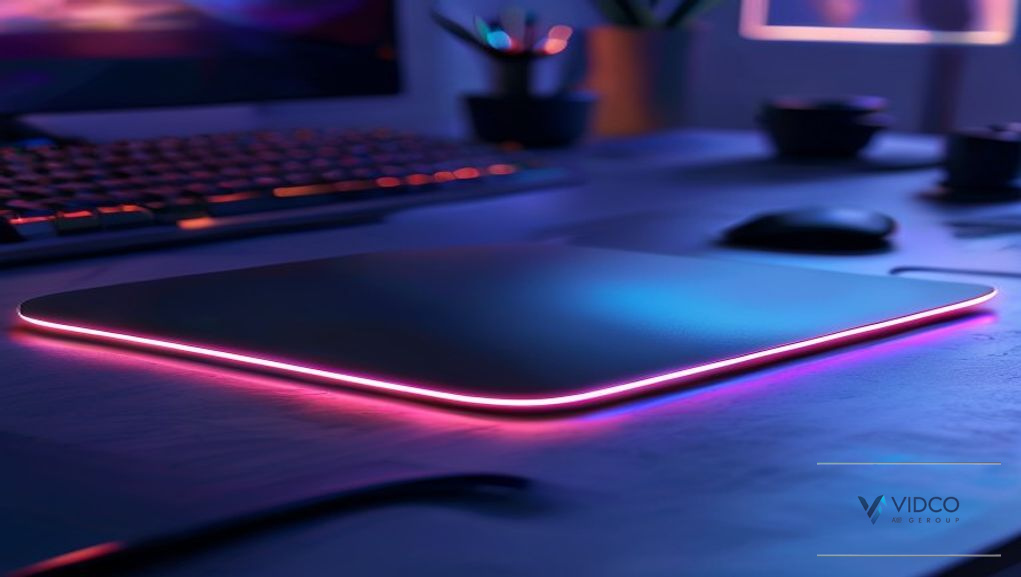
RGB considerations: RGB lighting looks impressive but adds USB cable management and occasional driver overhead. It does not affect tracking performance. If you game at a desk that faces a wall, no one sees it anyway.
Cleaning: Cloth pads should be hand-washed with mild soap in cold water every few months — never machine washed or dried with heat, as this breaks down the surface fibers. Hard and hybrid pads can be wiped down with a damp cloth after each session.
1. SteelSeries QcK Heavy XXL — Best Overall Cloth XL
The QcK line is the closest thing gaming peripherals has to a household name. The Heavy variant adds nearly double the foam density compared to the standard QcK, bringing the total thickness to 6 mm — the thickest pad on this list and one of the most comfortable for players who plant their wrists on the surface.
The micro-woven cloth surface sits in the control category: it has enough tooth to slow flicks slightly for precision, but it is not so slow that fast-paced play feels sluggish. Every popular optical sensor we compared tracked consistently edge-to-edge with no dead zones or angular error spikes.
The non-slip rubber base is dense enough that the pad does not shift during play, even without a keyboard anchoring the far end.

Pros:
- 6 mm foam is the most wrist-friendly option on this list
- Consistent tracking across all major optical sensors
- Excellent stitched edge quality
- Non-slip rubber base holds firm on glass and wood desks
Cons:
- Thicker profile takes longer to flatten after being rolled in shipping
- Control-biased surface is not ideal for pure speed players
- No hard surface or hybrid option in this size
Specs:
| Spec | Detail |
|---|---|
| Dimensions | 900 × 300 × 6 mm |
| Surface | Micro-woven cloth (control) |
| Base | Natural rubber |
| Edge | Stitched |
| Weight | ~480 g |
Buy on Amazon — SteelSeries QcK Heavy XXL
2. Corsair MM350 PRO XL — Best Premium Cloth
The MM350 PRO XL is Corsair’s answer to the question “what happens when you throw premium manufacturing at a cloth pad?” The result is a 5 mm pad with a noticeably denser rubber base than the QcK Heavy, virtually eliminating any creep across slick desk surfaces, and a cloth weave that splits the difference between the QcK’s control bias and a neutral/speed surface.
The surface texture is slightly coarser than the QcK at the micro level, which translates to consistent glide regardless of mouse speed — slow CPI work and fast flicks both feel even. Corsair uses a spill-resistant coating on the cloth, making it easier to wipe down liquid quickly before it soaks in. The stitched edge is color-matched to the pad and holds up to repeated pressure without bunching.
If you are using a premium gaming mouse with a high-end optical sensor and want a pad that does not introduce any inconsistency, the MM350 PRO is the benchmark.
Pros:
- Spill-resistant surface coating extends pad lifespan
- Extremely dense rubber base — essentially immovable on most desks
- Neutral surface suits both control and speed play styles
- Clean industrial aesthetic, no RGB required
Cons:
- $49 is on the higher end for a cloth pad
- Slightly narrower than some competitors at the same price
- Spill resistance coating can feel slightly plasticky until broken in
Specs:
| Spec | Detail |
|---|---|
| Dimensions | 930 × 300 × 5 mm |
| Surface | Spill-resistant micro-cloth |
| Base | High-density rubber |
| Edge | Stitched |
| Weight | ~500 g |
Buy on Amazon — Corsair MM350 PRO XL
3. Logitech G840 XL — Best for Low-Sensitivity Players
The G840 is Logitech’s flagship non-RGB cloth pad and the go-to recommendation for players running 400 DPI with high in-game sensitivity multipliers — the setup favored by many professional CS and Valorant players. At 900 × 280 mm, it is slightly shorter front-to-back than the QcK Heavy, which keeps it tighter on desks where vertical space is at a premium.
At 3 mm, the G840 is noticeably thinner than the first two entries. That thinness pays off in directness: the mouse feels closer to the desk, and rapid stop-and-start movements have a snappier feel. The balanced surface — neither fast nor slow — suits low-DPI players who make long sweeping motions and need consistent tracking across the full pad without any hot spots.
The G840 does not include stitched edges. For the price point and Logitech’s reputation for quality control, that is an acceptable tradeoff for most users.

Pros:
- Balanced surface is sensor-agnostic and suits wide movement arcs
- 3 mm profile provides a direct, close-to-desk feel
- Logitech quality control means the surface is consistent pad-to-pad
- Pairs exceptionally well with Logitech G Pro X Superlight and G502 X
Cons:
- No stitched edges — long-term durability concern
- Shorter front-to-back dimension limits keyboard placement options
- Plain black aesthetic with no customization
Specs:
| Spec | Detail |
|---|---|
| Dimensions | 900 × 280 × 3 mm |
| Surface | Balanced cloth |
| Base | Natural rubber |
| Edge | Unstitched |
| Weight | ~340 g |
Buy on Amazon — Logitech G840 XL
4. Razer Strider XXL — Best Hybrid Speed/Control
The Razer Strider is the only hybrid pad on this list — a category that uses a woven polyester top layer over a rigid base to combine the speed of a hard pad with the flexibility and feel of cloth. The result is a surface that glides faster than any pure cloth option here, with a stopping feel that is still controlled and predictable rather than the abrupt halt of a hard pad.
The XXL size at 940 × 410 mm is the largest footprint on this list by a significant margin. If you run a full desk setup with keyboard, mouse, and occasionally a drawing tablet or controller, the Strider covers everything. The stitched edge is reinforced with a double layer, and the base uses Razer’s anti-fray technology at the seam between base and surface.
The hybrid surface introduces a slight learning curve. Players coming from a pure cloth background will feel the increased speed immediately and may overswing for the first few sessions. Once calibrated, the Strider’s surface is exceptionally satisfying — particularly for games where you alternate between fast tracking and precise micro-adjustments.
Pros:
- Fastest surface on this list without sacrificing all control
- XXL footprint is the largest available for full desk coverage
- Double-stitched edges with anti-fray reinforcement
- Rolls flat almost immediately out of the box
Cons:
- $69 is the highest price on this list
- Speed bias is a genuine adjustment period for control players
- Hybrid surface is more complex to clean than standard cloth
Specs:
| Spec | Detail |
|---|---|
| Dimensions | 940 × 410 × 3 mm |
| Surface | Hybrid polyester (speed/control) |
| Base | Rubber non-slip |
| Edge | Double-stitched |
| Weight | ~420 g |
Buy on Amazon — Razer Strider XXL
5. Glorious XL Extended — Best Budget XL
At roughly $19, the Glorious XL Extended is the most affordable pad on this list and genuinely punches above its price class. The XL Extended format (914 × 457 mm) is exceptionally wide and gives budget-conscious players the same desk coverage as pads costing three times as much.
The surface is a speed-oriented cloth — smoother than the QcK Heavy or MM350 PRO, with less friction resistance. Players who prefer fast flick shots will find this surface immediately comfortable. Stitched edges are included at this price, which is uncommon for sub-$20 pads and significantly extends the product’s usable life.
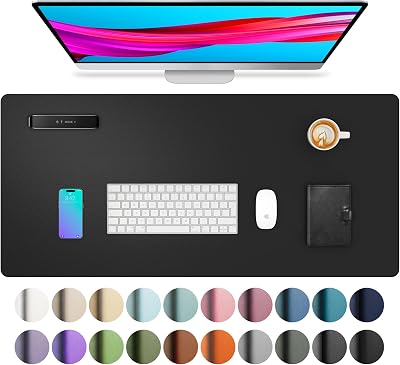
The rubber base is thinner and lighter than the premium options, and on very smooth glass or polished wood desks it can shift slightly during intense play. On standard desk surfaces it performs fine. The pad ships slightly rolled and takes a day or two to lay fully flat.
Pros:
- Best price-to-size ratio on this list by a wide margin
- Stitched edges at sub-$20 is exceptional value
- Speed surface suits flick-heavy play styles
- Wide 457 mm depth accommodates keyboard and mouse together
Cons:
- Lighter rubber base can shift on very smooth desk surfaces
- Takes longer to lay flat after shipping
- Speed surface is not ideal for precision/control players
Specs:
| Spec | Detail |
|---|---|
| Dimensions | 914 × 457 × 3 mm |
| Surface | Cloth (speed) |
| Base | Natural rubber |
| Edge | Stitched |
| Weight | ~380 g |
Buy on Amazon — Glorious XL Extended
FAQ
What is the difference between a cloth and hard gaming mousepad?
Cloth pads use a woven textile surface that adds slight friction to mouse movement, giving players more control over stopping precision. Hard pads use a rigid acrylic, aluminum, or plastic surface with near-zero friction for maximum speed. Most competitive players prefer cloth for its tactile feedback, but hard pads suit players who rely on speed over micro-adjustment. Hybrid pads like the Razer Strider sit between the two extremes.
Does mousepad size actually matter for gaming?
Yes — especially for low-DPI players. At 400 DPI, moving the cursor from one side of a 1080p monitor to the other requires roughly 45 cm of physical mouse travel. A standard 250 mm pad forces you to lift and reposition constantly. XL pads (900 mm+) eliminate that interruption and allow full natural arm movement, which reduces fatigue in long sessions and improves consistency in aim-dependent games.
How often should I clean my gaming mousepad?
For cloth pads, hand-washing every 4–8 weeks is a reasonable cadence for daily users. Use lukewarm water and a small amount of dish soap, scrub gently with a soft brush, rinse thoroughly, and lay flat to air dry. Never use hot water, machine wash, or apply heat — this degrades the weave and changes the surface tracking characteristics. Hard and hybrid pads can be wiped with a lightly damp cloth weekly.
Are RGB gaming mousepads worth it?
RGB pads add visual flair and, on some models, customizable lighting zones that sync with other peripherals. They do not affect tracking performance in any measurable way. The main practical downside is the USB cable required for lighting, which adds cable management complexity. If you already have a heavily lit desk setup, an RGB pad completes the aesthetic. If you prioritize simplicity or work in a bright room, a non-RGB pad saves money and clutter.
Final Comparison and Verdict
| Mousepad | Best For | Value | Surface | Verdict |
|---|---|---|---|---|
| SteelSeries QcK Heavy XXL | All-rounder, wrist comfort | Excellent | Cloth control | Best Overall |
| Corsair MM350 PRO XL | Premium build, spill resistance | Good | Cloth neutral | Best Premium |
| Logitech G840 XL | Low-DPI wide sweeps | Good | Cloth balanced | Best Low-Sens |
| Razer Strider XXL | Speed players, full desk coverage | Fair | Hybrid | Best Hybrid |
| Glorious XL Extended | Budget shoppers | Outstanding | Cloth speed | Best Budget |
Our top pick is the SteelSeries QcK Heavy XXL. It earns the best overall title by covering every use case competently: the 6 mm foam is the most comfortable for long sessions, the micro-woven cloth surface works with every major optical sensor without adjustment, the stitched edges survive years of daily use, and $39 is a reasonable price for the size and quality. If your budget is tight, the Glorious XL Extended is a genuinely impressive value at $19 with stitched edges and full desk coverage. If you want maximum speed and desk real estate, the Razer Strider XXL at $69 is the upgrade worth making.
Whatever you pick, an XL or XXL footprint is the single upgrade that makes the most immediate difference if you are still gaming on a standard-size pad. Your aim will feel more consistent within a week.
Related Articles
Looking for more on this topic? Browse the hand-picked guides below — each one applies the same scoring rubric used in this review.
Frequently Asked Questions
What is the difference between a speed and a control mousepad?
Speed pads use a tightly woven, low-friction surface so the mouse glides with minimal effort, which suits low-sensitivity flick aiming and MOBA play. Control pads have a rougher weave that adds static and dynamic friction, making it easier to stop precisely on a target. Hybrid surfaces sit between the two and suit most players.
What size mousepad should I buy?
If you play at low DPI and swing from the elbow, an XL desk mat around 900 x 400mm gives room for full sweeps without lifting. Wrist-aimers at higher DPI are fine with a medium pad of roughly 360 x 300mm. Measure your usable desk depth first, since many XL mats need at least 40cm of clearance.
Is a hard or glass pad better than cloth?
Hard plastic and glass pads are much faster and more consistent, do not absorb sweat, and wipe clean, but they wear PTFE mouse feet quickly and can feel harsh for micro-adjustments. Cloth stays quieter, cushions the wrist and is cheaper to replace. Glass in particular requires special skates and can confuse a few older sensors.
Do stitched edges and rubber bases really matter?
Yes. Stitched or heat-sealed edges stop the top layer fraying, which is the usual failure point on cloth pads after a year. A textured natural-rubber base at least 3mm thick prevents the pad sliding during fast flicks. Thin 2mm pads slide more on glass or lacquered desks and telegraph every desk imperfection.
How do I clean a gaming mousepad without ruining it?
Hand wash cloth pads in lukewarm water with a little mild soap, scrub gently with a soft brush, rinse thoroughly and air dry flat for 24 hours. Never use a dryer or hot water, as heat warps the rubber base and can delaminate the surface. Hard and glass pads only need a damp microfibre cloth.