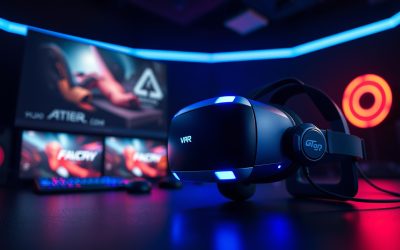
- Top Pick: Meta Quest 3 512GB | Virtual Reality — VR Headset — Gorilla Tag Bundle
- Best Value: Meta Quest 3S 128GB | Virtual Reality — VR Headset (Renewed Premium)
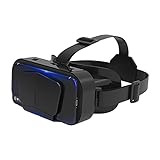
- Premium Choice: Virtual Reality Goggles, 3D VR Glasses Adjustable VR Headset with Wide Angle Lens for Movies Games, Anti-Blue Eyes Protected- Universal Virtual Reality Goggles Set for Beginners
Affiliate disclosure: As an Amazon Associate we earn from qualifying purchases. This post contains affiliate links — if you buy through them we may earn a small commission at no extra cost to you. This never affects our recommendations.
- PlayStation VR2 4K HDR Gaming: The Premium PS5 Virtual Reality Experience
- Understanding 4K Resolution in VR: Per-Eye Specifications
- OLED Display Technology: Why It Matters for Gaming
- HDR (High Dynamic Range) Gaming in VR
- Screen-Door Effect Elimination
- Text Clarity and UI Rendering
- Environmental Detail and Texture Quality
- Comparison: PSVR2 4K HDR vs Other VR Platforms
- Game-Specific Visual Examples
- Performance Trade-offs: Why Graphics Excellence Matters
- Eye Comfort and Visual Fatigue
- FAQ: PSVR2 Visual Quality Questions
- Product Recommendations for PSVR2
- Recommended Resources
- Conclusion: PSVR2 4K HDR as the Visual Standard
- Related Articles
- Frequently Asked Questions
- Related Articles
🛒 Best Price Today on Amazon
Prime members get fast, free shipping on everything above, plus member-only deals. New members get a 30-day free trial — cancel anytime.
Start 30-Day Prime Free Trial →See Today’s Amazon DealsPlayStation VR2 4K HDR Gaming: The Premium PS5 Virtual Reality Experience
PlayStation VR2 stands apart from competing VR platforms with one critical technical advantage: 4K HDR gaming. While standalone headsets and entry-level PC VR systems rely on lower-resolution displays, PSVR2’s dual 2000×2040 OLED displays deliver stunning visual fidelity with HDR color depth. This comprehensive guide explores how PSVR2’s 4K HDR capabilities transform gaming immersion, why the visual quality matters, and how PSVR2’s visuals compare to other VR platforms available in 2026.
In a hurry? See the top-rated PlayStation VR2 4K HDR Gaming deals available right now:
🛒 Check Playstation Vr2 4K Hdr Gaming Prices on Amazon →Understanding 4K Resolution in VR: Per-Eye Specifications
When discussing VR resolution, per-eye measurements matter. PSVR2 delivers 2000×2040 pixels per eye—approximately 4 million pixels total (both eyes combined). For context:
- PSVR2: 2000×2040 per eye (4M pixels combined)
- Meta Quest 3: 1344×1344 per eye (1.8M pixels combined)
- Valve Index: 1440×1600 per eye (2.3M pixels combined)
PSVR2’s resolution advantage is substantial. More pixels means sharper text, crisper textures, and dramatically reduced screen-door effect (the grid pattern visible in lower-res VR). In practical gaming terms, you read in-game menus without squinting, see environmental details in peripheral vision, and maintain visual clarity during fast-paced action.
OLED Display Technology: Why It Matters for Gaming
PSVR2 uses OLED panels instead of LCD technology. This isn’t a subtle difference—it fundamentally impacts how games look:
Perfect Blacks
OLED pixels emit their own light; they can switch completely off for true black. LCD panels use backlighting, so “black” is actually dark gray. For horror games, space exploration, and night scenes, OLED’s true blacks create dramatically more immersive darkness. Shadows in Resident Evil Village VR are genuinely unsettling when they’re black instead of gray.
Infinite Contrast Ratio
Because OLED can display pure black alongside bright colors, contrast is technically infinite. Explosions pop dramatically against dark skies. Neon signs glow intensely in dark environments. The visual impact is immediately noticeable and significantly more immersive than LCD alternatives.
Vibrant Color Accuracy
OLED panels deliver more saturated, accurate colors without requiring excessive brightness. Colors appear natural and lifelike, especially in outdoor gaming environments. PSVR2’s color accuracy is calibrated for gaming, meaning every color choice by developers displays exactly as intended.
HDR (High Dynamic Range) Gaming in VR
HDR extends the range of brightness and color that displays can show. Traditional gaming works within a limited brightness/color space; HDR expands this dramatically. PSVR2’s HDR implementation means:
Brightness Range
Traditional displays peak at ~200-300 nits brightness. HDR displays achieve 800-1000+ nits in peak brightness areas. In VR games, this means sunlight reflections, explosions, and bright effects feel authentically bright—your eyes register genuine visual intensity rather than a simulation of brightness.
Color Depth
HDR expands the color palette from millions of colors to billions. In practice, this means smooth color gradients without banding, more nuanced shadows, and richer environmental color variation. A sunset in HDR displays thousands of color transitions; standard displays show a dozen or so, creating visible stepping.
Artistic Intent
Game developers design PSVR2 titles specifically for HDR. Scenes are crafted knowing the display can show true blacks, extreme brightness, and precise color. Every visual element is intentional, not a compromise between technical limitations. Horizon Call of the Mountain‘s sunsets and fire effects are stunning specifically because they’re optimized for PSVR2’s HDR capabilities.
Screen-Door Effect Elimination
Lower-resolution VR headsets suffer from screen-door effect: a visible grid pattern created by the gap between pixels. Imagine looking through a window screen—you see the pattern overlaid on the view. It’s distracting and breaks immersion.
PSVR2’s 2000×2040 resolution per eye is high enough that screen-door effect becomes virtually invisible. You see sharp images without pixel grid distraction, even when looking closely at text or fine detail. This elimination of screen-door effect is a massive immersion improvement—you see the virtual world, not the technology rendering it.
Text Clarity and UI Rendering
Higher resolution directly impacts how readable game UI and text appear. In PSVR2:
- Menu Text: Perfectly readable without eye strain
- Subtitles: Clear enough to follow during cutscenes
- HUD Elements: Sharp, crisp, never blurry
- Fine Detail: Texture details remain visible in peripheral vision
Compare this to lower-resolution headsets where text requires focusing directly, subtitles need careful attention, and small HUD elements blur at the edges. PSVR2’s clarity transforms how you interact with game interfaces—they feel natural and readable, not an accessibility compromise.
Environmental Detail and Texture Quality
Higher resolution allows developers to craft more detailed environments. Textures display fine detail—wood grain, fabric weave, metal scratches—that lower-res headsets struggle to show. In exploration-heavy games like Wanderer, every environmental detail is visible and sharp, enhancing the sense of being present in a detailed, lived-in world.
PSVR2’s 4K per-eye resolution paired with PS5’s GPU power means games can feature:
- High-quality textures across entire environments
- Detailed character models with fine facial features
- Sharp distant objects visible in peripheral vision
- Complex scene geometry rendered with precision
Comparison: PSVR2 4K HDR vs Other VR Platforms
| Feature | PSVR2 | Quest 3 | Valve Index |
|---|---|---|---|
| Resolution Per Eye | 2000×2040 (4K) | 1344×1344 (1.8K) | 1440×1600 (2.3K) |
| Display Type | OLED | LCD | LCD |
| HDR Support | Yes (full HDR) | No | No |
| Color Accuracy | DCI-P3 gamut | Standard RGB | Standard RGB |
| Refresh Rate | 90Hz / 120Hz | 72Hz / 90Hz / 120Hz | 90Hz / 144Hz |
| Screen-Door Effect | Virtually eliminated | Noticeable | Slight |
| Text Clarity | Excellent | Good | Good |
| Black Levels | Perfect (OLED) | Gray-ish (LCD) | Gray-ish (LCD) |
Game-Specific Visual Examples
Horror Gaming: Resident Evil Village VR
PSVR2’s true blacks and high resolution make horror genuinely terrifying. Dark corridors are authentically black, not gray—creating real darkness that triggers survival instincts. High-res detail reveals every cobweb, bloodstain, and architectural detail, making the environment viscerally real.
Racing: Gran Turismo 7 VR
High resolution means you read track markers, other racers’ details, and HUD information clearly at high speed. HDR makes sunlight and reflections feel blindingly real. The combination creates authentic racing immersion impossible at lower resolutions.
Adventure: Horizon Call of the Mountain
Open-world detail shines in 4K resolution. Distant mountains remain sharp and detailed. Sunsets display hundreds of color transitions. Every plant, rock, and structure is visible. The sense of scale and environmental richness is stunning.
Puzzle Gaming: Portal VR: The Companion Collection
Text clarity is critical for puzzle solving. PSVR2’s perfect text rendering makes reading clues, HUD elements, and environmental text effortless. The high resolution eliminates frustration from needing to focus on small UI elements.
Performance Trade-offs: Why Graphics Excellence Matters
Higher resolution and HDR rendering demand GPU power. PS5’s 10.28 TFLOPS is sufficient because:
- PS5 is built specifically for PSVR2 optimization
- Developers understand the hardware intimately
- Games target 90Hz and 120Hz with consistent frame rates
- No CPU bottlenecks or driver issues (console advantage)
Unlike PC VR where drivers, variable hardware, and complexity introduce performance variability, PSVR2 games deliver consistent visual quality across all PS5 units.
Eye Comfort and Visual Fatigue
Higher resolution actually reduces eye fatigue. Lower-res displays force your eyes to work harder distinguishing detail, leading to faster fatigue. PSVR2’s crisp image clarity means your eyes work less hard, enabling longer comfortable gaming sessions.
OLED’s lack of backlight flicker also reduces eye strain compared to LCD displays, which pulse brightness continuously.
FAQ: PSVR2 Visual Quality Questions
Q: Is 4K resolution really necessary for VR gaming?
A: Subjectively, no—many enjoy lower-res VR. Objectively, yes—higher resolution creates measurably better immersion through text clarity, detail visibility, and screen-door elimination. If budget allows, 4K is preferable.
Q: Does HDR actually improve gaming, or is it marketing?
A: HDR is measurable and significant. True blacks, brightness range, and color accuracy directly impact visual quality. Compare a horror game in HDR vs non-HDR, and you’ll see the difference immediately.
Q: Why don’t other VR headsets use OLED displays?
A: OLED is expensive and consumes more power. For standalone headsets (battery-constrained), OLED drains battery quickly. For PC VR, OLED adds cost without justifying the price premium. PSVR2 uses OLED because PS5 provides unlimited power and Sony committed to premium visuals.
Q: Does high resolution reduce gaming performance?
A: Not on PSVR2. PS5’s GPU is powerful enough for 4K gaming at 90–120Hz. Developers optimize knowing the hardware, so visual quality doesn’t come at performance cost.
Product Recommendations for PSVR2
As an Amazon Associate we earn from qualifying purchases at no extra cost to you.





PSVR2’s 4K HDR capabilities represent the pinnacle of console VR gaming. The combination of high resolution, OLED color accuracy, HDR dynamic range, and PS5 processing power creates gaming experiences that are visually stunning and genuinely immersive. For players prioritizing visual quality, PSVR2 is unmatched.

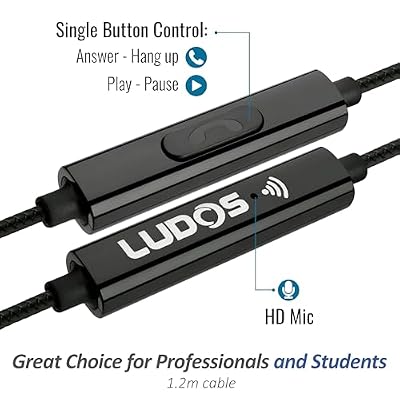
Ludos Clamor Wired Earbuds in-Ear Headphones, 5 Years Warranty, Earphones with Microphone, Noise Isolating Ear Buds for School, Kids, Women, Small Ear



As an Amazon Associate we earn from qualifying purchases. Product prices and availability are accurate as of the date/time indicated.
Recommended Resources
- VR headset technical specifications comparison
- Complete VR headset buying guide 2026
- Gaming setup with VR integration
- Wireless gaming accessories for VR
- Gaming PC for PC VR alternatives
Ludos Clamor Wired Earbuds in-Ear Headphones, 5 Years Warranty, Earphones with Microphone, Noise Isolating Ear Buds for School, Kids, Women, Small Ear
As an Amazon Associate we earn from qualifying purchases. Product prices and availability are accurate as of the date/time indicated.
Conclusion: PSVR2 4K HDR as the Visual Standard
PlayStation VR2’s 4K HDR display technology sets the visual standard for VR gaming. The combination of 2000×2040 per-eye resolution, OLED color accuracy, true black rendering, and HDR dynamic range creates gaming experiences that are visually superior to all competing platforms. For players who value visual immersion and have a PS5, PSVR2 represents the best visual VR gaming experience available in 2026.
Experience PSVR2, and discover how 4K HDR transforms gaming into an art form.
Related Articles
Looking for more on this topic? Browse the hand-picked guides below — each one applies the same scoring rubric used in this review.
Frequently Asked Questions
Does PSVR2 genuinely deliver 4K HDR?
It uses two OLED panels at 2000 by 2040 pixels each, which totals roughly 4K across both eyes rather than 4K per eye. HDR support is real and, combined with OLED, produces deep blacks and bright highlights that LCD headsets cannot match. The practical result is excellent contrast in dark game environments.
Why does OLED matter more in VR than on a TV?
Because the panels sit centimetres from your eyes and fill your entire field of view, so backlight bleed and grey blacks on an LCD are immediately obvious and break immersion in dark scenes. OLED per-pixel illumination makes space, horror and night-time environments dramatically more convincing.
What is mura and does it affect image quality here?
Mura is subtle brightness and colour non-uniformity across a panel, most visible on flat dark or grey areas. Sony applies mura correction to reduce it. Some users still notice faint patterning in very dark scenes, though it is far less distracting than the greyish blacks and glow of comparable LCD headsets.
Do I need a PS5 Pro to get the best visuals?
A standard PS5 runs every PSVR2 title as designed. A PS5 Pro provides extra GPU headroom, which some patched games use for higher resolution or steadier frame rates in demanding scenes. The headset hardware is identical either way, so the Pro is an enhancement rather than a requirement.
How does the lens design affect sharpness?
PSVR2 uses Fresnel lenses, which give a wide field of view but produce a smaller sweet spot and some glare around bright objects against dark backgrounds, often called god rays. Careful adjustment of headset position and lens spacing keeps text and detail sharp; a sloppy fit causes noticeable edge blur.
Ready to decide? Our #1 pick for 2026 is the Resolution Per Eye.
Live price & availability on Amazon.