- Top Pick: Valve Steam Deck OLED 512GB
- Runner-up: Lenovo Legion Go S (SteamOS)
- Also consider: 8BitDo Ultimate 2 Bluetooth Controller
Ask what state Linux gaming is in and the honest 2026 answer is that it depends entirely on which layer of the stack you mean. The compatibility layer that runs Windows games is mature, the drivers underneath it are in the best shape they have ever been, and an entire handheld category now ships with Linux as its factory operating system. Set against that, a hard core of competitive multiplayer titles remains completely closed, and a handful of desktop rough edges still remind you this platform was assembled by projects, not one company.
This survey walks the whole stack in order: how Windows games run today, where anti-cheat stands, each GPU vendor’s driver situation, what the handheld wave changed, how far the Wayland display stack has come, and what is still genuinely broken — ending with whether your own library makes switching sensible this year.
As an Amazon Associate, we earn from qualifying purchases.
Quick answer
Linux gaming in 2026 is a working default for most single-player and co-op libraries: Proton is stable and current, AMD and Intel drivers are open and current, NVIDIA’s supported path is clear, SteamOS handhelds are mainstream products, and Wayland handles HDR and VRR. The hard exception is competitive multiplayer guarded by kernel-level anti-cheat, which remains Windows-only territory.
The compatibility layer today
Proton is no longer an experiment you opt into; it is the standard way Windows games run on Linux, built into Steam and enabled through Steam Play. The current stable line is Proton 11, released in 2026 on a Wine 11 base. Underneath, DXVK translates Direct3D 9, 10 and 11 to Vulkan, VKD3D-Proton does the same for Direct3D 12, and the ntsync kernel driver, now shipping in mainstream distro kernels, handles the Windows synchronization behaviour that used to cost performance through workarounds.
The practical shape of the layer matters more than its version numbers. Valve’s Deck Verified programme gives a public, per-game record of what runs well on fixed hardware, and ProtonDB’s community reports cover the long tail. Community builds such as GE-Proton fill the gaps the official line cannot, typically for video codecs and store-specific quirks. The result is a layered system — official Proton first, community builds second, per-game reports as the map — that a new user can navigate without understanding any of it, because Steam picks sensible defaults and failure cases are usually documented before you meet them.
Anti-cheat: the current shape
Anti-cheat is where the platform’s one structural limit lives, and its shape in 2026 is stable rather than improving or collapsing. Easy Anti-Cheat and BattlEye both support Linux through Proton, and both leave the decision to each game’s developer. Where a developer enables that support, big multiplayer games run; where they do not, the same technology is a wall. The support is also revocable — EA withdrew Linux access for Apex Legends despite the technical path existing, the clearest demonstration that this is a policy layer, not a purely technical one.
The hard core is kernel-level anti-cheat. Riot’s Vanguard guards Valorant and League of Legends, Activision’s Ricochet guards Call of Duty, Bungie has never supported Destiny 2 under Proton, and Epic has not enabled Fortnite for Linux. None of these are bugs awaiting fixes; they are publisher positions, and no Proton or Wine release changes them. Everything else in this survey should be read with that carve-out in mind: the platform works, except where a publisher has decided it will not.
Drivers per vendor
AMD remains the path of least resistance. The driver lives in the kernel and Mesa, updates arrive with the system, and the RADV Vulkan driver is the same stack Valve targets on Steam Deck and SteamOS. Current RDNA 4 cards such as the Radeon RX 9070 series are supported by current Mesa releases, and ray tracing through RADV has moved from experimental to documented and usable — the ray-tracing status article in this cluster maps it vendor by vendor.
Intel’s Arc cards run on the open ANV Vulkan driver in Mesa, which has matured alongside the Battlemage generation; Arc is a legitimate Linux option now in a way the Alchemist launch generation was not. NVIDIA is the vendor with an asterisk. The supported route for GeForce RTX and GTX 16-series cards is NVIDIA’s own driver built on its open kernel modules, and its Wayland support has become genuinely solid. The fully open NVK driver in Mesa keeps improving, but the proprietary driver remains the one most players should run, and older NVIDIA generations sit on legacy branches with slower-moving support.
The handheld effect
The Steam Deck did more than sell well; it made Linux the factory operating system of a product category. SteamOS now ships on hardware Valve does not make — Lenovo’s Legion Go S is the first licensed third-party SteamOS handheld — and Valve has extended SteamOS installation to desktop PCs with AMD graphics, alongside its own Steam Machine hardware running the same system. Around that official core sits a community ecosystem of SteamOS-like distributions such as Bazzite delivering the same console-style session on arbitrary hardware.
The strategic effect is a fixed target. Developers, anti-cheat vendors and driver teams gained one well-defined Linux configuration worth testing against, and the Deck Verified badge gives players a compatibility signal that did not exist when every Linux install was a unique snowflake.
The display stack: Wayland, HDR and VRR
Wayland is now the default session on the major desktops, and the gaming features that lagged for years have largely landed. KDE Plasma on Wayland supports HDR and variable refresh rate, gamescope has provided HDR on SteamOS since the Deck OLED, and GNOME’s HDR work has been progressing through its own release schedule. VRR is routine on Wayland compositors, fractional scaling is usable, and the old X11-versus-Wayland argument has settled into a default with exceptions rather than a genuine fork. Two caveats remain: HDR is application-dependent, so per-game results vary, and the HDMI Forum’s licensing terms still keep full HDMI 2.1 bandwidth out of AMD’s open driver, making DisplayPort the safe route for high-refresh 4K there.
What is still broken or missing
Beyond the anti-cheat wall, the remaining gaps are specific rather than general. Some storefronts have no native Linux client at all: the Xbox app and PC Game Pass exist only through cloud streaming in a browser, and launchers such as Battle.net and the EA app run through community tooling rather than official support. Peripheral configuration software is frequently Windows-only, so advanced mouse, headset and racing-wheel settings may need a Windows machine or a community tool. A minority of games still need a launch option, a specific Proton build or a community fix, and a smaller minority simply never work — ProtonDB’s borked category is honest about them.
Valve’s monthly Steam Hardware Survey continues to record Linux as a small but steadily growing share of Steam systems — small enough that most developers treat it as a secondary platform, growing steadily enough that the investment behind it shows no sign of slowing.
How to choose
Decide by library, not by ideology. If your gaming is single-player, indie, or co-op in titles whose anti-cheat supports Linux, switching in 2026 costs you little and the platform will feel finished. If you split your time, a dual-boot or a handheld-plus-Windows-desktop arrangement captures most of the benefit with none of the sacrifice. If your evenings are Valorant, Call of Duty, Destiny 2 or Fortnite, the answer is not close: those games decide for you, and Windows stays your gaming system whatever the rest of the stack does. Hardware tilts the decision too — current AMD and Intel Arc systems are the smoothest arrivals, NVIDIA systems are well supported on the proprietary driver, and very old hardware deserves a test run from a live USB before commitment.
Who should skip this
Skip the survey if you already run Linux and your library works — your own ProtonDB history is better evidence than any platform summary. Skip it, too, if you are choosing hardware for a Windows build; nothing here argues against that.
Gear that defines the platform in 2026
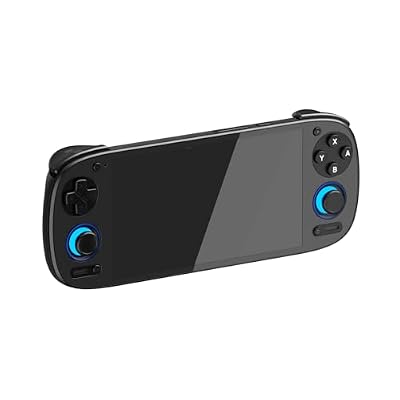
Valve Steam Deck OLED 512GB

The device that made Linux a factory gaming platform: SteamOS, a verified-games programme built around it, and the reference target for other handhelds.
- Display: 7.4-inch HDR OLED, up to 90Hz
- Storage: 512GB NVMe SSD
- Memory: 16GB LPDDR5
- Operating system: SteamOS
Lenovo Legion Go S (SteamOS)

The first licensed third-party SteamOS handheld — proof that Valve’s system is now a platform other manufacturers build on, not a one-device curiosity.
- Display: 8-inch 120Hz IPS LCD touch screen
- Chip: AMD Ryzen Z2 Go
- Memory: 16GB
- Storage: 1TB SSD
- Operating system: SteamOS
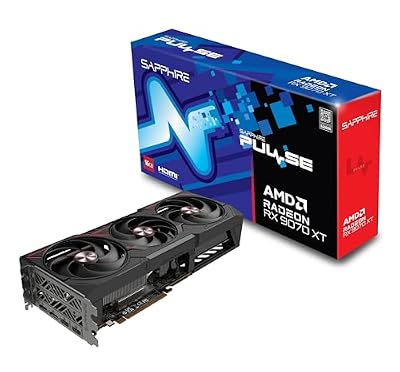
Sapphire Pulse Radeon RX 9070 XT
RDNA 4 on the open Mesa stack is the current desktop reference point for Linux gaming: current-generation performance with the driver maintained in the open.
– Graphics processor: AMD Radeon RX 9070 XT (RDNA 4)
– Memory: 16GB GDDR6
– Model: 11348-03-20G
– Outputs: Dual HDMI, dual DisplayPort
Samsung 990 PRO 2TB NVMe SSD
A fast Gen4 drive is the unglamorous enabler of the modern Linux library: shader caches, prefixes and large installs all reward quick, roomy storage.
– Interface: PCIe 4.0 NVMe M.2 2280
– Capacity: 2TB
– Maker-rated sequential read: up to 7,450 MB/s
– Model: MZ-V9P2T0B/AM
8BitDo Ultimate 2 Bluetooth Controller

Steam Input makes standard controllers first-class citizens on Linux, and this is the kind of pad that benefits: broad compatibility without vendor software.
- Connectivity: Bluetooth, wired USB
- Sticks: Maker-listed TMR anti-drift sticks
- Compatibility: Windows, Switch and standard HID hosts including Linux
- Extras: Charging dock included
FAQ
Can I play my whole Steam library on Linux in 2026?
Most of it, for most people. Single-player and indie libraries transfer almost completely, and ProtonDB will tell you any specific title’s status before you commit. The exceptions cluster in competitive multiplayer with kernel-level anti-cheat, plus a thin tail of games that never worked.
Is Linux still behind on features like HDR and ray tracing?
Less than its reputation suggests. HDR works through KDE Plasma on Wayland and through gamescope on SteamOS, though per-game results vary. Ray tracing functions on all three vendors’ current drivers — AMD’s RADV and NVIDIA’s proprietary driver are the most complete paths.
Do I need a special distro to game on Linux?
No. Mainstream distributions with current kernels and Mesa releases run the same Proton stack. Gaming-focused distros such as Bazzite package the pieces for you and add a console-style session, which is a convenience, not a requirement.
What is the single biggest reason not to switch?
Your favourite competitive game. If it is guarded by kernel-level anti-cheat — Valorant, League of Legends, Call of Duty, Destiny 2, Fortnite — no distro, driver or Proton release changes that, and the publisher’s position is the whole story.
Final verdict
Linux gaming in 2026 is best described as finished in the middle and unfinished at the edges. The middle — Proton, Mesa, SteamOS, Wayland — is maintained, current and boring in the way infrastructure should be. The edges are a publisher-policy wall around a set of competitive games and a scatter of specific gaps: storefront apps, peripheral software, HDMI politics. Whether that adds up to a platform worth switching to is a question about your library’s edges, and for a growing number of players those edges no longer include anything they play.