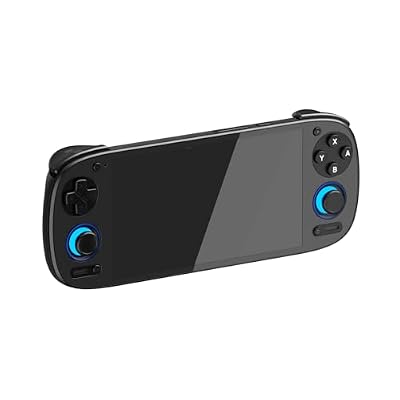
- Top Pick: Lenovo Legion Go 2
- Runner-up: SanDisk 1TB Extreme microSDXC
- Also consider: Samsung T7 Portable SSD 1TB
For the first time in this cluster, the screen argument is not OLED against LCD. Both of these flagships carry OLED panels, both play the same decades of games, and both are built by companies that know exactly what they are doing. Yet they could hardly be more different machines: Valve’s Steam Deck OLED is an efficiency-first console that happens to be a PC, while Lenovo’s Legion Go 2 is a full Windows gaming PC that happens to be shaped like a handheld.
As an Amazon Associate, we earn from qualifying purchases.
That difference decides every emulation tier below. The Deck wins on weight, simplicity and battery manners; the Go 2 wins on raw headroom, screen size and software freedom. What follows is the tier-by-tier breakdown, judged against the emulators’ own published requirements, for libraries built from your own dumped discs and cartridges.
This article contains affiliate links, and we may earn a commission if you buy through them at no extra cost to you.
Quick Answer
Pick the Legion Go 2 for PS2, GameCube and Wii upscaling, HD texture packs and any PS3 ambition: its eight Zen 5 cores are the closest handheld silicon to RPCS3’s desktop-class recommended tier. Pick the Steam Deck OLED for everything from the cartridge era through PS1 and PSP, where both machines are flawless and the Deck is far lighter, simpler and easier on its battery.
Two OLED Screens, Two Different Bets
Contrast is a tie here, and that is new. Both panels deliver the perfect blacks that make dark PS1 dungeons and neon arcade palettes look right, so the argument moves to size, resolution fit and refresh.
The Deck’s 7.4-inch panel runs 1280×800 at up to 90Hz with HDR. That 800-line height is quietly retro-friendly: the PS1’s 240-line output triples to 720 lines with slim borders, and PSP games sit close to a clean multiple too. Valve sized this screen for the games the chip can actually drive, and for older systems the match is honest.
The Go 2 goes the other way: an 8.8-inch OLED at 1920×1200, 144Hz and variable refresh. The 1200-line height is the integer-scaling sweet spot of this entire cluster, because 240-line content multiplies by exactly five and fills the panel with no borders and no shimmer. The extra width makes stacked Nintendo DS layouts and text-heavy RPGs genuinely easier to read, and VRR smooths out the odd native refresh rates that arcade and early console hardware used. If your library leans on dual-screen and 3D-era games, this is the better window into them.
The Weight Is Not a Footnote
Valve lists the Steam Deck OLED at about 640 g. Lenovo’s specification record puts the Legion Go 2 at roughly 920 g with its controllers attached, which is close to half again as much, and you feel every gram of it in a long session held at reading distance.
Lenovo’s answer is that the Go 2 does not have to be held at all. Its TrueStrike controllers detach, the body has a built-in stand, and the machine becomes a small tabletop console while your hands rest in your lap. That works at a desk, a tray table or a kitchen counter, and it does nothing for a bus seat. The Deck makes no such argument: it is simply light enough to forget, and for cartridge-era sessions measured in hours, that simplicity is a real feature rather than a missing one.
Battery tells the same story in reverse. The Go 2 carries a 74Wh pack against the Deck’s 50Wh, but its silicon is thirstier, while the Deck’s APU was designed around a 4 to 15 W envelope and sips at retro loads. Neither maker publishes emulation-specific endurance figures, so runtime is not stated; judge by the physics instead: light games favour the Deck’s efficiency, heavy games drain both machines quickly.
Where the Zen 5 Headroom Actually Pays
From the NES through the PS1, PSP and DS, this comparison is a tie and it is not close in either direction. Both chips are generations past what DuckStation, PPSSPP and melonDS ask for, so those tiers are decided entirely by the screen and weight sections above.
PS2, GameCube and Wii are where the Go 2 earns its size. Its Zen 5 cores and Radeon 890M-class graphics hold higher internal resolution multiples in PCSX2 and Dolphin, and the 32GB of memory in the configuration listed below gives HD texture packs room to live. The Deck runs the same libraries well, but at settings matched to its 800-line panel, which on a 7.4-inch screen still looks right; it simply has no spare headroom to spend on upscaling bravado.
PS3 separates them properly. RPCS3’s published recommended tier asks for a six-core, twelve-thread desktop-class CPU, and the Go 2’s eight Zen 5 cores and sixteen threads are the closest any handheld gets to it, which buys per-title play with the compatibility database as your guide. The Deck’s four Zen 2 cores sit below that tier, so its PS3 library is light Playable titles only. Xbox 360 is simpler: Xenia’s supported builds target Windows, so the Go 2 runs it natively while the Deck route is a compatibility-layer workaround rather than a supported path.
Software: Guardrails vs Open Field
The Deck’s emulation story is EmuDeck: one guided install that sets up the emulators, folds your library into the Steam interface and makes the whole thing feel like a console. The honest caveat, documented in Libretro’s own Steam release notes, is that RetroArch’s Steam build ships without the Core Downloader, so cores arrive as free DLC or as files you copy in yourself. Standalone emulators beyond that mean trips into desktop mode.
The Go 2 runs full Windows 11, so every standalone emulator installs natively, frontends like Playnite and ES-DE have proper Windows builds, and nothing needs a workaround. The friction is the mirror image of the Deck’s polish: a desktop operating system on a handheld screen, updates on its own schedule, and per-emulator setup done by hand, softened only partly by Lenovo’s Legion Space overlay. They are opposite temperaments; pick the one that matches yours.
The Kit That Serves Both
Lenovo Legion Go 2

The challenger itself, in the configuration its Amazon listing documents. Note that the Steam Deck OLED is sold through Valve’s own store and has no Amazon listing, which is why it appears throughout this comparison in prose rather than as a product slot.
- Chip: AMD Ryzen Z2 Extreme, Zen 5, 8 cores and 16 threads
- Graphics: Radeon 890M-class integrated graphics
- Memory and storage: 32GB LPDDR5X, 2TB SSD in this configuration
- Display: 8.8-inch OLED, 1920×1200, 144Hz, variable refresh
- Battery: 74Wh
- Weight: roughly 920 g with controllers attached
- Extras: detachable TrueStrike controllers, M.2 2280 slot, two USB4 ports, Windows 11
See the Lenovo Legion Go 2 on Amazon
SanDisk 1TB Extreme microSDXC

Both machines take microSD, and a card is still the cheapest library expansion on either. RetroArch and EmuDeck are equally happy running a collection from the card slot, which also makes moving a library between the two handhelds a card swap rather than a copy job.
- Capacity: 1TB
- Format: microSDXC, UHS-I
- Model: SDSQXAV-1T00-GN6MA
- Ratings: A2 application class, V30 video class
- Adapter: full-size SD adapter included
See the SanDisk 1TB Extreme microSDXC on Amazon
Samsung T7 Portable SSD 1TB

For the library that outgrows cards, or for shuttling a full collection between a desktop and either handheld, the T7 remains the program’s reference external drive. PS2 and GameCube images are large, and a fast USB drive keeps them off the internal SSD.
- Capacity: 1TB
- Interface: USB 3.2 Gen 2 over USB-C
- Model: MU-PC1T0T/AM
- Enclosure: aluminium, pocket-sized
- Cable: USB-C included
See the Samsung T7 Portable SSD 1TB on Amazon
tomtoc Arccos G47 Carrying Case
The Go 2’s size rules out most handheld cases, and the Deck OLED deserves better than a loose bag pocket. The G47 is the larger shell this program keeps returning to for big handhelds; confirm the fit for your device against the maker’s listing before ordering.
- Type: hard-shell carrying case
- Model: G47M1D1
- Fit: sized for larger gaming handhelds per the maker
- Interior: padded compartment with accessory space
- Shell material: not stated
See the tomtoc Arccos G47 Carrying Case on Amazon
JSAUX 6-in-1 Docking Station HB0609

One dock serves both machines at a TV: the Deck for EmuDeck on the big screen, the Go 2 with its controllers detached. The maker’s own listing notes there is no VRR pass-through, so the Go 2’s variable refresh stays a handheld-only feature when docked.
- Type: USB-C docking station, 6-in-1
- Ethernet: Gigabit port for wired play and transfers
- Video: HDMI output to a TV or monitor
- Power: USB-C pass-through charging
- Caveat: no VRR pass-through, per the maker’s listing
See the JSAUX 6-in-1 Docking Station HB0609 on Amazon
How to Choose
Start with your library’s ceiling, not its floor. If it stops at the PS1, PSP and the cartridge era, both machines are flawless and the decision collapses to weight and temperament: the Deck for light, simple and console-like, the Go 2 only if you also want the big screen for DS layouts and text.
If PS2 and GameCube upscaling, texture packs or any PS3 titles matter, the Go 2 is the only one of the two with headroom to offer, and its Windows installation removes the workaround layer from Xenia and the standalones. If torn, buy storage first: a large microSD serves either machine and survives a change of mind.
Who Should Skip
Skip the Legion Go 2 if your library is 8-bit, 16-bit and PS1. Its power, size and weight buy you literally nothing there, and the Deck plays those systems identically for hours longer per charge in practice. Skip the Steam Deck OLED if PS3 or Xbox 360 emulation is the point of the purchase, because its four Zen 2 cores and Xenia’s Windows-only supported route make both a compromise from day one. Skip both if your plan depends on a downloaded library: these machines are at their best, and their setup guides assume, games dumped from hardware you own.
FAQ
Which handheld is better for PS2 and GameCube emulation?
The Legion Go 2. Its Zen 5 cores and stronger integrated graphics hold higher internal resolutions in PCSX2 and Dolphin and leave room for HD texture packs, while the Steam Deck OLED runs the same libraries at settings matched to its 800-line panel. Both are good; only one has headroom to spare.
Can the Steam Deck OLED play Xbox 360 games through Xenia?
Only through workarounds. Xenia’s supported builds target Windows, so on SteamOS it runs through compatibility layers without the project’s backing. The Legion Go 2, running Windows 11, uses the supported route natively. Set expectations per title either way, using Xenia’s compatibility reports.
Does the Legion Go 2’s 144Hz VRR panel matter for retro games?
More than you would expect. Many arcade boards and early consoles ran at slightly non-standard refresh rates, and variable refresh lets the panel match them instead of forcing everything to a fixed rate, which smooths frame pacing. The 144Hz ceiling itself matters less than the VRR range below it.
Is the Legion Go 2 too heavy for long handheld sessions?
At roughly 920 g with controllers attached, against about 640 g for the Steam Deck OLED, it is a real consideration for held play. Detaching the controllers and using the built-in stand turns it into a tabletop setup, which solves the problem everywhere except laps, hammocks and bus seats.
Final Verdict
There is no loser here, only a fork. The Steam Deck OLED is the better retro console: lighter, simpler, kinder to its battery, and flawless across the cartridge era through the PSP. The Legion Go 2 is the better emulation computer: the bigger and better-matched OLED, the only real PS3 path of the two, and Windows freedom for every standalone. Choose by the heaviest system in your library, and let the tiers above make the call.