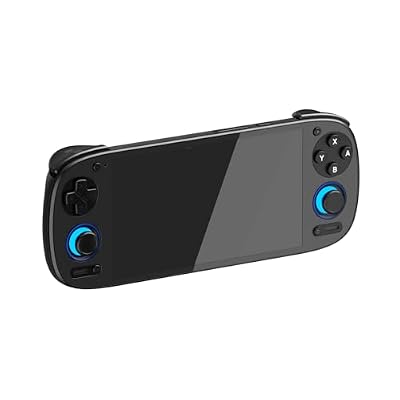
- Top Pick: GameSir G7 SE Wired Controller
- Runner-up: Xbox Wireless Controller (2025), Carbon Black
- Also consider: Valve Steam Deck OLED 512GB
Soulslike games ask more of a player than almost any other genre: patient exploration, deliberate stamina management and boss fights that punish a single mistimed dodge. On Linux they ask one extra question before any of that — will the game run at all? The honest starting point is that virtually nothing in this genre ships a native Linux build. FromSoftware has never released one, and neither have the studios following in its footsteps. Everything in this catalogue reaches a Linux desktop through Proton, Valve’s compatibility layer inside Steam Play.
The good news is that Proton carries this genre unusually well. The FromSoftware catalogue is among the most played and most reported Windows software in the Proton ecosystem, and its flagship title made the one anti-cheat decision that matters, as the sections below explain. The standouts from other studios mostly follow the same pattern. What follows is a map of what actually works: the FromSoftware line first, then the challengers, then the anti-cheat and input realities that decide whether a given title belongs in a Linux library, and finally the small kit list that suits a genre built on timing.
As an Amazon Associate, we earn from qualifying purchases.
Quick answer
Almost no soulslike ships a native Linux build, so Proton does the heavy lifting — and it carries the genre well. FromSoftware’s catalogue, from Dark Souls Remastered to Elden Ring with its Proton-enabled Easy Anti-Cheat, plays through Steam Play, as do Lies of P and Nioh. Expect strong single-player runs; check anti-cheat before counting on co-op.
The FromSoftware line through Proton
Elden Ring is the genre’s centre of gravity, and its Linux story turns on one fact: the game uses Easy Anti-Cheat, and FromSoftware enabled that anti-cheat’s Proton support. That single publisher decision is why Elden Ring’s full online layer — co-op summons, invasions and messages — works on Linux and on the Steam Deck instead of stopping at the menu. The Shadow of the Erdtree expansion rides on the same foundation. Elden Ring Nightreign, the co-op-focused follow-up, takes the same approach, which matters because a three-player game with a blocked anti-cheat would be no game at all.
The older catalogue is simpler still. Dark Souls Remastered, Dark Souls II in its Scholar of the First Sin edition and Dark Souls III predate the current anti-cheat era; their online features run through ordinary networking rather than a kernel-level gatekeeper, and all three are long-settled Proton titles with years of community reports behind them. Sekiro: Shadows Die Twice removes the question entirely — it is a single-player game with no online component to lose. Armored Core VI sits adjacent to the genre rather than inside it, but FromSoftware fans should know it follows the same pattern: a Windows build, a Proton path, and no native port.
Two practical notes apply across the whole line. First, these are DirectX titles translated in real time, so Steam’s shader pre-caching earns its keep — letting it finish before a session smooths the traversal hitches this engine family is known for on any platform. Second, FromSoftware’s frame pacing has quirks on Windows too; a Linux player seeing an odd stutter is often looking at the game, not the compatibility layer.
Beyond FromSoftware: the challengers
Lies of P is the standout from outside the original studio: a Belle Époque puppet nightmare with weapon assembly and a lying system, built in Unreal Engine and carried by Proton with no anti-cheat wall around its single-player campaign. The Nioh pair from Team Ninja bring a faster, stance-switching take on the formula, with deep loot systems; both run through Proton, and their co-op works through conventional networking. Remnant 2 bends the genre toward co-op shooting and is built for three players from the ground up. Lords of the Fallen offers a dual-world mechanic and full co-op. Black Myth: Wukong sits on the genre’s border — more action game than soulslike in structure — and is one of the more demanding Unreal Engine 5 titles a Linux system can be asked to translate.
The pattern to notice is that the challengers are nearly all single-player-first designs, and single-player is where Proton is strongest. Difficulty in this genre rarely comes from the compatibility layer; it comes from the games being exactly as hard as advertised.
The anti-cheat and multiplayer reality
Anti-cheat is the one place a Linux player can genuinely lose features, so it deserves plain words. Systems such as Easy Anti-Cheat and BattlEye can support Proton, but only when the publisher switches that support on — the technology allowing it and the developer allowing it are two different decisions. Elden Ring is the genre’s proof that the switch exists and works. Kernel-level anti-cheat of the kind used by some competitive shooters is a different category altogether and remains a hard wall, but that category barely touches this genre: soulslikes are not esports titles, and their online layers are asynchronous messages, bloodstains, summons and invasions rather than ranked ladders.
The working rule is simple. Single-player soulslikes are safe purchases on Linux almost without exception. For any title where co-op or invasions are the point, check that game’s specific anti-cheat position before buying — and remember that every FromSoftware title also offers an offline mode, so a network feature being unavailable never makes the game itself unplayable.
Input, latency and the hardware that matters
Soulslike combat is a timing test, which makes input the honest hardware question. No figures are quoted here, because latency depends on the whole chain — controller, connection, compositor and display — and a number measured on someone else’s desk describes that desk. What can be said structurally is this: a wired controller removes the wireless link from the chain entirely, modern Bluetooth controllers are the convenience option most players use without complaint, and 2.4 GHz dongle connections sit between the two. On the software side, Steam Input translates nearly any modern pad into the XInput layout these games expect, and the kernel’s xpad and xpadneo drivers cover the Xbox family natively.
Storage matters in a quieter way. These games stream large worlds and reload after every death — and there will be many deaths — so an SSD is the assumed baseline rather than an upgrade. A fast external drive also suits players who share a game library between a Windows and a Linux install.
How to choose
Start with the entry point. Newcomers to the genre on Linux should begin where the Proton record is deepest: Elden Ring for the open-world take with working online play, Dark Souls Remastered for the original blueprint, or Sekiro for the purest single-player test with no multiplayer variables at all. Choose by the online question next. If summons and invasions are essential, Elden Ring and Nightreign carry the publisher-enabled anti-cheat that makes them work; if a game will be played solo, nearly the whole catalogue is open. Choose by hardware after that — older Dark Souls entries run on modest systems, while Wukong-class Unreal Engine 5 titles ask for a genuinely current GPU. Finally, decide where the genre will be played: a desktop with a wired pad, or a handheld such as the Steam Deck, where this catalogue’s Deck reports are extensive.
Who should skip this
Skip the genre on Linux if a native build is a matter of principle — there effectively are none, and waiting for one means not playing. Skip any specific co-op soulslike whose anti-cheat position has not been confirmed for Proton, because the campaign may be fine while the feature that motivated the purchase is not. Competitive players who need the ranked ecosystems of kernel-anti-cheat shooters are reading the wrong catalogue entirely; nothing here substitutes for those games. And players who dislike repetition as a design language should believe the genre’s reputation — these games teach through failure, on every operating system equally.
The kit that suits the genre
8BitDo Ultimate 2 Bluetooth Controller
The wireless all-rounder for long boss sessions: drift-resistant sticks, switchable trigger feel and a dock that keeps it charged between attempts.
Specs:
– TMR joysticks with switchable Hall Effect and tactile trigger modes
– Bluetooth, 2.4 GHz dongle and wired USB-C connections
– Charging dock included; 1000mAh internal battery
– Recognised by Steam Input as a standard modern pad
GameSir G7 SE Wired Controller

The wired option for players who want the shortest input chain available and no battery to manage mid-fight.
Specs:
– Wired USB-C connection only — no wireless link in the chain
– Hall Effect sticks and triggers
– Two remappable back buttons
– Standard XInput layout handled by the kernel xpad driver
Xbox Wireless Controller (2025), Carbon Black

The layout these games are tuned around, with first-party support on Linux through the xpad and xpadneo drivers.
Specs:
– Model EP2-29929, Carbon Black
– Bluetooth and USB-C wired connections
– Hybrid D-pad and textured grips
– Pairs with PC and handheld setups through Steam Input
Samsung T9 Portable SSD 2TB
Fast external storage for a soulslike library shared between machines, with quick reloads after each defeat.
Specs:
– Model MU-PG2T0B/AM, 2TB capacity
– USB 3.2 Gen 2×2 interface; maker-rated sequential reads up to 2,000 MB/s
– Compact metal enclosure with drop resistance rated by the maker
– Works as a shared Steam library drive between Windows and Linux installs
Valve Steam Deck OLED 512GB

The handheld route into the genre: Elden Ring and its peers are among the most documented Deck titles in existence.
Specs:
– 7.4-inch HDR OLED display
– 512GB NVMe internal storage, microSD expansion slot
– SteamOS with Steam Play and Proton built in
– Full-size controls with trackpads for menu-heavy games
FAQ
Is Elden Ring fully playable on Linux, including online?
Yes, through Proton. FromSoftware enabled Easy Anti-Cheat’s Proton support, so co-op, invasions and messages work on Linux and Steam Deck rather than being blocked. An offline mode also exists in the game itself.
Are any soulslike games native on Linux?
Effectively no. Neither FromSoftware nor the major studios behind Lies of P, Nioh or Lords of the Fallen ship a native Linux build. The entire genre on Linux runs through Proton, which is why Proton report history matters more than any port announcement.
Does Dark Souls III multiplayer work through Proton?
Yes. The Dark Souls games predate the kernel anti-cheat era and use conventional networking for summons and invasions, so their online features carry through Proton without the publisher-permission question that decides newer titles.
Which soulslike should a Linux player start with?
Elden Ring for the fullest modern package with working online play, Dark Souls Remastered for the original design on modest hardware, or Sekiro for a single-player-only test where no network feature can be lost.
Final verdict
Soulslike games are, quietly, one of Linux gaming’s success stories. The genre’s defining studio enabled the one anti-cheat decision that mattered, its back catalogue predates the anti-cheat wars entirely, and the challengers are built around single-player campaigns that Proton handles at its best. The only discipline required is checking the anti-cheat line on any co-op-first title before buying. Do that, pick an entry point from the FromSoftware line or Lies of P, and the genre’s famous difficulty will come from exactly where it should — the bosses, not the operating system.