Selaco, Altered Orbit Studios’ first-person shooter built on the GZDoom engine, entered Early Access on 31 May 2024. For Linux players the first question is the usual one: is there a real Linux build, or only a Windows binary and a Proton hope? Steam’s record answers it directly. The store flags the game for Linux, and unlike the many records this series reads where that flag starts an argument, here every layer underneath it agrees.
That agreement is worth walking through, because these status pieces exist precisely for the records where the flag lies. This one checks the platform fields, the depot and package layers, the game’s single add-on app, the ProtonDB file, Valve’s Steam Deck test sheet and the GOG catalogue. No verdict below rests on what the GZDoom engine could do — only on what the records say.
As an Amazon Associate, we earn from qualifying purchases.
Quick answer
Yes. Selaco is native on Linux. Steam flags the game for Windows and Linux, the Linux requirements field carries real platform-specific text, and a Linux 64-bit depot sits inside the purchase package. Valve rates it Verified on Steam Deck on the native runtime, and ProtonDB’s file reads Platinum across 35 reports. No GOG edition exists.
The status at a glance
| Question | Answer from the record |
|---|---|
| Native Linux build | Yes — flag, requirements, depot and package all agree |
| Linux requirements tab | Populated with platform-specific text |
| Mac build | No — flag false, tab is a TBA placeholder |
| Add-on apps | One soundtrack, flagging all three platforms |
| ProtonDB record | Platinum headline, 35 reports, good confidence |
| Steam Deck verdict | Verified, tested July 2024, native runtime |
| GOG edition | None — no product record exists |
What Steam’s own record says
Steam’s appdetails record for Selaco (app 1592280) lists the platforms as Windows true, Mac false, Linux true. Developer and publisher of record are both Altered Orbit Studios, the release date reads 31 May 2024, and the genre list still carries the Early Access tag.
The Linux requirements field is the genuine article. Both tiers name a 64-bit Linux in platform-specific terms — Ubuntu 18.04, Mint 19 or Debian 10 — with a Core i5-3570K or Ryzen 3 1200 and a GTX 970 or Radeon R9 380 at minimum, rising to a Core i7-7700K or Ryzen 7 1700 with a GTX 1070 or RX 5600 XT recommended. This is not copied Windows text or boilerplate; it was written for this platform.
The Mac field shows the opposite problem. The Mac flag reads false, yet a Mac tab exists whose entire content, at both tiers, is a single placeholder note: TBA. A tab with text in it is not a build, and the depot table confirms nothing sits behind it.
The depot and package layer
The depot table is where native claims usually collapse, and here it holds. SteamDB lists six depots: small Windows, Linux and unconfigured marker depots of 119 bytes each, a Windows 64-bit depot of 58.12 MiB, a Linux 64-bit depot of 111.15 MiB, and one large unconfigured depot of 3.12 GiB carrying the shared data both executables read. A real Linux binary depot, larger than its Windows counterpart, is not the shape of a stranded port.
The decisive layer is the purchase package. Selaco sells through a single package (sub 570269), whose packagedetails record reads Windows true, Mac false, Linux true. SteamDB’s package page lists all six depots inside it, the Linux 64-bit depot among them, with the content depots last updated on 23 November 2026 — the same day the public branch moved to build 26879395. A normal purchase delivers the Linux build by construction, still maintained rather than frozen at launch. The app configuration registers a dedicated Linux client icon, and for once the icon has a real depot behind it.
The family sweep: one soundtrack, one false flag
The record’s DLC array holds exactly one app: the Selaco Official Soundtrack (3047790), a music app released in June 2024. Read on its own record, it flags all three platforms true over requirement fields that are empty lists on every platform, and its own purchase package repeats the same three flags.
That paperwork needs ruling from the game, as always. Its Linux flag happens to agree with a genuinely native game. Its Mac flag agrees with nothing: the game ships no Mac build, so the soundtrack claims a platform its own product does not sell. It is the classic soundtrack shape — all-true flags over empty fields — with the dissent landing on Mac instead of Linux for a change. No demo app exists; the demo this game once showed survives only as a branch name inside the same app.
Anti-cheat and account layers
Selaco is a single-player game with none of the machinery that complicates Linux status for online titles. Steam’s record names no DRM notice and no external account requirement. SteamDB’s detected-technology list reads as engine plumbing — GZDoom, idTech heritage, FluidSynth, Ogg, OpenAL, Vorbis — with no anti-cheat detected. The Are We Anti-Cheat Yet dataset, searched by name and by app id, carries no entry for this game. Three sources, kept separate, all negative.
What ProtonDB’s file says
ProtonDB’s summary record for Selaco, read in full, is as clean as community files get: Platinum headline, best-reported and trending tiers, across 35 reports, at good confidence. For a native title that file describes the community’s experience with the shipping builds rather than a compatibility layer’s success rate, and a unanimous Platinum is consistent with the depot record above.
One check could not be completed. ProtonDB’s game page would not render its requirements block in readable form in any route tried this session, so this article claims nothing about whether that page heads its requirements with a native-support label. The tier figures come from the summary record, read completely; the heading gap is disclosed rather than filled in.
Steam Deck: Verified on the native runtime
Valve’s own compatibility endpoint returned no readable sheet this session, so the verdict and paperwork were read from SteamDB’s republication of Valve’s compatibility data, a route disclosed here rather than hidden. The verdict is Verified, with SteamOS separately rated Compatible. All four Verified checks pass: full functionality under the default controller configuration, Deck controller icons shown, legible in-game text, and a default graphics configuration that performs well. The configuration notes are clean — gamepad input, no manual keyboard invocation, no launcher step.
The sheet’s recommended runtime reads native, the detail that matters most here: the badge certifies the Linux build itself, not a Windows build carried by Proton. The paperwork, though, is dated. Valve tested the game on 31 July 2024 against build 15157412, two months after the Early Access launch. The public branch now serves build 26879395, and an Early Access title with a nightly branch moves constantly. The Verified grade is the current store verdict, but its test sheet describes a build line from the game’s first summer — a supplement candidate for the factual Deck-paperwork list.
The GOG ruling
There is no GOG edition to weigh. GOG’s catalogue search returns no product for this game, and the game’s natural GOG address redirects to the general catalogue rather than resolving to a product page, so no identity-verifiable product record exists to rule from. The Steam copy is the only PC edition sold.
Gear that fits the record
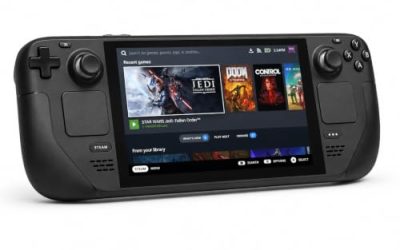
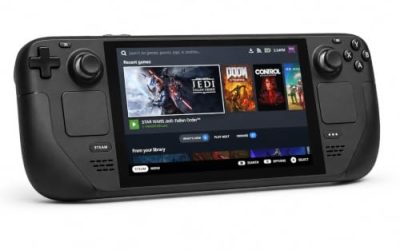
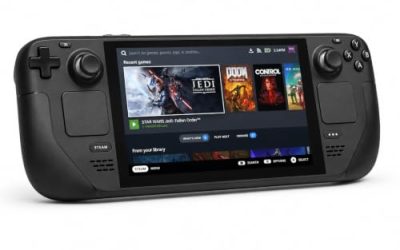
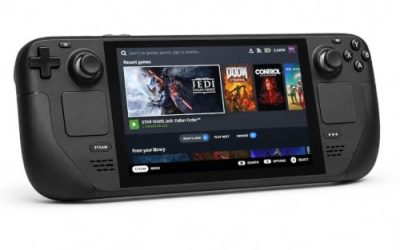
Valve Steam Deck OLED 512GB

The handheld the Verified badge was written for, and this time the badge runs the native Linux build rather than a compatibility layer. The game’s recommended tier is modest next to the Deck’s APU.
Specs
- Display: 7.4-inch HDR OLED, 1280 by 800, up to 90 Hz
- Processor: AMD Zen 2 and RDNA 2 custom APU
- Memory: 16 GB LPDDR5
- Storage: 512 GB NVMe, plus a microSD slot
- Wireless: Wi-Fi 6E and Bluetooth
- Channel note: Valve sells the Deck mainly through its own store, so Amazon listings are third-party sellers
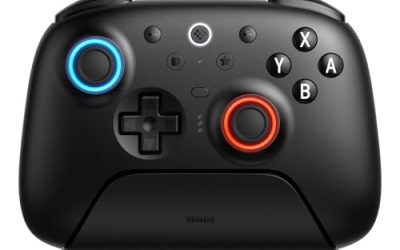
8BitDo Ultimate 2 Bluetooth Controller
The docked and desktop pad pick. Steam lists full controller support for the game, and this pad covers the couch case with modern sticks, triggers and back buttons.
Specs
- Connectivity: Bluetooth wireless and USB-C wired
- Joysticks: TMR electromagnetic, anti-drift design
- Triggers: Hall effect, with mode switching
- Extras: two remappable back buttons, motion control
- In the box: charging dock included
Xbox Wireless Controller, Carbon Black
The safest guest pad in PC gaming: Steam Input support is universal, the glyphs match what most games display, and it pairs over Bluetooth or its own wireless standard.
- Connectivity: Xbox Wireless and Bluetooth
- Port: USB-C for wired play
- Controls: hybrid D-pad, dedicated Share button
- Power: AA batteries or optional rechargeable pack
Logitech G502 HERO
Selaco is a shooter first, and at a desk a precise wired mouse is still the genre’s home input. Eleven programmable buttons cover the inputs a long session repeats.
Specs
- HERO optical sensor, up to 25,600 DPI
- 11 programmable buttons
- Adjustable weight system
- Wired USB connection
- On-board memory profiles
Samsung T9 Portable SSD 2TB
For moving a Linux game library between machines, or keeping an offline backup of installers, a fast USB-C drive is the simple answer. The headline figure needs a Gen 2×2 host port; on a lesser port the drive runs at that ceiling.
Specs
- Capacity: 2 TB portable SSD
- Interface: USB 3.2 Gen 2×2, USB-C connector
- Maker-rated speeds: up to 2,000 MB per second read, 1,950 MB per second write
- Features: Dynamic Thermal Guard, maker-rated drop resistance
How to choose
Choose the Steam copy, the only PC edition on sale and the exact build both records describe. On a Linux desktop or laptop, install it as a native game: no compatibility tool needs selecting, and the published requirements name Ubuntu 18.04-era distributions and GTX 970-class hardware, so most current systems clear the bar easily. Keep it updated, because Early Access builds land often and the depot record shows the Linux build moving with the Windows one. On Steam Deck, the Verified native badge means install and launch.
Who should skip
Skip it if you play on a Mac: there is no Mac build, and the TBA text in the Mac tab is a placeholder, not a promised port. Skip it if you only buy DRM-free installers, because no GOG edition exists. Skip it if you want a finished campaign today: the genre list still reads Early Access. And skip the soundtrack’s platform flags as buying evidence — they are paperwork over empty fields.
FAQ
Is Selaco native on Linux?
Yes. Steam flags the game for Linux, the requirements field carries genuine platform-specific text, a Linux 64-bit depot of 111.15 MiB sits inside the purchase package, and Valve’s Deck sheet names the native runtime. Every layer agrees.
Is Selaco Steam Deck Verified?
Yes. Valve rates it Verified, with all four checks passing, and SteamOS separately Compatible. The test paperwork dates from July 2024 and an early build, while the game has updated heavily since, so treat the grade as current and the test build as historical.
The soundtrack flags Mac support. Is there a Mac version?
No. The soundtrack is a music app whose record flags all three platforms over empty requirement fields. The game flags Mac false, its Mac tab holds only a TBA placeholder, and no Mac depot exists. The game’s record overrules the add-on’s paperwork.
Can I buy Selaco on GOG instead?
No. GOG’s catalogue holds no product record for the game and its natural GOG address resolves to the general catalogue. Steam is the only storefront selling a PC edition.
Final verdict
Selaco is the straightforward case this cluster rarely gets: a native Linux build that survives every check. The flag is backed by a real requirements tab, a real Linux depot inside the purchase package, a client icon with a build behind it, a Deck badge issued to the native runtime, and a Platinum community file. The paperwork traps here point elsewhere — a TBA placeholder in the Mac tab, and a soundtrack claiming a Mac version that does not exist. Buy the Steam copy and run the native build.
Product and ASIN Reference
| Product | ASIN |
|---|---|
| Valve Steam Deck OLED 512GB | B0CQ3RWQQZ |
| 8BitDo Ultimate 2 Bluetooth Controller | B0F194QFT2 |
| Xbox Wireless Controller, Carbon Black | B08DF248LD |
| Logitech G502 HERO | B07GBZ4Q68 |
| Samsung T9 Portable SSD 2TB | B0CHFS9K14 |