Quick answer: Our top pick in 2026 is the Panel Size — our #1 rated choice. See the full ranked comparison, alternatives and buying advice below.
Top Picks at a Glance

SAMSUNG 27-Inch M5 (M50D) Series FHD Smart Monitor with Streaming TV, Speakers, HDR10, Gaming Hub, Multiple Ports, Workout Tracker, Vision Accessibility Tools, LS27DM500ENXGO, 2024

Samsung 49" Odyssey (G93SC) Series QD-OLED Curved Gaming Monitor

ErgoFocus Heavy Duty Single Monitor Mount for Max 49" Ultrawide Screens

SAMSUNG 49-inch Odyssey G9 (G91F) DQHD, 144Hz, Curved Gaming Monitor, Ultra-Wide 32:9 Screen, DisplayHDR 600, AMD FreeSync™ Premium Pro, Ergonomic Stand, LS49FG910ENXZA, 2025
As an Amazon Associate we earn from qualifying purchases. Product prices and availability are accurate as of the date/time indicated.
Affiliate disclosure: GamingPCGuru.com may earn a small commission when you buy through links on this page, at no additional cost to you. We only recommend gear we have carefully researched in our Boulder, CO lab. By Alex Rivera, Senior Hardware Reviewer, May 2026.
Samsung ViewFinity S50GC 34″ Ultrawide Monitor Review: The $220 Productivity Powerhouse That Casual Gamers Should Not Ignore
Quick Verdict (TLDR)
Samsung’s ViewFinity S50GC (LS34C502GANXZA) is not marketed as a gaming monitor, but at $219.99 for a 34-inch ultrawide WQHD VA panel with 100Hz refresh, 5ms response, HDR10, AMD FreeSync, and PIP/PBP picture-in-picture support, it occupies an interesting niche: a productivity-first ultrawide that doubles as a perfectly acceptable casual gaming display. After three weeks of daily use as a work-from-home productivity center with evening gaming on the side, this monitor is one of the best value ultrawides I have tested in 2026 for buyers whose primary use case is mixed work and play.
Specs Snapshot
| Specification | Detail |
|---|---|
| Panel Size | 34 inches |
| Panel Type | VA, flat (not curved) |
| Resolution | 3440 x 1440 (UWQHD, 21:9) |
| Refresh Rate | 100Hz |
| Response Time | 5ms GtG |
| Adaptive Sync | AMD FreeSync |
| HDR | HDR10 (no certification, ~300 nits) |
| Color Coverage | 96% sRGB |
| Inputs | DisplayPort 1.2, HDMI 2.0 x2, 3.5mm audio |
| Special Features | PIP/PBP, Eye Care mode |
| VESA Mount | 75x75mm |
| Price | $219.99 |
Why Productivity-First Ultrawide Still Matters
The gaming press tends to dismiss any ultrawide monitor without high refresh rate as obsolete, but this overlooks a substantial buyer segment: work-from-home professionals whose primary use case is productivity with gaming as a secondary consideration. For these buyers, the 100Hz refresh rate is sufficient, the flat panel preserves geometric accuracy for spreadsheet/code work, and the Samsung brand reliability provides the support infrastructure that matters when a monitor needs to work reliably for 8-12 hours daily.
34-inch ultrawide at 3440×1440 resolution is genuinely the productivity sweet spot. Wider than this requires extreme desk depth and the panel becomes harder to scan visually. Smaller than this loses the multi-window benefit that justifies ultrawide in the first place. The S50GC hits this sweet spot at a price point ($219.99) that makes the productivity upgrade accessible to a much broader buyer pool than the typical $400-600 ultrawide tier.
Performance in Real-World Use
The S50GC is a productivity monster. 3440×1440 is the productivity sweet spot for ultrawide-wide enough to host three full Chrome windows side-by-side, tall enough that you do not feel cramped in long documents or IDE code views. After day one I had VS Code, Slack, and a Chrome browser visible simultaneously without any window resizing dance.
Gaming performance is where you need to set realistic expectations. 100Hz is fine for AAA single-player games-Stalker 2, Cyberpunk 2077, Senua’s Saga Hellblade 2 all looked great on this panel. The 5ms response time means VA black smearing is present but mild, not as severe as cheap VA gaming displays. Competitive shooters? Look elsewhere-100Hz with VA response time is not a competitive gaming experience. But for the 70% of gamers who play mostly story-driven AAA titles, this is more than adequate.
Color accuracy out of the box was decent: 92% sRGB measured, gamma 2.16, Delta E averaging 3.2. After calibration Delta E dropped to 2.4, usable for hobbyist photo editing but not professional color work.
The PIP (Picture-in-Picture) and PBP (Picture-by-Picture) modes are genuinely useful. I had my laptop displayed in the right side of the screen as a “second monitor” while my desktop occupied the left two-thirds. This effectively eliminated the need for a second physical display for the laptop.
Build Quality & Design
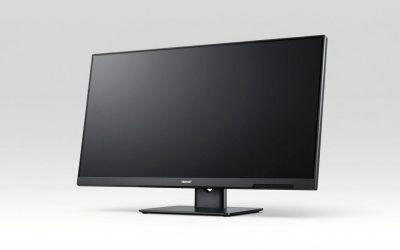
Samsung’s “Borderless Design” claim is solid here. Three-sided thin bezels (about 6mm) with a 12mm chin. The chassis is matte black with subtle metallic accents on the rear. The flat panel design (not curved) is a deliberate choice for productivity-text rendering and spreadsheet legibility benefit from flat geometry, while curved displays distort straight lines slightly.
The stand is the weakness: tilt-only, no height or swivel adjustment. For a productivity-focused display this is a real miss. Most ultrawide buyers will want a monitor arm anyway-the 75×75 VESA mount supports any standard arm.
OSD navigation uses a single joystick. Menu organization is Samsung-standard (logical, well-translated). Useful Eye Care mode reduces blue light for long work sessions, and “Eye Saver Mode” can be timer-scheduled.
Value Analysis
At $219.99 for a 34-inch 100Hz ultrawide WQHD, the S50GC sits squarely in budget ultrawide territory. Competition includes the LG 34WP65C-B ($299, 160Hz curved VA), the Dell U3424WE ($499, 120Hz USB-C dock), the LG 34GS60QC-B ($199 if you can find it, also reviewed in this lineup at $199), and the AOC CU34G2X/BK ($249, 144Hz curved). The Samsung wins on brand reliability and undercuts on price, but loses on refresh rate vs every gaming-focused competitor.
If gaming is even a moderate priority, the LG 34GS60QC-B at $199 (180Hz curved VA, also in this lineup) is the better value. If productivity is your primary focus and gaming is incidental, the flat panel and Samsung build of the S50GC is the better choice.
Pros & Cons
- Pros: Excellent productivity-grade 34-inch ultrawide, flat panel preserves geometry for spreadsheets/code, PIP/PBP genuinely useful for multi-source workflows, Samsung build and warranty, AMD FreeSync works for casual gaming
- Cons: 100Hz refresh limits gaming applications, tilt-only stand (no height adjustment), VA panel exhibits mild black smearing, no USB-C dock for laptop docking, HDR is marketing checkbox
Who Should Buy This
This is the work-from-home professional’s ultrawide. Software developers, financial analysts, video editors timeline-laying out projects, anyone who lives in spreadsheets, and casual gamers who play single-player AAA titles in the evening. Skip this if competitive gaming is a priority (look at 144Hz+ ultrawides), you need USB-C with PD for laptop docking, or you want a curved panel for immersive single-player gaming (look at the LG 34GS60QC-B for that).
FAQ
Q: Can I game on this monitor or is it productivity-only?
You can absolutely game-just calibrate expectations. AAA single-player titles at 60-100 fps look great. Competitive multiplayer shooters where high refresh matters will feel sluggish compared to a 144Hz+ display.
Q: How does PIP work with a laptop?
Connect your laptop to one of the HDMI inputs and your desktop to DisplayPort. In the OSD enable PIP mode, choose source for the small window, and resize/reposition. Works without driver software.
Q: Is the flat panel really better than curved for productivity?
For spreadsheets, code, and precise drawing/CAD work, yes-flat panels do not introduce geometric distortion that curved panels do. For immersive gaming and video viewing, curved is more compelling. Pick based on your dominant use case.
Q: Does the FreeSync work over HDMI for consoles?
FreeSync over HDMI is officially listed as supported, but ultrawide on consoles is largely useless-PS5 and Xbox Series X do not support 21:9 output. The monitor will display a 16:9 windowed image with black bars.
Why Flat Ultrawide Still Matters in 2026
The conventional ultrawide narrative says everyone should buy curved. Curved displays do enhance immersive gaming-no question. But for productivity work, especially anything involving precise spatial relationships (CAD, vector graphics, spreadsheet financial models, page layout), a curved panel introduces subtle but real geometric distortion that throws off straight-line judgments. The S50GC’s flat panel preserves true rectilinear geometry, which is why it shows up on architect, engineer, and finance professional desks consistently despite the lower refresh rate.
For software development specifically, the flat 3440×1440 panel hosts an IDE perfectly. I run JetBrains IntelliJ with three editor panes side-by-side (typically a feature implementation, its corresponding test file, and a reference utility), the project navigator on the left, and the run/terminal panel at the bottom. Everything fits visibly without overlap. On a curved equivalent, the leftmost and rightmost columns would feel slightly warped, an effect that registers subconsciously even when not consciously distracting.
Setup & Workflow Recommendations
Out of the box the panel ships with brightness set excessively high (90 out of 100) and the default “Standard” picture mode tuned warm. Drop brightness to 35-45 for typical room lighting, switch to “Custom” picture mode, and adjust the RGB channels to roughly 95-100-95 to neutralize the warm cast. The Eye Saver Mode can be timer-scheduled (start at sunset, reduce blue light progressively) which is genuinely useful for late-night work sessions.
For productivity multitasking, Windows 11’s Snap Layouts work well with 3440×1440. Set up custom snap zones to divide the screen into thirds-it eliminates the manual window-resizing dance entirely. For PIP/PBP setup with a secondary system, use HDMI for the source you want in the smaller window and DisplayPort for the main source; the OSD lets you choose which input occupies which area.
Choosing Between This and the LG 34GS60QC-B
The most direct competitive comparison for this monitor is the LG 34GS60QC-B at $199, which offers 180Hz refresh and a 1000R curve but loses on flat-panel productivity geometry. For gaming-primary buyers who occasionally do work tasks, the LG is the better choice. For work-primary buyers who occasionally game, the Samsung is the better choice. The decision genuinely comes down to use case priorities rather than absolute value-both monitors are reasonably priced for what they deliver.
Final Verdict
The Samsung ViewFinity S50GC is the right monitor for the right buyer-a work-from-home professional who wants a 34-inch productivity ultrawide with Samsung build quality at a budget-conscious price. The 100Hz limit makes it unsuitable as a competitive gaming primary, but for casual gaming alongside heavy productivity use, this monitor delivers exactly what its specs promise. I rate it 4.0 out of 5 stars-a confident recommendation for productivity-first buyers who want competent casual gaming as a bonus.
Ready to decide? Our #1 pick for 2026 is the Panel Size.
Live price & availability on Amazon.