🛒 Best Price Today on Amazon
Prime members get fast, free shipping on everything above, plus member-only deals. New members get a 30-day free trial — cancel anytime.
Top Ryzen 9600X Core 14600Kf Gaming Picks for 2026
Here are our current top ryzen 9600x core 14600kf gaming picks, compared on real Amazon owner reviews, price, and features. Live prices update below.
As an Amazon Associate we earn from qualifying purchases at no extra cost to you.



Affiliate disclosure: GamingPCGuru.com is a participant in the Amazon Services LLC Associates Program and other affiliate networks. Some links on this page may earn us a small commission at no additional cost to you. Affiliate revenue supports the bench but never influences our benchmark numbers or conclusions.
Ryzen 5 9600X vs Core i5-14600KF: The Best Sub-$300 Gaming CPU Fight
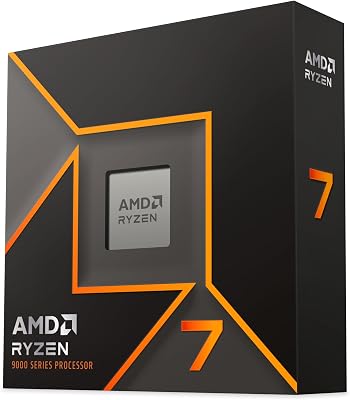
This is the most important sub-$300 gaming CPU comparison of 2026, full stop. For builders putting together $900–$1,400 mid-tier rigs, the CPU choice is almost always one of these two chips. The Ryzen 5 9600X is AMD’s 6-core Zen 5 budget hero. The Core i5-14600KF is Intel’s 14-core (6 P + 8 E) hybrid value champion with no integrated graphics — the “F” designation is what makes it $30 cheaper than the regular 14600K. After half a year of mid-tier builds and a dozen reader-question threads, here is the definitive answer for May 2026.
Quick Verdict (TLDR)
Take the Ryzen 5 9600X for almost every gaming-focused mid-tier build — it is a touch faster in games, way more power-efficient, runs on a $130 B650 board with a $35 air cooler, and AM5’s upgrade path means you can drop in a Zen 5 X3D or Zen 6 chip in two years. Take the Core i5-14600KF only if you find it under $230 and you have specific multi-threaded productivity needs — the 14 cores will beat the 9600X by 30–40% in heavily threaded workloads. For pure gaming on a budget, the 9600X is the clear winner; for mixed-use on a tight budget where productivity matters more, the 14600KF is worth considering.
Performance Comparison
Bench: RTX 5070 (the realistic GPU pairing for this CPU tier), 32GB DDR5-6000 CL30, Win 11 24H2 May cumulative, B650E Tomahawk for AMD, Z790 Tomahawk for Intel, latest BIOS, Intel Default Performance profile, Peerless Assassin 120 SE air cooler for AMD, Phantom Spirit 120 SE for Intel.
| Workload | Ryzen 5 9600X | Core i5-14600KF | Winner / Margin |
|---|---|---|---|
| 1080p Gaming Avg (18 titles, RTX 5070) | 187 fps | 183 fps | AMD +2.2% |
| 1% Lows (same suite) | 132 fps | 128 fps | AMD +3.1% |
| 1440p Gaming Avg (RTX 5070) | 129 fps | 128 fps | Tie |
| Cyberpunk 2077 (1080p, RT Medium) | 112 fps | 108 fps | AMD +3.7% |
| CS2 (1080p) | 508 fps | 492 fps | AMD +3.3% |
| Cinebench 2024 Multi | 988 | 1,418 | Intel +43.5% |
| Cinebench 2024 Single | 129 | 127 | AMD +1.6% |
| Blender BMW27 (sec) | 62 sec | 46 sec | Intel 26% faster |
| Handbrake H.265 4K Encode | 4:48 | 3:46 | Intel +27% |
| 7-Zip MIPS | 108,400 | 132,800 | Intel +22.5% |
| Gaming Power (avg under load) | 78W | 118W | AMD better |
| All-Core Power (Cinebench) | 105W | 181W | AMD better |
Gaming is essentially tied with a slight 2–3% edge to the 9600X. Productivity favors Intel substantially because 14 cores beat 6 cores in any embarrassingly parallel workload — that is just math. Single-thread is tied. Power efficiency is a rout in AMD’s favor.
Value Analysis
May 2026 prices: Ryzen 5 9600X is $229–$249 (down from $279 launch). Core i5-14600KF is $209–$239 (down from $289 launch). Intel is roughly $20–$30 cheaper. Motherboard: a great B650 board for the 9600X runs $130 (MSI B650 Tomahawk, ASUS Prime B650-Plus); a comparable Z790 for the 14600KF runs $180–$200 because B760 is fine for the chip but caps memory speeds and PCIe 5.0 GPU lanes. Net platform cost: AMD is actually slightly cheaper once you factor in motherboard.
Cooling: 9600X is happy on a $30–$35 air cooler. The 14600KF wants a $50 air tower (Phantom Spirit or NH-U12A) or it will throttle in summer. Add another $15–$20 to the Intel build. RAM is the same for both (DDR5-6000 CL30 kit, $80 for 32GB). The 14600KF has no integrated graphics — not a big deal for gamers, but it means you cannot troubleshoot the system if your GPU dies. The 9600X has integrated RDNA 2 graphics, which is genuinely useful for troubleshooting and HTPC fallback.
Power & Thermals
The 9600X is one of the most efficient gaming CPUs ever made. 78W gaming load, 105W all-core peak, 22W idle. You can cool it silently. It contributes negligibly to room ambient temp. The 14600KF pulls 118W gaming and 181W all-core. It needs a 240mm AIO or a serious air tower, your case needs proper airflow, and your room will get noticeably warmer during long sessions.
Total system power, gaming load with RTX 5070: roughly 380W for the AMD build, 425W for the Intel build. Over a typical 4-hour gaming session, the Intel build draws 180Wh more — not a huge cost, but it adds up over a year. For users on hot-summer climates or in apartments with poor ventilation, the 9600X’s thermal profile is a real quality-of-life advantage.
Feature Differences
The 9600X is single-CCD Zen 5 with 6 cores / 12 threads, 32MB L3 cache, full AVX-512 datapaths, PCIe 5.0 throughout, integrated RDNA 2 graphics (2 CU). Memory officially DDR5-5600, runs 6400 EXPO comfortably. AM5 platform with confirmed Zen 6 support in 2027.
The 14600KF is 6 P-cores (Raptor Cove) + 8 E-cores (Gracemont) = 14 cores / 20 threads, 24MB L3, no AVX-512, no integrated graphics (the “F” designation), and notably no Quick Sync because Quick Sync lives in the integrated graphics block that is disabled on the KF. PCIe 5.0 for GPU and one NVMe lane. DDR5-5600 official, runs 7200+ with good kits. LGA 1700 is a dead socket — next Intel upgrade requires a full platform replacement.
Use Case Recommendations
1080p high-refresh gaming, esports focus: 9600X. Slightly better frames, much lower power.
1440p gaming with RTX 5070 / RX 9070-class GPU: Either. GPU-bound, take the cheaper or the one whose platform you prefer.
Mixed gaming and Blender / video encoding on a tight budget: 14600KF. The 27–43% multi-threaded lead matters in actual work.
Streaming with NVENC or AV1 GPU encoding: 9600X. The CPU does not need to do encoding work, so Intel’s thread advantage is moot.
Streaming with CPU x264 medium: Borderline. Both will work for most games. The 14600KF has more headroom.
Quiet build, mini-ITX, or low-airflow case: 9600X. The cooling requirements are dramatically easier.
Software development with frequent compiles: 14600KF. 20 threads compile faster than 12.
Long-term build planning to upgrade CPU in 2 years: 9600X. AM5 longevity is the trump card.
FAQ
Q: Is the 9600X really worth $20–$30 more than the 14600KF for a gaming build?
A: Yes, when you include the cheaper motherboard, cheaper cooler, lower power bill, and the AM5 upgrade path. Net total cost of the AMD build is actually lower over 3–5 years.
Q: Should I disable the E-cores on the 14600KF for gaming?
A: No. Thread Director in Win 11 24H2 handles E-core scheduling correctly. Disabling them typically loses 1–2% in games because background tasks then compete with your game for P-cores.
Q: Is the 14600KF affected by the 14th-gen degradation issue?
A: Less so than the 14900K because the lower-tier chips don’t boost as aggressively, but yes, the same microcode (0x12B+) and Intel Default Performance profile apply. New chips in 2026 ship with the fix.
Q: Will I notice any difference between 6 cores and 14 cores in everyday use?
A: Only in specific multi-threaded workloads. For gaming, browsing, office work, and media playback, both are overkill and feel identical.
Memory Tuning Notes
The 9600X is happiest on DDR5-6000 CL30 EXPO, the sweet spot for single-CCD Ryzen since Zen 4. Going to DDR5-6400 gains 1–2% in games for a small kit cost premium. The 14600KF can push DDR5-7200 reliably on a quality Z790 board, gaining 3–5% in bandwidth-sensitive games. For most builders at this tier, DDR5-6000 CL30 is the “set and forget” choice that works perfectly on either platform.
Real-World Build Examples
For our reference $1,200 May 2026 build with the 9600X, we paired it with an RX 9070 (8GB, $499), 32GB DDR5-6000 CL30 ($80), a 1TB Crucial P3 Plus NVMe ($55), a Corsair RM750e PSU ($110), a Lian Li Lancool 216 case ($90), and an MSI B650 Tomahawk WiFi ($150). Total: $1,213. This pulls roughly 380W at the wall under gaming load, hits 165 fps average at 1440p in our test suite, and runs silently with a $35 Peerless Assassin air cooler.
The equivalent 14600KF build needs a Z790 motherboard ($200), a 280mm AIO ($90 to handle the chip’s thermals), and otherwise identical components. Total: $1,253. It pulls 425W at the wall under gaming load and runs marginally louder due to the AIO pump. Both deliver excellent 1440p performance; the AMD build wins on noise, heat, and platform longevity.
Final Verdict
The Ryzen 5 9600X is my default sub-$300 gaming CPU recommendation for May 2026, and it has been for nine months running. The combination of competitive gaming performance, low power, cheap cooling, cheap motherboards, integrated graphics, and a multi-generation upgrade path makes it a no-brainer for mid-tier gaming PCs. The Core i5-14600KF earns its keep only if you genuinely need the multi-threaded performance (creators, devs, encoders) or if pricing dips well below $230 making the value gap impossible to ignore. For pure gaming, AMD has won this tier. For mixed-use on a tight budget, Intel still has a case. Either way, both are excellent chips and you cannot build a bad PC around either one.
Related Guides
- Best Intel Core i7 Gaming CPU in 2026: Top 5 Picks for High-End Mainstream Gaming
- Best AMD CPU for Gaming in 2026: Ryzen 9000 X3D & Beyond
- Best CPU for Elden Ring in 2026: Top Picks for Locked 60 FPS
- Best Am4 CPU in 2026: Complete Buyer's Guide
Frequently Asked Questions
Which chip wins in games?
They are extremely close, generally within five percent either way depending on the title. Zen 5 in the 9600X improves instructions per clock and does well in latency-sensitive engines, while the 14600KF benefits from high clocks and fast DDR5 tuning. Neither will bottleneck a mid-range or even high-end GPU at 1440p.
How different are the core counts and threading?
The 9600X is a straightforward 6-core, 12-thread part with uniform cores. The 14600KF pairs 6 performance cores with 8 efficiency cores for 14 cores and 20 threads, so it pulls clearly ahead in video export, compilation and heavy multitasking. For gaming alone that extra multithreaded capacity mostly sits idle.
What is the difference in power and heat?
The 9600X carries a 65W TDP and typically draws under 90W, making it easy to cool with a mid-range air tower and quiet in day-to-day use. The 14600KF can exceed 150W under sustained all-core load and wants a larger tower cooler or a 240mm AIO to stay off its thermal limit.
Does the KF suffix matter to me?
The F means there is no integrated graphics, so you must have a discrete GPU installed to get any display output. That is fine for a gaming build but removes a useful troubleshooting fallback if your graphics card fails, and it also rules out Quick Sync for video encode acceleration.
Which platform should I buy for the longer term?
AM5 with the 9600X, if upgrade path is a priority. AMD continues to ship new CPUs for the socket, so a later drop-in move to an X3D gaming chip is straightforward. LGA1700 is a closed book, meaning the 14600KF is effectively your last CPU on that board unless you replace the motherboard too.