- Top Pick: AMD Ryzen 7 7800X3D
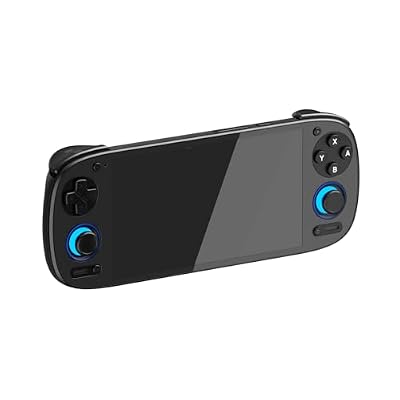
- Runner-up: ASUS ROG Ally X
- Also consider: Valve Steam Deck OLED 512GB
Both emulators that defined Switch emulation on Linux are gone. Yuzu shut down in March 2024 after Nintendo sued its developer and the case settled within days, and Ryujinx ended that October after its lead developer accepted an agreement with Nintendo. What remains in 2026 is a scattered ecosystem of forks, continuations and archived code.
This status report sets out what happened to the two originals, which descendant projects are still maintained according to their own project pages, what hardware runs them on Linux, and where the legal line sits. That line is simple and it runs through everything below: these emulators only work with game files, encryption keys and firmware dumped from a Switch you own and a library you bought.
As an Amazon Associate, we earn from qualifying purchases.
Quick answer
Switch emulation on Linux survives through forks, not the originals. Yuzu closed in March 2024 after a Nintendo settlement, and Ryujinx stopped that October. Eden, a Yuzu-line fork, is the most actively maintained option with stable Linux and Steam Deck builds. Every surviving emulator needs game files and keys dumped from your own Switch and library.
What happened to Yuzu and Ryujinx
Nintendo of America sued Tropic Haze LLC, the company behind Yuzu, in late February 2024, arguing the emulator facilitated piracy on a large scale. The case never reached a trial. On 4 March 2024 the two sides settled: Tropic Haze agreed to a payment widely reported at 2.4 million dollars, accepted an injunction against developing or distributing Yuzu, and shut the project down. Its sister emulator Citra, for the Nintendo 3DS, was discontinued the same week.
Ryujinx, the C#-based emulator started by developer gdkchan in 2017, was never sued. On 1 October 2024 a team member announced that Nintendo had contacted gdkchan and offered an agreement to stop work and remove the organization and the assets under his control. The GitHub organization was deleted and the official download page was emptied. With that, both first-generation Switch emulators ended inside a single year, and development moved to code already outside the original teams’ control.
The forks that carry the code now
Because Yuzu was open source under the GPL, copies of its code were never Nintendo’s to recall, and forks appeared within weeks. Their current state, per their own project pages and release channels, is uneven. Eden is the clear centre of gravity: a Yuzu-line project founded in May 2025 by developers who had previously worked on the Citron and Sudachi forks. Eden ships stable releases for Linux with dedicated Steam Deck builds, publishes nightly builds, and describes Linux as a first-class platform. When a February 2026 DMCA notice wave named Eden among more than a dozen emulator projects and its GitHub release repository was disabled, the team moved distribution to its own servers and kept releasing.
The rest of the Yuzu line is quieter. Citron, an early fork, wound down in early 2026 and continues at a slower cadence as Citron Neo, with reports differing on its current activity. Suyu, the first high-profile fork from March 2024, lost its Discord and its GitLab home early on, moved to self-hosting, and now survives as a low-activity continuation. Sudachi, once the most polished early fork, has been on hold since August 2025; its developer directed users toward Eden.
The Ryujinx line survives through Ryubing, a community continuation keeping the original codebase working: releases are maintenance-focused and occasional test builds still appear. Kenji-NX, a Ryujinx fork notable for its Android build, has likewise slowed. Nintendo’s takedown activity continued through 2026, including a large August sweep that removed hundreds of emulator repositories from GitHub in a single day. The practical consequence is that surviving projects live on their own infrastructure, and lookalike download sites using the old Yuzu and Ryujinx names have multiplied. Neither original has an official download anymore; any site offering one is a third party.
The legal line, stated plainly
An emulator is a program, and writing or running one is not itself the issue in the 2024 actions. Nintendo’s Yuzu complaint centred on circumvention: the emulator needs the console’s encryption keys to run games, and Nintendo argued the project facilitated access to pirated copies. The safe and lawful route through this is narrow but clear. The keys, the firmware and the games must come from your own Switch and your own purchased library, dumped by you from hardware you own. Downloading game files, keys or firmware from the internet for games you do not own is copyright infringement, and no emulator in this report changes that. This article deliberately contains no instructions for obtaining any of those files, because the only legitimate source is your own console.
What hardware actually runs it on Linux
Switch emulation is CPU-led work: the emulator translates the console’s ARM code on the fly, so single-core CPU performance matters more than raw graphics power, and every surviving project renders through Vulkan. Eden’s own documentation notes that Linux generally runs better than Windows on the same hardware and that AMD’s RADV Vulkan driver is the most stable path, which makes a modern Ryzen desktop or a recent AMD graphics card the low-friction choice. NVIDIA cards work through the proprietary driver; Intel integrated graphics suit lighter titles rather than the full library.
Handhelds are the popular route. The Steam Deck’s Zen 2 and RDNA 2 chip runs a large share of the library, which is why Eden publishes dedicated Deck builds, but the biggest first-party three-dimensional games push that chip hard and expose its limits. A Windows handheld such as the ROG Ally X, running a Linux handheld build, has noticeably more CPU and memory headroom. Plan on fast storage either way: shader compilation and large game files punish slow drives, and a full library plus shader caches outgrows small internal drives quickly.
How to choose
Choose by lineage first. If you want the most actively maintained code, frequent fixes and the best-documented Linux support, the Yuzu line through Eden is the default pick. If a specific game behaved better in Ryujinx historically, Ryubing is the continuation that preserves that behaviour, accepting its slower, maintenance-first pace. Choose by release channel second: stable releases for a machine you rely on, nightly builds only if you are comfortable reporting regressions and rolling back. Choose by source third, and treat this as a safety rule rather than a preference: download only from the project’s official site or its own servers, because the post-takedown landscape is full of impersonator sites trading on famous emulator names. Finally, choose by library: check the project’s own compatibility reporting for the specific games you own before reorganising a machine around any of this.
Who should skip this
Skip Switch emulation on Linux if you do not own a Switch. Without your own console there is no legitimate way to obtain the keys and game files every emulator requires, and that is the end of the road rather than a technicality to work around. Skip it if what you actually want is Switch 2: no official project supports the newer console, and the experimental unofficial forks reported in late 2026 boot only a handful of titles. Skip it if you want plug-and-play convenience, because fork-era emulation involves choosing builds, managing your own dumped files and living with per-game quirks. And skip it for online play: these projects recreate an offline console, and Nintendo’s network services are not part of the deal.
Hardware that runs it
AMD Ryzen 7 7800X3D

The desktop anchor for a Linux emulation build: strong single-core performance backed by a large stacked cache, on the AM5 platform with mature Linux support.
Specs:
– Cores and threads: 8 cores, 16 threads
– Architecture: Zen 4 with 3D V-Cache
– Boost clock: up to 5.0 GHz, maker-stated
– Socket: AM5
– TDP: 120 W, maker-stated
ASUS ROG Ally X

The high-headroom handheld route: its Z1 Extreme chip and generous memory give a Linux handheld build more CPU room than a Steam Deck, and the large battery suits longer sessions.
Specs:
– Processor: AMD Ryzen Z1 Extreme
– Memory: 24GB LPDDR5
– Storage: 1TB NVMe SSD
– Display: 7-inch, 1920 by 1080, 120Hz
– Battery: 80Wh
Valve Steam Deck OLED 512GB

The machine Eden explicitly builds for. It will not match a desktop or an Ally X on the heaviest titles, but its SteamOS environment, huge Linux community and dedicated builds make it the easiest handheld starting point.
Specs:
– Processor: AMD Zen 2 and RDNA 2 APU
– Memory: 16GB LPDDR5
– Storage: 512GB NVMe SSD
– Display: 7.4-inch HDR OLED, 1280 by 800, 90Hz
– Operating system: SteamOS
8BitDo Ultimate 2 Bluetooth Controller

Switch games expect a Switch layout, and this controller matches it while working across the PC too. Its stick technology avoids the potentiometer wear that causes drift in precision platformers.
Specs:
– Sticks: TMR electromagnetic sticks
– Connectivity: Bluetooth and USB-C wired
– Compatibility: Switch, Windows and Android
– Extras: remappable back buttons, charging dock included
SanDisk 1TB Extreme microSDXC

Library storage for the handheld route. A dumped library plus shader caches grows quickly, and this card’s speed class keeps loading and cache writes from bottlenecking a Steam Deck.
Specs:
– Capacity: 1TB
– Format: microSDXC, UHS-I
– Ratings: U3, V30 and A2 classes
– Read speed: up to 190MB per second with a compatible reader, maker-stated
FAQ
Is Switch emulation legal?
Emulators are software, and the surviving projects are developed and distributed as such. What the law does not leave open is the content: the games, encryption keys and firmware must be dumped from your own Switch and your own purchased library. Downloading any of them for games you do not own is copyright infringement, and the 2024 Yuzu settlement shows how seriously Nintendo pursues projects it believes facilitate that.
Can these emulators run Switch 2 games?
Not officially. Eden and the other maintained projects target the original Switch only. Unofficial experimental forks were reported in late 2026 booting a small number of Switch 2 titles, but they are unaffiliated, pre-release software, and no maintained emulator offers Switch 2 support.
Does the Steam Deck run Switch emulation well?
Well enough to be the most popular route: Eden publishes dedicated Steam Deck builds, and a large share of the library, especially two-dimensional and less demanding three-dimensional games, runs respectably on the Deck’s chip. The biggest first-party three-dimensional titles are where the hardware shows its limits, and a desktop or a stronger handheld handles those better.
Where should you download Eden or Ryubing from?
Only from each project’s official website or its own download servers. After the 2026 takedown waves pushed projects off GitHub, impersonator sites using the Yuzu and Ryujinx names multiplied, and neither original emulator has any official download. A familiar name on an unfamiliar site is a warning sign, not a shortcut.
Final verdict
Switch emulation on Linux in 2026 is a fork ecosystem living in the shadow of two shutdowns. Yuzu and Ryujinx are finished, Nintendo continues to press the survivors, and yet the code endures: Eden carries the Yuzu line forward with real Linux and Steam Deck support, while Ryubing keeps the Ryujinx line on maintenance life support. For a Linux gamer with a Switch on the shelf and a library worth revisiting, it remains a workable, lawful route — provided every file involved came off your own console, and every download came from the project’s own front door.