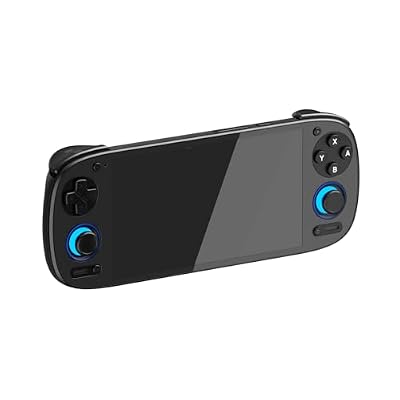
- Top Pick: Beelink SER8
- Runner-up: ASUS ROG Ally X
- Also consider: MSI Claw 7 AI+
Integrated graphics used to mean a machine that could open a game but not really play it. That stopped being true somewhere between AMD’s Radeon 780M and Intel’s Arc 140V. A current APU in a mini PC or handheld carries graphics hardware comparable to an entry-level discrete card from a few years ago, and on Linux it runs on the same open Mesa driver stack that powers the Steam Deck. The honest question is no longer whether integrated graphics can game, but which classes of games they handle well, which ones need compromises, and which ones stay out of reach.
This guide maps that territory without invented frame rates: the shared-memory reality that defines every iGPU, the state of the RADV and ANV Vulkan drivers in 2026, the settings posture that makes integrated play work, and five machines that show the current range.
As an Amazon Associate, we earn from qualifying purchases.
Quick answer
Yes, modern integrated graphics game on Linux. Radeon 780M and 890M APUs and Intel’s Arc 140V handle indies, emulation, esports titles and older AAA games comfortably, and play current AAA releases at reduced resolution with FSR or XeSS upscaling. They share system memory instead of carrying VRAM, run on Mesa’s RADV and ANV drivers, and reward fast dual-channel RAM, a current kernel and honest settings.
The capability map, by game class
Class one is everything two-dimensional, plus indie 3D, retro libraries and emulation through the PlayStation 2 and GameCube generations. Every current iGPU clears this bar with room to spare, older Iris Xe included. For this library, integrated graphics are not a compromise at all.
Class two is esports and live-service titles plus AAA games from roughly the PlayStation 4 era and earlier. This is the 780M’s home ground: RDNA 3 integrated graphics are consistently positioned as 1080p parts for this class at low-to-medium settings, and the 890M and Arc 140V sit a step above. High-refresh play at 240 Hz and beyond still belongs to discrete cards.
Class three is current AAA gaming, and it is possible with conditions. The handheld generation built around these APUs was designed exactly for this: render below native resolution, upscale with FSR or XeSS, accept medium settings, and cap the frame rate at a stable target. Gamescope on the Steam Deck popularised that workflow.
Class four is the wall. Path-traced modes, the heaviest ray-tracing presets and unoptimised launch-window releases exceed what any iGPU can do, because the limit is raw shader throughput and memory bandwidth, not drivers. Some absences are software, not silicon: titles whose anti-cheat publishers refuse Linux support will not run however strong the APU is.
Shared memory: the reality that defines an iGPU
An integrated GPU has no memory of its own. It carves its frame buffer out of system RAM and shares the memory bus with the CPU, which produces three practical consequences. First, total RAM matters twice: a 16 GB machine that hands 4 GB to the GPU leaves 12 GB for everything else, so 24 GB and 32 GB configurations are the comfortable zone. Second, memory speed is graphics performance. The same 780M runs noticeably differently behind slow single-channel memory than behind fast dual-channel DDR5, and the soldered LPDDR5X in handhelds and mini PCs is fast because the iGPU depends on it. On a desktop APU build, memory choice is a graphics decision.
Third, the BIOS frame-buffer setting is widely misunderstood. Older advice locked a large fixed UMA frame buffer, but modern AMD firmware works best left on Auto: the driver can grow the graphics allocation dynamically through the GTT, while a big fixed reservation permanently shrinks usable RAM. Set a modest floor only if a specific title misbehaves. There is no setting that creates bandwidth, and bandwidth is the ceiling every iGPU eventually hits.
The driver state: RADV, ANV and the Xe kernel driver
On Linux, integrated graphics live or die by Mesa. AMD’s Vulkan driver, RADV, is the mature half of the story: it ships on the Steam Deck, compiles shaders through the ACO compiler Valve funded to cut stutter, and fully supports the 780M and 890M. For AMD APU owners the correct move is simply a current distribution, because RADV improvements land in Mesa releases, not in anything installed separately.
Intel’s side has genuinely changed. The ANV Vulkan driver now serves two kernel drivers: the long-standing i915 and the newer Xe driver, which Lunar Lake hardware such as the Arc 140V uses. Xe has absorbed most of Intel’s Linux graphics work through 2025 and 2026, including the fixes that made the Claw handhelds viable Linux machines. The practical guidance mirrors AMD’s: recent kernel, recent Mesa, and a distribution that ships both promptly. OpenGL rides on the same stack, and DXVK and VKD3D-Proton sit on top of these Vulkan drivers, so their health is your health in Proton games.
The settings posture that makes it work
Integrated play rewards a consistent routine. Render below the panel’s native resolution and let FSR on AMD or XeSS on Intel reconstruct the image; both upscalers are widely supported and are the single largest lever an iGPU has. Prefer a frame-rate cap you can hold over an uncapped rate that swings, since a stable capped rate feels better than a bouncing peak and keeps fan noise and heat down.
Spend your remaining budget in the right order. Textures are mostly a memory question, so raise them while RAM headroom allows. Shadows, volumetrics and ray tracing are shader and bandwidth questions, so lower those first. In Gamescope sessions, per-game profiles make this a one-time setup per title. Finally, keep the kernel and Mesa current through your distribution’s normal updates; on integrated graphics, driver updates are performance updates.
How to choose
Choose by ambition first. If your library is class one and two, a 780M machine such as the Beelink SER8 is the value centre of this guide, and the Steam Deck OLED remains the easiest Linux gaming device to own. If you want class three headroom in a box that also does desktop duty, the 890M in the Beelink SER9 Pro is the strongest integrated option. Intel buyers get the Arc 140V in the MSI Claw 7 AI+, which pairs the newest Intel silicon with generous memory, while the ROG Ally X is the pick for a proven RDNA 3 handheld with the biggest battery in its class, ready for Bazzite.
Who should skip this
Skip integrated graphics if your target is native 1440p or 4K AAA play, high-refresh competitive gaming, or heavy ray tracing; a discrete GPU is the honest answer there. Skip it if your must-play list is headed by competitive titles whose publishers block Linux anti-cheat, because no APU fixes a policy refusal. And skip the cheapest mini PCs built on older Vega or Iris Xe silicon if class three matters to you, since the generational gap to RDNA 3 and Arc is the whole story here.
Five machines that show the range
Beelink SER9 Pro
The flagship APU in a box. Its Ryzen AI 9 HX 370 pairs twelve Zen 5 cores with the Radeon 890M, the strongest integrated graphics AMD ships, and 32 GB of fast LPDDR5X feeds it properly.
- Specs: AMD Ryzen AI 9 HX 370, 12 cores, up to 5.1 GHz
- Specs: AMD Radeon 890M graphics, 16 compute units
- Specs: 32 GB LPDDR5X memory, soldered
- Specs: 1 TB PCIe 4.0 NVMe SSD
- Specs: USB4, Wi-Fi 6, Bluetooth 5.2, 2.5G Ethernet
Beelink SER8

The value centre. The Ryzen 7 8745HS and its Radeon 780M deliver the class-two experience this guide describes, in a mini PC chassis.
- Specs: AMD Ryzen 7 8745HS, 8 cores, up to 4.9 GHz
- Specs: AMD Radeon 780M graphics, 12 compute units, up to 2,600 MHz as listed by the maker
- Specs: 32 GB DDR5 memory
- Specs: 1 TB PCIe 4.0 NVMe SSD
- Specs: USB4, HDMI and DisplayPort, Wi-Fi 6, 2.5G Ethernet
ASUS ROG Ally X

The proven handheld, sold with Windows and widely converted to Linux with Bazzite. Its Z1 Extreme carries the same RDNA 3 graphics family as the 780M, backed by 24 GB of memory and an 80 Wh battery the maker rates as the largest in its class.
- Specs: AMD Ryzen Z1 Extreme, 8 cores
- Specs: AMD RDNA 3 integrated graphics, 12 compute units, up to 2.7 GHz as listed
- Specs: 24 GB LPDDR5X memory
- Specs: 1 TB PCIe 4.0 NVMe SSD
- Specs: 7-inch 1080p display, 120 Hz, FreeSync Premium
MSI Claw 7 AI+

The Intel entry, and the machine that shows how far ANV and the Xe driver have come. The Core Ultra 7 258V brings Arc 140V graphics and an unusually generous 32 GB of memory for a handheld.
- Specs: Intel Core Ultra 7 258V, 8 cores, up to 4.8 GHz
- Specs: Intel Arc Graphics 140V integrated GPU
- Specs: 32 GB LPDDR5X memory
- Specs: 512 GB NVMe SSD
- Specs: 7-inch FHD display, 120 Hz, Thunderbolt 4
Valve Steam Deck OLED

The reference point. Its custom AMD APU is older silicon than everything above, yet Valve’s tuned SteamOS stack, Gamescope and the RADV driver make it the benchmark for honest iGPU gaming, and the only machine that ships with Linux.
- Specs: Custom AMD APU, Zen 2, 4 cores and 8 threads
- Specs: RDNA 2 integrated graphics, 8 compute units
- Specs: 16 GB LPDDR5 memory
- Specs: 512 GB NVMe SSD
- Specs: 7.4-inch HDR OLED display, 90 Hz, SteamOS 3
FAQ
Do I need a special driver for integrated graphics on Linux?
No separate download is needed. AMD APUs use the RADV Vulkan driver inside Mesa, and Intel Arc hardware uses ANV with the Xe kernel driver on Lunar Lake. Install a current distribution, keep it updated, and the driver stack arrives with the system.
How much RAM should an integrated-graphics gaming machine have?
Treat 16 GB as the floor and 24 GB or 32 GB as the comfortable zone. The GPU shares system memory, so a game, its graphics allocation and the OS all draw from the same pool, and handhelds and mini PCs cannot be upgraded later.
Is Intel integrated graphics finally usable for Linux gaming?
Yes, with current silicon. The Arc 140V, driven by ANV on the Xe kernel driver, is a credible gaming part, and XeSS upscaling support keeps growing. Older Iris Xe hardware remains a class-one and light class-two option.
Should I set a large fixed frame buffer in the BIOS?
Usually not. Leave AMD UMA settings on Auto so the driver can grow the allocation dynamically. A large fixed reservation removes RAM from games and the OS without adding bandwidth, the resource iGPUs actually run out of.
Final verdict
Integrated graphics on Linux have crossed from fallback to legitimate choice. A Radeon 890M or 780M, or an Intel Arc 140V, covers indies, emulation, esports and back-catalogue AAA outright, and plays current releases honestly at reduced resolution with upscaling. Buy the memory generously, keep Mesa and the kernel current, set a frame-rate cap you can hold, and the APU stops feeling like a compromise. Players chasing native high-resolution AAA or heavy ray tracing should still buy a discrete card and skip this category entirely.