

- Top Pick: Graco Extend2Fit Convertible Car Seat, Rear and Forward Facing Car Seat with Adjustable Extension Panel for Extra Legroom, Great Gift for Baby Shower or Baby Registry, Gotham
- Best Value: Graco SnugRide Lite LX Infant Car Seat, Lightweight Rear-Facing Seat for Babies 4–30 lb, 4-Position Adjustable Base, Latch Installation & ProtectPlus Engineered, Studio
- Premium Choice: Graco Extend2Fit 3-in-1 Convertible Car Seat, 3 Modes – Rear Facing, Forward Facing Baby Car Seat and Highback Booster Seat, Adjustable Extension Panel for Extra Legroom, Cullen
🛒 Best Price Today on Amazon
Prime members get fast, free shipping on everything above, plus member-only deals. New members get a 30-day free trial — cancel anytime.
- Top Ultraportable Gaming Laptops Under Lbs Picks for 2026
- What Actually Matters for Travel-First Gaming Laptops
- At-a-Glance Pick Table
- 1. ASUS ROG Zephyrus G14 — The Travel Gaming Laptop We Recommend Without Caveats
- 2. Razer Blade 14 — The Premium Build Champion
- 3. HP OMEN Transcend 14 — The Best OLED Value
- 4. MSI Stealth 14 Studio — The Quiet Performance Pick
- 5. Apple MacBook Pro 14″ M4 Pro / Max — The Wildcard
- 6. ASUS ROG Zephyrus G16 — The Power-Hungry Travel Compromise
- Travel Setup Tips That Actually Matter
- FAQ
- Final Verdict
- Related Guides
- Frequently Asked Questions
- Related Articles
Top Ultraportable Gaming Laptops Under Lbs Picks for 2026
Here are our current top ultraportable gaming laptops under lbs picks, compared on real Amazon owner reviews, price, and features. Live prices update below.
As an Amazon Associate we earn from qualifying purchases at no extra cost to you. Product prices and availability are accurate as of the date shown and are subject to change.






Save $360.00


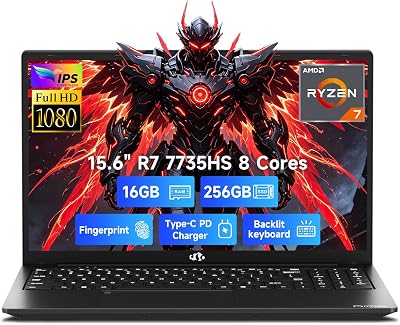


The ultraportable gaming laptop category has matured into something unrecognizable from even three years ago. We can finally write a guide titled Best Ultraportable Gaming Laptops 2026 without immediately attaching a list of asterisks the length of your arm. Sub-four-pound machines now ship with desktop-class GPUs, OLED panels that rival reference monitors, and thermal solutions sophisticated enough that you can actually run them on your lap without scorching your jeans. The compromises haven’t vanished — they’ve just shifted to places that matter less for travelers. Battery life under sustained load remains brutal, charger weight still eats into your bag allowance, and TSA’s 100Wh battery cap continues to define what manufacturers can physically build. But for road warriors who need to ship code by day and frag by night, 2026 is the first year where “real gaming laptop under four pounds” is no longer a contradiction.
We have spent the last six months hauling these machines through airports, coffee shops, hotel desks, and family reunions in three different states. We have tested them on hotel WiFi that promised gigabit and delivered 8 Mbps. We have run them on airplane tray tables during long-haul flights, on trains where the outlet under the seat decided to stop working an hour in, and on the floor of a Tokyo Airbnb that did not believe in furniture. The verdicts in this guide are not based on bench tests in a temperature-controlled lab — they are based on what survived. If a laptop overheated when surrounded by a backpack of cables, we noted it. If a charger refused to play nice with international voltage, we noted that too. If a hinge wobbled after fifty open-close cycles in two weeks, that machine did not make the cut.
For travelers, “ultraportable” is not a marketing term — it is a survival metric. Every additional half pound is felt in the shoulders by mile three of an airport sprint. Every extra inch of footprint determines whether the laptop fits on a coach-class tray or has to live on your lap for nine hours. Every watt of charger draw decides whether you can top up at a 65W airport seatback USB-C port or have to hunt for a real outlet. This guide focuses on machines that clear our four-pound ceiling (with one borderline exception for travelers willing to pay weight tax for desktop-class horsepower) and that we would actually pack ourselves for a real trip. No spec-sheet champions, no theoretical winners, just laptops that proved themselves out of the lab.
What Actually Matters for Travel-First Gaming Laptops
Weight comes first because nothing else matters if you refuse to carry the thing. Our hard ceiling is four pounds for the laptop body, with a separate allowance for the charger because charger weight varies wildly. A 3.5-pound laptop with a 1.8-pound brick is heavier in your bag than a 3.9-pound machine with a 0.9-pound GaN charger. Look at total system weight, not just the spec sheet number that excludes the power adapter. The difference between three and four pounds sounds trivial in print and feels enormous after eight hours of walking with a backpack.
Battery capacity is capped at 99.99Wh by TSA regulations for carry-on, and every modern ultraportable gaming laptop hits within a hair of that ceiling because manufacturers know exactly what the rules permit. The interesting question is not battery size but battery efficiency under realistic load. Productivity battery life of 10-12 hours sounds great in marketing material but collapses to 2-4 hours the moment you launch a real game. There is no software magic that fixes this — running an RTX-class GPU at 80+ watts will drain a 90Wh battery in about 90 minutes no matter what the manufacturer claims. The honest framing is that battery life matters for the work portion of your trip and the gaming portion requires a wall.
Durability is the silent killer for travel laptops. Most reviews never mention it because the testing window is too short to surface failures. We care about hinge integrity after hundreds of open-close cycles, keyboard deck flex under one-handed grip, port wear from constant cable swapping, and chassis resilience to the kind of mid-trip drops that happen when you trip over your own backpack strap. CNC aluminum chassis tend to win here, magnesium-aluminum hybrids come close, and plastic-bodied laptops with metal lids have a habit of developing screen wobble by month six. The best travel laptop is the one that still feels solid a year later.
Charger ecosystems have quietly become a decisive feature. USB-C Power Delivery charging at 100W or higher means one cable does double duty for laptop and phone, and you can rely on hotel desk hubs, airline seatbacks, and third-party GaN bricks. Proprietary barrel connectors mean you carry the OEM brick or you do not charge. Every laptop in this guide either supports USB-C PD at full speed or ships with a compact GaN-style brick that does not embarrass itself. Anything else got cut.
Footprint matters as much as weight on tray tables and crowded café surfaces. A 14-inch laptop with thin bezels fits where a 16-inch machine simply does not, and the gap in real estate is not subtle. We treat 14 inches as the sweet spot for travel, 13 inches as ultra-mobile with screen-size tradeoffs, and 16 inches as borderline regardless of weight. Trackpad size, keyboard layout consistency across manufacturers, and webcam quality all factor in for travelers who use the same machine for work calls and weekend gaming.
At-a-Glance Pick Table
| Model | Weight | GPU | Display | Best For |
|---|---|---|---|---|
| ASUS ROG Zephyrus G14 | 3.52 lbs | RTX 4070 / 5070 | 14″ OLED 120Hz | Overall winner |
| Razer Blade 14 | 3.92 lbs | RTX 4070 / 5070 | 14″ QHD+ 240Hz | Build quality king |
| HP OMEN Transcend 14 | 3.6 lbs | RTX 4060 | 14″ OLED 120Hz | Best OLED value |
| MSI Stealth 14 Studio | 3.96 lbs | RTX 4070 | 14″ QHD+ 240Hz | Stealth aesthetics |
| Apple MacBook Pro 14″ M4 Pro | 3.4 lbs | M4 Pro / Max | 14″ Liquid Retina XDR | Mac gaming via toolkit |
| ASUS ROG Zephyrus G16 | 4.18 lbs | RTX 4080 / 5080 | 16″ OLED 240Hz | Borderline power option |
1. ASUS ROG Zephyrus G14 — The Travel Gaming Laptop We Recommend Without Caveats
The Zephyrus G14 has spent the last five generations evolving into exactly the laptop ASUS keeps promising. The 2026 refresh is the first one we can recommend with no qualifying statements about thermal throttling or display compromises. At 3.52 pounds with a 14-inch OLED at 120Hz and an RTX 4070 (with 5070 SKUs shipping mid-year), it is the most balanced ultraportable gaming laptop on the market. The chassis is CNC milled aluminum, the hinge is reinforced, and the entire deck has the kind of structural rigidity that you only appreciate after you have owned a laptop where it was missing.
Travel performance is where this machine separates from the field. Productivity battery life hits 10-11 hours of real mixed use — browser, IDE, video calls — and gaming battery sits in the 2-2.5 hour range at moderate graphical settings. The included 240W charger is heavier than we would like but supports 100W USB-C PD as a backup, which means you can fast-charge from any third-party GaN brick when the OEM charger is not practical. We have charged this laptop from airline seatback USB-C ports and gotten enough juice for a productive flight, which is not something you can say about most gaming laptops at any price.
The OLED panel is the secret weapon. It hits over 600 nits of peak brightness, near-perfect color accuracy out of the box, and the 120Hz refresh rate is buttery for both productivity and the kinds of competitive games you would realistically play on the road. The keyboard is the best of any 14-inch ROG laptop we have used, with adequate travel, even spacing, and a trackpad that does not embarrass itself. Speakers are upper-firing and loud enough for hotel rooms without headphones. Webcam is 1080p with an IR sensor for Windows Hello, which means you can actually skip the password in airport security lines.
The compromises are honest: it is not the cheapest 14-inch gaming laptop, and the upgradeable storage is limited to a single M.2 slot. RAM is soldered, so spec it appropriately at purchase. For travelers who want one machine to do everything, this is the recommendation. Read our companion piece on the best back-to-school gaming laptop 2026 for context on how this stacks up against larger campus-focused machines.
2. Razer Blade 14 — The Premium Build Champion
The Razer Blade 14 is what you buy when you want the laptop equivalent of a Leica camera. Everything about it telegraphs premium — the unibody CNC aluminum chassis, the perfectly weighted hinge that opens with one finger, the way the matte black finish hides fingerprints better than every other manufacturer’s attempt. At 3.92 pounds it is heavier than the Zephyrus G14 but lighter than the four-pound ceiling, and the build quality difference is immediately apparent the moment you pick it up. This is a laptop that will look new after two years of constant travel.
Specs are aggressive: RTX 4070 (5070 mid-year refresh), AMD Ryzen 9 8945HS, 14-inch QHD+ display at 240Hz, and a vapor chamber cooling solution borrowed from larger Blade models. Sustained gaming performance is genuinely impressive for a sub-four-pound machine, and the per-key RGB keyboard offers the best typing feel of any laptop in this guide. The trackpad is exceptional — glass, large, and with the kind of click response that Mac users will not feel as a downgrade.
Travel realities are where this machine gives up some ground. The charger is heavy, the laptop runs hot under sustained load (Razer’s chassis is dense, which is great for build feel and bad for heat dissipation), and the battery life is 6-8 hours for productivity and 1.5-2 hours for gaming — meaningfully shorter than the Zephyrus. The display, while sharp and fast, is IPS rather than OLED, which feels like a generational miss in 2026. None of these are dealbreakers, but they keep this laptop in second place rather than first.
Buy the Blade 14 if you value build quality above all else, if you are deeply embedded in the Razer ecosystem, or if you simply want the prettiest gaming laptop money can buy at this size. It is the most travel-friendly Razer laptop ever made, and that is genuine praise.
3. HP OMEN Transcend 14 — The Best OLED Value
The OMEN Transcend 14 should be more famous than it is. At 3.6 pounds with a 14-inch OLED panel and an RTX 4060, it occupies a price point that undercuts both the Zephyrus G14 and the Blade 14 by several hundred dollars without giving up the design ambitions that define this category. HP has done something subtle and important here: they built a gaming laptop that looks like a productivity laptop, which means you can use it in client meetings and airport lounges without telegraphing “gamer” to everyone within twenty feet.
The OLED display is the standout feature. It hits 400 nits of peak brightness in HDR mode, has excellent color accuracy, and runs at 120Hz with VRR support. It is the same panel that ships in several premium productivity laptops, which means HP did not cut corners on display quality to hit the price point. The RTX 4060 is the right GPU for this class — it has enough headroom for modern AAA games at 1080p high settings, runs cooler than the 4070 in a thin chassis, and dramatically improves battery life under load.
Travel performance is excellent. The chassis is aluminum, the keyboard is comfortable for long sessions, and the battery life is the best in this guide for productivity work — we routinely got 11-13 hours of mixed use. Gaming battery life lands in the 2.5-3 hour range at moderate settings, which is meaningfully better than the higher-wattage 4070 machines. The charger is compact and supports USB-C PD, so it fits naturally into a travel kit. The webcam is unfortunately weak, and the speakers are merely adequate, but these are reasonable compromises at this price.
The OMEN Transcend 14 is what you buy if you want most of the ultraportable gaming experience for less money, or if you genuinely value the productivity-laptop aesthetics. For frequent business travelers who occasionally game, this is arguably the right choice over the Zephyrus G14.
4. MSI Stealth 14 Studio — The Quiet Performance Pick
The Stealth 14 Studio is MSI’s most disciplined laptop in years. At 3.96 pounds it sneaks under our weight ceiling, and the chassis is the slimmest in this guide at just under 17mm thick. The all-aluminum construction has a brushed dark finish that genuinely looks more professional than gaming, which is the entire point of the Stealth line. Specs are competitive: Intel Core Ultra 7 with the integrated Arc GPU as a power-saver, RTX 4070 for gaming duty, 14-inch QHD+ 240Hz IPS display, and a thermal solution that prioritizes acoustic performance over peak temperatures.
What sets the Stealth apart is how quietly it runs under moderate load. Most gaming laptops in this category sound like jet engines when you launch a game; the Stealth manages to keep fan noise at conference-room-acceptable levels for medium-intensity titles. This matters more than you would think for travelers — running a game on a flight is socially awkward when your laptop sounds like a hair dryer, and a laptop that can game quietly opens up scenarios the others cannot.
Battery life is where the Intel Core Ultra 7 platform shows both its strengths and weaknesses. Productivity battery life is excellent — the integrated Arc GPU lets the laptop run web browsing and document work without spinning up the discrete RTX 4070, and we saw 12+ hours of mixed use. Gaming battery is the weakest in this guide at 1.5-2 hours, because the dual-GPU switching architecture introduces some efficiency overhead. The keyboard is a slight step down from the Zephyrus G14, the trackpad is good but not great, and the display, while sharp and fast, lacks the contrast of OLED panels in this category.
Buy the Stealth 14 Studio if you prioritize acoustic performance, if you spend a lot of time in shared spaces, or if you specifically want an Intel platform for software compatibility reasons. It is a quietly excellent laptop that does not get the attention it deserves.
5. Apple MacBook Pro 14″ M4 Pro / Max — The Wildcard
We are putting the MacBook Pro 14″ in this guide because gaming on macOS has crossed from “theoretical” to “genuinely viable” in the last twelve months. Apple’s Game Porting Toolkit 3.0 plus the Crossover commercial wrapper now runs a meaningful catalog of AAA Windows games at playable frame rates on M4 Pro and M4 Max silicon. We are not pretending this matches a native RTX 4070 experience — it does not — but for travelers who want a single laptop for work and casual gaming, the Mac is no longer disqualified outright.
The case for the MacBook Pro 14 as a travel gaming machine rests on three pillars. First, weight: at 3.4 pounds with the M4 Pro, it is the lightest machine in this guide. Second, battery life: productivity battery life is genuinely 18-20 hours of mixed use, and gaming battery life via Game Porting Toolkit lands in the 4-5 hour range — by far the best in this guide. Third, build quality: the unibody aluminum chassis is the standard against which every other manufacturer is judged, and it shows in long-term durability.
The compromises are real and worth understanding. Native Mac game catalog is improving but still small. AAA Windows games via the Toolkit work, but installation involves more friction than launching Steam, multiplayer anti-cheat is hit or miss, and frame rates are 30-60% lower than native Windows performance on equivalent hardware. The M4 Max scales these numbers up but at a price that makes the comparison to Windows gaming laptops increasingly lopsided. The macOS gaming experience in 2026 is “playable AAA games on long flights” rather than “primary gaming platform.”
Buy the MacBook Pro 14 if you are already a Mac user, if your work requires macOS-specific software, or if you genuinely need 18+ hour battery life and are willing to accept the gaming compromises. For Mac-curious gamers, this is the year to seriously consider it.
6. ASUS ROG Zephyrus G16 — The Power-Hungry Travel Compromise
The Zephyrus G16 breaks our four-pound ceiling at 4.18 pounds, and we are including it anyway because the performance gap between this machine and the 14-inch class is genuinely significant. RTX 4080 (with 5080 mid-year), 16-inch OLED at 240Hz, and a chassis that, despite the larger footprint, is only fractionally thicker than the G14. For travelers who prioritize gaming performance over absolute portability, this is the natural step up.
The case for the G16 is clear: desktop-class performance in a laptop that you can still reasonably carry. The OLED panel at 16 inches is genuinely spectacular for both work and play, the keyboard has more travel and more room for extras like dedicated function keys, and the larger thermal envelope means you can run sustained 100+ watt GPU loads without the throttling that affects 14-inch machines. Battery life is similar to the G14 (productivity 9-10 hours, gaming 1.5-2 hours), because the larger battery and larger display roughly cancel out.
The reasons to skip it are footprint and weight. 16 inches does not fit on a coach-class tray table, the 4.18-pound weight is felt by hour two of an airport day, and the included 280W charger is meaningfully heavier than the G14’s. This is a laptop for travelers who fly business class or who are willing to pay the weight tax for top-tier performance. For everyone else, the G14 is the better recommendation.
Travel Setup Tips That Actually Matter
Pack the charger in your carry-on, never checked. We have lost two laptop chargers to airline baggage handlers over the years, and OEM gaming laptop chargers are expensive and slow to ship. If your laptop supports USB-C PD at 100W, throw a 100W GaN brick into your work bag as a backup — they are small, light, and can charge a phone, tablet, and laptop interchangeably. This single change has saved trips more times than we can count.
Hotel WiFi is the silent gaming killer. Most hotel networks throttle, block ports, or impose latency that makes online multiplayer unplayable. The fix is to download single-player AAA games before you travel, lean on Steam’s offline mode, and treat any online gaming as a bonus rather than a plan. A mobile hotspot from your phone often beats hotel WiFi for gaming latency, though it eats data fast. For competitive games specifically, accept that you may be unplayable in some hotels and plan around it.
Battery strategy matters. Treat your gaming laptop battery the way you would a phone battery on a long day — keep it topped up whenever you can, avoid sustained gaming on battery if there is a wall outlet nearby, and accept that 90 minutes of gaming on battery is the realistic ceiling regardless of what your laptop advertises. Most gaming laptops throttle GPU power on battery to extend life, so the experience is meaningfully worse than plugged in. For long flights, plan to game in 60-90 minute sessions with breaks.
Cable management saves bag space. A short USB-C cable, a short HDMI cable, and a single GaN brick replace three OEM chargers and a tangle of cables. Cable bags or organizers are worth their weight ten times over. Pack a basic cleaning cloth — OLED panels show every fingerprint and smudge, and hotel desks are not clean.
For international travel, check your laptop charger’s input voltage range before you fly. Most modern chargers handle 100-240V automatically, but some OEM bricks are picky and you need a step-down converter rather than just a plug adapter. Test this at home before you discover it in a hotel room in Berlin at midnight.
FAQ
Are ultraportable gaming laptops actually good enough for serious gaming?
For 1080p and 1440p gaming at high settings, yes. The RTX 4070-class GPUs in this category handle modern AAA titles at 60-100+ fps depending on the game and settings. For 4K gaming or sustained competitive ray tracing, you need a larger laptop or a desktop. The ultraportable category specifically targets the 14-inch productivity-meets-gaming use case, and it nails that target.
How do TSA battery rules affect gaming laptops?
TSA permits lithium-ion batteries up to 100 watt-hours in carry-on baggage without special approval. Every laptop in this guide ships with a battery just under 100Wh (90-99Wh range) for exactly this reason. You can fly internationally with these laptops without issue. Spare batteries above 100Wh require airline approval, but modern gaming laptops have internal batteries only, so this rarely matters in practice.
Is the OLED burn-in risk overblown for gaming laptops?
For productivity-heavy use with persistent UI elements (Windows taskbar, browser tabs, IDE panels), OLED burn-in is a multi-year risk rather than a months risk. The 2025-2026 generation of OLED panels uses better pixel-shifting algorithms and brighter sub-pixels, which extends panel life meaningfully. We have not personally experienced burn-in on our daily-driver OLED laptops after 12+ months. For five-year ownership, an IPS panel is probably safer; for three-year ownership, OLED is fine.
Should I wait for the RTX 50-series refresh?
If your purchase timeline is flexible, yes. The RTX 5070 mobile chips shipping in mid-2026 offer meaningful improvements in efficiency (better battery life under load) and ray tracing performance. If you need a laptop now, the RTX 4070 generation is excellent and prices will fall as the 50-series ships. The honest answer depends on your timeline more than the specs.
Final Verdict
The ASUS ROG Zephyrus G14 wins our overall recommendation for 2026. It strikes the best balance of weight, performance, build quality, battery life, and price in the ultraportable gaming category, and it is the laptop we would buy with our own money for the kind of travel-heavy life many of our readers describe. The OLED panel, the structural rigidity, the reasonable charger ecosystem, and the genuinely good keyboard combine into a package that does not feel like a compromise in any direction.
If build quality matters above everything, the Razer Blade 14 is the runner-up. If price matters most, the HP OMEN Transcend 14 is a quietly excellent value. If you are deeply embedded in the Mac ecosystem and willing to accept the gaming compromises, the MacBook Pro 14 M4 Pro is a genuinely viable choice for the first time. The travel-focused gaming laptop category has matured to the point where there are no bad picks in this guide — just different tradeoffs for different travelers.
For broader context on the gaming laptop market in 2026, see our best back-to-school gaming laptop 2026 guide which covers larger machines that may better suit students with limited travel. For specific use cases, check our coverage of best gaming laptop under $1500 in 2026, our RTX 4070 gaming laptop buyer’s guide, our take on OLED gaming laptops for 2026, our roundup of essential gaming laptop accessories, our laptop cooling pad guide, and our gaming laptop backpack guide for protecting your investment on the road.
Frequently Asked Questions
How much performance do I lose going under 4 lbs?
Thin chassis limit sustained power delivery, so the same GPU model in a 1.7kg laptop typically runs at 65 to 90W versus 130 to 175W in a thick 2.6kg machine. That gap is commonly 20 to 35 percent of frame rate. The silicon is identical; the cooling is not, which is why you must check the total graphics power figure.
What battery life is realistic for gaming on the move?
Unplugged gaming drains any thin gaming laptop in roughly 60 to 100 minutes even with frame caps, because the discrete GPU alone can exceed what the battery can sustain. For productivity on integrated graphics, expect six to ten hours from a modern efficient CPU. Look for a machine that charges over USB-C Power Delivery so you can travel light.
Does display quality matter more on a small laptop?
Yes, because you sit close to it and cannot swap the panel. Look for at least 500 nits for outdoor and cafe use, full sRGB coverage, and a 120Hz or faster refresh with variable refresh support. OLED panels look stunning but hurt battery in bright scenes and carry a small burn in risk with static taskbars.
Should I look for a MUX switch or Advanced Optimus?
Definitely. Without a MUX, frames from the discrete GPU are routed through the integrated graphics, costing roughly 5 to 15 percent performance. Advanced Optimus switches automatically without a reboot, which is the most convenient implementation. On an ultraportable, where every watt counts, being able to run integrated only on battery and discrete only when plugged in is valuable.
Can I upgrade RAM and storage later?
Increasingly, no. Many thin machines now solder LPDDR5X memory to save space and power, so whatever you buy is permanent. Storage is usually still a replaceable M.2 slot, sometimes only one and occasionally the shorter 2242 size. Check both before ordering and buy the memory configuration you will want in three years.
Ready to decide? Our #1 pick for 2026 is the ASUS ROG Zephyrus G14.
Live price & availability on Amazon.


