Buying a power supply for outdoor string lights is a decision about weather and headroom, not about the lights themselves. An indoor adapter will run a string on a dry evening, then fail when rain finds its vents or a cold night loosens a connection. The right unit is sealed against rain, sized at least twenty percent above the wattage of the string it feeds, and matched to the exact voltage and plug your lights expect.


This guide is for three buyers. Patio owners want an adapter with a timer so the lights switch themselves off. Renters and party hosts need a sealed unit for single evenings. Deck and garden owners want a high-wattage driver with room to grow. The five units were picked from the names and specifications on their Amazon pages, and each one is rated for outdoor use. If the lights hang over the same patio where you watch an outdoor TV, the same logic applies to both.
Quick Picks
As an Amazon Associate we earn from qualifying purchases
| Product | Best for | Key spec from title |
|---|---|---|
| DEWENWILS 60W Outdoor Transformer | A patio string that switches itself on and off | 60W, 12V DC, timer and photocell sensor |
| inShareplus 12V 300W IP67 Power Supply | Long runs and several strings in parallel | 300W, 12V DC, 25A, IP67 waterproof |
| LEDwholesalers 12V 60W IP68 Driver | One short string where rain pools | 60W, 12V DC, 5A, IP68 waterproof |
| Karyoosi 12V 60W IP67 LED Driver | An outlet a step farther from the first bulb | 60W, 12V DC, 5A, 4.9-foot cable |
| NIYIPXL 120W IP67 LED Driver | A long run with room to add a second string | 120W, 12V DC, 10A, IP67 waterproof |
How to Choose
Match voltage and wattage before anything else
Every string light has a working voltage, usually 12 volts DC for low-voltage sets or 120 volts AC for plug-in mains sets, and the adapter must match it exactly. A 12-volt string on a 24-volt driver will burn out, while a 120-volt string on a 12-volt driver will not light at all. Next add up the wattage: count the bulbs, multiply by the watts each bulb draws, and choose an adapter rated at least twenty percent higher than that total. A 48-watt string needs a 60-watt adapter, and a 90-watt run needs 120 watts. That headroom keeps the adapter cool and leaves room to add a second string later.
Read the weatherproof seal, then protect the connections
An IP67 seal means the housing survives immersion in shallow water, while IP68 goes further and IP65 handles rain and spray. Any of the three works for a patio, but the seal only covers the closed housing, not the joints where cables meet. Put every plug and splice inside a weatherproof junction box or under a covered eave, and loop the cable so water drips off the lowest point instead of running into a connector. A sealed driver left lying in a puddle will still fail eventually, so mount it on a wall or post, off the ground, with the cable entries pointing down.
Check the plug, the connector, and the cord length
Low-voltage string lights usually end in a 5.5 x 2.1 mm or 5.5 x 2.5 mm barrel jack, and the two sizes look identical until you try to mate them. Measure the jack on your string, or check the listing, before ordering an adapter. Some drivers end in bare wires instead of a jack, which means buying weatherproof wire connectors and doing the join yourself. Cord length matters too: a 3.3-foot lead suits an outlet right beside the patio, while a 4.9-foot lead reaches an outlet a step farther away. Measure from your outlet to the first bulb, then add slack for the cable loop that sheds rain.
Decide on dimming, timers, and smart control
A photocell sensor switches the lights on at dusk and off at dawn. A countdown timer is better when you want the lights off by midnight, and a unit with both gives you the choice. Dimming is a separate feature: most sealed drivers run at full brightness, so if you want softer light for late evenings you need either a dimmable driver or a string with its own dimmer. Smart control through an app or voice assistant is handy for a permanent install, but it adds a hub or a Wi-Fi link that can drop. For a simple patio string, a photocell and a timer cover nearly every evening without extra gear.
The 5 Best Options
DEWENWILS 60W Outdoor Transformer with Timer and Photocell
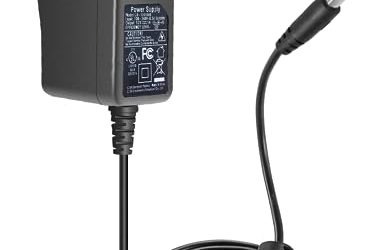
The DEWENWILS transformer is the only pick here that switches itself on and off, thanks to a built-in photocell sensor and countdown timer, so it suits patio owners who want the lights to glow at dusk and go dark on their own. It converts household 120-volt AC to 12-volt DC at up to 60 watts, which covers most single low-voltage string runs, and its molded weatherproof body mounts on a wall through a built-in hanging hole. The 3.3-foot power cable keeps the unit close to the outlet, so plan the mount point before you hang the string.
Specs
- Input: 120V AC
- Output: 12V DC, up to 60W
- Timer and photocell light sensor with dusk-to-dawn operation
- Weatherproof molded body
- 3.3-foot power cable
- Built-in hanging hole for wall mounting
- ETL Listed
- Model: TLA-60-12DW
- Not for halogen lights
Best for: A patio string that switches itself on at dusk and off on a timer.
Watch out for: Confirm your string lights run on 12V DC and draw under 60 watts in total, and note the listing says this transformer is not for halogen lights.
inShareplus 12V 300W IP67 Waterproof Power Supply
The inShareplus 300-watt driver is the heavy lifter of this guide, built for long runs and future growth rather than a single short string. It takes a wide 80 to 265-volt AC input and delivers 12 volts DC at up to 25 amps, so it can feed several strings wired in parallel or one very long run across a big garden. The sealed IP67 housing and 3-prong plug suit a permanent outdoor mount, and the 3.3-foot cable keeps the connection short. Buy this one when the total wattage of your lights is already past 100 watts or you plan to add more.
Specs
- Input: AC 80-265V
- Output: DC 12V, 25A
- Maximum power: 300W
- Waterproof: IP67
- 3-prong plug
- 3.3-foot cable
- Designed for outdoor use
- Model: 12V 300W
Best for: Long garden runs and several low-voltage strings wired in parallel.
Watch out for: 300 watts is far more than one short string needs, and the output ends in wires rather than a barrel jack, so plan weatherproof connectors for the join.
LEDwholesalers 12V 60W IP68 Waterproof Driver

The LEDwholesalers driver is the quiet workhorse pick: a compact 60-watt unit with the deepest water protection in this guide, IP68, which means the sealed housing tolerates immersion as well as rain. It delivers 12 volts DC at up to 5 amps through a standard 3-prong plug, a simple setup for one string of modest length on a porch or balcony. There is no timer or dimmer, so it suits buyers who already switch their lights with an outdoor timer or a smart plug. Its small size also tucks neatly behind a planter or post.
Specs
- Output: 12V DC
- Output current: 5A at full load
- Output power: 60W
- Waterproof: IP68
- 3-prong plug
- Model: 3204
Best for: One short string on a porch or balcony where rain can pool around the driver.
Watch out for: The 5-amp, 60-watt ceiling is firm, so add up your string wattage first and confirm the 3-prong plug fits your outdoor outlet.
Karyoosi 12V 60W IP67 Waterproof LED Driver

The Karyoosi driver covers the same 60-watt, 12-volt, 5-amp brief as the LEDwholesalers unit, but with a longer 4.9-foot cable that reaches an outlet farther from the first bulb. Its IP67 sealed housing and 3-prong plug suit a patio or garden wall, and the wide 110 to 265-volt AC input tolerates the voltage swings of an older outdoor circuit. It is a constant-voltage driver with no timer or dimmer, so pair it with an outdoor timer if you want the lights to switch off. The extra cable length is the reason to pick it over a shorter-lead rival.
Specs
- Input: 110-265V AC
- Output: 12V DC, 5A
- Maximum power: 60W
- Waterproof: IP67
- 3-prong plug
- 4.9-foot cable
- Model: 12V60W
Best for: A single 12-volt string whose outlet sits a step farther from the first bulb.
Watch out for: Check the DC plug size against your string connector before ordering, and remember the 60-watt ceiling when adding a second string.
NIYIPXL 120W IP67 Waterproof LED Driver
The NIYIPXL 120-watt driver sits in the middle of this guide: twice the headroom of the 60-watt picks, without the bulk or the wiring job of the 300-watt unit. It converts 100 to 260-volt AC to 12 volts DC at up to 10 amps, and its fully encapsulated IP67 housing is built to live outside in rain and cold, with a working range down to minus 40 degrees. The listing notes a full-load burn-in test on every unit, which is a useful sign for a driver that will run for hours every evening. It suits a long single run or two strings joined together.
Specs
- Input: 100-260V AC, 50/60Hz
- Output: 12V DC, 10A
- Maximum power: 120W
- Waterproof: IP67, fully encapsulated
- 100% full load burn-in test
- Efficiency: 87%
- Dimensions: 7.72 x 2.71 x 1.65 inches
- Weight: 1.51 pounds
- Working temperature: -40 to +50 degrees Celsius
Best for: A long single run, or two 12-volt strings joined together, with headroom to spare.
Watch out for: The listing gives no plug-and-play barrel jack, so confirm how the output wires connect to your lights before ordering.
Which One Fits Your Situation
A patio string you want to switch itself on and off
Pick the DEWENWILS transformer. Its photocell sensor turns the lights on at dusk and its countdown timer turns them off again, so the string needs no attention once it is hung. The 60-watt ceiling covers most single low-voltage strings, and the weatherproof body mounts on the wall beside the patio. If your string draws more than 60 watts, step up to the NIYIPXL instead and add a separate outdoor timer.
A long run across a big garden or deck
Pick the inShareplus 300-watt driver. Its 25-amp output feeds several strings wired in parallel or one very long run, and the sealed IP67 housing survives rain through the season. Keep the total load under 300 watts with headroom to spare, and put every wire joint in a weatherproof box. The NIYIPXL 120-watt driver is the fallback when the total stays under 100 watts and you want a smaller unit.
A single short string on a porch or balcony
Pick the LEDwholesalers 60-watt driver or the Karyoosi 60-watt driver. Both deliver 12 volts at 5 amps in a sealed housing, which is plenty for one modest string. Choose the LEDwholesalers unit for the deepest water protection, IP68, when the driver may sit where rain pools. Choose the Karyoosi unit when the outlet sits farther from the first bulb, since its 4.9-foot cable gives you the extra reach.
A permanent install you may extend later
Pick the NIYIPXL 120-watt driver. Its 10-amp output leaves room to join a second string later without swapping the driver, and the fully encapsulated housing is built for year-round outdoor life. Mount it on a wall with the cable entries pointing down, and leave slack in the cable for the drip loop. If the plan grows past 120 watts, the inShareplus 300-watt driver is the next step up.
Common Mistakes
- Buying an indoor adapter for an outdoor string and watching it fail in the first rain.
- Matching the plug shape but not the voltage, so a 12-volt string meets a 24-volt driver.
- Sizing the adapter to the exact wattage of the string, with no headroom for heat or a second string.
- Leaving plugs and splices exposed to rain instead of housing them in a weatherproof box.
- Forgetting to measure the cord run from the outlet to the first bulb before ordering.
Frequently Asked Questions
What size power supply do I need for outdoor string lights?
Add up the wattage of every bulb on the string, then choose an adapter rated at least twenty percent higher. A 48-watt string needs a 60-watt adapter, and a 90-watt run needs 120 watts. The voltage must match exactly: a 12-volt string needs a 12-volt driver. Check the bulb count and the watts per bulb on the string listing before you order.
Can I use an indoor power adapter outside?
No. Indoor adapters have vents and unsealed cases that let rain and damp inside, which can short the unit or trip the circuit. Use a sealed driver rated IP65 or better, mount it off the ground, and house every plug and splice in a weatherproof box. Even a sealed driver should sit under an eave or on a wall rather than in a puddle.
Do outdoor string lights need a timer?
They do not need one, but a timer or photocell sensor makes life easier and saves energy. A photocell switches the lights on at dusk and off at dawn, while a countdown timer turns them off at a set hour. The DEWENWILS transformer in this guide has both built in. With a plain driver, add an outdoor timer or a smart plug between the outlet and the adapter.
Why do my string lights dim at the far end?
Dimming at the far end usually means voltage drop along a long cable run or an adapter that is too small for the total load. First check the adapter size against the total wattage of the string. If the adapter has headroom, shorten the run, split the string across two drivers, or move the driver closer to the middle of the run so both halves share the cable length.