- Top Pick: Adobe Lightroom 1TB | AI-assisted photo editor | 12-Month Subscription with auto-renewal |PC/Mac | Digital Download
- Best Value: PhotoPad Photo Editing and Image Editor Free [PC Download]
- Premium Choice: Photo Suite – Photo Editing Software: Edit and Retouch Photos, Create Effects & Collages for Windows 11 and 10
🛒 Best Price Today on Amazon
Prime members get fast, free shipping on everything above, plus member-only deals. New members get a 30-day free trial — cancel anytime.
- Top Motherboards Photo Editing Picks for 2026
- Best Motherboards for Photo Editing at a Glance
- 1. GIGABYTE Z790 AORUS Elite AX LGA 1700 ATX Motherboard, Intel Core 14th/13th
- 2. MSI MAG B650 Tomahawk WiFi Gaming Motherboard, AMD Ryzen 9000/8000/7000
- 3. MSI MAG B550 Tomahawk Gaming Motherboard, AMD Ryzen 5000 Series, AM4, DDR4
- 4. ASUS ROG Strix Z390-E Gaming Motherboard, LGA1151, Intel 8th/9th Gen, ATX DDR4
- 5. GIGABYTE B550 AORUS Elite AX V2 AMD AM4 ATX Motherboard, Ryzen 5000/4000
- 6. MSI B550M PRO-VDH WiFi ProSeries Motherboard, AMD Ryzen 5000, AM4, DDR4 (microATX)
- How to Choose a Motherboard for Photo Editing
- Frequently Asked Questions
- Related Guides
- Related Articles
- Related Guides
Top Motherboards Photo Editing Picks for 2026
Here are our current top motherboards photo editing picks, compared on real Amazon owner reviews, price, and features. Live prices update below.
As an Amazon Associate we earn from qualifying purchases at no extra cost to you.

![PhotoPad Photo Editing and Image Editor Free [PC Download]](https://m.media-amazon.com/images/I/51Z1W5q6pVL._SL160_.jpg)


Photo editing is a memory- and storage-hungry workflow, and the motherboard is what ties those resources together. Editing large RAW files, layering high-resolution images, and running a catalogue alongside your editor all demand plenty of RAM capacity and fast storage, while importing from cameras and card readers leans on quick, plentiful USB ports. The board you choose sets the ceiling for how much memory you can install, how many fast M.2 SSDs you can run, and what connectivity you have for peripherals and offload. This guide rounds up the best motherboards for photo editing in 2026, judged on the things a photographer’s PC actually needs.
Our picks were chosen on what genuinely supports an editing workflow: maximum RAM capacity and memory support, the number and speed of M.2 storage slots, USB port count and speed, and connectivity such as Wi-Fi and high-speed I/O. We note where a board offers Thunderbolt-class or high-bandwidth USB-C for fast external offload, and we are clear that most mainstream boards rely on fast USB rather than dedicated Thunderbolt. Prices span from around $99 up to around $400. We avoid invented numbers and describe each board’s real capabilities. Below is an at-a-glance comparison of all six, then a closer look at each and a buyer’s guide built around memory, storage and I/O.
Best Motherboards for Photo Editing at a Glance
| Motherboard | Best For | Standout Spec | Approx Price |
|---|---|---|---|
| GIGABYTE Z790 AORUS Elite AX | High-capacity Intel editing | DDR5, multi M.2, Wi-Fi 6E | around $190 |
| MSI MAG B650 Tomahawk WiFi | Modern AMD editing build | DDR5, PCIe 5 M.2, USB-C | around $160 |
| MSI MAG B550 Tomahawk | Balanced AMD value | DDR4, dual M.2, robust USB | around $160 |
| ASUS ROG Strix Z390-E Gaming | Feature-rich Intel platform | Strong I/O, DisplayPort, dual M.2 | around $400 |
| GIGABYTE B550 AORUS Elite AX V2 | Wi-Fi AMD value board | DDR4, dual M.2, Wi-Fi | around $140 |
| MSI B550M PRO-VDH WiFi (mATX) | Compact budget editing | DDR4, M.2, Wi-Fi, microATX | around $100 |
1. GIGABYTE Z790 AORUS Elite AX LGA 1700 ATX Motherboard, Intel Core 14th/13th
The GIGABYTE Z790 AORUS Elite AX is the high-capacity Intel pick and our top choice for photo editing. As a Z790 ATX board for 13th/14th-gen Intel Core chips, it supports high-capacity DDR5 memory, provides multiple fast M.2 slots for storage, and includes Wi-Fi 6E and a generous USB array. At around $190 it is a well-rounded, editing-focused foundation.
For a photographer this board hits the priorities squarely. Its DDR5 support lets you install a large memory pool to keep big RAW files and a catalogue responsive, the multiple M.2 slots let you run a fast scratch/cache drive alongside your OS and a photo library on separate SSDs, and the plentiful high-speed USB ports — including USB-C — make importing from cameras and card readers quick. Wi-Fi 6E adds flexible connectivity for backups and cloud sync. For a high-capacity, storage-rich Intel editing platform, the Z790 AORUS Elite AX is the standout.
Pros: High-capacity DDR5, multiple fast M.2 slots, generous high-speed USB including USB-C, Wi-Fi 6E.
Cons: Mainstream high-bandwidth USB-C rather than dedicated Thunderbolt; premium DDR5 platform cost.
2. MSI MAG B650 Tomahawk WiFi Gaming Motherboard, AMD Ryzen 9000/8000/7000

MSI MAG B650 Tomahawk WiFi Gaming Motherboard (AMD Ryzen 9000/8000/7000 Series Processors, AM5, DDR5, PCIe 4.0, M.2, SATA 6Gb/s, USB 3.2 Gen 2, HDMI/DP, Wi-Fi 6E, Bluetooth 5.3, 2.5Gbps LAN, ATX)


As an Amazon Associate we earn from qualifying purchases. Product prices and availability are accurate as of the date/time indicated.
The MSI MAG B650 Tomahawk WiFi is the modern AMD pick. This B650 board for current Ryzen 7000/8000/9000 chips supports high-capacity DDR5 memory, includes PCIe 5.0-capable M.2 storage and several M.2 slots, and pairs strong USB connectivity — including USB-C — with built-in Wi-Fi. At around $160 it is a well-equipped, future-looking editing foundation on AM5.
For an editing build this board delivers where it counts. DDR5 support enables a large, fast memory pool for handling big images and catalogues, the fast PCIe-based M.2 slots let you dedicate separate SSDs to OS, cache and photo library for snappy file access, and the robust USB layout with USB-C speeds up camera and card-reader imports. Integrated Wi-Fi keeps it flexible for backups. As a modern, high-capacity AM5 board with strong storage and connectivity for photographers, the B650 Tomahawk WiFi is an excellent, well-priced choice.

Pros: DDR5 high-capacity support, fast PCIe M.2 storage, robust USB with USB-C, built-in Wi-Fi.
Cons: Uses fast USB-C rather than dedicated Thunderbolt; newer DDR5 platform pricing.
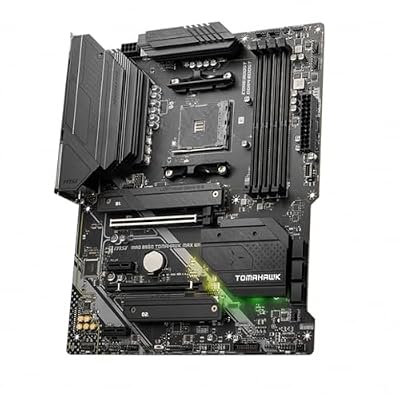
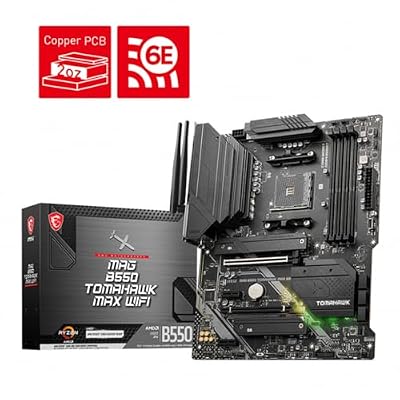
3. MSI MAG B550 Tomahawk Gaming Motherboard, AMD Ryzen 5000 Series, AM4, DDR4

MSI MAG B550 Tomahawk MAX WiFi Gaming Motherboard (AMD Ryzen 5000 Series, AM4, DDR4, PCIe 4.0, SATA 6Gb/s, M.2, USB 3.2 Gen 2, HDMI/DP, Wi-Fi 6E, Bluetooth 5.2, 2.5Gbps LAN, ATX)



As an Amazon Associate we earn from qualifying purchases. Product prices and availability are accurate as of the date/time indicated.
The MSI MAG B550 Tomahawk is the balanced AMD value pick. A long-time favorite B550 board for Ryzen 5000 chips, it supports a healthy capacity of DDR4 memory, provides dual M.2 slots with PCIe 4.0 support, and offers a robust set of USB ports. At around $160 it is a dependable, well-rounded base for an editing PC that uses cost-effective DDR4.
For a photographer on the proven AM4 platform, this board covers the essentials strongly. Its DDR4 support allows a generous memory pool for comfortable RAW editing, the two M.2 slots let you split a fast cache drive from your OS or photo storage, and the solid USB selection handles camera imports and peripherals well. It is known for sturdy build quality and reliable VRMs. While it lacks the very latest DDR5 and Thunderbolt-class I/O, as a balanced, affordable editing board with dual M.2 and dependable USB, the B550 Tomahawk is an easy recommendation.
Pros: Healthy DDR4 capacity, dual PCIe 4.0 M.2 slots, robust USB selection, sturdy build.
Cons: DDR4 rather than DDR5; no Thunderbolt and standard high-speed USB only.
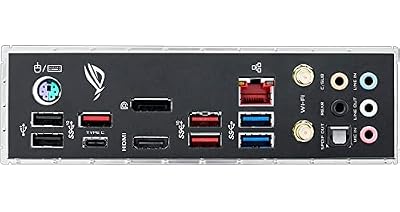
4. ASUS ROG Strix Z390-E Gaming Motherboard, LGA1151, Intel 8th/9th Gen, ATX DDR4

Asus ROG Strix Z390-E Gaming Motherboard LGA1151 (Intel 8th 9th Gen) ATX DDR4 DP HDMI M.2 USB 3.1 Gen2 802.11AC Wi-Fi


As an Amazon Associate we earn from qualifying purchases. Product prices and availability are accurate as of the date/time indicated.
The ASUS ROG Strix Z390-E Gaming is the feature-rich Intel pick from a previous platform. This Z390 ATX board for 8th/9th-gen Intel Core chips offers a strong I/O loadout, DDR4 memory support, dual M.2 slots and DisplayPort output, with ASUS’s well-regarded build quality. It is listed here at around $400, the premium price on this list.
For an editing PC built on the LGA1151 platform, the Z390-E brings a rich feature set: ample DDR4 capacity for a comfortable memory pool, dual M.2 slots to separate cache and storage drives, and a generous, fast USB array for imports and peripherals. ASUS’s strong VRM and build quality add reliability. Be aware, though, that it sits on an older Intel platform with a more limited upgrade path and uses DDR4 rather than DDR5, and its listed price is high — so weigh that against the newer Z790 and AM5 boards. As a feature-rich older-platform option, it remains a capable editing board.

Pros: Strong I/O and USB, dual M.2 slots, ample DDR4 support, ASUS build quality, DisplayPort.
Cons: Older LGA1151 platform with limited upgrades; DDR4 only and a high listed price.
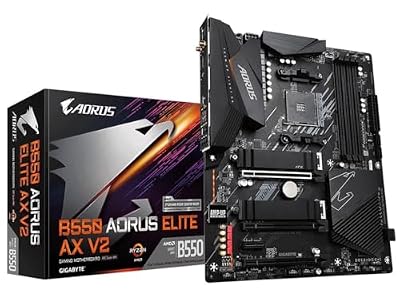
5. GIGABYTE B550 AORUS Elite AX V2 AMD AM4 ATX Motherboard, Ryzen 5000/4000
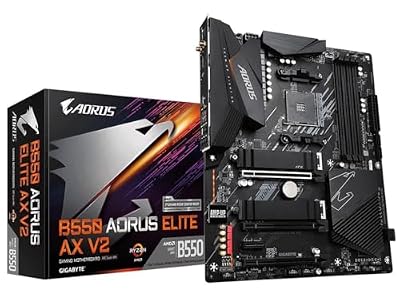
GIGABYTE B550 AORUS Elite AX V2 AMD AM4 ATX Motherboard, Supports Ryzen 5000/4000/3000 Processors, DDR4, 12+2 Power Phase, 2X M.2, PCIe 4.0, Front USB-C, WIFI6, 2.5 GbE LAN, Q-Flash Plus, RGB Fusion
As an Amazon Associate we earn from qualifying purchases. Product prices and availability are accurate as of the date/time indicated.
The GIGABYTE B550 AORUS Elite AX V2 is the Wi-Fi AMD value pick. This B550 ATX board for Ryzen 5000/4000 chips supports a solid capacity of DDR4 memory, includes dual M.2 slots, and adds built-in Wi-Fi for flexible connectivity, all at around $140 — making it one of the better-value full-ATX editing boards here.
For a photographer wanting a capable, affordable AM4 board with wireless, this fits well. The DDR4 support enables a generous memory pool for RAW editing and cataloguing, the dual M.2 slots let you run a fast cache drive separately from OS and photo storage, and the integrated Wi-Fi simplifies backups and cloud sync without an add-in card. The USB selection covers imports and peripherals. It uses DDR4 rather than DDR5 and relies on standard fast USB rather than Thunderbolt, but as a Wi-Fi-equipped, dual-M.2 value board for editing, the B550 AORUS Elite AX V2 is a smart, well-priced choice.
Pros: Solid DDR4 capacity, dual M.2 slots, integrated Wi-Fi, good full-ATX value.
Cons: DDR4 not DDR5; standard high-speed USB rather than Thunderbolt-class I/O.
6. MSI B550M PRO-VDH WiFi ProSeries Motherboard, AMD Ryzen 5000, AM4, DDR4 (microATX)

MSI B550M PRO-VDH WiFi ProSeries Motherboard (AMD Ryzen 5000, AM4, DDR4, PCIe 4.0, SATA 6Gb/s, M.2, USB 3.2 Gen 1, Wi-Fi, Bluetooth, D-SUB/HDMI/DP, Micro-ATX)


As an Amazon Associate we earn from qualifying purchases. Product prices and availability are accurate as of the date/time indicated.
Rounding out the list is the MSI B550M PRO-VDH WiFi, the compact budget pick. This microATX B550 board for Ryzen 5000 chips supports DDR4 memory, includes an M.2 slot for fast storage, and adds built-in Wi-Fi, all in a smaller form factor. At around $100 it is the most affordable board here and ideal for a compact editing system.
For a photographer building a small or budget-conscious editing PC, this board delivers the core needs. The DDR4 support still allows a useful memory pool for RAW work, the M.2 slot provides fast SSD storage for your OS and active projects, and integrated Wi-Fi keeps the compact build connected for backups. The microATX size suits smaller cases. It naturally has fewer M.2 slots and less expansion than the full-ATX boards, uses DDR4, and relies on standard USB rather than Thunderbolt — but for an affordable, space-saving editing foundation with Wi-Fi, the B550M PRO-VDH WiFi covers the essentials neatly.

Pros: Affordable microATX, DDR4 support, M.2 storage, built-in Wi-Fi, compact for small builds.
Cons: Fewer M.2 slots and expansion than ATX boards; DDR4 and standard USB only.
How to Choose a Motherboard for Photo Editing
Photo editing leans hard on memory, so RAM capacity and support are the first things to check on a motherboard. Editing large RAW files, stacking high-resolution layers and keeping a catalogue open all benefit from a big memory pool, so look at the board’s maximum supported capacity and memory generation. The DDR5 boards here — the Z790 AORUS Elite AX and B650 Tomahawk WiFi — support faster, higher-capacity modern memory, while the DDR4 boards still allow generous, cost-effective pools that comfortably handle most editing workloads. Make sure the board lets you install as much memory as your workflow needs.
Storage is the next priority, because editing throughput depends on fast SSDs and the slots to run them. Multiple M.2 slots let you separate your operating system, a fast scratch/cache disk, and your photo library across dedicated drives, which keeps imports, previews and exports snappy. The full-ATX boards here generally offer two or more M.2 slots — and the newer boards add PCIe 5.0-capable storage — while the compact microATX option has fewer. Prioritise a board with enough fast M.2 slots to give your photo workflow room to breathe.
Connectivity is what makes day-to-day importing and offload painless. A photographer constantly moves files from cameras, card readers and external drives, so a generous number of fast USB ports — ideally including high-speed USB-C — matters a great deal. A few high-end boards offer Thunderbolt-class connectivity for very fast external SSD offload, but be realistic: most mainstream boards on this list rely on fast USB and USB-C rather than dedicated Thunderbolt, which is perfectly capable for the vast majority of editing workflows. Built-in Wi-Fi, present on most picks here, also helps with backups and cloud sync.
Finally, weigh platform, form factor and budget together. Choose a current platform like Intel’s Z790 or AMD’s AM5 (B650) if you want DDR5 and the longest upgrade path, or a proven AM4 (B550) board for excellent DDR4 value. Match the form factor to your case — full ATX for maximum slots and expansion, microATX like the B550M PRO-VDH for a compact build — and set your budget. Confirm the RAM capacity, M.2 count and USB connectivity meet your editing needs, then pick the motherboard on this list that best fits your workflow and your camera kit.
Frequently Asked Questions
How much RAM capacity should a photo-editing motherboard support?
Aim for a board that lets you install a generous memory pool, because photo editing — large RAW files, layered images and an open catalogue — is memory-hungry. The DDR5 boards here, like the Z790 AORUS Elite AX and B650 Tomahawk WiFi, support faster, higher-capacity modern memory, while the DDR4 boards still allow large, cost-effective pools. Choose a board whose maximum supported capacity comfortably exceeds what your current workflow uses, so you have room to grow.
How many M.2 slots do I need for photo editing?
More than one is ideal. Multiple M.2 slots let you put your operating system, a fast scratch/cache drive and your photo library on separate SSDs, which keeps imports, previews and exports fast. The full-ATX boards here typically offer two or more M.2 slots — and newer boards add PCIe 5.0-capable storage — while the compact microATX B550M PRO-VDH has fewer. Pick a board with enough fast M.2 slots for the way you organise your files.
Do I need Thunderbolt on my motherboard for photo editing?
Not necessarily. Thunderbolt offers very fast external SSD offload and is a nice bonus, but most mainstream boards on this list — including the Tomahawk and AORUS models — rely on fast, plentiful USB and high-speed USB-C instead, which handles camera imports, card readers and external drives perfectly well for the vast majority of editing workflows. Prioritise a strong USB and USB-C loadout; treat Thunderbolt as a premium extra rather than a requirement.
Should I choose a DDR5 or DDR4 motherboard for a photo-editing build?
DDR5 boards like the Z790 AORUS Elite AX and B650 Tomahawk WiFi offer faster, higher-capacity modern memory and the longest upgrade path, which suits a high-end editing build. DDR4 boards such as the B550 Tomahawk and B550 AORUS Elite AX V2 still support large, capable memory pools at a lower platform cost and remain excellent value for editing. Choose DDR5 for future-proofing and peak memory performance, or DDR4 to save money while still meeting your workflow’s needs.
Related Guides
- Best Motherboards
- Best NVMe SSDs
- Best RAM Kits
- Best CPUs for Your Build
- Best Monitors for Content Creation
- Best PC Builds
Affiliate Disclosure: As an Amazon Associate, we earn from qualifying purchases. If you click a link and make a purchase, we may earn a small commission at no extra cost to you. Prices and availability are accurate as of publication and may change.