

- Top Pick: SANSUI 34-Inch Curved Gaming Monitor UWQHD 3440 x 1440P 200Hz Ultrawide
- Best Value: Amzfast 24.5 Inch 280Hz/240Hz Gaming Monitor FHD 1080p Monitor, 1ms Adaptive Sync, 3000:1, 126% sRGB, 93% DCI-P3, TÜV Rheinland Eye Care, HDMI 2.0 x 2 & DP 1.4 x 2, AMZG25X1 Pro
- Premium Choice: LG 32U701SB-B 32-inch Smart 4K UHD webOS 26 60Hz HDR10 Computer Monitor
Let’s be honest up front: there is no such thing as an ‘AI monitor.’ No display accelerates training, runs a model, or does anything AI-specific — that work happens on your GPU and CPU. What people really mean when they search for the best monitor for AI is a great display for AI-related work: writing and testing code, juggling prompts and outputs, reading long documents and logs, and keeping dashboards, notebooks and a chat window all in view at once. That is a high-resolution, roomy, multi-window job, and this guide rounds up the monitors that do it best in 2026 — treating ‘best for AI’ as ‘best for the developer and data work that AI involves.’
- Best Monitors for AI Work at a Glance
- 1. SANSUI 32-inch Curved Gaming Monitor, High Refresh Rate FHD 1080P
- 2. SANSUI Curved Monitor 27 inch 120Hz USB Type-C with Speakers
- 3. SANSUI 34-Inch Curved Monitor UWQHD 3440 x 1440P, Up to 200Hz / 165Hz
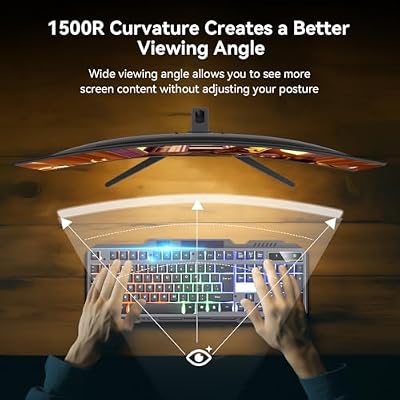
- 4. SANSUI 27 Inch Curved 240Hz Gaming Monitor FHD 1080P, 1500R Curve
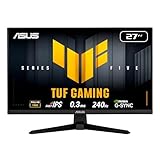
- 5. ASUS TUF 32 Inch Curved Gaming Monitor – QHD 2560 x 1440, 165Hz
- 6. SANSUI 34 Inch 240Hz Ultrawide Curved Monitor UWQHD 3440×1440, 21:9 2K
- How to Choose a Monitor for AI Work
- Frequently Asked Questions
- Related Guides
- Related Articles
Our picks were chosen on what genuinely helps with AI and data work: resolution and text clarity for reading code and outputs, screen real estate and ultrawide or large-format space for many windows, multi-display flexibility, and value. We have led with the displays best suited to a serious AI workstation and worked toward the crossover options, with prices from around $110 up to around $285. The list spans sharp QHD and UWQHD panels, large multi-window screens and a USB-C laptop-friendly option. Below is an at-a-glance comparison, then a closer look at each and an honest buyer’s guide built around resolution, screen space and multi-display setups — what actually makes AI work more comfortable.
As an Amazon Associate we earn from qualifying purchases at no extra cost to you. Product prices and availability are accurate as of the date shown and are subject to change.




🛒 Best Price Today on Amazon
Prime members get fast, free shipping on everything above, plus member-only deals. New members get a 30-day free trial — cancel anytime.
Best Monitors for AI Work at a Glance
| Monitor | Best For | Standout Spec | Approx Price |
|---|---|---|---|
| SANSUI 32-inch Curved FHD | Big multi-window canvas | 32-inch, generous real estate | around $180 |
| SANSUI 27-inch USB-C with Speakers | Laptop AI workstation | USB-C one-cable, speakers | around $110 |
| SANSUI 34-inch Curved UWQHD | Ultrawide notebook + chat | 3440×1440 ultrawide | around $216 |
| SANSUI 27-inch Curved 240Hz FHD | Compact crossover panel | 27-inch, fast refresh | around $129 |
| ASUS TUF 32-inch Curved QHD 165Hz | Big sharp QHD canvas | 32-inch QHD, 2560 x 1440 | around $285 |
| SANSUI 34-inch 240Hz Ultrawide UWQHD | Sharp ultrawide data view | 3440×1440 21:9, sharp | around $250 |
1. SANSUI 32-inch Curved Gaming Monitor, High Refresh Rate FHD 1080P

SANSUI 32 Inch Curved 240Hz Gaming Monitor High Refresh Rate, FHD 1080P




As an Amazon Associate we earn from qualifying purchases. Product prices and availability are accurate as of the date/time indicated.
The SANSUI 32-inch curved leads the list as the big multi-window pick for AI and data work. It is a large 32-inch curved Full HD panel — marketed for gaming, but its real value here is the room to arrange a lot of windows at once. At around $180 it gives you a wide, immersive canvas to keep a code editor, a chat or prompt window and a results pane all visible together without constant alt-tabbing.
For AI work the appeal is window management. Much of the day is spent moving between a prompt, the model’s output, a terminal and documentation, and a 32-inch screen lets you lay several of those side by side; the curve keeps the wide edges in comfortable view. Be honest about the trade-off: at 1080p across 32 inches, fine text is softer than on a QHD panel, so it favors layout space over pixel-sharp characters. If you want the most affordable way to get a big, single-surface canvas for multi-window AI work, it delivers generous room.
Pros: Large single-surface canvas for many windows, immersive curve, affordable big screen.
Cons: 1080p across 32 inches makes fine text softer; a gaming-first panel, not AI-specific.
2. SANSUI Curved Monitor 27 inch 120Hz USB Type-C with Speakers

SANSUI Curved Monitor 27 inch 120Hz USB Type-C Computer Monitor


As an Amazon Associate we earn from qualifying purchases. Product prices and availability are accurate as of the date/time indicated.
The SANSUI 27-inch USB-C is the laptop AI-workstation pick. Plenty of AI and data work happens on a laptop, and this 27-inch curved 120Hz panel with USB Type-C and built-in speakers turns one into a comfortable desk setup over a single cable. At around $110 it is a tidy, well-equipped display for anyone running notebooks, prompts and dashboards from a portable machine.
For AI work the USB-C connectivity is the standout. One cable to your laptop carries video and, on supported machines, charging power, so you dock into a larger screen and undock again with a single connection — ideal when your actual compute lives in the laptop or a cloud GPU and the monitor is purely your window onto it. The 27-inch size gives room for a notebook beside a chat window, the built-in speakers cover calls, and the curve adds comfort. As a clean, laptop-friendly display for AI and data tasks, it is a smart pick.
Pros: Single-cable USB-C for laptops, comfortable 27-inch curve, built-in speakers, smooth 120Hz.
Cons: USB-C power delivery depends on your laptop; 1080p detail is modest for dense data.
3. SANSUI 34-Inch Curved Monitor UWQHD 3440 x 1440P, Up to 200Hz / 165Hz

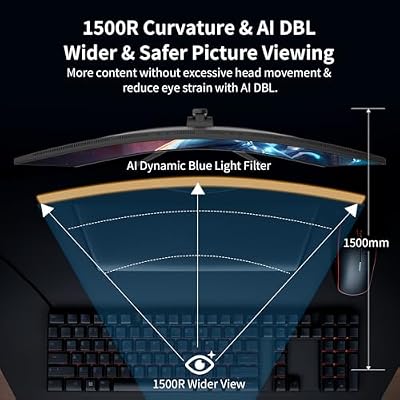
SANSUI 34-Inch Curved Gaming Monitor UWQHD 3440 x 1440P Up to 200Hz Curved 1500R - PIP/PBP, OD 1ms, HDR, 300nits, sRGB 130%, DCI-P3 97%,AI Crosshair,HDMI2.1x2,DP1.4(Cable Included)



As an Amazon Associate we earn from qualifying purchases. Product prices and availability are accurate as of the date/time indicated.
The SANSUI 34-inch curved ultrawide is the notebook-and-chat powerhouse pick for AI work, and one of the most practical shapes for it. It is a 34-inch UWQHD (3440 x 1440) 21:9 curved panel, pairing a wide canvas with a sharper-than-1080p resolution that keeps text and data crisp. At around $216 it is a premium option, and the ultrawide format is exactly why it suits AI workflows so well.
For AI and data work an ultrawide is a natural fit. The 21:9 width lets you place a code editor or notebook beside a model’s chat output, or a dashboard next to a terminal, without a bezel splitting your attention, and the 3440 x 1440 resolution keeps dense text, tables and logs sharp across the whole panel. The gentle curve keeps the far edges comfortably in view through long sessions. For split-screen prompting, reviewing outputs and watching data side by side with no center bezel, the SANSUI 34-inch ultrawide is the standout.
Pros: Wide 21:9 canvas for editor-plus-output, sharp UWQHD text for dense data, comfortable curve.
Cons: Pricier than 1080p panels; the very wide format is more than casual users need.
4. SANSUI 27 Inch Curved 240Hz Gaming Monitor FHD 1080P, 1500R Curve

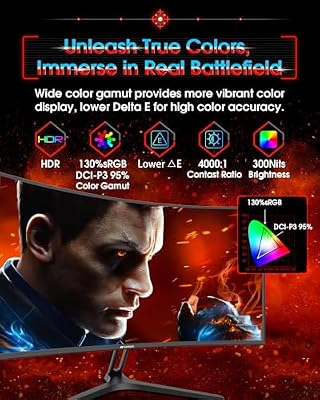
SANSUI 27 Inch Curved 240Hz Gaming Monitor FHD 1080P, 1500R Curve Computer Monitor, 130% sRGB, 4000:1 Contrast, HDR, FreeSync, MPRT 1Ms, Low Blue Light, HDMI DP Ports, Metal Stand, Cable Incl.




As an Amazon Associate we earn from qualifying purchases. Product prices and availability are accurate as of the date/time indicated.
The SANSUI 27-inch curved is the compact crossover pick — a display for the AI enthusiast who also games. It is a 27-inch Full HD curved monitor with a fast 240Hz refresh rate; that speed is aimed squarely at gaming, but the 27-inch size makes it a perfectly usable everyday screen for prompting and data work too. At around $129 it is an affordable do-it-all panel for a desk that pulls double duty.
For AI work, treat it as a capable general-purpose display rather than a specialist tool. The 27-inch size gives reasonable room for a chat window beside a notebook or terminal, and it works well as one half of a dual-monitor setup. Be candid about the limits: at 1080p the text is softer than a QHD or UWQHD panel, which matters when you are reading dense outputs or tables, and the deep curve is a personal preference. But if you want one monitor that handles AI and data tasks by day and fast gaming by night without spending much, this SANSUI fits the bill.
Pros: Affordable crossover, usable 27-inch size for prompting, fast refresh for gaming downtime.
Cons: 1080p text is softer for dense data; the deep curve is not for everyone, not AI-specific.
5. ASUS TUF 32 Inch Curved Gaming Monitor – QHD 2560 x 1440, 165Hz

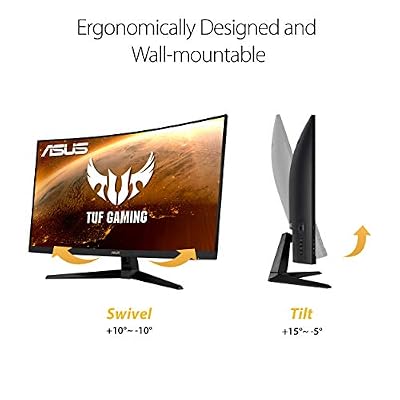
ASUS TUF 32 Inch Curved Gaming Monitor - QHD (2560 x 1440), 165Hz (Supports 144Hz), 1ms, Extreme Low Motion Blur, Speaker, FreeSync Premium, VESA Mountable, DisplayPort, HDMI - VG32VQ1B




As an Amazon Associate we earn from qualifying purchases. Product prices and availability are accurate as of the date/time indicated.
The ASUS TUF 32-inch curved is the big-and-sharp pick, combining a large canvas with a higher resolution. It is a 32-inch QHD (2560 x 1440) curved panel running at 165Hz, so unlike the 1080p 32-inch options it pairs generous screen area with the pixel density to keep text crisp. At around $285 it is the premium option here, and the QHD-on-32-inches combination is the reason why.
For AI work this hits a strong balance of space and clarity. The 32-inch size gives plenty of room to arrange a notebook, a chat window, a terminal and a dashboard, while the QHD resolution keeps all that dense text and data sharp and readable rather than soft — a real advantage over a same-size 1080p panel when you are reading code, tables and outputs for hours. The curve keeps the wide edges in view, and the trusted ASUS build inspires confidence. The 165Hz refresh is a gaming bonus you will not need for AI, but for a big, sharp multi-window canvas, the ASUS TUF 32-inch is the standout.
Pros: Large 32-inch canvas with sharp QHD text, room for many windows, trusted ASUS build.
Cons: Most expensive here; the 165Hz refresh is unnecessary for AI and data work.
6. SANSUI 34 Inch 240Hz Ultrawide Curved Monitor UWQHD 3440×1440, 21:9 2K

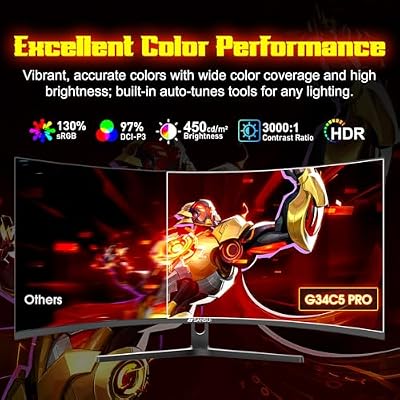
SANSUI 34 Inch Curved Monitor 240Hz UWQHD 3440×1440 Gaming Monitor




As an Amazon Associate we earn from qualifying purchases. Product prices and availability are accurate as of the date/time indicated.
Rounding out the list is the SANSUI 34-inch 240Hz ultrawide, the sharp-data ultrawide pick. It is a 34-inch UWQHD (3440 x 1440) 21:9 curved panel — like the other SANSUI ultrawide here, it pairs a wide canvas with a sharper-than-1080p resolution that keeps dense text and tables readable. At around $250 it is a premium ultrawide built for spreading work across a wide, clear surface.
For AI and data work the ultrawide shape is the draw, and the resolution makes it usable. The 21:9 width is ideal for placing a notebook or editor beside a model’s output, or a wide data table next to a chat window, all without a center bezel breaking your view, and the 3440 x 1440 resolution keeps that dense content crisp. The high refresh rate is a gaming feature you will not need for data work, but it does no harm. For a sharp, wide, no-bezel canvas to review outputs and data side by side, this SANSUI ultrawide rounds out the list strongly.
Pros: Wide 21:9 no-bezel canvas, sharp UWQHD text for dense data, immersive curve.
Cons: Premium price; the high refresh rate is wasted on AI and data work.
How to Choose a Monitor for AI Work
First, set expectations honestly: no monitor makes AI faster. Training, inference and data processing all run on your GPU and CPU — the display simply shows the work. So ‘best monitor for AI’ really means the best display for the developer and data tasks AI involves: reading code and outputs, juggling prompts and results, and keeping notebooks, dashboards and a chat window in view. Judge these monitors on resolution, screen space and arrangement, not on any imaginary AI feature, and ignore marketing that suggests otherwise.
Resolution and text clarity come first, because AI and data work is dense and text-heavy. A higher-resolution panel like the QHD ASUS TUF 32-inch or the UWQHD SANSUI ultrawides packs more pixels into the same space, so code, tables, logs and outputs stay sharp and readable rather than soft. Crisp text reduces fatigue when you are reading model outputs and dense data for hours, so favour resolution over a same-size 1080p panel if your work involves a lot of reading and review.
Screen real estate and multi-window space are the next priority, because AI work means watching several things at once. A large 32-inch panel or a 21:9 ultrawide like the SANSUI 34-inch models lets you place a notebook or editor beside a chat output, a dashboard next to a terminal, without a bezel breaking your view. Ultrawides are especially good for split-pane layouts. Decide whether you want one big or wide canvas, or a multi-monitor setup, and choose the screen area that matches how many windows you keep open.
Finally, weigh connectivity, comfort and budget, and skip the specs you will not use. A high refresh rate, common on these gaming-derived panels, does nothing for AI or data work, so only value it if you also game — spend on resolution and screen space instead. USB-C, as on the SANSUI 27-inch, simplifies a laptop or cloud-GPU workflow to a single cable. Match the panel to how you actually work — a big sharp QHD or ultrawide for dense multi-window review, or a tidy USB-C panel for a laptop setup — and pick the display on this list that fits your AI and data workflow, with no illusions about magic hardware.
Frequently Asked Questions
Is there really such a thing as a monitor ‘for AI’?
No. No display accelerates training, runs a model, or does anything AI-specific — that work happens on your GPU and CPU. ‘Best monitor for AI’ really means the best display for the developer and data work AI involves: reading code and outputs, managing prompts, and keeping notebooks, dashboards and chat windows in view. Judge a monitor on resolution, screen space and arrangement, and ignore any marketing that claims an AI-specific benefit.
What monitor specs actually matter for AI and data work?
Resolution, screen real estate and multi-window flexibility. A sharp QHD or UWQHD panel like the ASUS TUF 32-inch or the SANSUI ultrawides keeps dense text, tables and outputs readable, while a large or ultrawide canvas lets you watch a notebook, a chat output and a terminal at once. Refresh rate and gaming features do nothing for AI work, so prioritise a sharp, roomy display over speed.
Is an ultrawide monitor good for AI development?
Very. The 21:9 width of an ultrawide like the SANSUI 34-inch models is ideal for placing a code editor or notebook beside a model’s output, or a wide data table next to a chat window, all without a center bezel breaking your view. The UWQHD resolution keeps that dense content sharp. For split-screen prompting, reviewing outputs and watching data side by side, an ultrawide is one of the most practical shapes you can buy.
Can I use a gaming monitor for AI and data work?
Absolutely — many of the best displays for AI work are gaming-derived panels, since they offer large or ultrawide canvases at good prices. Just choose based on resolution and screen space rather than refresh rate: a sharp QHD or UWQHD panel like the ASUS TUF 32-inch or the SANSUI ultrawides is excellent for reading code and data, while the high refresh rate is simply a gaming bonus you will not use for AI tasks.
Related Guides
- Best Monitors
- Best 4K Monitors for Sharp Detail
- Best Ultrawide Monitors
- Best GPUs for AI and Machine Learning
- Best PCs for AI Workloads
- Best Monitor Arms for Multi-Display
Affiliate Disclosure: As an Amazon Associate, we earn from qualifying purchases. If you click a link and make a purchase, we may earn a small commission at no extra cost to you. Prices and availability are accurate as of publication and may change.
Ready to decide? Our #1 pick for 2026 is the SANSUI 32-inch Curved FHD.
Live price & availability on Amazon.


