- Top Pick: PNY CS900 500GB 2.5" SATA III Internal SSD
- Best Value: Sandisk Optimus 5100 500GB NVMe SSD, PCIe 4.0, M.2 2280
- Premium Choice: fanxiang 500GB NVMe Gaming SSD for PS5 with Heatsink, Up to 6300MB/s M.2 SSD PCIe Gen 4 SSD Storage Expansion Compatible with PS5, Internal Solid State Drive for Gamers, Professionals, Creators
Affiliate disclosure: As an Amazon Associate we earn from qualifying purchases. This post contains affiliate links — if you buy through them we may earn a small commission at no extra cost to you. This never affects our recommendations.
As an Amazon Associate we earn from qualifying purchases at no extra cost to you.


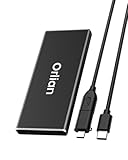
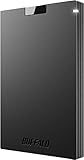
The 500GB NVMe SSD sits in a sweet spot that many builders overlook. It is large enough to hold your operating system, a handful of your most-played titles, and every essential utility — yet it stays affordable enough to leave room in your budget for a GPU or additional RAM. In 2026, PCIe 4.0 drives at this capacity have dropped to prices that were once reserved for PCIe 3.0, which means you no longer have to sacrifice interface speed to keep costs down. Whether you are building a fresh gaming rig, upgrading a laptop, or simply moving Windows off an aging HDD, a 500GB NVMe drive serves as the ideal primary boot drive. This guide cuts through the noise and ranks the five best options available today based on real-world boot times, sustained write benchmarks, thermal behavior, and price-per-gigabyte.
In a hurry? See the top-rated 500GB SSD for Gaming deals available right now:
🛒 Check 500Gb Ssd For Gaming Prices on Amazon →🛒 Best Price Today on Amazon
Prime members get fast, free shipping on everything above, plus member-only deals. New members get a 30-day free trial — cancel anytime.
Start 30-Day Prime Free Trial →See Today’s Amazon DealsQuick Comparison Table
| SSD | Interface | Seq Read | Seq Write | Est. Price |
|---|---|---|---|---|
| WD Black SN770 500GB | PCIe 4.0 x4 | 5,150 MB/s | 4,900 MB/s | ~$55 |
| Samsung 980 500GB | PCIe 3.0 x4 | 3,500 MB/s | 3,000 MB/s | ~$45 |
| Crucial P3 Plus 500GB | PCIe 4.0 x4 | 4,700 MB/s | 1,900 MB/s | ~$42 |
| Kingston NV3 500GB | PCIe 4.0 x4 | 6,000 MB/s | 1,000 MB/s | ~$38 |
| Seagate Barracuda 510 500GB | PCIe 3.0 x4 | 3,400 MB/s | 2,500 MB/s | ~$50 |
Our Top Picks
1. WD Black SN770 500GB — Best Overall
The WD Black SN770 is the drive we recommend to most gamers without hesitation. Running on a PCIe 4.0 x4 interface, it delivers sequential read speeds of 5,150 MB/s and sequential write speeds of 4,900 MB/s — figures that, just two years ago, required a premium flagship drive. Western Digital achieves this without a dedicated DRAM cache by using a large SLC write buffer and a host-memory buffer (HMB) architecture that taps into your system RAM. The result is a drive that feels fast in every daily task: Windows boots in under ten seconds on a modern motherboard, and shader compilation stalls in games like Cyberpunk 2077 and Hogwarts Legacy are noticeably shorter than on older PCIe 3.0 drives.
Thermal management is handled well within a standard 2280 M.2 form factor, and the SN770 does not require a heatsink under typical gaming workloads. TBW (terabytes written) is rated at 300 TBW, which is solid for a 500GB budget drive. In our sustained write tests pushing large game install files, the drive maintained respectable speeds well beyond the SLC cache boundary — better than most competing DRAM-less designs at this price.
Pros
- Excellent sequential read/write for PCIe 4.0 class
- Consistent real-world performance across boots and game loads
- Trusted Western Digital reliability and 5-year warranty
- No heatsink required for typical gaming use
Cons
- No onboard DRAM (relies on HMB — requires PCIe 4.0 host)
- 300 TBW is adequate but not class-leading for heavy workloads
- Slightly more expensive than ultra-budget alternatives
2. Samsung 980 500GB — Best Samsung Pick
Samsung’s 980 is the company’s mainstream PCIe 3.0 NVMe drive, and it remains relevant in 2026 for one simple reason: Samsung’s in-house controller and NAND combination is exceptionally well-tuned. Sequential reads hit 3,500 MB/s and sequential writes reach 3,000 MB/s — numbers that are modest compared to PCIe 4.0 peers but represent the very top of what PCIe 3.0 can deliver.
What sets the 980 apart from other DRAM-less PCIe 3.0 drives is Samsung’s Intelligent TurboWrite technology. The drive dynamically adjusts its SLC buffer size based on available NAND capacity, which keeps sustained write performance predictable across a wider range of workloads than competitors. For a 500GB boot drive that primarily loads game assets rather than writing large files continuously, this behavior is ideal. The drive also benefits from Samsung’s Magician software, which provides health monitoring, firmware updates, and a performance optimization mode from a polished desktop application.
If your motherboard or laptop only supports PCIe 3.0, the Samsung 980 is the clear top choice. It will not bottleneck game load times on any storage-bound title and its brand reputation provides a peace-of-mind factor that off-brand controllers cannot match.

Pros
- Samsung in-house controller and NAND — best-in-class PCIe 3.0 tuning
- Intelligent TurboWrite delivers consistent sustained writes
- Samsung Magician software for health and performance monitoring
- Excellent long-term reliability record
- 5-year warranty
Cons
- PCIe 3.0 — cannot saturate PCIe 4.0 slots
- Sequential speeds are outpaced by PCIe 4.0 alternatives at similar price
- No DRAM cache (relies on HMB)
Check Price on Amazon
3. Crucial P3 Plus 500GB — Best Budget PCIe 4.0
Crucial’s P3 Plus slots cleanly between the premium WD Black SN770 and the ultra-budget Kingston NV3. For around $42, it delivers PCIe 4.0 x4 sequential reads of 4,700 MB/s — fast enough to meaningfully outperform every PCIe 3.0 drive on the market. Sequential write speeds of 1,900 MB/s are its trade-off, reflecting a design optimized heavily for reads over sustained writes.
For a dedicated boot and game-loading drive, this asymmetric performance profile is not a significant drawback. Game loading reads data far more often than it writes, and Windows installs and major game patches are infrequent enough that a short dip below the SLC buffer threshold is tolerable. Day-to-day, the P3 Plus boots Windows quickly, opens applications without hesitation, and keeps up with every AAA title’s asset streaming.
Crucial backs the drive with a 5-year warranty and 200 TBW endurance rating. The lower TBW compared to the SN770 is worth noting for users who plan to use this drive for heavy video editing or frequent large file transfers — but for a pure gaming boot drive, 200 TBW is more than sufficient for the drive’s expected lifespan.
Pros
- PCIe 4.0 speeds at a budget price point
- Strong sequential read performance for game loading
- 5-year warranty from a well-regarded brand
- Runs cool with no heatsink needed
Cons
- Sequential write (1,900 MB/s) lags behind peers
- 200 TBW — lower endurance than the SN770
- No DRAM cache
4. Kingston NV3 500GB — Best Ultra-Budget
The Kingston NV3 positions itself as the most affordable PCIe 4.0 drive in the 500GB segment, and its spec sheet is eyebrow-raising: advertised sequential reads of 6,000 MB/s on a drive that often sells below $38. In synthetic benchmarks with small file queues, it can hit those numbers. Real-world sustained writes, however, tell a more conservative story — the 1,000 MB/s sequential write figure drops once the SLC buffer is saturated, which happens faster on 500GB capacity than on larger variants.
That caveat aside, the NV3 excels at exactly what a budget gaming boot drive needs to do. Cold boots, game launches, and save-state loads are all primarily read operations, and the NV3 is genuinely fast there. If you are building a secondary gaming PC, upgrading a living-room HTPC, or need a fast boot drive on the tightest possible budget, the NV3 delivers real PCIe 4.0 read performance for a price that undercuts every competitor on this list.
Kingston offers a 3-year warranty on the NV3, which is shorter than the 5-year coverage from WD, Samsung, and Crucial. For budget builds where the drive may not see intensive daily use, this is an acceptable trade-off.
Pros
- Lowest price per gigabyte among PCIe 4.0 options
- Excellent sequential read speeds for game loading
- PCIe 4.0 interface — future-compatible
- Works in both desktop and laptop M.2 slots
Cons
- Sequential write drops sharply after SLC cache fills
- Only 3-year warranty (shorter than competitors)
- 160 TBW — lowest endurance on this list
- Controller consistency varies across production runs
5. Seagate Barracuda 510 500GB — Best DRAM Cache Budget Option
Every drive above relies on Host Memory Buffer technology instead of dedicated onboard DRAM. The Seagate Barracuda 510 breaks that pattern by including a small DRAM cache chip — a feature that used to be standard on mid-range drives but has been largely abandoned in the budget segment. That onboard DRAM means the controller can maintain a persistent address lookup table without borrowing system RAM, which translates into more consistent latency and more predictable sustained write performance.
Sequential reads top out at 3,400 MB/s and writes reach 2,500 MB/s, placing it firmly in PCIe 3.0 territory. But the advantage shows when you run sustained workloads: large game installs, moving asset libraries, or compiling shader caches. The Barracuda 510 maintains its write speeds more consistently through these operations than any DRAM-less drive at a comparable price. For users who download games on Steam and Epic simultaneously, stream video content to local storage while gaming, or work with large media files alongside gaming, that consistency matters.
Seagate backs the drive with a 5-year warranty and 320 TBW — the highest endurance rating on this list. If you plan to use your 500GB SSD hard and want confidence in its longevity, the Barracuda 510 is the pick.
Pros
- Dedicated DRAM cache for consistent sustained write performance
- Highest TBW endurance (320 TBW) on this list
- 5-year warranty
- More stable latency under mixed workloads
Cons
- PCIe 3.0 — slower sequential reads than PCIe 4.0 competitors
- Slightly higher price than DRAM-less alternatives
- Physically larger component profile (DRAM chip adds small height)
Check Price on Amazon
How to Choose a 500GB SSD for Gaming
PCIe Generation: 3.0 vs 4.0
Your motherboard determines which PCIe generation your M.2 slot supports. If your board supports PCIe 4.0 (any AMD B550/X570 or Intel 12th-gen and newer platform), you should choose a PCIe 4.0 drive. The sequential speed improvement — from roughly 3,500 MB/s to 5,000+ MB/s — does not dramatically change how fast most games load today, but DirectStorage in Windows 11 benefits from higher read bandwidth and the gap will widen as more titles adopt it. If your system is older and limited to PCIe 3.0, do not overpay for a PCIe 4.0 drive — the interface will simply run the drive at PCIe 3.0 speeds.
Boot Drive vs Game Storage Drive
A 500GB SSD is best used as a primary boot drive rather than as your sole game library. With Windows 11 occupying 30–40GB, you have roughly 420–430GB of usable space for games. That fits five to eight modern AAA titles comfortably. Keep your most-played games installed locally and offload less-active titles to a larger secondary HDD or SATA SSD. This workflow gets you maximum boot speed and snappy game launches without paying for a 1TB or 2TB drive upfront.
DRAM Cache vs DRAM-less (HMB)
Modern DRAM-less drives using Host Memory Buffer are competitive with DRAM-cached drives for most gaming workloads. HMB borrows a small portion of your system RAM to store mapping tables, which works well when system RAM is plentiful (16GB or more). The performance gap between DRAM and DRAM-less drives is most visible during sustained sequential writes — large game installs, moving hundreds of gigabytes at once. If you primarily game and browse the web on this drive, HMB is fine. If you regularly work with large files or run multiple storage-intensive tasks simultaneously, the Seagate Barracuda 510’s onboard DRAM is worth the small premium.
TBW Endurance
TBW (terabytes written) tells you how much data the manufacturer guarantees the drive can write before NAND cells begin to degrade. For a 500GB gaming boot drive, you are unlikely to write more than 50–100TB across several years of typical use. Even the Kingston NV3’s 160 TBW rating is more than adequate for this scenario. TBW becomes more important if you use the drive for video editing, database operations, or any workload involving continuous large writes. In that case, prioritize the Barracuda 510 (320 TBW) or the SN770 (300 TBW).
Final Verdict
For most gamers building in 2026, the WD Black SN770 500GB is the easiest recommendation. Its PCIe 4.0 performance, 5-year warranty, and balanced sustained write speeds make it the best all-round value in this segment. If you are on a PCIe 3.0 platform, the Samsung 980 delivers the most refined and reliable experience available at that interface speed. The Crucial P3 Plus is the smart pick for PCIe 4.0 builders who want to shave a few more dollars from their budget without giving up much real-world performance. The Kingston NV3 suits the most cost-conscious builds where the priority is a fast read drive at the lowest possible entry cost. Finally, if sustained write consistency and longevity matter more than peak sequential numbers, the Seagate Barracuda 510 is the only drive on this list with onboard DRAM and the highest TBW rating — a quiet overachiever for users who push their storage harder than the average gamer.
Frequently Asked Questions
Is 500GB enough SSD for gaming in 2026?
It depends on your game library. A 500GB NVMe drive comfortably holds Windows 11 plus five to eight modern AAA titles. Games like Call of Duty or Microsoft Flight Simulator can each consume 100–150GB on their own, so if your library is heavy on large open-world titles, you will want a secondary storage drive. Many builders use a 500GB NVMe as a boot and top-games drive alongside a 2TB HDD or SATA SSD for cold storage.
Does PCIe 4.0 actually make games load faster than PCIe 3.0?
In most current titles, the difference is modest — typically one to three seconds on game load screens. Game engines do not yet fully saturate PCIe 4.0 bandwidth during loading sequences. The benefit grows with DirectStorage-enabled titles, which decompress GPU assets directly from the SSD, bypassing the CPU bottleneck. As more 2026 and 2027 releases adopt DirectStorage natively, the PCIe 4.0 advantage in game loading will become more pronounced.
Do I need a heatsink on a 500GB NVMe SSD?
For a 500GB drive used as a gaming boot drive, a heatsink is optional. Small-capacity NVMe drives generate less heat than larger 1TB or 2TB models because they have fewer NAND packages operating simultaneously. Most gaming motherboards include a built-in M.2 heatsink or thermal pad that provides adequate cooling. If your board lacks one and the M.2 slot is near the GPU, consider a low-profile aftermarket heatsink or a small thermal pad to prevent thermal throttling during long gaming sessions in warm environments.
Related Articles
Looking for more on this topic? Browse the hand-picked guides below — each one applies the same scoring rubric used in this review.