

- Top Pick: Samsung T7 Portable SSD 1TB Titan Gray, USB 3.2 Gen 2, Up to 1,050MB/s
- Best Value: SAMSUNG T7 Portable SSD, 1TB External Solid State Drive, Speeds Up to 1,050MB/s, USB 3.2 Gen 2, Reliable Storage for Gaming, Students, Professionals, MU-PC1T0H/AM, Blue
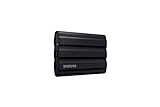
- Premium Choice: Samsung T7 Shield Portable SSD 1TB, USB 3.2 Gen 2, Up to 1,050 MB/s
SSDs are more expensive than HDDs because every gigabyte of an SSD has to be etched onto silicon in a semiconductor fab costing tens of billions of dollars, while every gigabyte of an HDD lives on a thin magnetic coating inside a mechanical assembly whose cost barely changes whether the drive holds 2TB or 20TB. That single difference — storage cost that scales with silicon versus storage cost that’s mostly fixed — explains every price gap you’ll see on a store shelf in 2026.
As an Amazon Associate we earn from qualifying purchases at no extra cost to you.



What You’re Actually Paying For Inside Each Drive
The SSD: a silicon product
A modern NVMe SSD is three costly parts: NAND flash dies, a controller, and firmware (plus a DRAM cache on premium models like the Samsung 990 Pro or WD Black SN8100). The NAND is where the money goes. Each die starts as a 300mm silicon wafer pushed through hundreds of process steps — lithography, deposition, and precision plasma etching that punches microscopic channel holes through 200-plus stacked layers of memory cells in modern 3D NAND. A single leading-edge fab costs roughly $20–30 billion to build, and that capital cost is baked into every terabyte sold.
Crucially, SSD cost scales almost linearly with capacity. Doubling storage means doubling the silicon — a 4TB drive physically contains twice as much NAND as a 2TB model, and every die must be tested and binned (faster TLC versus cheaper, denser QLC) before it ships.
The HDD: a mechanical product
A hard drive is glass or aluminum platters, a spindle motor, an actuator arm carrying read/write heads, and a controller board — precision mechanics, but mature ones. The bill of materials sits around $30–50 whether the drive is 2TB or 20TB. Manufacturers grow capacity mostly by increasing areal density (bits per square inch of platter) rather than adding parts; technologies like Seagate’s HAMR-based Mozaic platform keep pushing density up without new silicon.
That flat mechanical cost explains two things at once: why a 20TB HDD can hit around 1.5 cents per GB, and why a 1TB HDD at $45–55 is barely cheaper per gigabyte than a 1TB SSD — you can’t shrink the motor just because the capacity shrank.
The Dollar-per-GB Math in 2026
Both markets have been inflating lately — NAND contract prices climbed through late 2025 as fabs prioritized AI datacenter demand, and nearline HDD supply stayed tight for the same reason. Typical retail ranges right now look like this:
| Capacity | NVMe SSD (typical) | SSD $/GB | HDD (typical) | HDD $/GB | Verdict |
|---|---|---|---|---|---|
| 1TB | $60–$95 | ~6–9¢ | $45–$55 | ~5¢ | Premium is $15–40 — pay it |
| 2TB | $100–$150 | ~5–7¢ | $60–$80 | ~3–4¢ | ~$50–70 gap; still worth it for a game drive |
| 4TB | $200–$300 | ~5–7¢ | $80–$115 | ~2–3¢ | SSD is a luxury; HDD fine for archives |
| 8TB | $450–$650 | ~6–8¢ | $120–$170 | ~1.5–2¢ | 3–4x gap; HDD unless silence matters |
| 16TB+ | $1,000+ where sold | — | $220–$350 | ~1.5¢ | No realistic consumer contest |
The table hides the real insight: below 2TB, the HDD’s mechanical cost floor erases nearly all of its price advantage, so the SSD premium is trivially small in dollars. Above 4TB, linear silicon scaling makes the gap explode. This is why “just buy an SSD” stops being practical advice once you’re storing a media library rather than an operating system.
What the Speed Premium Actually Buys
The spec that matters for gaming isn’t the headline sequential number — 7,000MB/s on Gen4 drives, up to ~14,000MB/s on Gen5 flagships versus ~250MB/s on a hard drive. It’s random-access latency. An HDD head physically seeks across a platter in roughly 8–15ms and manages around 150–200 random IOPS; an SSD answers in microseconds and handles hundreds of thousands. In practice:
- Level loads that take 45–90 seconds on a hard drive drop to roughly 5–15 seconds on a Gen4 NVMe drive.
- DirectStorage titles stream compressed assets straight toward the GPU and are explicitly designed around NVMe bandwidth — an HDD leaves that feature on the table.
- Texture pop-in and traversal stutter in open-world games largely disappear because asset streaming stops bottlenecking on seek time.
Run the math on the premium: if a 2TB Gen4 drive costs ~$60 more than a 2TB HDD, and you save ~40 seconds on each of 10 game loads per day, that’s about 6.7 minutes daily — roughly 40 hours of waiting eliminated per year, or about $1 per hour saved in year one alone. And a one-off task like copying a 200GB game folder takes 20+ minutes HDD-to-HDD at ~200MB/s, versus about a minute NVMe-to-NVMe.
Where Each Drive Belongs: A Decision Matrix
| Your situation | Best fit | Why |
|---|---|---|
| Boot drive and daily apps | Any NVMe SSD | Random latency drives boot and app-launch speed; the premium is ~$20 at 1TB |
| Main game library (1–2TB) | Gen4 NVMe, e.g. SN850X-class | Load times, DirectStorage, no stutter — the ~$50–70 premium is the best value in the build |
| Laptop storage | NVMe only | No moving parts to kill in a drop; lower power draw helps battery life |
| Bulk media, backups, archives (4TB+) | HDD | Sequential reads are all you need; ~2¢/GB beats ~6¢/GB |
| NAS with 8TB+ per bay | CMR HDDs (WD Red Plus / IronWolf class) | Sustained writes, cost per terabyte, rated for 24/7 duty |
| Budget build doing everything | 1–2TB NVMe + reused/old HDD | Speed where it’s felt, cheap bulk where it isn’t |
The Hidden Costs Nobody Puts on the Spec Sheet
Reliability cuts both ways. SSDs carry endurance ratings — around 600TB written per TB of capacity for typical TLC drives — which is more than a decade of normal gaming use, and they shrug off bumps and drops. HDDs have no write limit but wear mechanically and can die from a fall while spinning. For power and noise, an SSD draws ~5–8W at peak and is silent; a 3.5-inch HDD pulls ~6–10W while spinning and adds audible seeks and vibration to your case. Neither factor changes the sticker price, but both change what the drive costs you to live with.
Will the Gap Ever Close?
At small capacities, it effectively already has — a 1TB HDD barely undercuts a 1TB SSD per gigabyte, which is why hard drives under 2TB have nearly vanished from gaming builds. At large capacities, no: denser QLC (and eventually PLC) NAND trims the premium, but silicon cost will always scale with bits stored, while HDD capacity keeps riding areal-density improvements on the same cheap mechanics. Expect the crossover zone to creep upward toward 4TB over the next few years, not the gap to disappear.
FAQ
Is a SATA SSD still worth buying over an HDD?
Yes. The real upgrade is random-access latency, not sequential speed, and SATA SSDs deliver the same microsecond response times as NVMe. For a secondary game drive on an older board, a $60–80 1TB SATA SSD beats any HDD.
Can I keep some games on a hard drive?
Older titles, esports games, and anything with small assets load fine from an HDD. Modern open-world and DirectStorage games are where you’ll feel the pain — split your library rather than choosing one drive for everything.
Do HDDs last longer than SSDs?
They fail differently rather than longer. SSDs wear out gradually with writes (and give warning via SMART data); HDDs can run for years then die suddenly from mechanical wear or shock. For typical gaming use, either should outlast its usefulness.
Why did SSD prices go up recently if NAND keeps improving?
Fab capacity is finite. When AI datacenters bid aggressively for NAND and DRAM output through 2025–2026, consumer SSD prices rose even though the underlying technology got denser — supply allocation, not capability, set the price.






