Immersion in a game comes from space. When rain sounds like it falls around a room instead of inside your skull, when a distant engine grows from one side of a valley, and when dialogue sits in front of you rather than on top of the soundtrack, the world feels bigger than the screen. That sense of space is mostly decided by soundstage and imaging, and those two qualities depend on how a headphone is built: open-back ear cups that let sound breathe outward, or sealed closed-back cups that trap the world in and keep your room out.
This guide gathers five headphones and headsets that take immersion seriously, from classic wired open-back models to a planar magnetic wireless flagship. Each entry separates the published specifications from general listening commentary, so it stays clear which claims come from the manufacturer and which are widely reported impressions. Readers comparing broader picks can also work through the site roundup of the best headphones for gaming before deciding which style fits their setup.
As an Amazon Associate we earn from qualifying purchases
What Makes Headphones Sound Immersive
Soundstage is the perceived width and depth of the audio scene, and imaging is how precisely individual sounds are placed inside that scene. Open-back headphones usually lead on soundstage because their ear cups are vented, so sound leaks out and outside noise leaks in. The trade-off is zero isolation: an open-back pair is a poor choice beside a sleeping partner or on a train, and everyone nearby hears a faint version of your game.
Closed-back headphones seal the cups, which strengthens bass impact and blocks distractions, but the stage typically feels narrower and closer. Driver design matters too. Most gaming gear uses dynamic drivers, while planar magnetic drivers move a thin film across its whole surface and are often praised for detail and separation, at the cost of extra weight.
Spatial audio adds a processing layer on top. Dolby Atmos for Headphones and DTS Headphone:X work on PC and Xbox through licensed apps, Windows Sonic is built into Windows and Xbox, PlayStation uses its own Tempest 3D AudioTech, and many PC headsets add virtual surround in their own software. These systems are software, not hardware, so a good stereo headphone can still carry a spatial mix well. Connection type finishes the picture: wired links have no latency or battery concerns, 2.4 GHz wireless dongles keep delay low for gaming, and Bluetooth is convenient but adds latency that varies by codec, with standard SBC at the slow end and low-latency codecs such as aptX Low Latency or LC3 improving matters on supported hardware.
Philips Fidelio X2HR

The Fidelio X2HR is a wired open-back headphone built around large 50 mm neodymium dynamic drivers, angled slightly to match the shape of the ear. Philips publishes a frequency response of 5 to 40,000 Hz, an impedance of 30 ohms, and a detachable 3.5 mm cable, which together make it easy to drive from a controller, a laptop, or a phone without a dedicated amplifier. Those are the published figures; the listening reputation is separate commentary, and reviewers have long described the X2HR as one of the widest sounding headphones in its class, with warm bass that gives explosions and orchestral scores real weight.
Because the cups are fully open, the X2HR suits a quiet room and single player games where atmosphere matters more than isolation. There is no built in microphone, so voice chat means adding a separate desk microphone or an inline mic cable. For players who want a big, relaxed stage for story games and open worlds, it remains a benchmark pick.
Key specs, as published by Philips: 50 mm neodymium drivers, open-back design, 30 ohm impedance, 5 to 40,000 Hz frequency response, wired 3.5 mm detachable cable, no microphone.
beyerdynamic DT 990 Pro

The DT 990 Pro is a studio classic that gamers adopted for its spacious presentation. The widely sold 250 ohm version uses dynamic drivers in open-back cups with velour ear pads, and beyerdynamic publishes a frequency response of 5 to 35,000 Hz. The higher impedance means a motherboard output may sound quiet; a modest headphone amplifier or a capable audio interface is the common pairing, and beyerdynamic also sells lower impedance variants for weaker sources.
Listening commentary around the DT 990 Pro consistently highlights precise imaging, which helps with locating footsteps and direction cues, plus a bright top end that some listeners love for detail and others find sharp. It is wired only, ships with a coiled cable ending in a 3.5 mm plug with a screw on 6.35 mm adapter, and has no microphone, so competitive players usually pair it with a standalone mic. For a desk setup with an amp already in place, it is a proven route to a wide and detailed stage.
Key specs, as published by beyerdynamic: dynamic drivers, open-back design, 250 ohm impedance on this version, 5 to 35,000 Hz frequency response, wired coiled cable, velour pads, no microphone.
Sennheiser HD 599

The HD 599 is the comfort first option in this group. Sennheiser fits its own 38 mm transducers with aluminum voice coils into open-back cups, publishes an impedance of 50 ohms and a frequency response of 12 to 38,500 Hz, and includes two detachable cables, a longer one with a 6.35 mm plug and a shorter one with a 3.5 mm plug for controllers and laptops. The 50 ohm rating keeps it easy to drive from almost any source.
Review commentary generally describes the HD 599 sound as balanced and relaxed, with a stage that feels natural rather than exaggerated, which suits long sessions in narrative games where voices and ambient detail matter more than slam. The light clamp and plush pads are frequently praised for comfort over hours. Like the other wired hi-fi models here, it carries no microphone, and its open cups leak sound in both directions, so it belongs in a private room rather than a shared space.
Key specs, as published by Sennheiser: 38 mm transducers, open-back design, 50 ohm impedance, 12 to 38,500 Hz frequency response, two detachable cables included, no microphone.
Audeze Maxwell
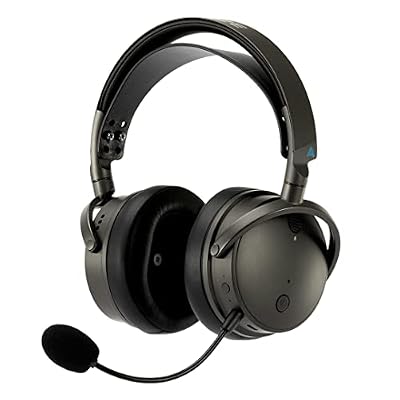
The Maxwell takes the opposite approach: a closed-back wireless gaming headset built around 90 mm planar magnetic drivers, far larger than the dynamic drivers in most headsets. Audeze publishes a frequency response of 10 to 50,000 Hz and a battery rating of over 80 hours per charge. It connects through a low latency 2.4 GHz USB dongle, Bluetooth 5.3, or a wired USB and 3.5 mm link, and the Xbox version includes a Dolby Atmos license, while the PlayStation version leans on Tempest 3D audio from the console.
A detachable boom microphone with an AI noise reducing processor handles voice chat, which separates the Maxwell from the wired hi-fi models above. Commentary from reviewers such as RTINGS and SoundGuys has praised its detail and separation for a closed-back design, though its roughly 490 gram weight is a recurring caveat for long sessions. As a closed-back headset it isolates well, making it the pick here for shared rooms, late night play, and anyone who wants planar detail without giving up wireless freedom or a proper mic.
Key specs, as published by Audeze: 90 mm planar magnetic drivers, closed-back design, 2.4 GHz wireless, Bluetooth 5.3 and wired modes, battery rated over 80 hours, detachable boom microphone, 10 to 50,000 Hz frequency response.
SteelSeries Arctis Nova 7

The Arctis Nova 7 is a closed-back wireless headset with 40 mm neodymium magnetic drivers, built for players who split time between platforms. SteelSeries publishes a 38 hour battery rating, simultaneous 2.4 GHz and Bluetooth connections so game audio and phone audio can mix, and a retractable ClearCast Gen 2 microphone with AI noise cancelling. On PC, the Sonar software adds parametric EQ and virtual spatial audio, and the headset also works with PlayStation Tempest 3D audio over its dongle connection.
Impressions from reviewers tend to describe the Nova 7 as a convenience pick rather than a stage champion: the sound is enjoyable and the imaging is solid for a closed gaming headset, but it will not match the openness of the wired models above. What it returns in exchange is flexibility, a proper retractable mic, multi platform support across PC, PlayStation, Switch and mobile, and no cable at all. For mixed gaming, chat, and media use in one headset, that trade makes sense.
Key specs, as published by SteelSeries: 40 mm neodymium drivers, closed-back design, 2.4 GHz wireless plus Bluetooth, battery rated at 38 hours, retractable ClearCast Gen 2 microphone, USB-C charging.
How to Choose for Immersion
Start with your room. A quiet, private space unlocks the open-back models, and their wider stage is the simplest route to immersion. A shared or noisy space points to the closed-back headsets, which trade some width for isolation and stronger low end impact. Next, decide on voice chat. Only the Maxwell and the Arctis Nova 7 include microphones; the three wired hi-fi headphones need a separate mic, which is an extra purchase and extra desk clutter to plan for.
Then check the source. The 250 ohm DT 990 Pro may need an amplifier, while the X2HR and HD 599 run happily from a controller. Console players should confirm spatial audio support per platform: Atmos on Xbox and PC, Tempest 3D on PlayStation 5, and headset software features such as SteelSeries Sonar are PC only. Finally, weigh latency and battery. Wired has neither concern; 2.4 GHz wireless is the safe wireless choice for fast games, and Bluetooth alone is better kept for slower, cinematic play and media.
Frequently Asked Questions
Is open-back or closed-back better for immersion?
Neither wins outright. Open-back models generally present a wider, more natural stage, which many players find more immersive in quiet rooms. Closed-back models isolate outside noise and deliver stronger bass impact, which can feel more immersive in a busy home. The room and the game matter more than the label.
Do I need Dolby Atmos or another spatial audio app?
No. Spatial audio is optional processing layered over the headphone output. A capable stereo headphone already images well in most games, and platform features such as Windows Sonic or PlayStation Tempest 3D are widely supported. Paid options like Dolby Atmos for Headphones or DTS Headphone:X add their own tuning, and they work with any wired or wireless headset on supported platforms.
Can these headphones be used for voice chat?
Only two of the five include a microphone: the Audeze Maxwell with its detachable boom mic, and the SteelSeries Arctis Nova 7 with a retractable mic. The Philips Fidelio X2HR, beyerdynamic DT 990 Pro, and Sennheiser HD 599 are listening only headphones, so they need a separate USB microphone, a desk mic, or a compatible inline mic cable for chat.
Is Bluetooth good enough for gaming?
Bluetooth is fine for slow paced and cinematic games, but its latency is higher than a wired link or a 2.4 GHz dongle, and the delay varies by codec and device. Competitive and rhythm based games are safer on wired or 2.4 GHz connections. Headsets that offer both, like the two wireless models in this guide, let each connection do the job it suits best.
Final Verdict
For the widest stage on a desk, the Philips Fidelio X2HR and beyerdynamic DT 990 Pro remain the classic wired routes, with the Sennheiser HD 599 as the lighter, comfort led alternative. For a complete wireless package, the Audeze Maxwell pairs planar magnetic detail with a real boom microphone and very long battery life, while the SteelSeries Arctis Nova 7 trades some sonic ambition for multi platform convenience and easy chat. Match the design to your room first, then to your platform, and immersion follows.
Product and ASIN Reference
| Product | ASIN |
|---|---|
| Philips Fidelio X2HR | B01N5VHLUG |
| beyerdynamic DT 990 Pro (250 ohm) | B0011UB9CQ |
| Sennheiser HD 599 | B01L1IICR2 |
| Audeze Maxwell (Xbox) | B0BNGT66Y5 |
| SteelSeries Arctis Nova 7 | B0B15QM5LL |