- Top Pick: 8K & 64MP Professional Camera for Photography, Dual-Lens,48X Zoom with Moon | 16X Optical + 3X Digital,180°Flip Screen, 32GB TF Card,2 Batteries,WiFi, Hot Shoe,Wide & Macro Lens Kit,Vlogging and Travel
- Best Value: 8K 64MP Digital Cameras for Photography,16X Zoom,3 Color Filters,Dual-Lens | 180°Flip Screen,WiFi,Microphone, Tripod, Wide & Macro Lens Kit,2 Batteries, 32GB TF Card,Vlogging and Travel,Beginners
- Premium Choice: True 8K 64MP Digital Camera for Photography with Microphone(Black) | Autofocus & Anti-Shake,16X Zoom,WiFi,Wide-Angle Macro Lens,32GB TF Card,Vlogging Camera for YouTube & Travel
Macro photography asks a camera to do something unusual: focus on a subject only a few centimeters away and fill the frame with a bee’s eye, a watch movement, or the veins of a leaf. That makes the shopping question different from a general camera search. Zoom range and headline megapixels matter far less than how close the lens can focus, how steady the camera stays at close range, and whether a macro attachment is part of the package. In 2026 the listings are crowded with compact kits promising 8K video and huge pixel counts, so it helps to sort what the spec sheet actually proves from what is only a label.
This guide suits hobbyists, craft sellers photographing small items, and beginners who want to try close-up work before committing to specialist gear. We cover eight cameras, seven of them compact kits that bundle a wide-angle and macro lens, plus one interchangeable-lens DSLR for buyers who want room to grow. Everything below is drawn from the product listings, not from lab figures, so treat it as a way to narrow the field.
Quick Picks
As an Amazon Associate we earn from qualifying purchases at no extra cost to you.


| Product | Best for | Key spec from the title |
|---|---|---|
| Monitech Dual-Lens 48X Kit | Hot-shoe accessory use | Dual lens, hot shoe, wide and macro lens kit, 2 batteries |
| Monitech 16X Zoom Kit with Filters | Beginners wanting extras | Tripod, microphone, 3 color filters, macro lens |
| Eddioklp True 8K Camera | Autofocus-first shooters | Autofocus and anti-shake, wide-angle macro lens |
| Canon EOS Rebel T7 Kit | Growing into real macro gear | 24.1 megapixel APS-C sensor, 18-55mm lens |
| G-Anica 5K Dual-Lens Camera | Selfie-style monitoring | 180 degree flip screen, wide and macro lens |
| NBDDIGITAL True 5K Camera | Carry-ready gift kit | Leather case, autofocus, anti-shake, macro lens |
| Lnmywn 5K Vlogging Camera | Mixed video and close-ups | Flip screen, microphone, macro and wide-angle lens |
| Krunia 5K 80MP Camera | Teen or first-time users | 3 inch flip screen, 18X zoom, 64G card |
How to Choose
Look for a Real Macro Path, Not Just a Macro Label
True macro means the lens can reproduce a subject near life size on the sensor, usually written as 1:1. None of these listings states a magnification ratio, so a bundled macro lens should be read as a close-up attachment rather than a guarantee of 1:1 work. For the compact kits, what you can verify is that a macro lens is physically included. For the DSLR, macro comes from adding a dedicated macro lens or close-up filters later, which is the route serious hobbyists eventually take.
Sensor Size Matters More Than Pixel Counts
Headline figures such as 8K, 5K, and 64MP describe what the listing advertises as output, and the titles do not state sensor size. A larger sensor, like the APS-C chip named on the Canon, generally gives cleaner detail and more control over background blur than the small sensors normally found in compact kits. If your macro shots will be printed or cropped, sensor size and lens quality are a better guide than pixel count. Be wary of large resolution numbers that appear without a sensor size beside them. Two cameras can both claim 64MP while recording very different amounts of real detail, and at macro distances every flaw in the optics becomes obvious.
Stability and Focus Behavior at Close Range
At a few centimeters, tiny movements blur the shot. Look for anti-shake and autofocus, both named on the Eddioklp and NBDDIGITAL, and check whether a tripod is bundled, as with the second Monitech listing. A flip screen is practical for low-angle shooting at ground level, since you can frame a mushroom or an insect without lying flat. For static subjects, plan on a tripod no matter what the listing says; the extra stability makes close work much easier.
What Budget Kits Usually Leave Out
Entry-level bundles pack in batteries, memory cards, and filters but often skimp on lens quality, manual control, and a raw file format. The listings here mention bundled cards of 32GB and 64G and two batteries, which are genuinely useful, yet none names aperture control or a minimum focus distance. If those controls matter, the Canon is the only one in this set whose title points to a lens with a stated aperture range and interchangeable lens mounts.
The 8 Best Options
Monitech Dual-Lens 48X Kit
This Monitech bundle lists a dual-lens design, a hot shoe, a wide and macro lens kit, a 180 degree flip screen, WiFi, a 32GB card, and two batteries. It suits a shooter who wants to add a small light or microphone through the hot shoe for close-up work.
- Strength: the hot shoe gives a mounting point for accessories that most compact kits lack.
- Strength: two batteries and a bundled card mean you can shoot without buying extras first.
- Trade-off: the zoom wording is confusing, mixing 48X with 16X optical plus 3X digital, so rely on the optical figure.
Skip it if you want a clear, single zoom specification to compare.
Monitech 16X Zoom Kit with Filters
The second Monitech is packaged for beginners, adding a tripod, a microphone, and three color filters to the dual-lens, flip-screen body. A tripod is the single most useful accessory for close work, so including one is a real advantage for first-time macro shooters.
- Strength: the included tripod stabilizes static subjects like coins, flowers, and small products.
- Strength: the macro lens, microphone, and filters cover several creative options in one box.
- Trade-off: the listing does not mention hot-shoe support, so accessory expansion is limited.
Skip it if you already own a sturdy tripod and want a leaner kit.
Eddioklp True 8K Camera
The Eddioklp listing stresses autofocus and anti-shake, plus a wide-angle macro lens, a microphone, 16X zoom, WiFi, and a 32GB card. Autofocus and stabilization are the two behaviors that most affect hand-held close-ups, which makes this a sensible choice for people who cannot always use a tripod.
- Strength: anti-shake is named directly, which helps with hand-held framing.
- Strength: autofocus reduces missed shots when a subject shifts slightly.
- Trade-off: the listing mentions no flip screen, so low-angle framing is harder.
Skip it if low-angle work is your main use and you want a tilting display.
Canon EOS Rebel T7 Kit
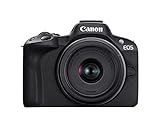
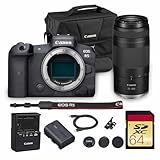
This is the only interchangeable-lens camera here, an entry DSLR with a 24.1 megapixel APS-C CMOS sensor, an EF-S 18-55mm f/3.5-5.6 IS II lens, Full HD video, and built-in Wi-Fi. It does not include a macro lens, but it gives you a path to add one.
- Strength: the APS-C sensor is larger than those usually found in compact kits.
- Strength: you can add a dedicated macro lens or close-up filters later.
- Trade-off: the kit lens named in the title is a general-purpose zoom, so true macro needs an additional purchase.
Skip it if you want macro capability straight out of the box.
G-Anica 5K Dual-Lens Camera
The G-Anica pairs dual lenses with a 180 degree flip screen, WiFi, and a wide-angle plus macro lens, along with a 16X zoom and two batteries. It is aimed at beginners who want to see the frame while shooting close to the ground or at awkward angles.
- Strength: the flip screen makes low and overhead angles easy to frame.
- Strength: two batteries give a buffer for longer outdoor sessions.
- Trade-off: the title does not mention a bundled memory card, so check the contents.
Skip it if you need autofocus or stabilization to be named in the specs.
NBDDIGITAL True 5K Camera
This kit adds a protective leather case to a 64MP, 16X zoom body with autofocus, anti-shake, WiFi, a wide-angle and macro lens, and a 32GB card. It fits buyers who want a carry-ready package for walks, travel, and casual close-up work.
- Strength: autofocus and anti-shake are both named in the title.
- Strength: the leather case protects the body and lens while you carry it around.
- Trade-off: the listing does not name a flip screen or extra batteries.
Skip it if you plan long shooting days that depend on spare batteries.
Lnmywn 5K Vlogging Camera
The Lnmywn listing combines a 5K, 64MP body with WiFi, a microphone, 16X zoom, a 180 degree flip screen, two batteries, and macro plus wide-angle lenses. It serves people who split their time between talking-head video and close-up photos.
- Strength: flip screen, microphone, and two batteries cover video and stills.
- Strength: macro and wide-angle lenses are both included.
- Trade-off: no bundled memory card or autofocus detail appears in the title.
Skip it if photography only is the goal and you do not need a microphone.
Krunia 5K 80MP Camera
Krunia lists an 80MP, 5K body with a 3 inch flip screen, autofocus, an 18X zoom, a 64G card, two batteries, and wide-angle plus macro lenses, aimed at teens and beginners. It has the largest bundled card here, which suits people who shoot many close-up attempts to get one sharp frame.
- Strength: the 64G card gives more room for repeated macro attempts.
- Strength: autofocus plus a 3 inch flip screen make framing straightforward.
- Trade-off: the 80MP figure is a headline number without a stated sensor size.
Skip it if you want a tripod or case in the box.
Which One Fits Your Situation
You Shoot Small Products on a Desk
Pick the Monitech 16X Zoom Kit with Filters. The bundled tripod keeps the camera steady for static subjects, and the macro lens is included from day one.
You Photograph Insects and Flowers Outdoors
The Eddioklp True 8K Camera makes sense here, since autofocus and anti-shake help when a subject moves and a tripod is not practical.
You Plan to Upgrade Later
Choose the Canon EOS Rebel T7 Kit. Its APS-C sensor and interchangeable-lens design let you add a dedicated macro lens when you are ready to move beyond attachments.
You Shoot Near the Ground
The Krunia 5K 80MP Camera offers a 3 inch flip screen and a 64G card, which together make low-angle, trial-and-error framing easier.
Common Mistakes
- Trusting megapixel and 8K labels without checking sensor size or lens details.
- Assuming a bundled macro lens equals 1:1 magnification when the listing gives no ratio.
- Shooting hand-held at close range, where small shake ruins focus, instead of using a tripod.
- Ignoring minimum focus distance, which decides how near you can get before the image goes soft.
- Skipping lighting, even though close subjects are often shaded by the camera itself.
Related guides
- Battery Operated Smoke And Carbon Monoxide Detectors
- Combination Smoke And Carbon Monoxide Detectors
- Aio Liquid Coolers For High Performance Gaming
Frequently Asked Questions
Do I need a DSLR for macro photography?
No. A compact kit with a macro attachment can capture close-ups for casual use. A DSLR or mirrorless body becomes valuable when you want a dedicated macro lens and more control over depth of field.
What does 1:1 magnification mean?
It means the subject is reproduced at its real size on the sensor. Most compact kit listings never state a ratio, so treat their macro lenses as close-up tools.
Is a tripod really necessary?
For static subjects, it is the best accessory you can add. Depth of field is razor thin at close range, and a steady mount makes careful focusing possible.
Are high megapixel numbers a good guide?
Not on their own. Sensor size, lens quality, and stabilization shape close-up detail more than a headline pixel count, especially when the listing does not state sensor dimensions.