- Top Pick: Logitech G Pro Wireless
- Runner-up: SteelSeries Rival 3
- Also consider: Glorious Model O
The arena shooter is built on a simple contract: everyone spawns equal, weapons and armour sit on the map for whoever controls them best, and movement is a weapon in itself. It is also one of the luckiest genres a Linux player can pick: its foundations are id Software engines whose source code was released years ago, so the classics never depended on a publisher keeping a port alive.
This catalogue covers the multiplayer arena niche only, title by title: what runs natively, what runs on an open-source engine with your own game data, and what runs through Proton, anti-cheat caveats included. Single-player retro FPS and hero shooters already have their own guides on this site.
As an Amazon Associate, we earn from qualifying purchases.
Quick answer
Start native: Xonotic and Warfork install and run on Linux with no compatibility layer, Quake III Arena runs through the ioquake3 engine using data from your own copy, and Unreal Tournament 2004 has a native modern build again thanks to OldUnreal. Through Proton, Quake Live carries the strongest community rating, Quake Champions works with tinkering, and Splitgate now needs Proton forced after its native build was removed.
What counts as an arena shooter here
Every title below is multiplayer-first, built on equal starts, item pickups and movement techniques such as strafe-jumping, rocket-jumping and bunny-hopping, across duel, team deathmatch, capture the flag and clan arena. Games that lock weapons behind character abilities are hero shooters; single-player campaigns in retro dress are boomer shooters. Both live elsewhere on this site.
Native and open source: no translation layer
Xonotic
Xonotic is the genre’s open-source flagship: a free, GPL-licensed arena shooter forked from the Nexuiz project and built on the DarkPlaces engine, a heavily evolved descendant of the original Quake engine. The current stable release, version 0.8.6, ships with 25 official maps and sixteen modes including deathmatch, capture the flag, clan arena and freeze tag, around a weapon set built on combos. Movement is the point — bunny-hopping and laser jumps reward practice the way Quake III once did. It installs from most distro repositories or as a Flatpak, needs no account, and runs at high frame rates even on integrated graphics. Bots cover offline practice; public servers keep multiplayer alive.
Warfork, and the Warsow it forked from
Warsow is the cel-shaded movement shooter built on the Qfusion engine, with a dash mechanic layered over strafe-jumping and a long competitive history. The original project has gone quiet — its long-promised 2.6 release has still not appeared — but the fork is healthy. Warfork is free on Steam, still in early access, and its store page publishes SteamOS and Linux system requirements: a native build, not a Proton entry. It keeps Warsow’s movement model and adds easier server hosting. Warsow itself still runs natively too, packaged by several distributions.
Quake III Arena through ioquake3
Quake III Arena is the template the whole genre copied, and the durable way to play it on Linux is ioquake3, the community engine built from id’s released source code. The pattern is the one this site’s engine coverage describes: the engine is free, the game data is not. ioquake3 reads the pak files from your own installed copy, whether from Steam, GOG or an old disc, and returns widescreen resolutions and modern input handling. The Steam release is a Windows build that also runs through Proton, and tools such as Luxtorpeda can wire the open engine into Steam Play. The duel scene that formed around this game still runs servers, and the bots remain a complete offline ladder.
Unreal Tournament 2004, revived by OldUnreal
UT2004’s Linux story is the best news in this catalogue. With Epic’s blessing, the OldUnreal team has taken over maintenance: their installer assembles the original game and applies the community’s patches, and patch 3374 — the first major update in over twenty years — delivers a native modern build for Linux on 64-bit Intel and ARM, with a new SDL3 backend and renderer. The game is available again at no charge through that official route. Onslaught, assault, bombing run and the classic deathmatch and CTF modes all return, and patched clients can play with unpatched ones in most cases; the known exception is servers still running the old AntiTCC anti-cheat, which a compatible update is set to address. An existing copy can also be patched, though the team recommends a fresh install.
Through Proton: the modern shelf
Quake Live
Quake Live began as a browser game with a native Linux client, but that era ended when it moved to a standalone client; the Steam version is a Windows build. On Linux it runs through Proton, and runs well: community reports place it at ProtonDB’s highest tier, and Valve’s own Proton releases have shipped fixes for its multiplayer connections. What you get is Quake III’s design tightened into a dedicated service — duel, clan arena, deathmatch and capture the flag, plus workshop maps. Of the Proton entries here, this one asks the least of you: install it, let Steam apply Proton, and play.
Quake Champions
Quake Champions is id Software’s modern take — the classic weapon circle and movement, plus champions with individual abilities, which pushes it toward the hero-shooter border without crossing it. Its Linux position needs honesty: the game carries Easy Anti-Cheat, and unusually for this list the developer has enabled that anti-cheat’s Linux support, so matches are not blocked at the door. ProtonDB reports settle at the middle tier, Silver: most players get in, but launch failures and matchmaking hiccups recur, and Valve rates it Playable rather than Verified on Steam Deck. Treat it as a tinkering-tier recommendation — genuinely playable, occasionally fragile.
Splitgate
Splitgate — portal guns welded onto a Halo-flavoured arena shooter — once had the strongest Linux story of the modern shelf: a native build, maintained for years. That story has ended. As 1047 Games wound the game down, official servers were shut down in favour of player-hosted matches, and in 2025 the developers removed the native Linux version entirely; the anti-cheat went with it. The game still plays on Linux, but only by forcing the Windows build through Proton in Steam — on automatic, it tries to launch a Linux build that no longer exists. ProtonDB reports rate the result at the Gold tier. Its sequel launched with Steam Deck-only support while desktop Linux was blocked, so check its current status separately.
Diabotical: the honest exception
Diabotical, the colourful Eggbot shooter from The GD Studio, is the one name on many arena lists this catalogue cannot recommend to Linux players. It is exclusive to the Epic Games Store, has no native build, and we found no reliable current reports of it running under Proton — its store-only, anti-cheat-guarded setup has kept Linux players out. Its duel-focused Aim Arena mode is well regarded, but unless you also keep a Windows install, treat it as a watch-list title rather than a playable one.
Gear for high-refresh arena play
Arena shooters are decided by aim and movement, so what matters is a light mouse, a surface that tracks it honestly, and a monitor that keeps up with the frame rates these engines produce.
Logitech G Pro Wireless

The long-standing duel player’s wireless pick: LIGHTSPEED connectivity, a flagship optical sensor and an ambidextrous shell with removable side buttons. On Linux it works as a standard wireless mouse, and open tools such as Piper cover its DPI and button settings.
Specs:
- Sensor: HERO 25K optical
- Connection: LIGHTSPEED wireless with USB receiver, or wired over USB
- Weight: about 80 g
- Shape: ambidextrous, removable magnetic side buttons
- Extras: onboard memory profiles, LIGHTSYNC RGB
SteelSeries Rival 3

A budget-tier wired mouse with a proper gaming sensor and a safe, low shape. The maker’s GG software targets Windows and macOS, but the mouse itself is plug-and-play on Linux.
Specs:
- Sensor: TrueMove Core optical, up to 8,500 CPI
- Connection: wired USB
- Weight: about 77 g
- Switches: split-trigger design, maker-rated for extended click life
- Lighting: three-zone Prism RGB
Glorious Model O
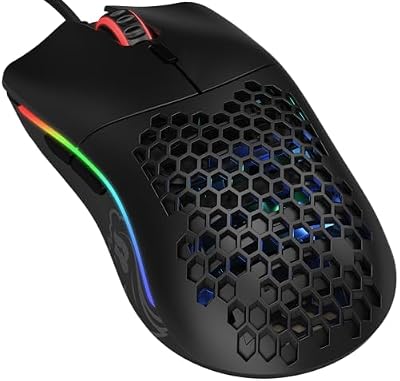
The honeycomb ultralight: a perforated shell keeps weight down for fast, low-sensitivity swipes. DPI and polling settings change on the mouse itself, which suits Linux players, since the Glorious Core software is Windows-only.
Specs:
- Sensor: Pixart PMW-3360 optical, up to 12,000 DPI
- Connection: wired, flexible Ascended cord
- Weight: about 67 g in the matte finish
- Feet: G-Skates PTFE
- Extras: on-device DPI adjustment, RGB ring
BenQ ZOWIE XL2546K

The arena scene’s traditional monitor: a 24.5-inch TN panel built for competitive FPS rather than colour work. Its headline features live inside the monitor — DyAc+ blur reduction, Black eQualizer and Color Vibrance are hardware settings that work identically on Linux, and the S-Switch puck saves your profiles. Set the refresh rate in your display settings; the panel does the rest.
Specs:
- Panel: 24.5-inch TN, 1920 by 1080
- Refresh rate: 240 Hz
- Motion feature: DyAc+ blur reduction, in-monitor
- Inputs: three HDMI 2.0, one DisplayPort 1.2
- Stand: height, tilt, swivel and pivot; S-Switch and shielding hood included
SteelSeries QcK Medium

The default cloth pad under half the mice in this genre. Its micro-woven surface is tuned for optical sensors, the rubber base stays put during wide flicks, and the medium size suits low-sensitivity arm aiming.
Specs:
- Surface: micro-woven cloth, tuned for gaming sensors
- Base: non-slip rubber
- Size: 320 by 270 mm
- Model: 63004
- Colour: black
How to choose
Choose by friction first: for a match within minutes and no compatibility worries, install Xonotic or Warfork. For the canonical duel experience, Quake III Arena through ioquake3 or Quake Live through Proton both deliver it, with Quake Live the more populated route. Choose UT2004 when you want the broadest mode list and vehicle play. Take Quake Champions or Splitgate only when their modern presentation is the draw, and budget setup patience for Champions. Whatever you pick, check the server browser at the hours you actually play — your timezone matters more than any feature list.
Who should skip
Skip this shelf if you want a large, always-full matchmaking queue: these are connoisseur games with small, dedicated populations. Skip it if you play primarily with a controller — arena shooters are mouse-and-keyboard games at their core. Skip it, too, if hero abilities and loadout progression keep you playing; this site’s hero shooter coverage is the better shelf. And if the word Proton already annoys you, stay on the native half of the list, which stands alone comfortably.
FAQ
Is Quake Champions playable on Linux?
Yes, with caveats. Its Easy Anti-Cheat is enabled for Linux, so online play is permitted, but community reports rate it at ProtonDB’s Silver tier: expect occasional launch or matchmaking issues and some tinkering.
Do I need to own Quake III Arena to use ioquake3?
Yes. ioquake3 is only the engine; it contains no game content. It reads the data files from your own copy of the game, whether the Steam or GOG release or an original disc.
What happened to Splitgate’s native Linux version?
The developers removed it in 2025 as the game moved from official servers to player-hosted matches. The Windows build still runs through Proton at a Gold community rating, but you must force Proton in Steam’s compatibility settings — automatic still looks for the deleted Linux build.
Are these games still populated?
Modestly, and honestly. None fills lobbies like the largest modern shooters, but Xonotic, Quake Live and UT2004 keep active server browsers and organised duel communities. Check the browser during your usual hours before committing to one.
Final verdict
Linux is quietly the best home the arena shooter has. Its two defining classics are future-proofed by open engines and an officially blessed revival, its open-source natives are free and frictionless, and the modern commercial entries mostly work — with Splitgate’s forced-Proton detour and Quake Champions’ tinkering as the prices of admission. Install Xonotic tonight, and work down the list.