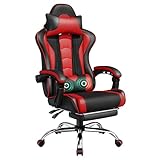
The DPS Gaming 3D Insight is a mesh-back gaming chair built around a hybrid design: a breathable mesh backrest paired with a padded fabric or PU seat cushion, 3D adjustable armrests, a height-adjustable headrest, and a 275 lb weight rating. It sits in the mid-range bracket of gaming chairs, usually priced $180–$280, and is one of the few chairs at that price with a mesh back instead of an all-foam shell. Below is what actually matters if you’re deciding whether it fits your body, your desk setup, and your patience for assembly.
Mesh Back vs. Padded Seat: How the Comfort Actually Splits
The Insight uses two different comfort strategies depending on which half of the chair you’re sitting against, and that split is the main reason people search for this model instead of a standard racing-style chair.
The backrest is tensioned mesh stretched over a plastic frame. Mesh doesn’t compress the way foam does, so it flexes slightly under lumbar pressure instead of flattening out. That’s good for airflow, since there’s no foam layer trapping heat against your back, and it holds up better over years of use because mesh doesn’t lose loft the way foam padding eventually does. The tradeoff is that mesh feels firmer and less “cushioned” than a padded racing chair, especially in the first few weeks before you adjust to it.
The seat pan is the opposite: dense foam wrapped in fabric or PU leather, depending on the variant you buy. This is intentional. Your back needs airflow more than your seat does, since the seat bears most of your body weight and benefits from cushioning that a mesh panel can’t provide at that load. The result is a chair that runs noticeably cooler on your back during long sessions than an all-foam gaming chair, while still giving you a supportive seat base.
If you run hot, work in a room without strong AC, or have had lower-back sweat issues with padded racing chairs, the mesh-back layout is the bigger selling point than any of the adjustability features. If you specifically want a plush, sink-in feel, a fully padded chair will feel softer, just warmer.
3D Armrests and Headrest: What “Adjustable” Actually Means Here
“3D adjustable” armrests move in three axes: up and down, forward and back, and side to side (pivot). That’s different from cheaper 2D armrests, which only go up and down. The practical benefit is being able to line the armrest pad up with your elbow at your actual desk height and keyboard position, rather than forcing your shoulders to compensate.
| Adjustment | Typical Range | Why It Matters |
|---|---|---|
| Armrest height | ~3.5–4.5 inches of vertical travel | Matches desk height so shoulders stay relaxed, not shrugged |
| Armrest depth (fore/aft) | ~1.5–2 inches | Lets elbow rest naturally without reaching forward |
| Armrest pivot | Roughly 15–20 degrees each direction | Angles pad inward for mousing or outward for typing |
| Headrest height | ~4–5 inches of vertical travel | Positions the pad at neck/head level for different user heights |
| Recline range | 90–155 degrees typical | Upright for work, reclined for breaks or media |
The headrest attaches via a strap or bracket and slides along a rail rather than rotating on a ball joint, so you’re adjusting height and rough angle, not fine-tuning tilt the way a premium ergonomic chair would allow. For most users this is enough to stop the pad from hitting the base of the skull or floating above the shoulders, which is the actual problem headrests are solving.
Seat Width, Height Range, and Whether You’ll Actually Fit
Fit problems are the most common regret with mid-range gaming chairs, so it’s worth working through the numbers instead of assuming “one size fits all.”
| Spec | Typical Value |
|---|---|
| Seat width | ~20–21 inches |
| Seat depth | ~19–20 inches |
| Seat height from floor | ~18–22 inches (gas cylinder adjustable) |
| Backrest height | ~29–31 inches |
| Weight capacity | 275 lbs |
| Recommended user height | Roughly 5’4″ to 6’2″ |
The 275 lb capacity is a hard ceiling set by the gas cylinder and the base frame, not a soft suggestion. Manufacturers rate this conservatively, so someone at 270 lbs sitting still is fine, but someone at 250 lbs who leans hard into recline and shifts weight aggressively will wear out the cylinder faster than the rating implies. If you’re above 250 lbs and want margin, look at chairs rated 300–400 lbs instead, since going over a chair’s rated capacity is the single fastest way to blow a gas lift.
On the height side, the seat height range of roughly 18–22 inches works for most desks in the 28–30 inch range, using the standard rule that your knees should sit at roughly the same height as your hips, or slightly below, when your feet are flat on the floor. If your desk is higher than 30 inches, you’ll be adjusting the chair near its max height and may end up with your feet not flat on the floor, which is worth checking against your own desk before buying.
Assembly: What Takes 20 Minutes and What Doesn’t
Assembly is genuinely close to 20 minutes for someone doing it alone, but that number assumes the parts go together without a hiccup, which isn’t universal. Here’s the sequence and where it usually breaks down.
- Step 1 — Attach casters to the base (2 minutes): Push each caster wheel into the star base by hand. This step rarely causes problems, but wheels can feel like they’re not seating fully; a firm push with body weight behind it is normal and expected.
- Step 2 — Insert the gas cylinder into the base (1 minute): The cylinder should drop into the center of the star base and click into place. If it wobbles, it’s not seated correctly and needs to be reseated before moving on, since a loose cylinder will cause the chair to tilt after assembly.
- Step 3 — Attach the seat pan to the tilt mechanism (5 minutes): This is the most common trouble spot. The seat pan has four bolt holes that need to line up with the mechanism plate underneath. Buyers frequently report the holes being slightly misaligned, which usually means the seat pan is rotated 180 degrees from where it should be, not that the chair is defective. Flip the seat pan and recheck before forcing bolts.
- Step 4 — Bolt the backrest to the seat pan or mechanism (5–7 minutes): Depending on the exact bracket design, this uses either two large bolts or a four-bolt plate. Hand-tighten all bolts first, then go back and fully tighten each one; tightening one bolt fully before starting the next can pull the frame slightly out of square, making the last bolt hole misaligned.
- Step 5 — Attach armrests (3 minutes): Straightforward screw-in mounts, rarely an issue.
- Step 6 — Slide the gas cylinder assembly into the seat mechanism, then attach the headrest strap or bracket (2 minutes): The headrest is often the last thing people install and the part most likely to be attached upside down or backward on strap-style models, since the strap can loop through either way but only one orientation keeps the pad angled correctly toward the neck.
The realistic time for someone who’s built one or two flat-pack chairs before is close to the advertised 20 minutes. First-timers, or anyone who hits the seat-pan alignment issue in Step 3, should budget closer to 30–35 minutes. Having a second person hold the backrest steady during Step 4 removes most of the frustration, since a wobbling backrest is the main reason bolt holes don’t line up cleanly.
Who This Chair Actually Fits
| Your Situation | Verdict |
|---|---|
| Run hot, no strong AC, long sessions | Good fit — mesh back is the main advantage over padded chairs at this price |
| Want a plush, sink-in racing chair feel | Consider a fully padded chair instead; mesh feels firmer |
| Body weight under 250 lbs | Well within the 275 lb rating with margin |
| Body weight 250–275 lbs | Fits the rating but consider a 300+ lb rated chair for longevity |
| Height under 5’4″ or over 6’2″ | Check seat depth and height range carefully; may feel oversized or cramped |
| Desk height above 30 inches | Verify seat height maxes out comfortably before buying |
The DPS Gaming 3D Insight earns its price bracket mainly on the mesh-back airflow and true 3D armrest adjustability, two features that are often stripped down or absent on cheaper all-foam competitors. The tradeoffs are a firmer backrest feel and a headrest that adjusts position more than angle, both of which are reasonable compromises at this price point rather than defects.