

A cute desk chair under $50 will get you a colorful shell, a foam seat between 1.5 and 2 inches thick, a plastic or lightweight steel base, and a weight rating around 220 lbs — but it almost never gets you real lumbar support, adjustable arms, or a mechanism built to survive daily 8-hour use past the six-month mark. That’s the honest trade-off, and knowing exactly where the corners get cut helps you pick a chair that still looks good on camera without collapsing under normal wear.
As an Amazon Associate we earn from qualifying purchases at no extra cost to you.
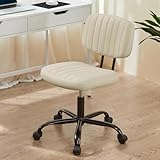

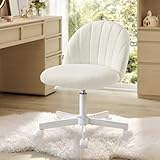
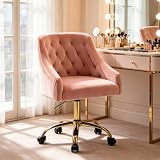
What “$50” actually buys you
Chairs in this price band share a construction pattern regardless of the pastel, velvet, or boucle finish on top. Understanding the four components that get downgraded first explains why two visually similar chairs can have very different lifespans.
Foam density
Budget seat foam typically runs 1.5–1.8 lb/ft³ density, compared to 2.5–3.5 lb/ft³ in $150+ task chairs. Low-density foam compresses fast — expect a noticeable seat dip within 3–6 months of daily use, especially past the 8-hour mark. It’s not a defect, it’s the foam spec doing exactly what that density does.
Base material
Most sub-$50 chairs use a nylon/plastic five-star base instead of chrome or coated steel. Plastic bases handle straight-line rolling fine but are more prone to cracking at the leg-to-hub junction if the chair gets dragged sideways across carpet or tilted while someone stands on an armrest to reach a shelf. Steel bases exist at this price point on a handful of models, but they usually come with thinner foam to offset the cost.
Weight rating
220 lbs is the near-universal ceiling for this category. That number is the sustained-load rating, not the momentary rating — leaning back hard, kids climbing on it, or a second person perching on the armrest can spike stress past what the gas lift or caster housing is rated for, even if a person’s static weight is well under 220 lbs.
Lumbar support
True lumbar support means a contoured lower-back curve or an adjustable pad. Almost nothing under $50 has this — you get a flat or gently curved backrest instead. Some listings market “ergonomic S-shape” backs, which is a molded curve baked into the shell, not an adjustable support system. It helps posture slightly more than a flat back, but it’s not a substitute for real lumbar adjustment.
Seat height and footprint: the numbers that actually matter for a small desk
Cute chairs are often marketed on looks, but for small desks the seat height range and base diameter decide whether the chair fits under the desk at all. Here’s a practical spread across common style categories at this price point.
| Style category | Seat height range | Base diameter | Seat depth | Best fit |
|---|---|---|---|---|
| Velvet-look swivel (no arms) | 16.5″–20″ | 23″–24″ | 17″–18″ | Desks 27″+ high, tight footwells |
| Pastel task chair (fixed arms) | 17″–20.5″ | 25″–26″ | 18″–19″ | Standard 29″–30″ desks |
| Papasan / accent swivel | 15″–17″ (fixed, non-adjustable) | 26″–28″ | 19″–20″ | Open floor space, not tight desk nooks |
| Kids/teen mini chair | 14″–17.5″ | 20″–22″ | 15″–16″ | Small-frame users, compact desks under 26″ wide clearance |
The base diameter matters more than most buyers expect. A chair with a 26″ base needs at least 26″ of clear floor width to swivel without clipping desk legs or a nearby drawer unit — measure your under-desk clearance before ordering, not just the desk’s outer width.
Worked example: matching seat height to desk height
The standard comfort formula is: desk height minus 10–12 inches equals the target seat height for most adults (5’2″–5’9″). For a common 29″ desk, that puts the ideal seat height at 17″–19″. Checking the table above, the velvet-look swivel and pastel task chair both fall in that window at their lower adjustment settings, but the papasan-style accent chair’s fixed 15″–17″ range sits too low for a 29″ desk — you’d end up reaching up at your keyboard, which causes shoulder strain well before the chair itself wears out.
Decision matrix: which trade-off fits your situation
Instead of chasing the cutest photo, match your actual use case to the trade-off you can live with.
| Your situation | Prioritize | Accept the trade-off in |
|---|---|---|
| Sitting 6+ hours/day, gaming or work | Foam density and base material over looks | Skip velvet-look shells with visibly thin (under 1.5″) seat padding |
| Small bedroom desk, tight footwell | Seat height range and base diameter | Give up fixed armrests if they’d hit desk drawers |
| Renter, moving within a year | Lightweight plastic base is fine | Accept it won’t survive being dragged across hardwood repeatedly |
| User over 200 lbs | Steel base models specifically, not plastic | Look above $50 if none of the steel-base pastel options fit budget — 220 lb ratings have almost no margin |
| Occasional use (a few hours, few days/week) | Aesthetic first is reasonable here | Foam compression and lumbar gaps matter less at low usage hours |
Six-month durability checks before you buy
A few spec details separate chairs that hold up from ones that visibly sag by month three:
- Gas lift cylinder diameter — look for 24mm or wider; anything unlisted or visibly thin in product photos tends to lose height retention faster.
- Caster wheel width — narrow single-wheel casters wear flat spots on hard flooring quicker than dual-wheel casters, which distribute load better.
- Seat pan material — plywood or engineered wood seat pans hold foam shape longer than molded plastic pans, which flex under repeated sitting.
- Stitching on velvet-look covers — fabric wrapped and stapled underneath the seat pan (not glued) resists peeling and bunching longer.
Bottom line
At under $50, you’re buying a chair for looks and short-to-medium term use, not for all-day ergonomic support. Match the seat height to your desk using the height-minus-10-to-12-inch rule, confirm the base diameter against your actual floor clearance, and pick a steel base if you’re over 200 lbs or plan daily long sessions. If none of the trade-offs above are acceptable for your use case — especially all-day gaming or work — that’s a sign to shift budget toward the $80–$150 range instead, where adjustable lumbar and denser foam start showing up.





