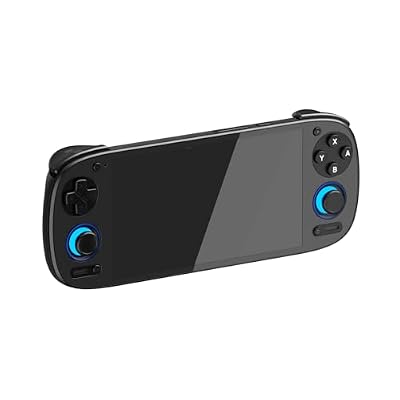
- Top Pick: Atari CX78+ Wireless Gamepad
- Runner-up: Samsung T7 Portable SSD 1TB
- Also consider: Dell P1917S 19-Inch Monitor
The Atari 2600 looks like the simplest console ever made, yet it is one of the hardest to emulate well. The machine has no frame buffer: games draw the picture by racing the electron beam, so a timing error of a few cycles shows up as a warped sprite or a rolling screen. Four decades of cartridges hide extra hardware in the shell, from bankswitching to a full ARM processor.
As an Amazon Associate, we earn from qualifying purchases.
That is why the choice of emulator matters more here than on most systems. One program, Stella, has spent decades becoming the reference point everything else is measured against, and Atari itself uses Stella-based emulation in its modern 2600+ console. The alternatives each earn a specific niche rather than a general role.
This article contains affiliate links, and we may earn a commission when you buy through them at no extra cost to you.
Quick Answer
Install standalone Stella. It is the accuracy reference for the 2600, with a cycle-exact TIA core, support for every known bankswitching scheme including the ARM-assisted DPC+ and CDFJ cartridges, and proper paddle and driving controller emulation. Choose the RetroArch core only for a unified library, and Gopher2600 for a serious debugger alongside very accurate play.
Stella: The Reference Point
Stella began on Linux under Bradford W. Mott, is maintained today by Stephen Anthony, and is released under the GPL for Windows, macOS and Linux; the current 7.0 series continues a history stretching back to the late 1990s. Its documentation leads with the components that decide 2600 accuracy. The TIA graphics chip is emulated with the cycle-exact core from the 6502.ts project, and the sound uses code derived from an FPGA implementation, with cycle-exact audio and stereo support. The RIOT chip, handling timers and input, gets the same cycle-level treatment, which is why beam-racing games behave as they do on hardware.
Around that core, Stella is a complete tool rather than a bare emulator. A built-in ROM launcher carries a database of game information, the properties system stores the right controller type, television format and switch settings per game, and the Time Machine feature records your session so you can move backwards and forwards through it. A full debugger with the Distella disassembler serves homebrew developers. If a dumped cartridge can be played accurately anywhere, it is here.
Where Compatibility Is Really Decided: Bankswitching
The 2600 can address only 4K of cartridge ROM at a time, so larger games must swap banks. Reading or writing a hotspot address switches which 4K slice is visible: the F8 scheme used by most 8K Atari games switches at 0x1FF8 and 0x1FF9, F6 extends the idea to 16K, and F4 to 32K. Third parties invented variants including Parker Brothers’ segmented E0, M-Network’s E7, Tigervision’s 3F and the expanded 3E, Activision’s FE, and the Arcadia Supercharger, which loaded games from cassette in multiple parts.
Stella’s cartridge system covers more than forty of these schemes, and its documentation states plainly that it supports all known bankswitching schemes. It autodetects the scheme for almost every cartridge, and when detection guesses wrong, the Game Properties dialog lets you force the correct type, a setting remembered for that ROM. Filename extensions can force a scheme too. This unglamorous machinery decides whether a collection simply works, and weaker emulators quietly fail here on unusual titles.
ARM in the Cartridge: DPC, DPC+ and CDFJ
The strangest 2600 cartridges contain their own processors. Pitfall II shipped with Atari’s DPC chip, which adds data fetchers that feed graphics to the TIA at speed plus a music mode producing three-voice sound the base hardware cannot make. Modern homebrew goes further: cartridges built around the Harmony board run ARM code alongside the 6507. The DPC+ scheme pairs bankswitching with an ARM coprocessor, and the CDF family, named for its creators Chris, Darrell, Fred and John, adds 32 fast fetchers, digital audio channels and, in CDFJ+, ROM sizes up to 512K with 32K of RAM.
Stella supports the DPC+ and CDF(J)(+) schemes, including partial emulation of the ARM processor through the Thumbulator engine, as its documentation describes. Gopher2600 instead emulates the Harmony cartridge’s ARM7TDMI directly. Either way, these cartridges are the current frontier of 2600 compatibility: an ARM-assisted game is not a plain ROM with extra memory, and an emulator without coprocessor support will not run it at all.
Controllers: The Other Half of Accuracy
A 2600 emulator that only handles a joystick gets half the library wrong in feel. Stella’s documentation lists emulation of the joystick, paddles, the driving controller, the CBS Booster Grip, Sega Genesis pads, keyboard controllers, the QuadTari adapter, Trak-Balls, the MindLink and a light gun, with autodetection for most common types. Paddles are analog, so Stella reads them from the mouse for the fine control games like Kaboom! were designed around. The driving controller is a rotary encoder, not a paddle that stops at each end, and Indy 500 plays badly if an emulator treats the two as interchangeable.
The console itself is part of the input. The difficulty switches change how several games behave, the TV type switch doubles as a pause or palette control in some titles, and Stella’s properties database stores the intended settings per game. Real controllers work through the Stelladaptor and 2600-daptor USB adapters, which Stella supports directly.
Getting the CRT Look
The 2600 was designed for a fuzzy composite television picture, and many games exploit that, blending colours through flicker that looks harsh on a sharp panel. Stella emulates CRT output using Blargg’s NTSC filtering, with presets for composite, S-Video and RGB connections and adjustable contrast, brightness, saturation and gamma. Gopher2600 includes its own CRT effects. For games that alternate sprites every frame to fake transparency, filtering is the difference between a solid image and a strobing mess.
The Alternatives, Honestly
RetroArch Stella Core
RetroArch offers a core based on Stella, the sensible choice if your multi-system library already lives in RetroArch and you want one interface, one shader system and one save layout. You give up the standalone launcher, properties editing and debugger, and core builds can trail standalone releases. For pure accuracy the core inherits Stella’s engine, so the gap is workflow, not quality.
Gopher2600
Gopher2600, written in Go by JetSetIlly, is the developer’s emulator. Its graphical debugger works at CPU and colour-clock level with breakpoints, traps and watches across the CPU, TIA and RIOT, a terminal interface, script recording and a regression database. It emulates the ARM7TDMI, supports SaveKey and AtariVox, PlusROM network features and the Movie Cart, and its author describes the 6507, TIA and RIOT emulation as very high accuracy. The trade-offs: a smaller project, some cartridge formats and CPU instructions documented as incomplete, and an interface that assumes you enjoy tools. Anyone who writes or studies 2600 code should keep it beside Stella.
Browser Options
Browser emulators such as Javatari run 2600 games with nothing to install, suiting a quick game on someone else’s machine. Expect a reduced feature set: limited controller support, no debugger, fewer cartridge edge cases handled and no library management. Fine for trying a game you own; a poor foundation for a collection.
Gear That Improves a 2600 Setup
Atari CX78+ Wireless Gamepad

A two-button pad in the style of the controller Atari bundled with the European 7800, suited to 2600 games that use a second button through a Booster Grip or Joy 2B+ layout, and to play where a stick feels oversized.
Specs:
- Two-button gamepad with D-pad and removable thumbstick
- Wireless via included USB-A and DB9 adapters
- USB-C charging
- Also works with original 2600 and 7800 hardware through the DB9 adapter
View the Atari CX78+ Wireless Gamepad on Amazon
8BitDo Pro 2 Bluetooth Controller (Hall Effect Edition)
For players who prefer a modern pad, the Pro 2 maps cleanly onto Stella’s joystick support, and its analogue sticks can stand in for paddle input in a pinch, though a mouse remains better for paddle games.
Specs:
- Bluetooth and USB-C wired connection
- Hall Effect analogue sticks
- Two programmable back buttons
- Rechargeable battery, around 20 hours per charge as 8BitDo states
- Mode switch for PC, Switch, Android and Apple devices
View the 8BitDo Pro 2 on Amazon
Samsung T7 Portable SSD 1TB

A complete 2600 library is tiny, but most emulation PCs carry several systems; a fast portable drive keeps the whole collection and its save states in one movable place.
Specs:
- 1TB capacity, model MU-PC1T0T/AM
- USB 3.2 Gen 2 interface
- Read speeds up to 1,050 MB/s and write speeds up to 1,000 MB/s as Samsung states
- AES 256-bit hardware encryption
- Weight 58 g
View the Samsung T7 Portable SSD on Amazon
Dell P1917S 19-Inch Monitor

The 2600’s picture is close to square by modern standards, and a 5:4 panel fills far more of the screen than a widescreen display. Amazon’s aspect-ratio field on this listing reads 16:9 in error; the aspect is 5:4, from the native resolution and Dell’s own specification.
Specs:
- 19-inch IPS panel
- Native resolution 1280 x 1024 (5:4)
- HDMI, DisplayPort and VGA inputs
- Built-in USB hub
- Height-adjustable stand
View the Dell P1917S on Amazon
SanDisk 128GB Ultra microSDXC Card

For a handheld or small-form-factor emulation box, a microSD card holds the 2600 library many times over along with the rest of a retro collection, and the included adapter simplifies transfers from a PC.
Specs:
- 128GB capacity, model SDSQUAB-128G-GN6MA
- Read speeds up to 140 MB/s as SanDisk states
- Class 10, U1 and A1 ratings
- Full-size SD adapter included
View the SanDisk 128GB Ultra microSDXC on Amazon
How to Choose
Start with your library. For standard commercial cartridges, standalone Stella covers everything and the decision is already made. If you own ARM-assisted homebrew on Harmony-style cartridges, confirm DPC+ and CDFJ support first; Stella and Gopher2600 both qualify, with different engines underneath. If you play paddle games seriously, prioritise mouse-driven paddle emulation and consider a 2600-daptor with real paddles. If you write or dissect 2600 code, add Gopher2600 for its debugger while Stella stays your player. Choose RetroArch’s core only when a unified frontend outweighs Stella’s launcher and properties tools.
Who Should Skip
Skip the alternatives-first approach if you just want your cartridges to play: installing three emulators to compare them is time Stella alone would have saved. Skip browser emulators beyond a quick session, and skip Gopher2600 if a debugger and terminal sound like work rather than fun. Skip the accessories if you play on a laptop keyboard; the library was designed around one button, and Stella maps it well to keys.
FAQ
Does Stella need a BIOS file?
No. The 2600 has no system BIOS to dump; Stella runs from the cartridge image alone, dumped from a cartridge you own.
Why does one of my games show a rolling or garbled screen?
The usual cause is a wrong television format or a misdetected bankswitch type. Stella autodetects both for almost all cartridges; if a dump still misbehaves, open Game Properties, set the format and cartridge type manually, and Stella will remember the choice for that ROM.
Can emulators run the ARM homebrew games sold on modern cartridges?
Yes, with the right emulator. Games built for Harmony-style cartridges use the DPC+ or CDF schemes, which need ARM coprocessor emulation. Stella provides it through its Thumbulator-based support; Gopher2600 emulates the ARM7TDMI directly.
Are paddles playable without real paddle controllers?
Yes. Stella emulates paddles using the mouse, which gives the fine analog control paddle games were designed for. A gamepad stick works but is noticeably coarser; real paddles through a 2600-daptor are the closest option to original hardware.
Final Verdict
Stella is the answer for almost everyone: cycle-exact where it matters, complete on bankswitching, honest about the ARM cartridges, and careful with the odd controllers that define half the library’s character. Keep Gopher2600 alongside it if you develop, and the RetroArch core if your library lives there. The 2600 rewards an emulator that sweats the details, and Stella has been sweating them the longest.