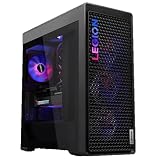
For gaming, the most important computer parts ranked by real performance impact are: the graphics card, the CPU, RAM, and the SSD — in that order — followed by the parts that don’t add speed but decide whether you keep it (PSU, cooling, motherboard). The catch: the “most important” part for your build is whichever one is currently your bottleneck, so this ranking pairs each component with the measurable gain you get when it’s the part holding you back.
As an Amazon Associate we earn from qualifying purchases at no extra cost to you.



The ranking at a glance
| Rank | Part | What it controls | Typical gain when it’s the bottleneck | Usual upgrade cost |
|---|---|---|---|---|
| 1 | Graphics card (GPU) | Frame rate at 1440p and 4K | +25–40% FPS per tier | $300–$1,000+ |
| 2 | CPU | 1% lows, high-refresh 1080p, sims/MMOs | +15–50% in CPU-bound games | $150–$500 |
| 3 | RAM | Stutter, minimum FPS, multitasking | +10–20% if under-capacity or single-channel | $60–$130 |
| 4 | SSD (NVMe) | Load times, asset streaming | Loads 2–4× faster than HDD/SATA | $60–$150 |
| 5 | Power supply | Stability, headroom | 0% FPS — enables everything else | $80–$150 |
| 6 | Cooling | Sustained boost clocks | Recovers 5–15% lost to throttling | $30–$120 |
| 7 | Motherboard | Compatibility, VRM quality | ~0% FPS | $120–$250 |
The parts that move frame rates
1. Graphics card — the frame-rate engine
The GPU ranks first because of simple math. A 1080p frame is 1920 × 1080 = ~2.07 million pixels. At 1440p that’s 3.69 million (+78%), and at 4K it’s 8.29 million (4× 1080p). Your CPU’s per-frame work — draw calls, physics, game logic — barely changes with resolution, so every step up in pixels shifts more of each frame’s cost onto the GPU. That’s why a 1080p esports rig is often CPU-limited while a 4K rig is almost always GPU-limited.
VRAM is the 2026 dividing line: 8GB cards increasingly hit texture-quality walls at 1440p in modern AAA releases. Target 12GB for 1440p and 16GB for 4K. Rough tier map: RTX 5060 / RX 9060 XT class for 1080p, RTX 5070 or RX 9070 XT for 1440p, RTX 5080/5090 for 4K.
2. CPU — sets your ceiling and your lows
The CPU decides how high your frame rate can go when the GPU isn’t the limiter, and it heavily shapes 1% lows — the stutters you actually feel. It’s the #1 part in high-refresh 1080p esports, MMOs, flight sims, and strategy games. A jump from a four- or five-year-old midrange chip to a 3D V-Cache CPU (Ryzen 7 7800X3D or 9800X3D) can lift lows 30–50% in CPU-bound titles while changing GPU-bound 4K numbers by almost nothing — which is exactly why it ranks second, not first. For balanced 1440p builds, a Ryzen 5 9600X or Core Ultra 5 245K-class chip is usually enough.
3. RAM — capacity first, speed second, always two sticks
32GB is the sensible baseline for 2026; 16GB produces hitching in open-world games once Discord, a browser, and the game compete for memory. The biggest RAM mistake is running one stick: single-channel halves memory bandwidth and commonly costs 10–20% FPS plus worse lows. Always buy 2×16GB, never 1×32GB. For AMD AM5 builds, DDR5-6000 CL30 is the price/performance sweet spot; paying for 7200+ typically returns 0–3%.
4. SSD — a load-time lever, not a frame lever
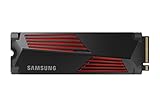
A faster SSD adds essentially zero FPS, but it’s the largest quality-of-life jump per dollar. Typical level loads: ~45–90 seconds on a hard drive, ~20–35s on SATA SSD, ~10–20s on a Gen4 NVMe drive. Gen5 NVMe (e.g., Crucial T705 class) shaves only 1–3 seconds more in most games because DirectStorage titles remain rare — so Gen4 (Samsung 990 Pro class) stays the sweet spot. An SSD also fixes texture pop-in and traversal stutter when asset streaming can’t keep up.
The parts that enable everything else
5. Power supply — do the math once
A PSU adds no FPS, but undersizing it causes reboots under load. The formula: GPU TDP + CPU TDP + ~90W (board, RAM, drives, fans) = gaming draw; multiply by ~1.4 for headroom.
- RTX 5070 (250W) + Ryzen 7 9800X3D (120W) + 90W = ~460W → a quality 650–750W unit
- RTX 5090 (575W) + 120W + 90W = ~785W → a quality 1,000W unit
For newer GPUs, an ATX 3.x-rated unit with a native 12V-2×6 cable handles transient spikes better than adapters. Buy quality, not just wattage.
6. Cooling — performance you quietly lose
Modern chips boost until they hit a thermal limit, so bad cooling doesn’t crash — it silently lowers clocks. If your CPU drops frequency after 10–15 minutes of play or sits above ~90°C, a $35–$50 tower cooler plus two intake fans typically recovers the lost 5–15%.
7. Motherboard — buys features, not frames
Boards contribute ~0% to FPS. Pay for VRM quality (only critical with 16-core chips), BIOS support for your CPU, and the M.2 slots/USB/Wi-Fi you need. A midrange board is correct for most builds.
Find your real bottleneck in 10 minutes
- Resolution test: drop render resolution one notch (1440p → 1080p). A large FPS jump = GPU-bound. Barely any change = CPU-bound.
- Utilization check: GPU at 95–99% = it’s doing all it can (ideal). GPU at 60–80% with one CPU thread near 100% = CPU-bound.
- Stutter check: average FPS fine but constant hitches → check RAM capacity and whether you’re running a single stick.
- Load check: game loads over ~40s on a modern install = storage problem.
Symptom-to-part decision matrix
| What you’re seeing | Likely bottleneck | 10-second check | Upgrade that pays |
|---|---|---|---|
| Low FPS at 1440p/4K, GPU pegged at 97% | GPU | Lowering resolution restores FPS | Next GPU tier (+25–40%) |
| FPS flat when resolution drops | CPU | One CPU thread ~95–100% | X3D-class chip or platform move |
| Okay averages, constant hitching | RAM | 16GB or single stick in use | 2×16GB DDR5-6000 |
| Minute-long loads, texture pop-in | SSD | Game installed on HDD/SATA | 1–2TB Gen4 NVMe |
| Random reboots under load | PSU | Crashes track GPU load spikes | Quality 650–850W ATX 3.x |
| FPS sags after 15 minutes | Cooling | Clocks fall as temps pass 90°C | Tower cooler + case airflow |
Where each budget dollar buys the most speed
- Under $100: fix broken configs first — a second RAM stick for dual-channel or a tower cooler can recover 10–20% in the right setup. Cheapest frames available.
- $100–$200: a Gen4 NVMe if you’re still on SATA or a hard drive — the biggest felt speedup per dollar for load times.
- $300–$700: a GPU tier jump — the largest raw FPS gain — but confirm PSU headroom first.
The classic mistake is pairing an $800 GPU with a $40 no-name PSU or a single RAM stick. The most important computer parts ranking only works if the enablers underneath are sound.
FAQ
Should I upgrade my CPU or GPU first?
Run the resolution test. If lowering resolution restores FPS, the GPU is limiting you — upgrade it. If FPS stays flat, the CPU is the ceiling and a faster GPU will buy you almost nothing.
Will more RAM or a faster SSD increase FPS?
RAM only if you were under-capacity or single-channel (then, meaningfully). An SSD improves load times and asset streaming, not frame rate — don’t buy Gen5 expecting FPS.
Does a better motherboard improve performance?
No measurable FPS difference. It buys VRM stability for power-hungry CPUs, BIOS compatibility, and connectivity — spend on it last.