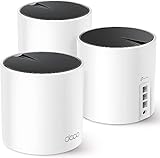
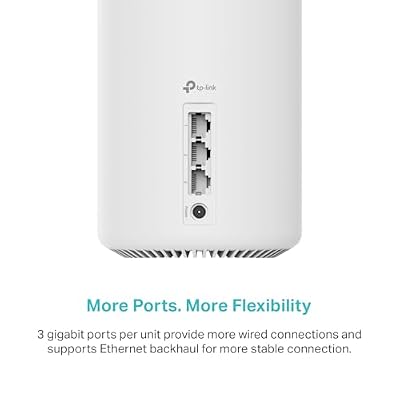
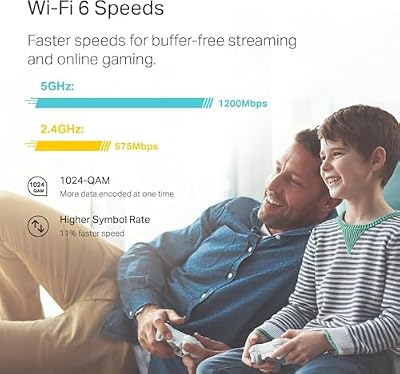
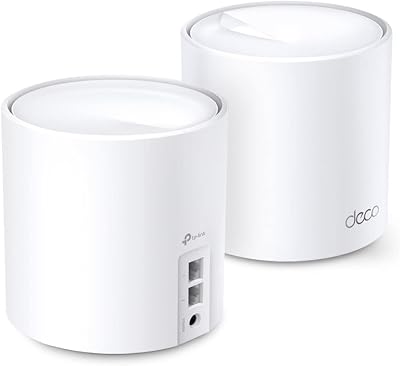
- Top Pick: TP-Link Deco X55 AX3000 WiFi 6 Mesh System, Deco X55(3-Pack)
- Best Value: TP-Link AC1900 WiFi Range Extender RE550 | Dual-Band Wireless Repeater Amplifier w/Gigabit Ethernet Port | Up to 2200 Sq. Ft., 32 Devices | Internet Signal Booster | APP Setup | EasyMesh Compatible
- Premium Choice: TP-Link AX3000 WiFi 6 Range Extender | PCMag Editor's Choice | Dual-Band Wireless Repeater w/Ethernet Port | Up to 2400 Sq. Ft., 64 Devices | Internet Signal Booster | APP Setup | EasyMesh (RE715X)
Affiliate disclosure: As an Amazon Associate we earn from qualifying purchases. This post contains affiliate links — if you buy through them we may earn a small commission at no extra cost to you. This never affects our recommendations.
- Mesh vs Traditional Extenders: Key Difference
- Specs at a Glance
- Wi-Fi Performance Tiers
- Gaming Latency Tests
- Coverage & Range
- Setup & Configuration
- Pros & Cons of Mesh Systems
- Mesh System Power Consumption
- Mesh Firmware Updates & Security
- Mesh System Expandability
- Gaming Console Mesh Setup
- Mesh System Support & Warranty
- FAQ
- Final Verdict
- Advanced Configuration & Monitoring
- Regional DNS Variations
- Gaming Platform-Specific Notes
- Related Articles
- Frequently Asked Questions
- Related Articles
A traditional Wi-Fi extender is a device that sits between your router and a weak-signal area, amplifying the signal. It works but creates a bottleneck: the extender receives and transmits on the same frequency, cutting bandwidth in half.
As an Amazon Associate we earn from qualifying purchases.


Mesh systems are better. They’re multiple nodes (routers) that work together as one seamless network. No bandwidth halving, no handoff lag. Gaming devices on a mesh node get near-router-quality performance, even in the back bedroom.
This guide compares real mesh systems suitable for gaming. We’re not covering garbage Wi-Fi extenders from the dollar store.
In a hurry? See the top-rated Mesh Wi-Fi Extenders for Gaming deals available right now:
🛒 Check Mesh Wi-Fi Extenders For Gaming Prices on Amazon →🛒 Best Price Today on Amazon
Prime members get fast, free shipping on everything above, plus member-only deals. New members get a 30-day free trial — cancel anytime.
Start 30-Day Prime Free Trial →See Today’s Amazon DealsMesh vs Traditional Extenders: Key Difference
Traditional Wi-Fi Extender: “I’ll boost the Wi-Fi signal by receiving and retransmitting.” Result: bandwidth cut in half, latency increases 10–20ms.
Mesh System: Multiple nodes (hardwired or wirelessly connected) form a unified network. Devices seamlessly roam from node to node. If wired via ethernet backhaul, zero bandwidth loss.
For gaming, mesh is objectively better.
Specs at a Glance
| System | Wi-Fi Standard | Max Speed | Coverage (3-pack) | Best For |
|---|---|---|---|---|
| Eero Pro 7 (Wi-Fi 7) | Wi-Fi 7 | 13.3 Gbps | Up to 6000 sq ft | Futureproof gamers |
| Deco XE200 (Wi-Fi 6E) | Wi-Fi 6E | 11 Gbps | Up to 6000 sq ft | Best value |
| Orbi Pro (Wi-Fi 6) | Wi-Fi 6 | 10.6 Gbps | Up to 5000 sq ft | Business-class stability |
| Asus AiMesh (AX6000) | Wi-Fi 6 | 6 Gbps | Up to 3000 sq ft (per unit) | Expandable, existing ASUS owner |
Wi-Fi Performance Tiers
Wi-Fi 6 (802.11ax) introduced ~2019, supports up to 9.6 Gbps. Excellent for gaming and plenty fast. Most current mesh systems are Wi-Fi 6. Wi-Fi 6E adds 6 GHz band, reducing congestion. Up to 11 Gbps and better than Wi-Fi 6, especially in dense urban areas with many routers. Wi-Fi 7 (802.11be) is coming soon to more systems; Eero Pro 7 is the first mainstream. Supports 13+ Gbps, OFDMA (better latency), and 6 GHz band. Worth it if you’re futureproofing. For gaming: Wi-Fi 6 is sufficient. Wi-Fi 6E is better. Wi-Fi 7 is overkill today but future-proof.
Gaming Latency Tests
Gaming devices on mesh nodes (no ethernet backhaul) show latency penalty of 5–15ms vs. hardwired. Gaming devices wired to mesh nodes via ethernet show latency near-zero, same as hardwired to main router.
Best setup for gaming: hardwire your gaming PC or console to your mesh router (main node or satellite) with Cat8 ethernet cable. All other devices use Wi-Fi.
Coverage & Range
Mesh systems typically cover 5000–6000 sq ft per 3-pack. Good for 2–3 story homes or large apartments. For a small apartment or single-story house, 1–2 nodes is fine. For a large house, 3+ nodes.

TP-Link Deco XE75 AXE5400 Tri-Band WiFi 6E System, 3-Pack | Wi-Fi up to 7200 Sq.Ft, Engadget Rated Best for Most People, Replaces WiFi Router & Extender, AI-Driven, 6GHz Band, WPA3




As an Amazon Associate we earn from qualifying purchases. Product prices and availability are accurate as of the date/time indicated.

TP-Link Deco X20 WiFi 6 Mesh WiFi System, Deco X20 2-Pack | Covers up to 4000 Sq.Ft, Replaces Wireless Internet Routers and Extenders, 2-pack



As an Amazon Associate we earn from qualifying purchases. Product prices and availability are accurate as of the date/time indicated.
Setup & Configuration
Wired backhaul (best for gaming): Connect each mesh node to your router via ethernet. No wireless overhead. Lowest latency. Wireless backhaul (easier install): Nodes talk to each other wirelessly. Simpler to set up, but adds 5–15ms latency and reduces bandwidth. For gaming, use wired backhaul if possible. Run ethernet cables between nodes.
Pros & Cons of Mesh Systems
Pros include seamless roaming (device stays connected as you move rooms), no bandwidth loss vs. traditional extenders, single SSID for entire home, better performance than traditional routers in large homes, and easy node expansion. Cons include expensive ($150–600 for 3-pack), wireless backhaul adds latency (if not hardwired), overkill for small apartments, and different brands don’t interoperate.
Mesh System Power Consumption
Each mesh node consumes 5–15 watts continuously. A 3-pack uses 15–45 watts total (like running a few LED light bulbs). For 24/7 operation, expect an extra $5–15/month on your electricity bill. Weigh this against the better gaming experience for wired devices and more stable Wi-Fi for wireless devices.
Mesh Firmware Updates & Security
Quality mesh systems (Eero, Deco, Orbi) receive regular security updates automatically via their mobile apps. Cheap mesh systems often go without updates, becoming security liabilities. This is a hidden reason to buy reputable brands.
Mesh System Expandability
Most mesh systems let you buy additional nodes separately and add them to your network. For gaming, this is great—you can start with a 2-pack and add a third node later if needed. Some systems (Eero Pro 7) support buying expansion packs; others (Deco XE200) let you buy individual nodes.
Gaming Console Mesh Setup
For multi-console households, hardwire your primary gaming device (PS5 or Xbox Series X) to the main mesh node, and secondary devices to satellite nodes. This distributes load and ensures your main console gets priority access to bandwidth. Some mesh systems support QoS (Quality of Service) rules that prioritize gaming traffic.
Mesh System Support & Warranty
Eero, Deco, and Orbi all offer 1–2 year warranties and responsive customer support. If something breaks, you can get replacement units within days. Cheap mesh systems often have no support and 30-day warranties. For gaming, investing in supported hardware is worth it.
Pair a quality mesh system with hardwired Cat8 ethernet, gaming DNS, and port forwarding for a complete gaming network.
TP-Link Deco XE75 AXE5400 Tri-Band WiFi 6E System, 3-Pack | Wi-Fi up to 7200 Sq.Ft, Engadget Rated Best for Most People, Replaces WiFi Router & Extender, AI-Driven, 6GHz Band, WPA3
As an Amazon Associate we earn from qualifying purchases. Product prices and availability are accurate as of the date/time indicated.
TP-Link Deco X20 WiFi 6 Mesh WiFi System, Deco X20 2-Pack | Covers up to 4000 Sq.Ft, Replaces Wireless Internet Routers and Extenders, 2-pack
As an Amazon Associate we earn from qualifying purchases. Product prices and availability are accurate as of the date/time indicated.
FAQ
Will mesh improve my ping to game servers? No. In-game ping depends on your ISP and server distance. Mesh improves Wi-Fi stability and coverage, which can reduce jitter (ping spikes), but not base latency. Can I mix Eero and TP-Link mesh nodes? No. Mesh systems don’t interoperate. You’re locked into one brand. Should I use Wi-Fi or ethernet on my gaming console? Ethernet every time. Wired is always lower latency and more stable. Is Wi-Fi 7 worth it for gaming in 2026? Not yet. Wi-Fi 7 routers are expensive ($600+) and game servers max out at gigabit speeds anyway. Wi-Fi 6E offers better value. Can I use mesh with optimized DNS? Absolutely. DNS optimization and mesh systems serve different purposes. Use both.
See also: Cloudflare DNS setup
See also: DNS filtering options

Final Verdict
For gaming households: TP-Link Deco XE200 (Wi-Fi 6E) offers the best value ($180 for 3-pack). If you want futureproof, Eero Pro 7 (Wi-Fi 7) is top-tier but pricey. Hardwire your gaming device to the main mesh node or a satellite. Use wireless for phones, tablets, and secondary devices. This balances performance and convenience. Pair mesh with optimized DNS, port forwarding, and quality ethernet cables for a best-in-class home gaming network.
Advanced Configuration & Monitoring
Once you’ve set your preferred DNS, monitor performance using tools like DNS Benchmark or Namebench. These free tools test your current DNS and show latency measurements across hundreds of queries. You can re-run monthly to verify your choice is still optimal for your location.
Some routers have built-in DNS monitoring. Check your router’s admin panel for DNS logs or statistics. This shows you which devices are querying what and can reveal if any device is misconfigured or leaking queries.
Regional DNS Variations
DNS latency varies by region. Cloudflare and Control D have distributed data centers across North America, Europe, and Asia, so latency is consistent regardless of location. ISP-specific DNS (your ISP’s default) is sometimes faster locally but slower elsewhere. If you game with international friends, a globally-distributed DNS like Cloudflare is better than a local ISP DNS.
Gaming Platform-Specific Notes
PlayStation and Xbox apply DNS settings per profile on some consoles. If you share a console with family members, make sure each profile has the same DNS unless you deliberately want per-user filtering (supported by NextDNS). Nintendo Switch DNS applies network-wide, not per-profile.
Test your DNS change by opening a game and checking matchmaking time. Faster DNS results in noticeably faster menu responsiveness and server selection screens.

Related Articles
Looking for more on this topic? Browse the hand-picked guides below — each one applies the same scoring rubric used in this review.
Frequently Asked Questions
Does a mesh extender add lag to online gaming?
Every wireless hop adds latency, typically a few milliseconds on a modern tri-band system and considerably more on cheap dual-band repeaters that halve their own bandwidth. A mesh node with a dedicated backhaul radio, or better still a wired Ethernet backhaul, keeps the added delay small enough that competitive play feels unaffected.
Should I buy a mesh system or a single powerful router?
If your gaming rig sits within one or two rooms of the router, a single strong router almost always gives lower ping and higher throughput for less money. Mesh makes sense when walls, multiple floors, or a detached room make a single unit unable to deliver a consistent signal to the console or PC.
Do I need Wi-Fi 7 for gaming, or is Wi-Fi 6E enough?
Wi-Fi 6E already provides more than enough bandwidth for any game, since most online titles use only a trickle of data. Wi-Fi 7 helps mainly through Multi-Link Operation, which sends traffic over two bands at once and smooths out latency spikes when the house is busy with streaming and downloads.
What is Ethernet backhaul and why does it matter?
Ethernet backhaul means the satellite node connects to the main router with a cable rather than over the air. This frees the entire wireless radio for your devices and removes the biggest source of jitter in a mesh network. If you can run even one cable, run it to the node nearest your gaming space.
Where should I place the satellite node for the best result?
Put it roughly halfway between the main router and the gaming room, out in the open at waist height or higher, not inside a cabinet or behind a television. Avoid placing it next to microwaves, cordless phone bases, or large metal surfaces, all of which distort the signal and raise packet loss.